


Antique Abattants
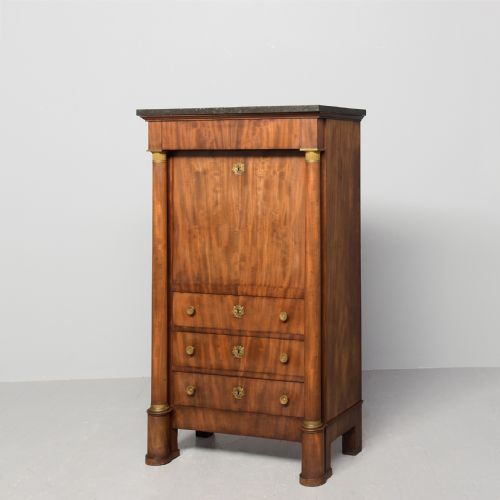
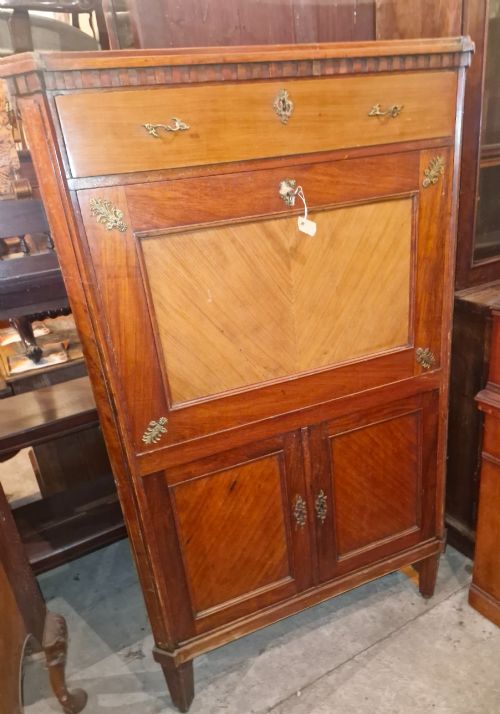
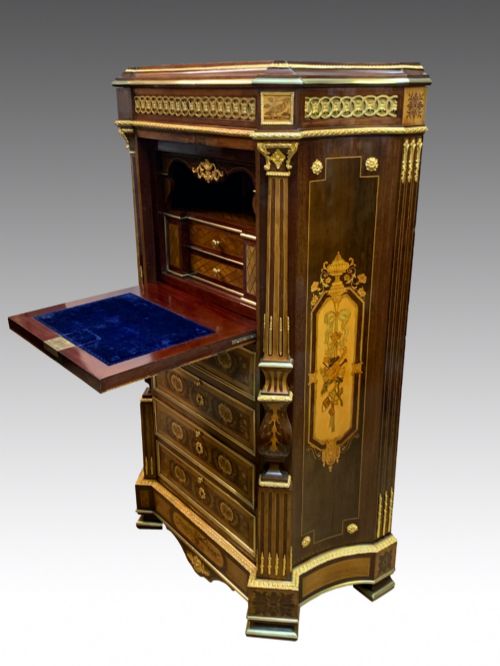
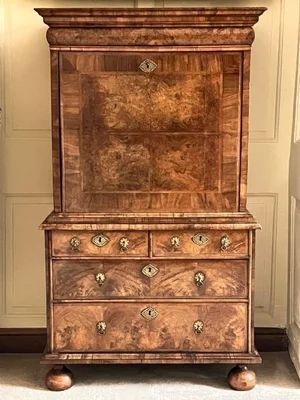
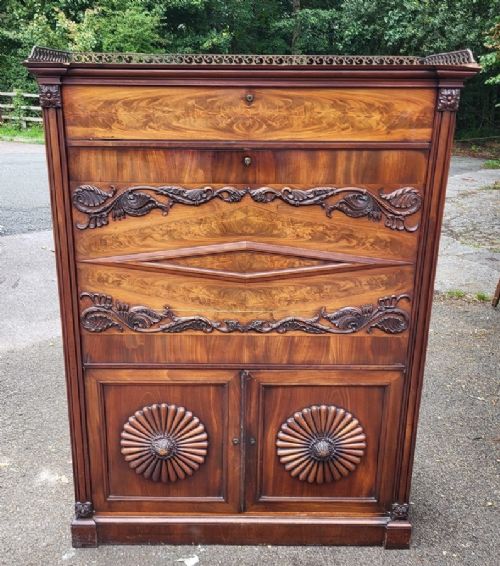
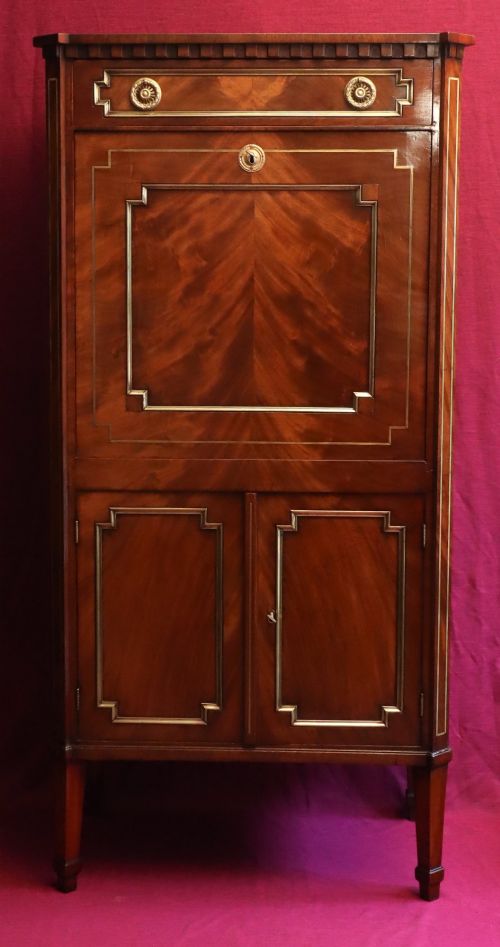
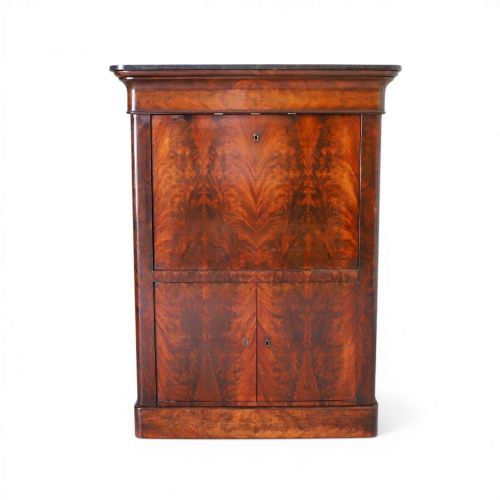
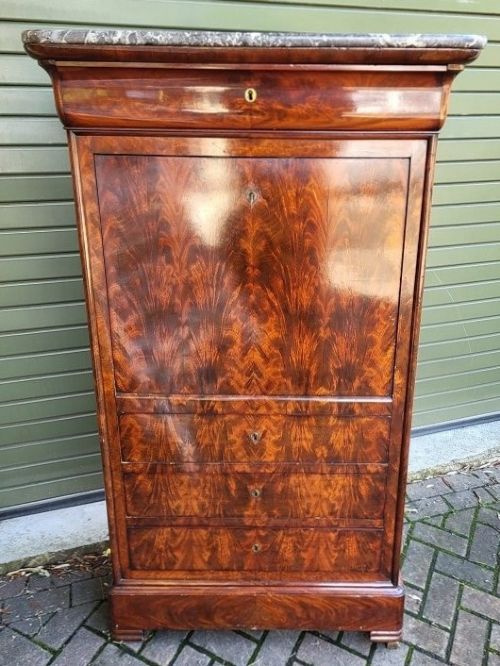
A secrétaire à abattant is a tall, upright writing cabinet whose front panel falls forward on hinges to make a writing surface, with storage below.

What Is An Abattant?
The form took shape in France in the middle of the 18th century, a space-saving alternative to the sloping bureau: the flap drops flat to write on and locks shut over the interior fittings, with a chest of drawers or a cupboard underneath. The type spread across Europe and was made right through the 19th century in successive styles.
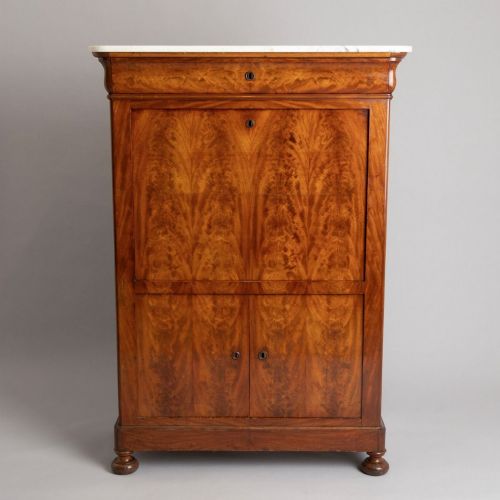
What you'll meet on Sellingantiques is overwhelmingly French in its description, and overwhelmingly 19th century. Of 99 listings, 65 titles say secretaire and 34 say french. It arrives as a veneered case piece, mahogany in 26 titles and walnut in 16, rosewood in nine, with marquetry named in 15 and a marble top in nine.
The same object answers to several names. Escritoire appears in 17 titles, desk in 12, bureau in eight, and some titles use two or three of those words at once. Spelling wanders too: secretaire, secrétaire, secrataire, abbatant and abattant all turn up, and the accented forms show as broken text in nine listings.
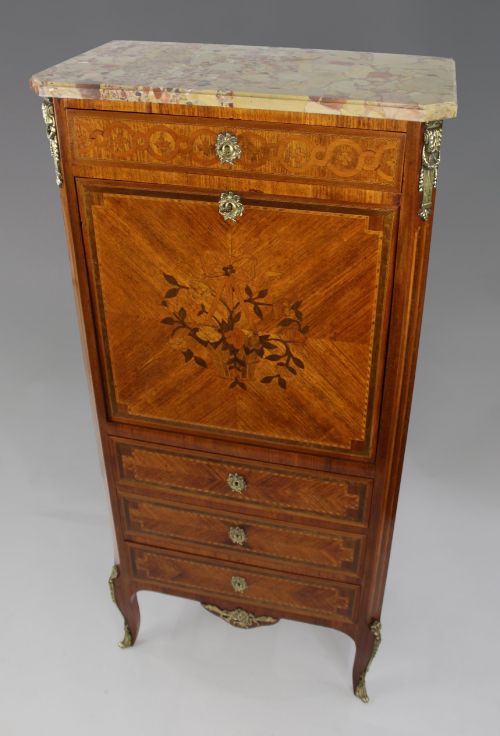
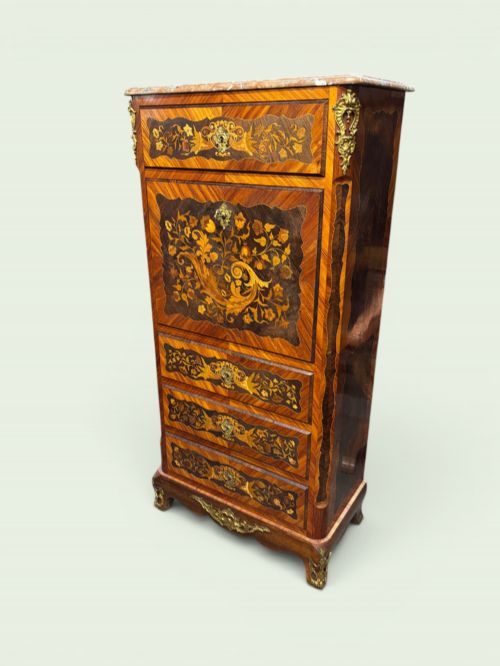
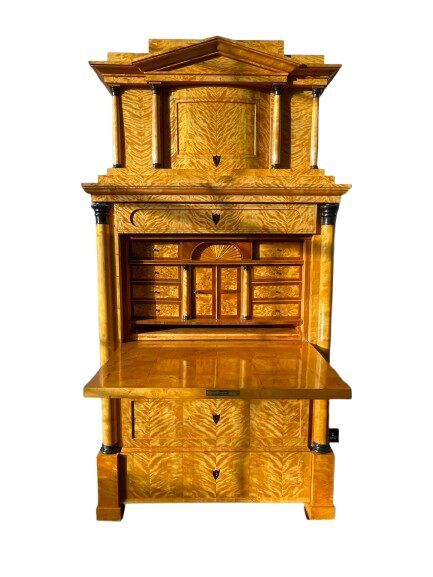
Beyond the plain French veneered case sit two smaller groups. Marquetry and inlaid examples, sometimes in kingwood or rosewood with ormolu mounts, run to about a sixth of the category. Biedermeier and Northern European pieces account for nine listings and bring in masur birch, birch burr and ebonised birch. Dating is mostly loose: 38 listings say only 19th Century, and titles often carry a circa year the dated field doesn't, so read the title date as the dealer's working estimate.
Where The Range Splits
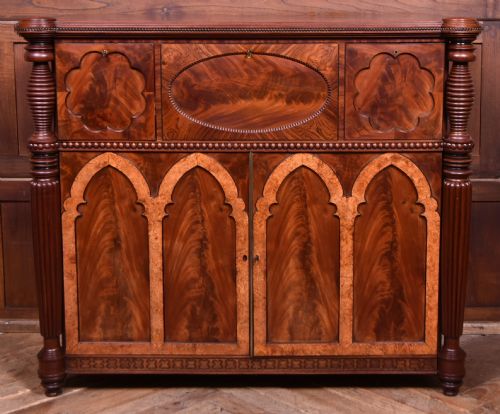
Timber does most of the work. Kingwood, tulipwood, amboyna, masur birch, burr walnut and flame mahogany sit at the upper end of what has sold on Sellingantiques; pine sits at the bottom, along with one cabinet converted to hold drinks. A plain veneered mahogany or walnut case occupies the broad middle.
Decoration and metal separate the top from that middle. Marquetry and inlay, named in 15 and ten titles, push a piece up, and painted decoration with ormolu-mounted tulipwood and parquetry occupies the very top of the sampled range. Titles specifying ormolu, brass mounting or brass inlay cluster in the upper half. The few titles naming a maker or an attribution all fall well above the middle.
A marble top is worth reading as a feature rather than a driver. The nine marble-topped listings spread across the middle of the range, and several are described as narrow and dated to the 1920s, a distinct late sub-type rather than a mark of quality.
Retail Price Guide 2026
Typical UK retail prices for abattants, calculated from the Sellingantiques database of over a million retail prices indexed since 2003. This retail price guide relies exclusively on Sellingantiques data; no external sources or auction records are used, so the figures do not describe the wider market.
The most expensive abattant ever sold on Sellingantiques was a painted secretaire a abattant, in August 2025.
The Antique Abattants Glossary
- Abattant
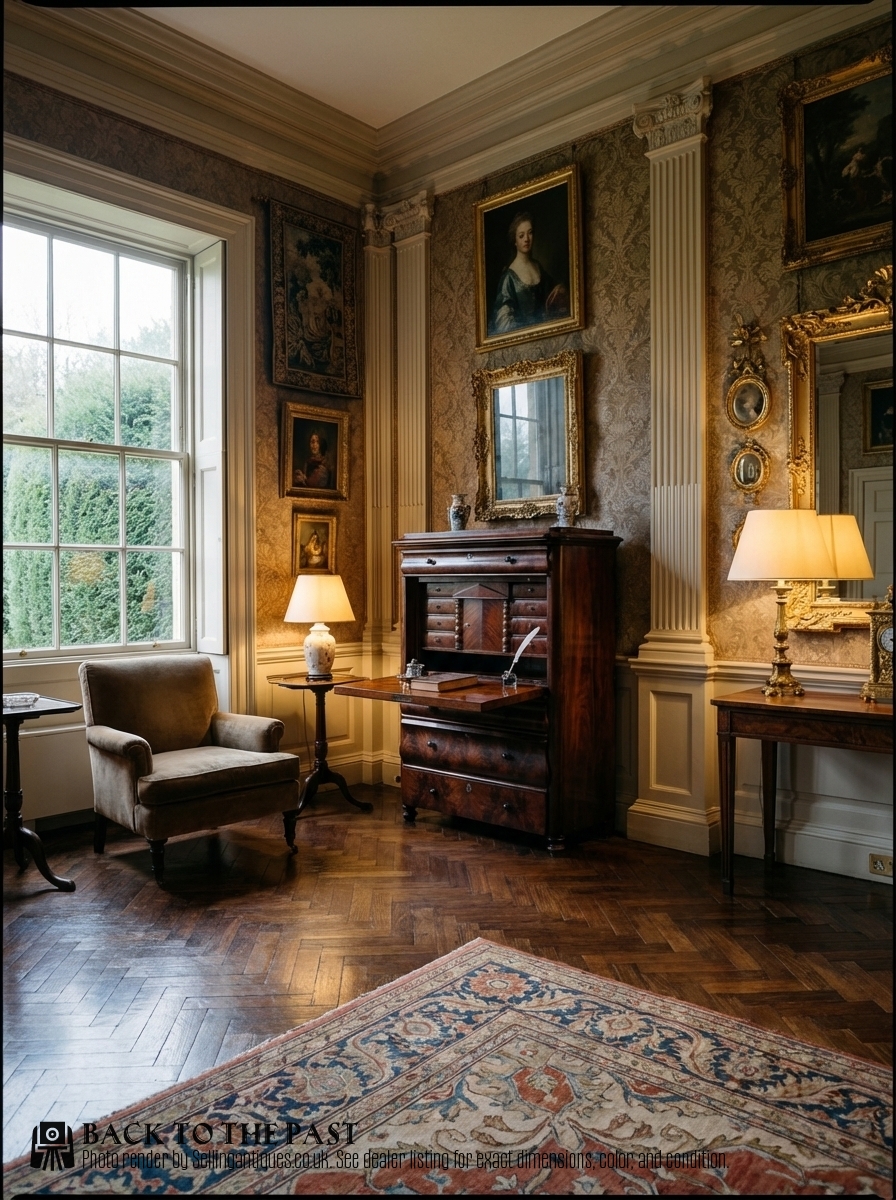
- The falling front panel, and by extension the whole cabinet fitted with one.
- Secrétaire à abattant
- The full French name for the form, which appears in titles under half a dozen spellings.
- Escritoire
- Used as an English synonym for the same falling-front writing cabinet, in 17 titles.
- Marquetry
- Decorative veneer picture-work in contrasting woods. Named in 15 titles; parquetry, the geometric version, appears in one.
- Ormolu
- Gilt-bronze mounts applied to corners, mouldings and edges.
- Biedermeier
- The Northern European style label attached to nine listings, typically pale or flame-figured wood with restrained lines.
Frequently Asked Questions
How many come up for sale each year?
About twelve reach the market on Sellingantiques in a year, drawn from a sample of 99 listings.
Fifty-five different dealers have listed one, so most dealers who handle the form handle it once rather than stocking it.
Why are they described in French terms?
The form began in France in the middle of the 18th century, and the vocabulary travelled with it. Thirty-four titles carry the word french.
Secretaire appears in 65 of 99 titles. The French naming holds even on pieces described as Biedermeier or Swedish.
What woods turn up most often?
Mahogany leads, in 26 titles, twelve of them as "mahogany secretaire". Walnut follows in 16, and rosewood in nine.
At the edges the woods get less usual: kingwood and tulipwood on the French inlaid examples, masur birch and birch burr on the Biedermeier ones, and single appearances for amboyna, Italian walnut and French cherrywood.
Are the dates in listings precise?
Mostly not. Thirty-eight listings are dated no more precisely than 19th Century, and another ten fall back on Victorian or Regency instead of a year.
Thirty-five of the 99 carry a clean year, and the dated field spans 1750 to 1920. Decade-level entries are thin and spread, with the 1860s the largest cluster at nine.
Titles often give a circa year the dated field doesn't, and the two sometimes disagree.
What is a marble-top abattant?
Exactly nine listings carry a marble top, and they are the same nine that mention marble at all.
Several of those are titled as narrow and dated to the 1920s, which makes them a recognisable late group within the category.
Do any 18th-century examples appear?
Only four listings are given as 18th Century, and the earliest clean date is 1750, on a Dutch floral marquetry example. One outlier is labelled 17th Century.
That early end is too thinly represented to describe as a group. The weight of the category sits in the 19th century.