

Antique Bonheur De Jour
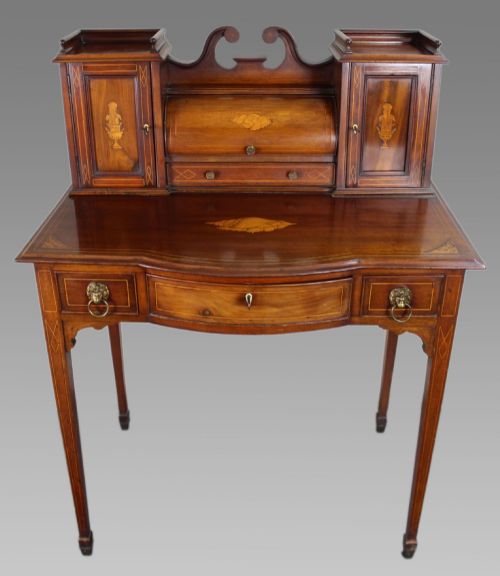
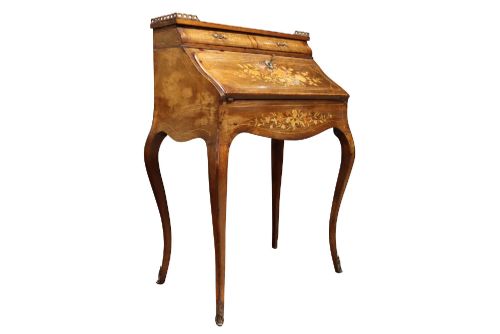
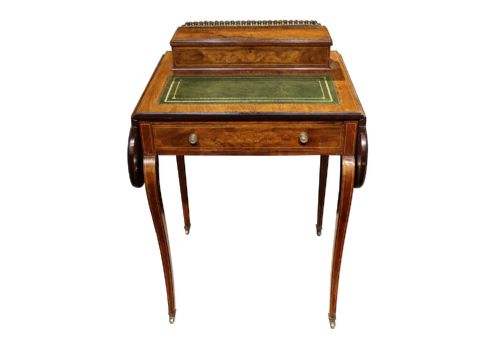
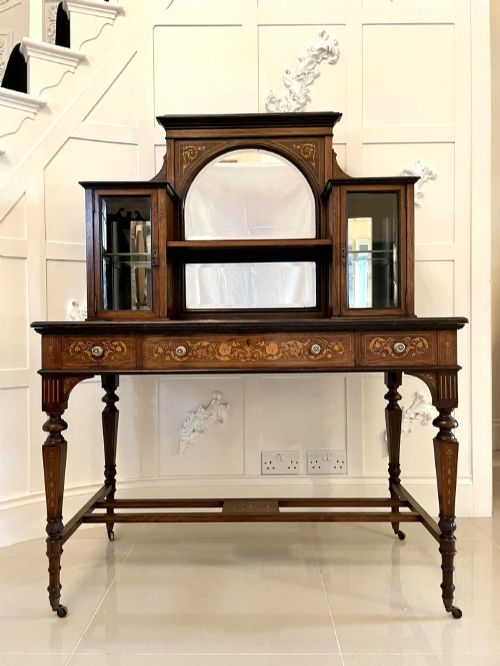
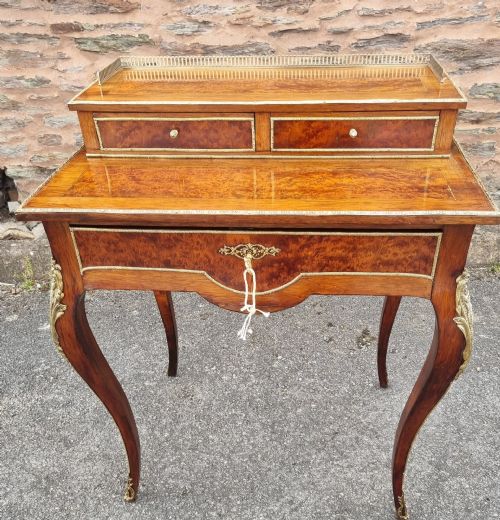
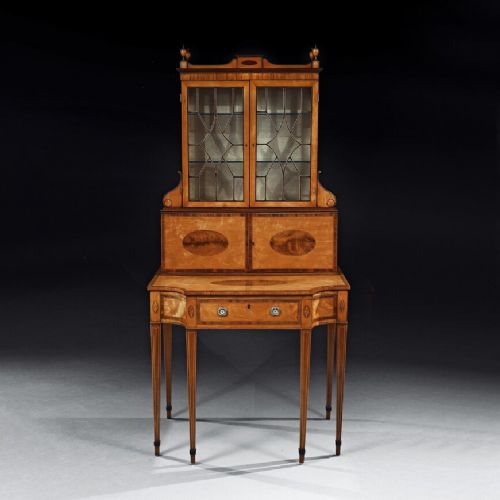
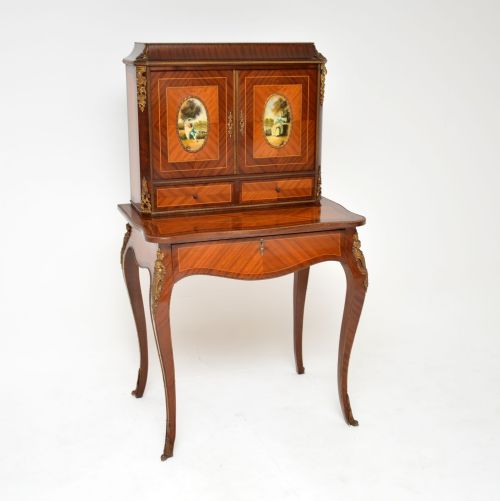
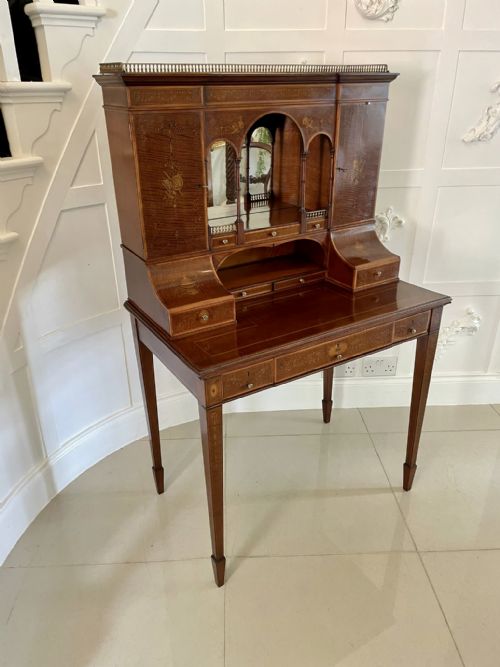
A bonheur de jour is a small writing desk on slender legs, with a raised tier of drawers, pigeonholes or a little cabinet sitting above a shallow writing surface.

What Is A Bonheur De Jour?
The form began in France in the second half of the eighteenth century as a light writing table for a lady, pairing a shallow top with a raised back tier of small drawers and compartments. England copied and reworked it right through the nineteenth century, and both strands sit under this heading.
Most titles on Sellingantiques use the phrase itself. The rest arrive at the same object through "writing desk", "ladies desk", "bureau de dame" or "escritoire", so the shape matters more than the wording. Size is the constant: petite, neat, small and miniature all turn up in descriptions.
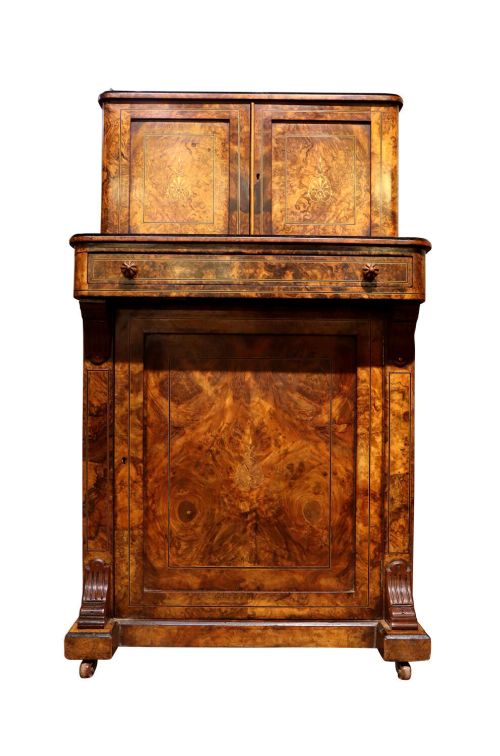
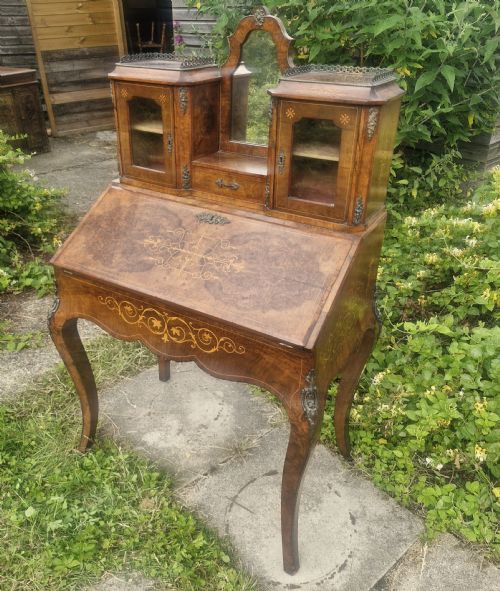
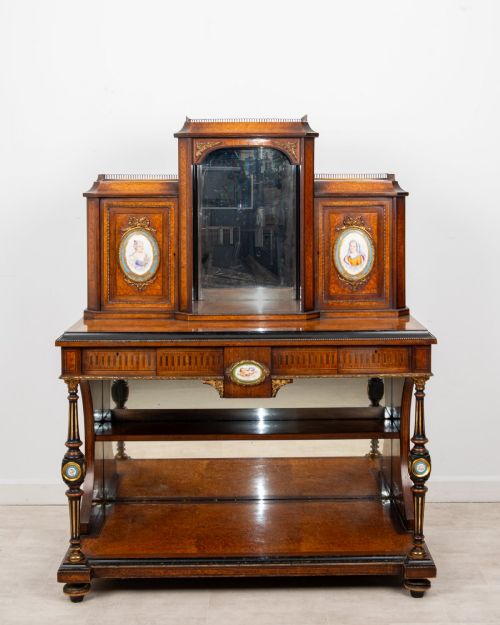
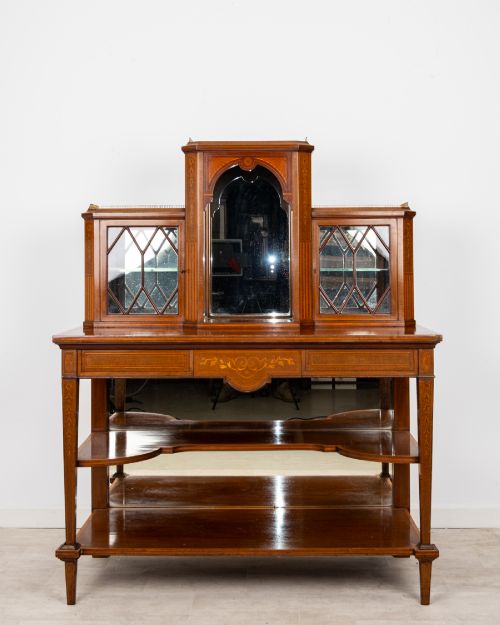
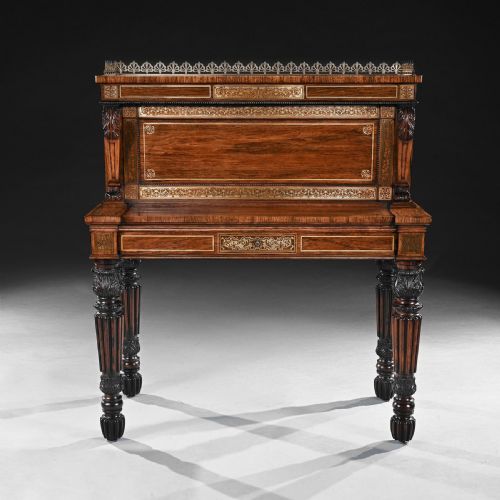
The piece you are most likely to meet is a 19th-century inlaid walnut or mahogany desk sold as a lady's writing desk. Walnut leads the timbers, burr walnut a large part of that, then mahogany, kingwood, satinwood and rosewood. Rosewood is thin in the archive but better represented in current stock.
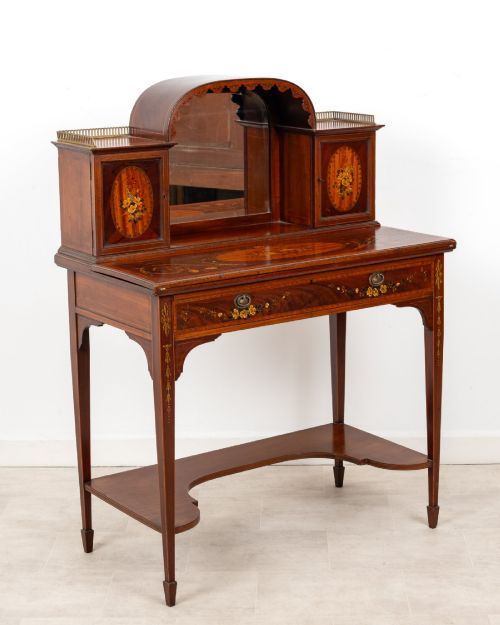
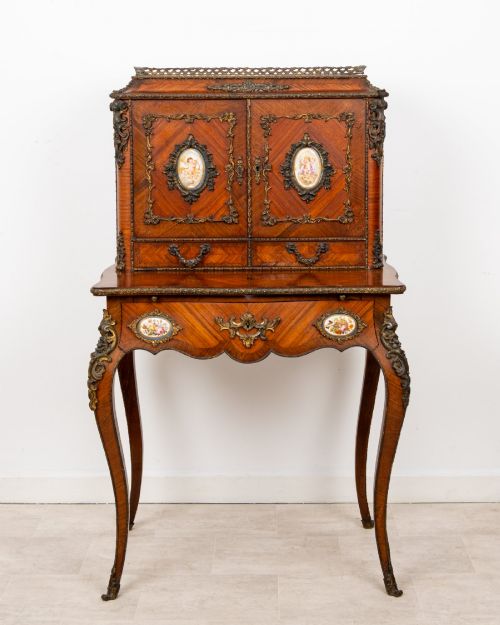
Three groupings account for most of what appears. French kingwood and marquetry pieces with gilt-metal mounts, sometimes with porcelain plaques, make up roughly a quarter. English walnut and burr walnut ladies' desks are the largest single group. Mahogany and satinwood revival pieces, Georgian in taste and often Edwardian in date, make up around a fifth.
Where The Range Splits
Decoration does most of the separating. Gilt-metal mounts, and the porcelain plaques that nearly always come with them on kingwood, cluster in the upper half of the range. Below that sit listings that name a timber and little else, with no mounts and no picture-work in the veneer.
Timber pulls in the same direction. Kingwood, amboyna, satinwood, harewood and burr yew sit high; plain mahogany and satin walnut sit at the bottom. Depth of decoration follows: marquetry, and the one-off finishes such as boulle, Vernis Martin, pietra dura and painted satinwood, recur among the highest-priced titles.
Two other things lift a piece. Pairs are the strongest, and all four sampled pairs sit at the very top. A workshop name, or an "attributed to", "after" or "in the style of" phrase, does the same on a smaller scale, though no single name recurs often enough to stand for the category.
Retail Price Guide 2026
Typical UK retail prices for bonheur de jour, calculated from the Sellingantiques database of over a million retail prices indexed since 2003. This retail price guide relies exclusively on Sellingantiques data; no external sources or auction records are used, so the figures do not describe the wider market.
The dated range on Sellingantiques runs from a walnut example given as 1750 to revival-style pieces of the 1920s and 1930s.

The Antique Bonheur De Jour Glossary
- Bonheur de jour
- The small writing desk with a raised superstructure above the writing surface; both "de jour" and "du jour" appear in titles.
- Superstructure
- The raised back section above the writing top, holding drawers, pigeonholes, shelves or a mirrored cabinet.
- Bureau de dame
- The French name for the same lady's desk, used in a few titles as an alternative.
- Ormolu
- Gilded metal mounts, sometimes written as gilt metal or brass mounts, and usually found on the kingwood pieces.
- Burr walnut
- Figured walnut veneer cut from a burl, and the signature English timber in this category.
- Vernis Martin
- A French painted-and-lacquered panel finish, named in a small number of titles.
Frequently Asked Questions
How often do these come up for sale?
Around 29 come to market on Sellingantiques in a year, and 77 different dealers have listed one.
That spread says something about the trade: it's a form most dealers meet occasionally rather than stock in depth.
What period do most of them date from?
The dated field runs from 1750 to 1930. Precise years are the exception, though, with about four in five dated listings giving a reign or a century instead.
"19th Century" is the largest bucket, followed by Victorian, then Edwardian and Georgian. Where a decade is given, the 1860s dominate, ahead of the 1880s and 1890s.
Are French and English examples different?
The French pieces run to kingwood and marquetry with gilt-metal mounts, and porcelain plaques when they carry them. They sit largely in the upper price band.
The English ones are walnut, burr walnut, mahogany, rosewood and satinwood, often described as ladies' writing desks, and usually inlaid rather than mounted.
Do bonheur de jour come in pairs?
Very seldom. Only four sampled listings are pairs or matched pairs, and all four sit at the very top of the range.
Singles are the norm.
Which timbers turn up most?
Walnut leads, with burr walnut a good part of that. Mahogany comes next, then kingwood, satinwood and rosewood.
Beyond those, the sample records amboyna on several of the higher-priced pieces, and single appearances of harewood, burr yew, satin birch and sabicu.
What unusual features show up in the sample?
Specialist finishes appear once or twice each and never more: pietra dura, chinoiserie, Moorish taste, boulle. A decorated surface outside marquetry and gilt mounts is a one-off in this category.
Construction throws up occasional oddities too, among them a bombé front, a cylinder bureau, a roll top, a marble top, a mirrored superstructure and a secret drawer.