
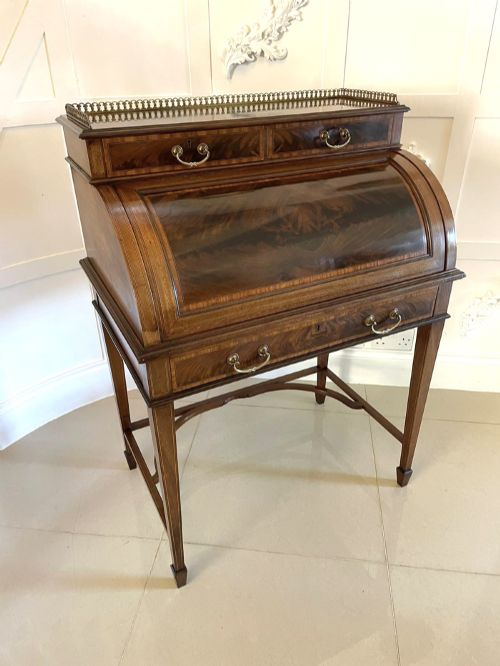
Antique Edwardian Bureau
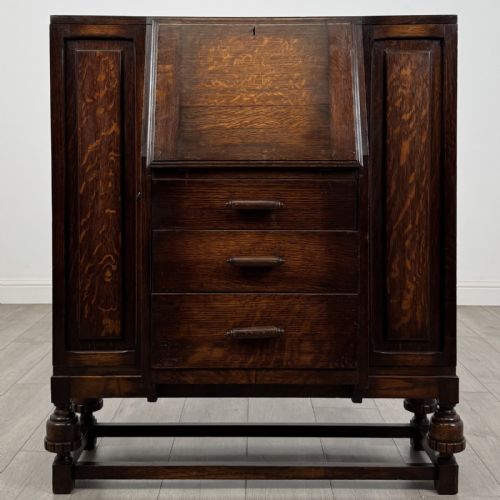
An Edwardian bureau is a writing desk with a sloping fall that drops to form a writing surface over pigeonholes and small drawers, made for letters and household papers.
Antique Edwardian Bureau
The bureau was established in Britain by the late 17th century and stayed a domestic letter-writing and paper-storage piece thereafter. The Edwardian examples are the last mass phase of that tradition, made when revival styling and machine-cut veneers were normal. Mahogany names itself in 181 of the titles on Sellingantiques, and inlay in 119.
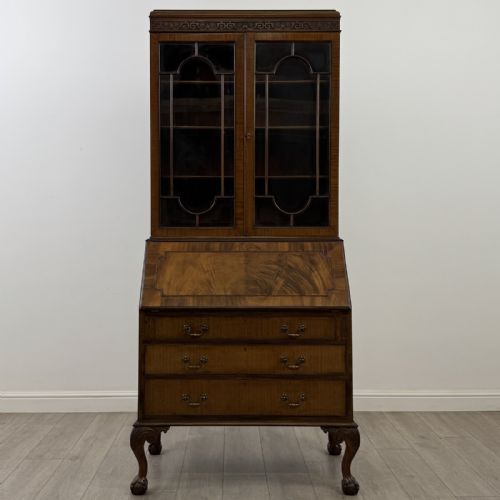
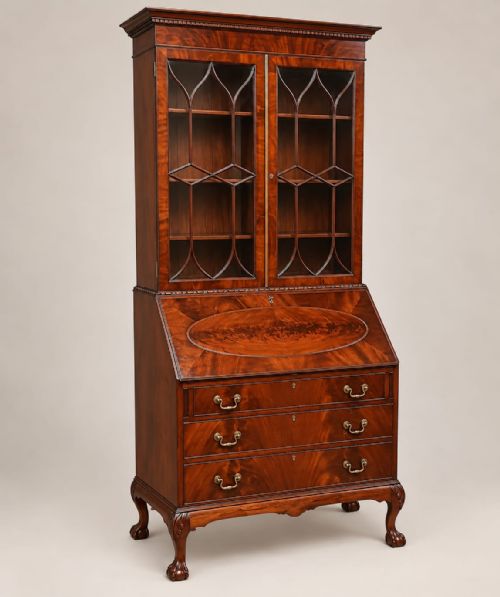
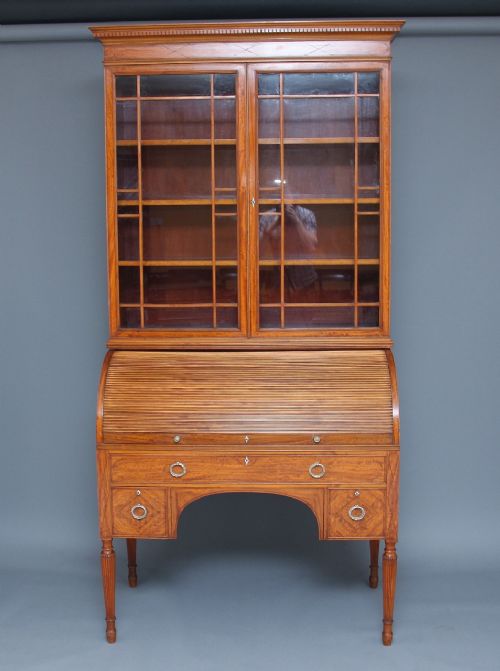
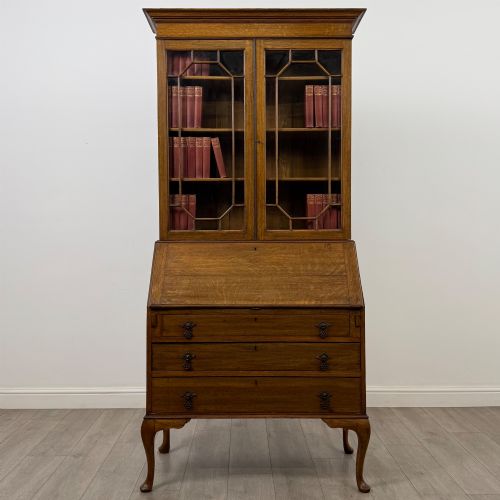
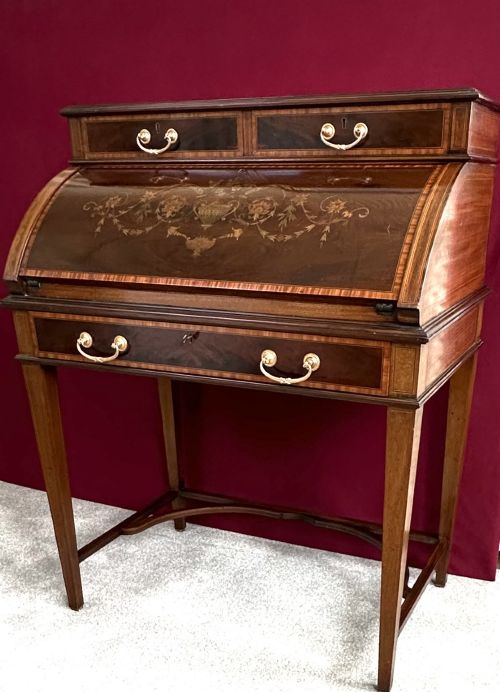
The version you're most likely to meet is an inlaid mahogany bureau, plain fall-front with no upper stage. Behind that comes the bureau bookcase, a glazed or astragal-glazed stage above the fall, which carries about a quarter of the titles. Cylinder and roll-top forms account for roughly one in eight.
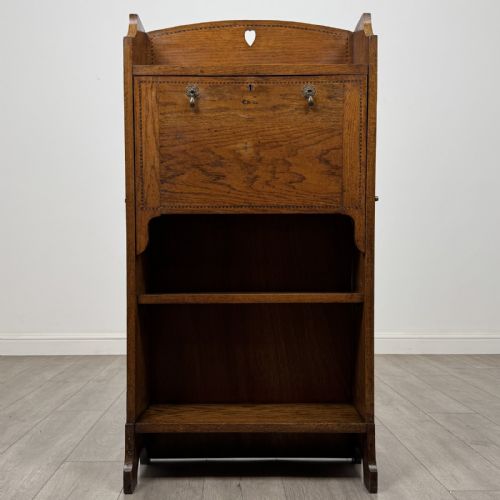
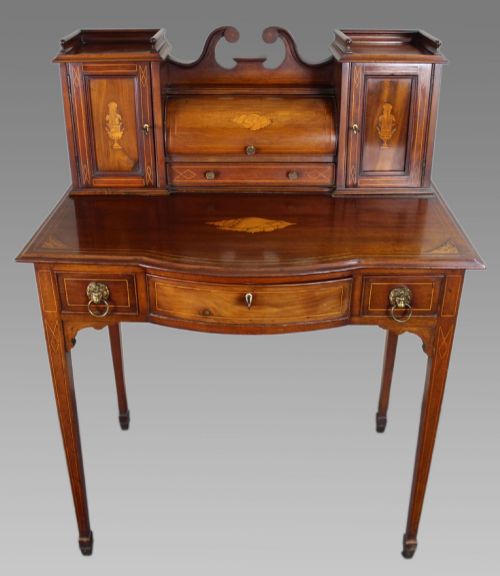
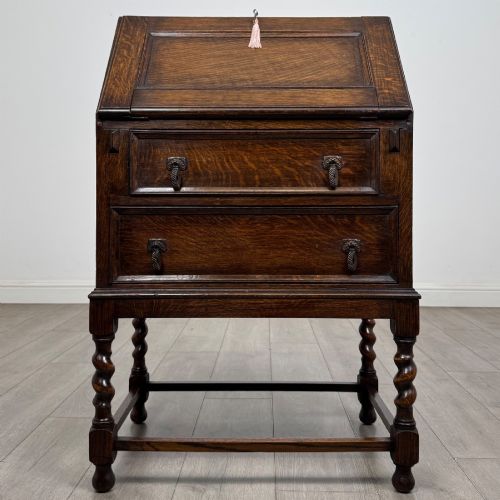
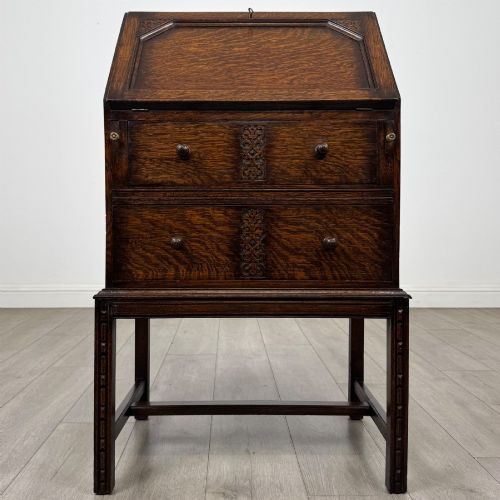
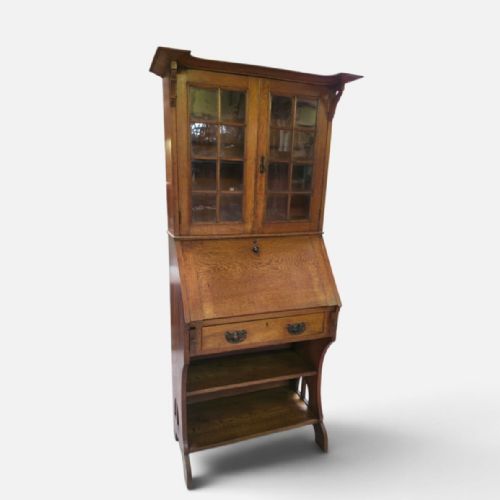
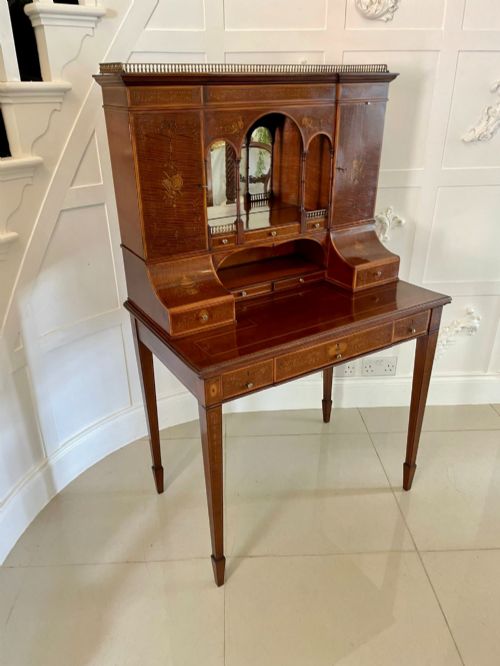
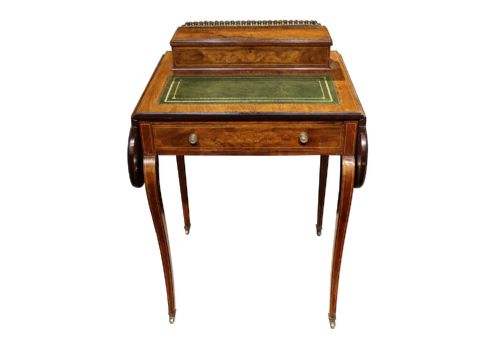
Two smaller groups sit alongside. The ladies' writing desk or bonheur du jour, with its raised superstructure of small drawers, runs to roughly a tenth and is rising in current stock. Oak appears in 64 titles, and a subset of those are Arts & Crafts hall bureaux of narrow footprint.
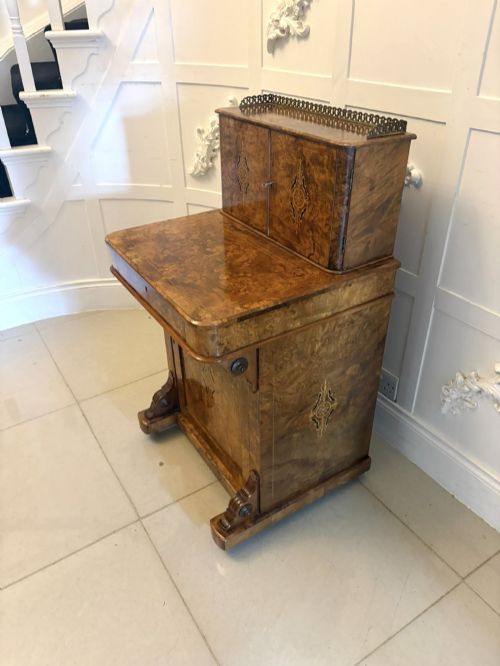
The dating is loose. Of 372 listings only 140 carry a clean year, and the word "Edwardian" alone accounts for 178. The dated field stretches from 1800 to 1930, with a tail in the 1890s, 1920s and earlier, and dealers themselves hedge with labels like "Late C19th/early C20th". Secretaire chests, secretaire bookcases and a davenport-style secretaire sit inside the category at its edges.
Where The Range Splits
Timber sets the floor and much of the ceiling. Plain oak and undescribed mahogany bureaux populate the lowest band. Satinwood and rosewood cluster in the upper half, and the rarer woods turn up in ones and twos: kingwood, amboyna, elm, satin walnut, one bureau in walnut and elm together.
Decoration then does the rest. Inlay runs right across the range, so it isn't in itself a marker of anything. Marquetry, in shaped foliate or pictorial veneers, appears in only 14 titles and sits high. Hand-painted satinwood pieces recur at the very top, and chinoiserie surfaces three times in the whole archive.
An upper stage lifts a piece. Cylinder bureau bookcases and astragal-glazed bureau bookcases concentrate above the middle. A named retailer or a label sits above an anonymous piece. Size cuts both ways: "small" appears from the cheapest bracket upward, but genuine miniature and undersized examples get singled out, one bureau bookcase advertised at only 19 inches wide.
Antique Edwardian Bureau Retail Price Guide 2026
Typical UK retail prices for edwardian bureau, calculated from the Sellingantiques database of over a million retail prices indexed since 2003. This retail price guide relies exclusively on Sellingantiques data; no external sources or auction records are used, so the figures do not describe the wider market.
The most expensive Edwardian bureau ever sold on Sellingantiques was a painted satinwood bureau bookcase, in June 2016.
Maple & Co
The Antique Edwardian Bureau Glossary
- Fall front
- The sloping flap that hinges down to make the writing surface. It's the feature that makes a bureau a bureau.
- Bureau bookcase
- A bureau with a glazed or panelled bookcase stage above it. Named in 97 titles, so a common thing to meet.
- Cylinder
- A solid quarter-round cover that rotates back into the carcass instead of dropping as a fall. It turns up in 43 titles.
- Astragal glazed
- Bookcase doors divided by slender moulded glazing bars. Dealers here spell it astragal, astral and astrical.
- Bonheur du jour
- A small lady's writing table with a raised superstructure of small drawers or shelves. Also written "bon heur du jour" and "bureau de dame".
- Crossbanding
- A border of veneer laid across the grain around a panel or drawer front, usually in a contrasting wood.
Antique Edwardian Bureau: Frequently Asked Questions
What wood are Edwardian bureaux usually made from?
Mahogany dominates. It's named in 181 titles, with "inlaid mahogany" alone appearing as a phrase in 53 of them.
Oak is the clear second at 64 titles, often on the Arts & Crafts and hall bureau side. Satinwood and rosewood appear in smaller numbers and sit in the upper half of the range.
Beyond those, kingwood, amboyna, elm and satin walnut show up in ones and twos.
How many come up for sale each year?
Around 37 a year come to market on Sellingantiques.
Ninety different dealers have listed one, so no single dealer defines the category. Stock spreads thin across a lot of hands.
Is a bureau bookcase different from a plain bureau?
A bureau bookcase carries a second stage above the fall, usually glazed with slender bars, sometimes panelled. About a quarter of the titles here name one.
The plain fall-front bureau with no upper stage is the largest single group. Titles for those tend to name nothing but the wood and the form.
Bookcase tops, including cylinder bookcases, concentrate above the middle of the range.
Why are some pieces dated outside the Edwardian period?
The dated field runs from 1800 to 1930, a 130-year spread for a category named after a nine-year reign. Twelve listings are filed simply as "19th Century" and five as "Georgian".
Most pieces carry a period word rather than a year. "Edwardian" alone accounts for 178 listings, with 1900s and 1910s next.
Dealers hedge the boundary themselves, with titles such as "Late C19th/early C20th" and "Early 20th Century".
What is a bonheur du jour?
A small lady's writing table with a raised superstructure of small drawers or shelves above the writing surface. Roughly a tenth of the category takes this form.
Spellings vary in the listings: bonheur du jour, bon heur du jour, bureau de dame, and plain "ladies writing desk". They're a rising share of live stock.
Do unusual or novelty forms turn up?
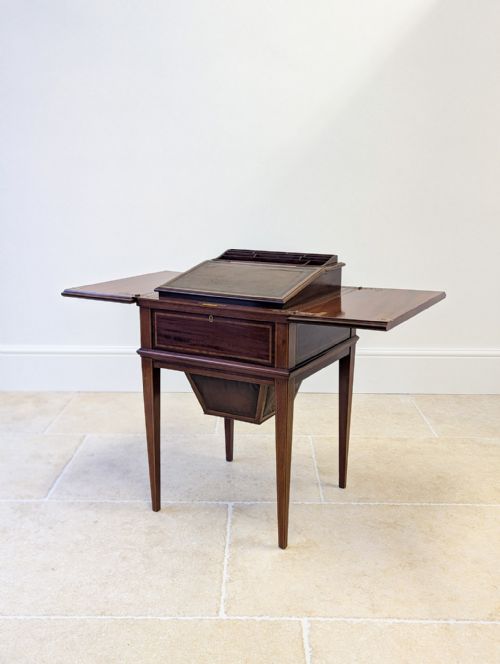
They do, in small numbers. Two titles describe a "moving interior", a mechanical fitting that appears nowhere else in the archive, and one oak bureau has been catalogued as a metamorphic drinks cabinet in bureau form.
Miniature and undersized pieces are a recurring curiosity, including a child's bureau desk and a miniature cylinder display desk.
Irish and Dublin origins appear twice, against 11 titles naming London.