
Antique French Bureau
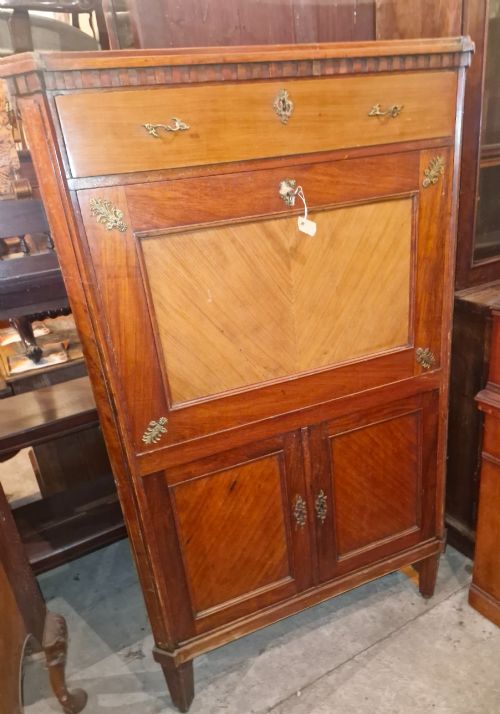
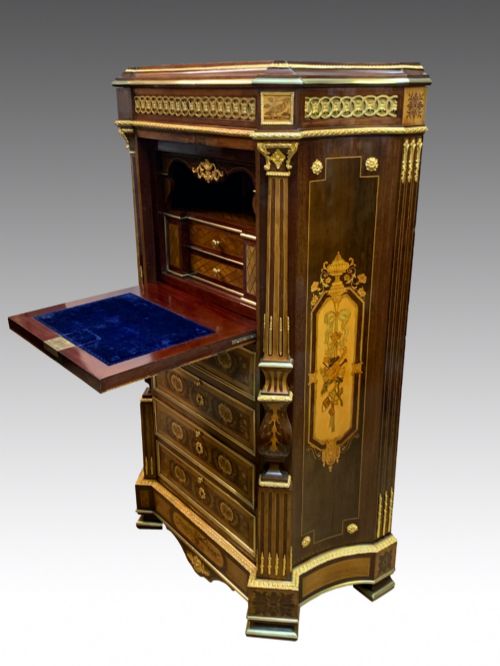
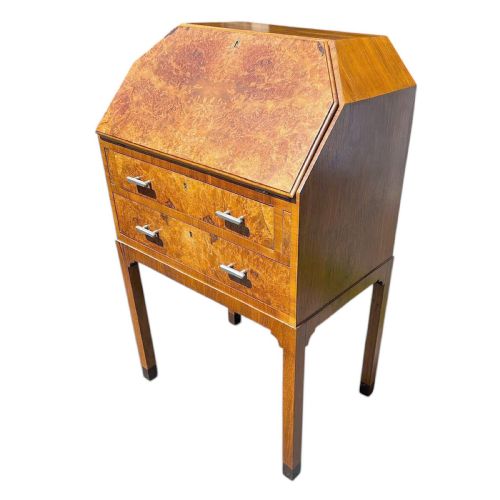
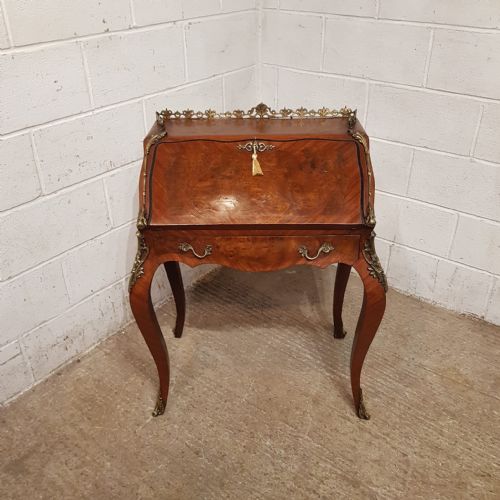
French writing furniture built around a fall-front, cylinder or raised writing compartment, made to hold letters, papers and small valuables in a private room rather than a study.

What You're Looking At
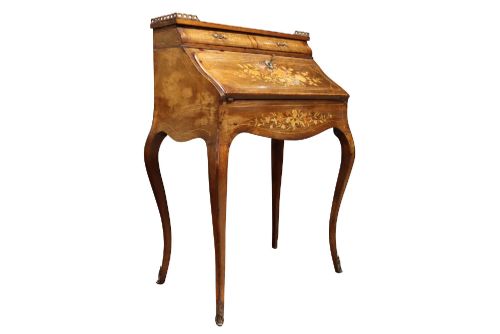
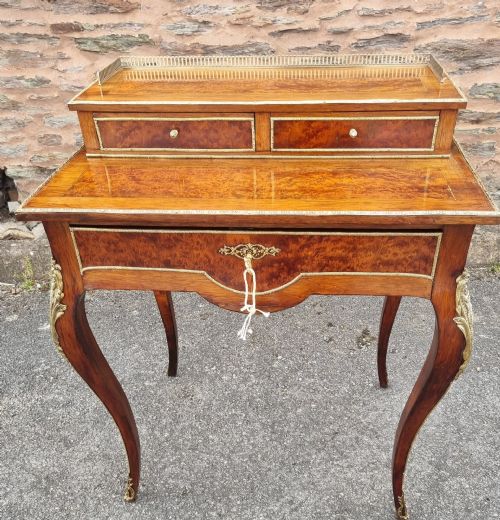
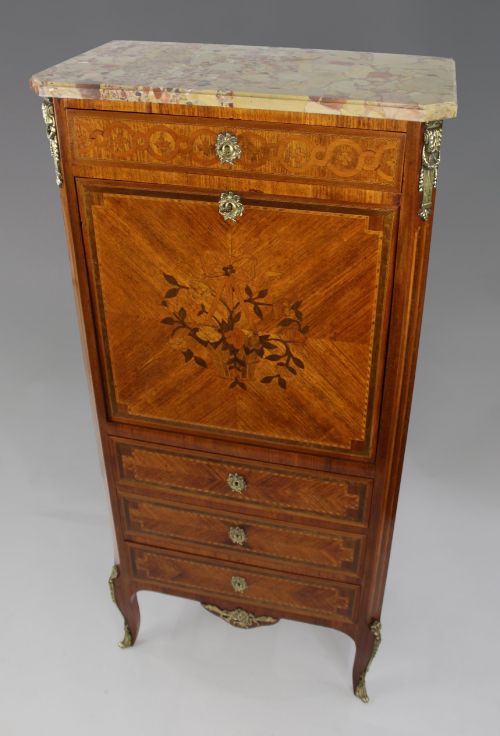
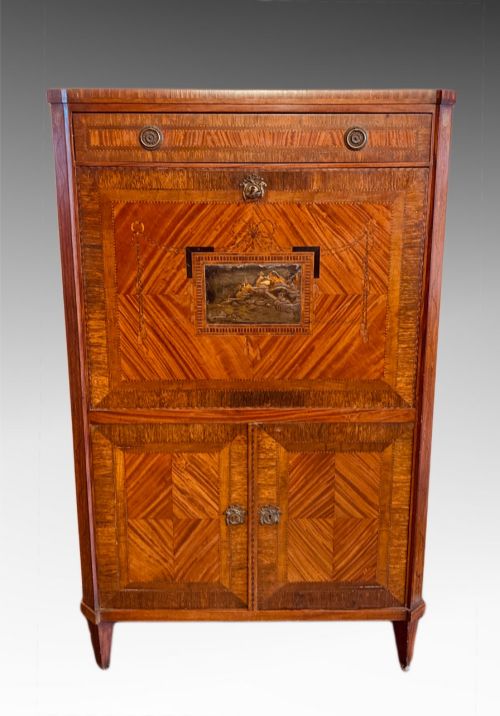
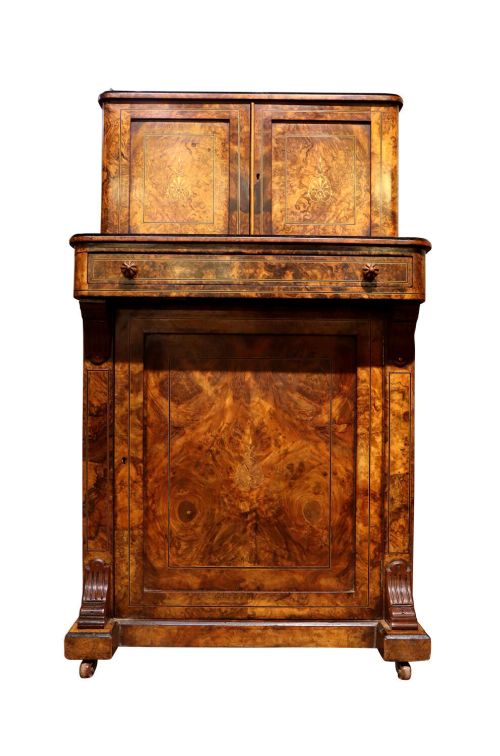
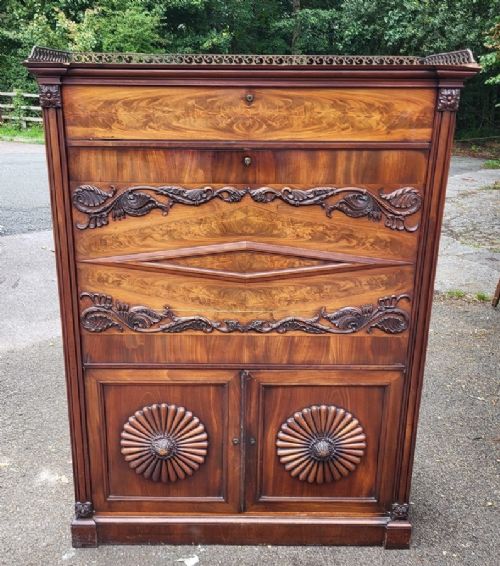
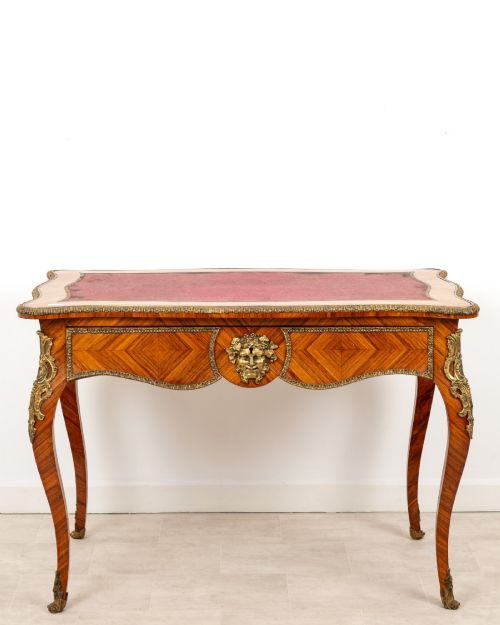
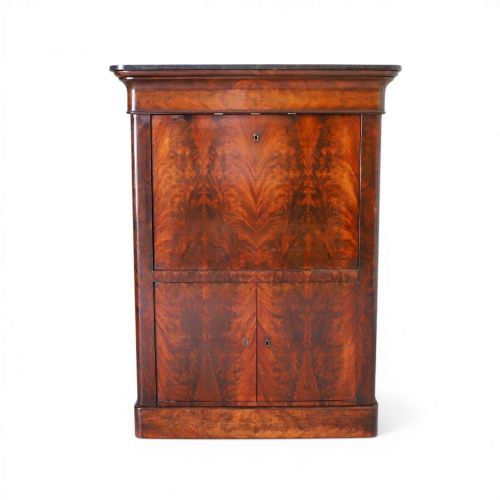
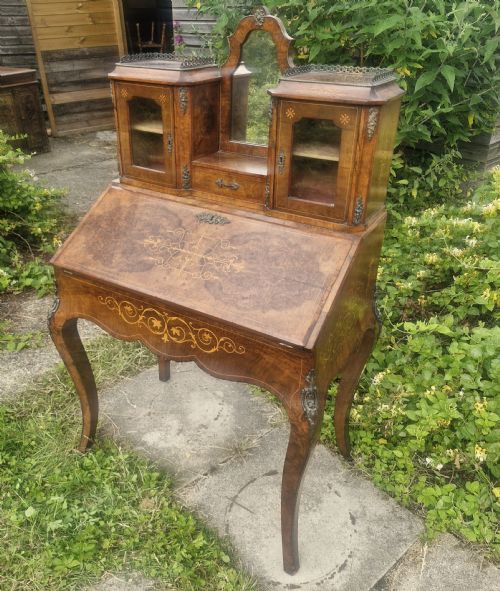
Four names cover overlapping objects in this category: bonheur du jour, bureau de dame, secretaire and escritoire. Titles regularly use two of them at once. Nine listings write it with the accent, secrétaire. The physical range runs from small veneered ladies' writing tables with a gallery or mirrored superstructure to tall upright fall-front cabinets standing over drawers.
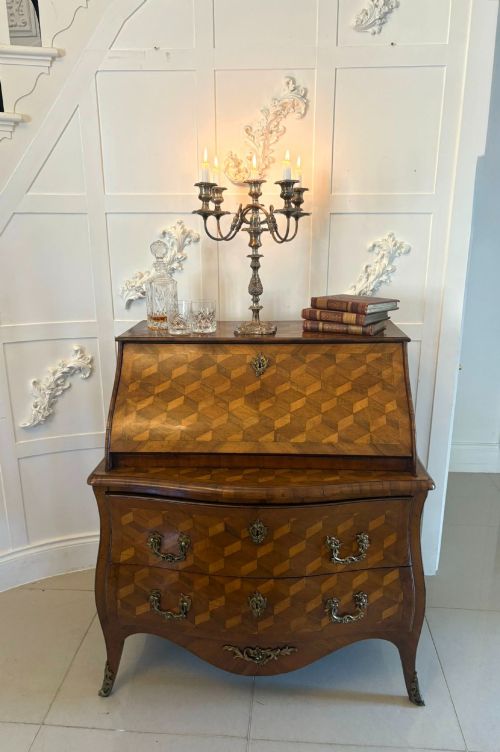
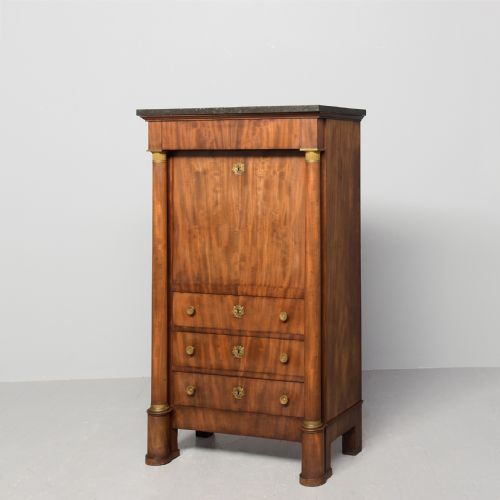
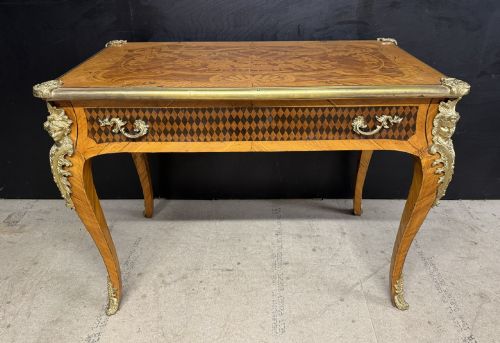
The small ladies' desk is the largest single group, roughly a third of what comes through. Bonheur du jour and bureau de dame between them account for it, and kingwood or walnut carries most of the veneer. The upright fall-front group, secretaire à abattant and escritoire, is about a quarter. Behind those sit smaller bodies of work: bombé secretaire chests with marble tops, flat-topped bureau plat writing tables, and cylinder, roll-top and tambour desks.
The forms took shape in the eighteenth century and were revived and made in quantity through the nineteenth. Only thirteen listings on Sellingantiques are dated to the 1700s, against eighty-seven given simply as 19th Century. Where a decade is stated it tends to fall in the 1880s, 1860s or 1890s, with a real tail running into the 1900s, 1920s and 1930s.
Louis XV, Louis XVI, Empire, Napoleon III, Louis Philippe and Art Deco all appear in titles, frequently written as 'style' or 'revival'. A Louis name in a title is a description of taste rather than a date. Around forty-four come to market in a year and a hundred-odd different dealers have listed one, so this is widely stocked rather than a specialist corner.
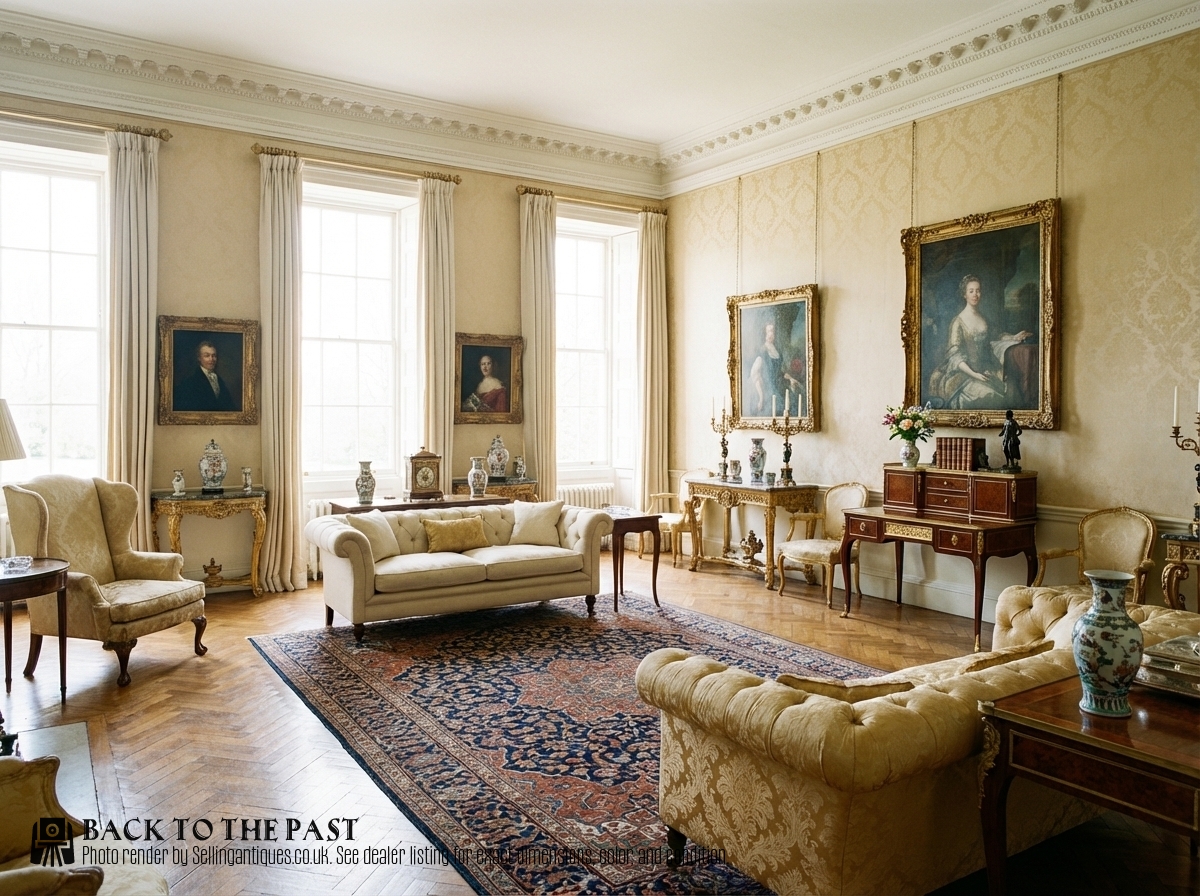
Where The Range Splits
Decoration does most of the work. A title that names marquetry, parquetry or inlay sits above one that names nothing at all, and the plainest entries here are the bare 'French mahogany bureau' or 'French bureau de dame' with no decorative term attached. Ormolu and gilt-metal mounts push a piece up too; they turn up throughout the category but concentrate above the middle.
The wood named in the title tracks the same line. Kingwood is far and away the commonest, and it, along with amboyna, tulipwood, satinwood and burr walnut, sits in the higher titles. Amboyna and the rest appear only a handful of times each. Plain mahogany and oak sit lower.
At the top, two things separate a piece from the rest of the field. Porcelain plaques and painted or varnished panels are the rarity that lifts one clear: only eleven titles mention porcelain and eight mention plaques, and they cluster at the highest end, usually paired with kingwood. The other is a name, whether stated outright or given as 'in the manner of'. Within the chest branch, a marble top over a bombé front stands above the plain fall-front examples.
Retail Price Guide 2026
Typical UK retail prices for french bureau, calculated from the Sellingantiques database of over a million retail prices indexed since 2003. This retail price guide relies exclusively on Sellingantiques data; no external sources or auction records are used, so the figures do not describe the wider market.
Kingwood is the timber named most often in these titles. Amboyna, tulipwood, satinwood, cherrywood, mulberry, cedar and Gonçalo Alves each turn up only a handful of times.
The Antique French Bureau Glossary
- Bonheur du jour
- Small ladies' writing table with a raised superstructure of shelves or small drawers above the top; written bonheur du jour or bonheur de jour in titles here.
- Bureau de dame
- A lady's writing desk, used more or less interchangeably with bonheur du jour across these listings.
- Secrétaire à abattant
- Tall upright cabinet whose front falls forward to make the writing surface, with drawers or a cupboard below.
- Escritoire
- General term used across the category for a fall-front writing cabinet, often described as ormolu-mounted.
- Bureau plat
- Flat-topped writing table with no superstructure. A small minority of what comes through.
- Bombé
- Outward-swelling front or sides. Fifteen titles use it, nine of them phrased 'bombe shaped', and it belongs almost entirely to the marble-topped secretaire chests.
Frequently Asked Questions
What is a bonheur du jour?
A small ladies' writing table with a raised superstructure of shelves or little drawers standing above the top. Some carry a mirrored back or a gallery.
It is the single largest group in this category, roughly a third of everything listed. Kingwood and walnut are the veneers that recur most on them.
Why do the same desks have four different names?
Bonheur du jour, bureau de dame, secretaire and escritoire describe overlapping objects, and titles regularly use two of them at once. Bureau de dame and bonheur du jour are used more or less interchangeably.
Secretaire and escritoire both point at the upright fall-front form. Nine listings write it with the accent as secrétaire.
Are these desks all made in France?
Not all of them. Several titles say 'in the French style', and some are described as Continental or English.
The category covers French and French-taste writing furniture together, which is why the style labels matter more than the country in a title.
Does a Louis XV label mean an eighteenth-century date?
Usually not. Louis XV, Louis XVI, Empire, Napoleon III and Louis Philippe are frequently written as 'style' or 'revival' in these titles, describing taste rather than period.
Only thirteen listings on Sellingantiques are dated to the eighteenth century. Eighty-seven are given simply as 19th Century, and thirty as Victorian.
Which woods turn up most often?
Kingwood leads by a wide margin, with walnut close behind, then rosewood and mahogany. Marquetry and inlay are named on a good number of them.
Amboyna, tulipwood, satinwood, cherrywood, mulberry, fruitwood, cedar and Gonçalo Alves each appear only a handful of times.
How often do porcelain-plaque examples appear?
Rarely. Eleven titles mention porcelain and eight mention plaques across the whole sample, and they cluster at the top of the range.
They tend to be paired with kingwood and gilt-metal mounts. Painted and varnished panels sit in the same upper band.