
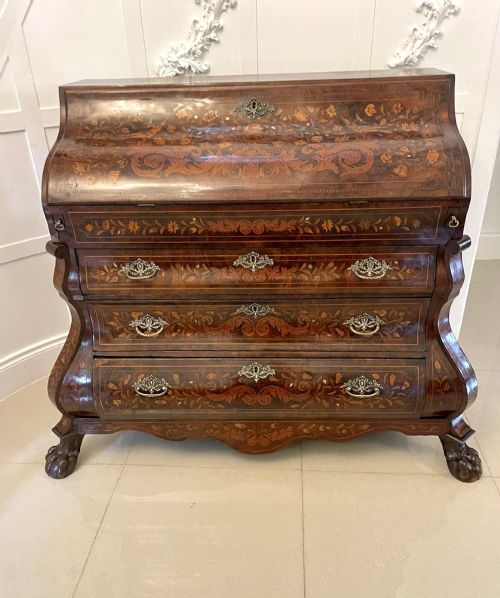
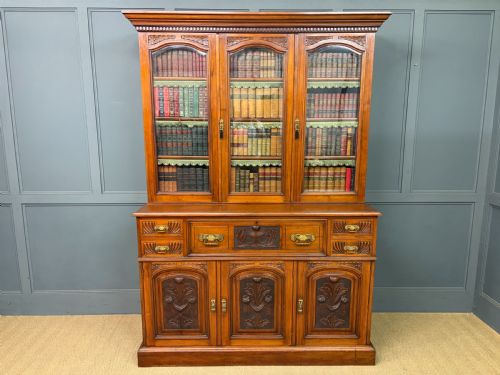

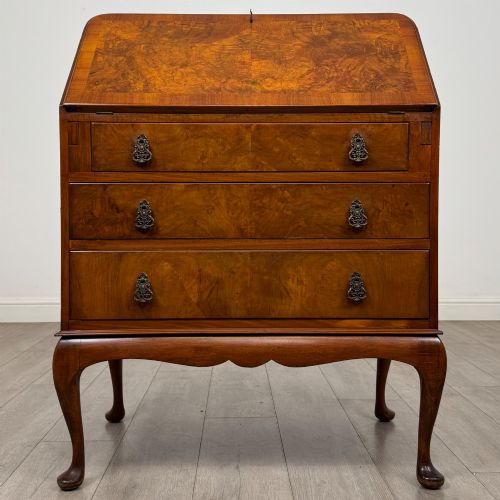
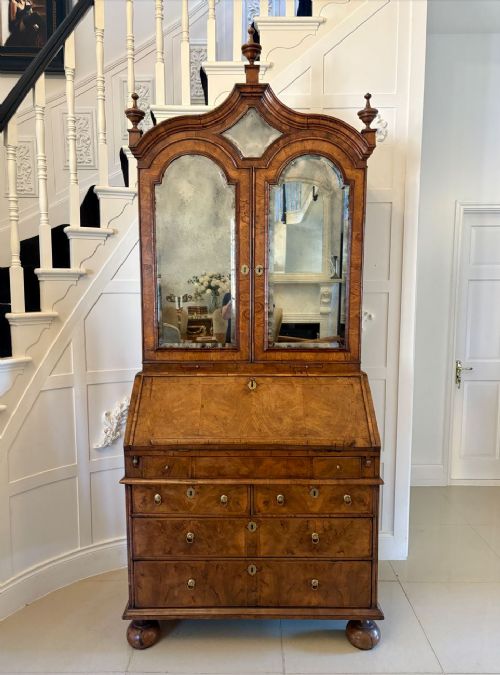
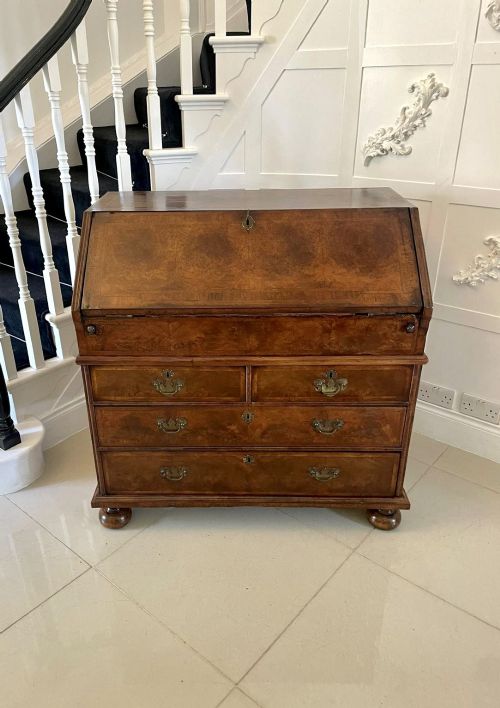
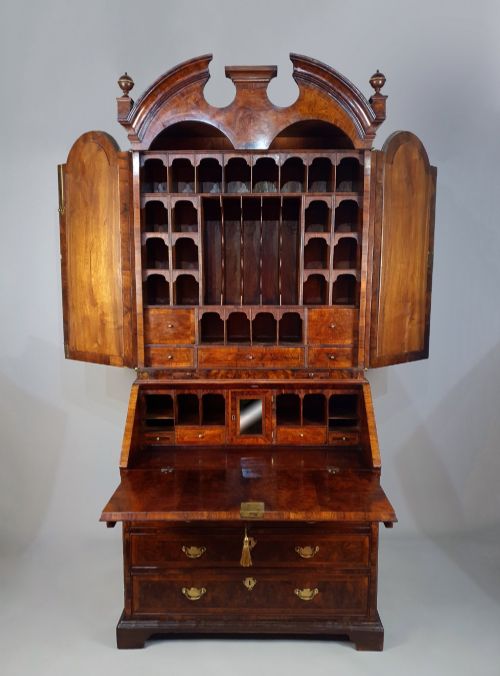
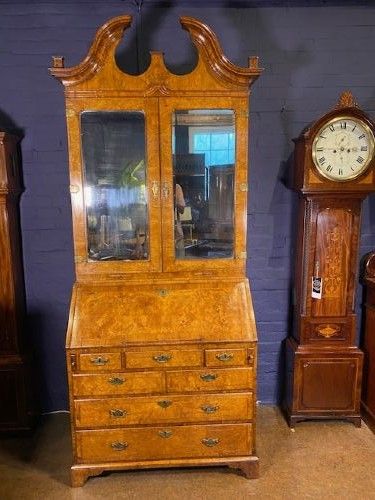
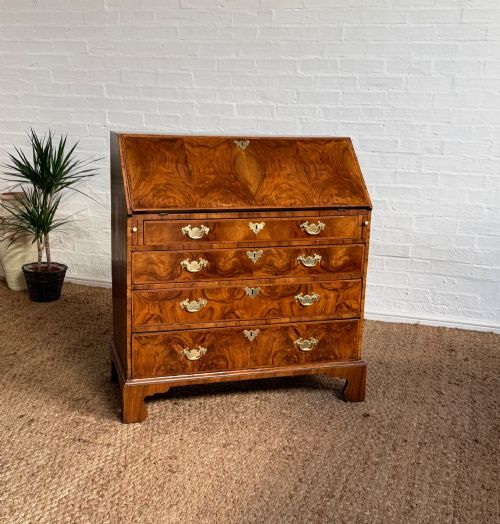
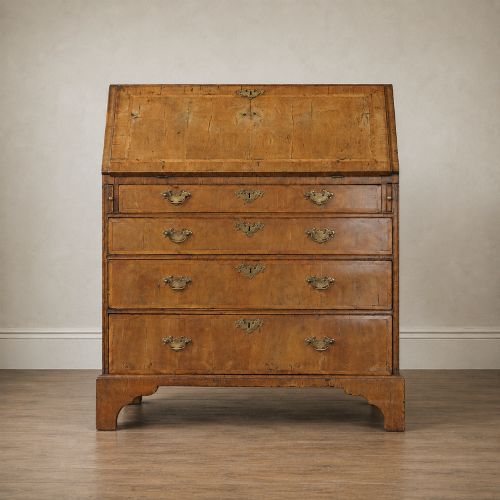
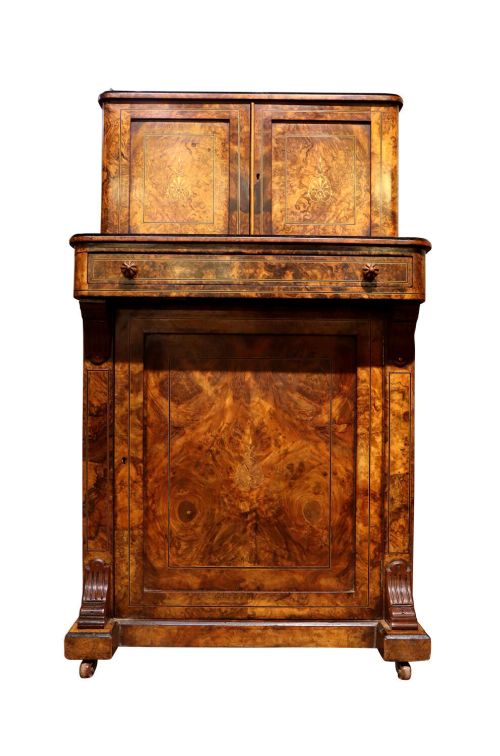
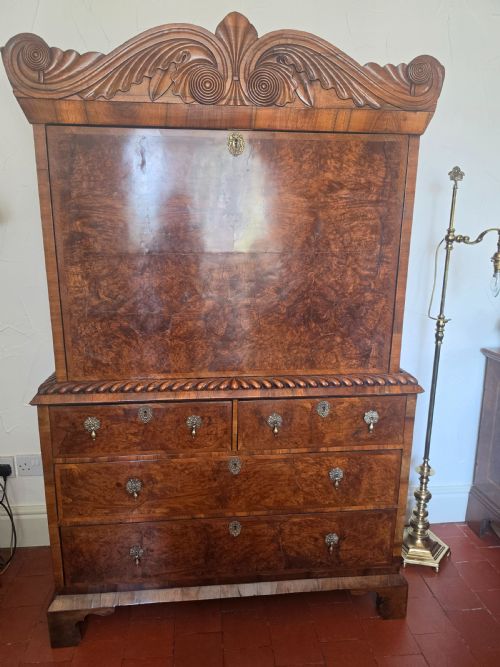
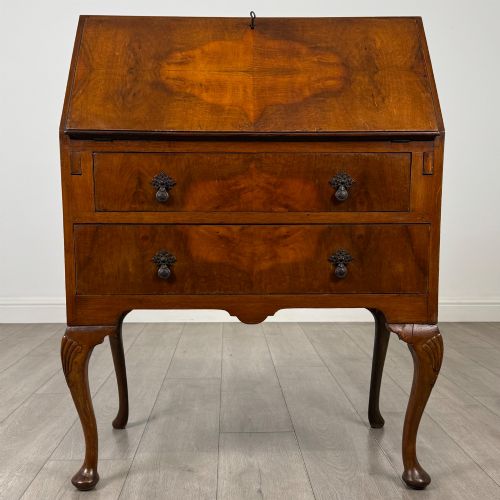
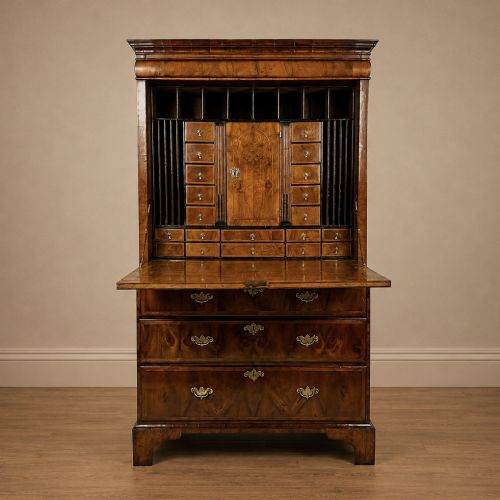
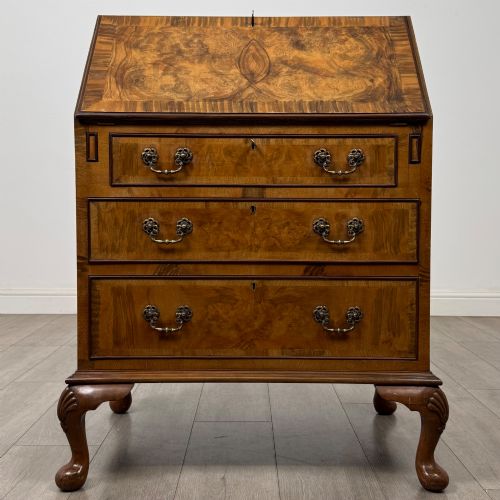
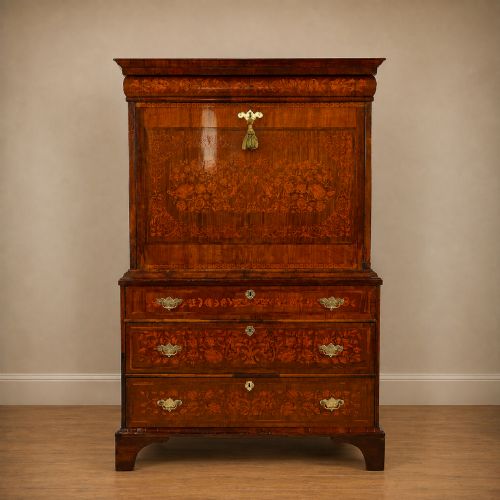
Brown Walnut Writing Cabinet
These brown walnut writing cabinet pieces combine practical storage with fitted desk spaces, offering a handsome focal point for any study.
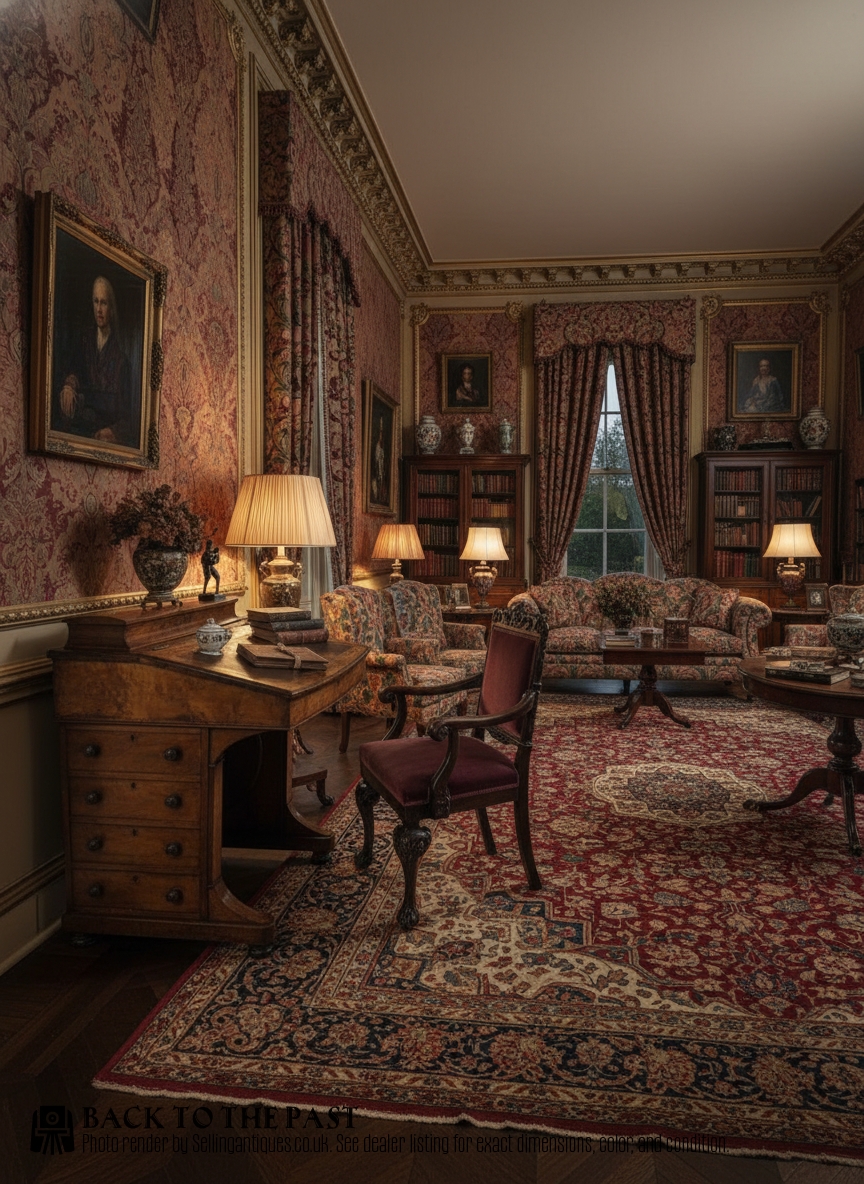
Identifying brown walnut writing cabinet examples
A brown walnut writing cabinet encompasses bureau bookcases, escritoires, and Davenport desks designed for correspondence and storage. These forms emerge across the Georgian, Queen Anne, and Victorian periods, bringing substantial cabinetry into domestic spaces.
The pieces listed on this page span several decades from the early eighteenth century through to the Victorian era. Bureau bookcases dominate the offerings, pairing shelved upper sections with fitted writing drawers below.
Materials and construction methods
Cabinet makers utilised walnut, burr walnut, and figured walnut veneers to create striking grain patterns across flat surfaces and fall-front writing flaps. These timbers provide a warm brown tone that deepens with age and handling.
Hardware elements incorporate brass for hinges, escutcheons, and drawer pulls, while internal compartments occasionally integrate leather writing surfaces. Selected pieces also feature glass panels within upper bookcase doors to display contents.
Retail Price Guide 2026
Typical UK retail prices for brown walnut writing cabinet, calculated from the Sellingantiques database of over a million retail prices indexed since 2003. This retail price guide relies exclusively on Sellingantiques data; no external sources or auction records are used, so the figures do not describe the wider market.
Secret drawers hidden within early writing desks let owners stash fortunes or miniature love letters out of sight.
Judging quality and craftsmanship
Superior examples rely on the careful selection of figured or burr walnut veneers, where grain patterns mirror across panels to create balanced visual rhythm. Lesser pieces display simpler timber selections with less attention to veneer symmetry.
The interior fitments of writing sections reveal the maker's hand through secret compartments, pigeonholes, and small drawers constructed with precise joinery. The sophistication of these internal configurations distinguishes standard desks from exceptional cabinet work.
The Brown Walnut Writing Cabinet Glossary
- Escritoire
- A writing cabinet featuring a fall-front flap that conceals small drawers and pigeonholes when opened. This form provides both display space and a private writing surface.
- Bureau bookcase
- A dual-purpose piece combining a lower sloping desk or bureau with an upper cabinet enclosed by doors. These large items served as libraries and writing desks combined.
- Burr walnut
- Timber taken from walnut tree growths that produce swirling, highly decorative grain patterns. Cabinet makers prized this material for drawer fronts and cabinet panels.
- Figured walnut
- Wood grain displaying distinctive natural patterns and tonal variations. Craftsmen arranged these veneers symmetrically to enhance the visual appeal of writing furniture.
Frequently Asked Questions
What is a brown walnut writing cabinet?
A brown walnut writing cabinet is a piece of antique furniture designed for correspondence, featuring a writing surface and enclosed storage. These items range from Davenport desks to large bureau bookcases.
They combine practical workspace with shelving or drawers, utilising walnut timbers to achieve a decorative finish.
How do I date a walnut bureau bookcase?
Dating relies on observing structural characteristics, hardware styles, and timber treatments across different eras. Pieces from the early eighteenth century often feature figured veneers and distinct internal layouts.
Victorian examples introduce alternative proportions and mechanical adjustments compared to their Georgian predecessors.
Where were these writing cabinets used?
These pieces served as functional furniture in private studies, libraries, and principal rooms of grand homes. They provided secure storage for letters, documents, and books.
The fitted interiors allowed owners to conduct correspondence in private before concealing their work behind locked doors.
How do I care for antique walnut furniture?
Maintaining walnut cabinetry requires stable room temperatures away from direct sunlight and heat sources to prevent timber movement. Gentle cleaning preserves the natural patina developed over centuries.
Avoid harsh chemical polishes and instead use appropriate wax applications suitable for antique wood finishes.