
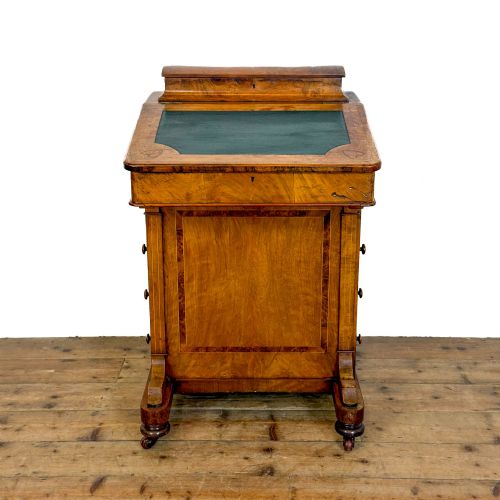


Inlaid Walnut Davenport
An inlaid walnut davenport offers a compact writing station with rich timber figuring and marquetry detail.

What an inlaid walnut davenport is
An inlaid walnut davenport is a compact writing desk originating primarily in the Victorian era, combining a sloped writing surface with a set of drawers. Buyers searching for an inlaid walnut davenport seek a small-scale piece of period furniture that functions as a practical writing desk while adding decorative presence to a room.
The majority of pieces encountered on this page date from the nineteenth century, specifically spanning the Victorian period through to the Edwardian era. These desks frequently incorporate burr walnut veneers, marquetry decoration, and brass hardware.
Standard forms include freestanding versions and those fitted with four drawers, while more specialised iterations incorporate bureau cabinets, pop-up mechanisms, piano tops, or open shelves. Each variation provides a distinct internal arrangement while maintaining the compact pedestal footprint characteristic of the form.
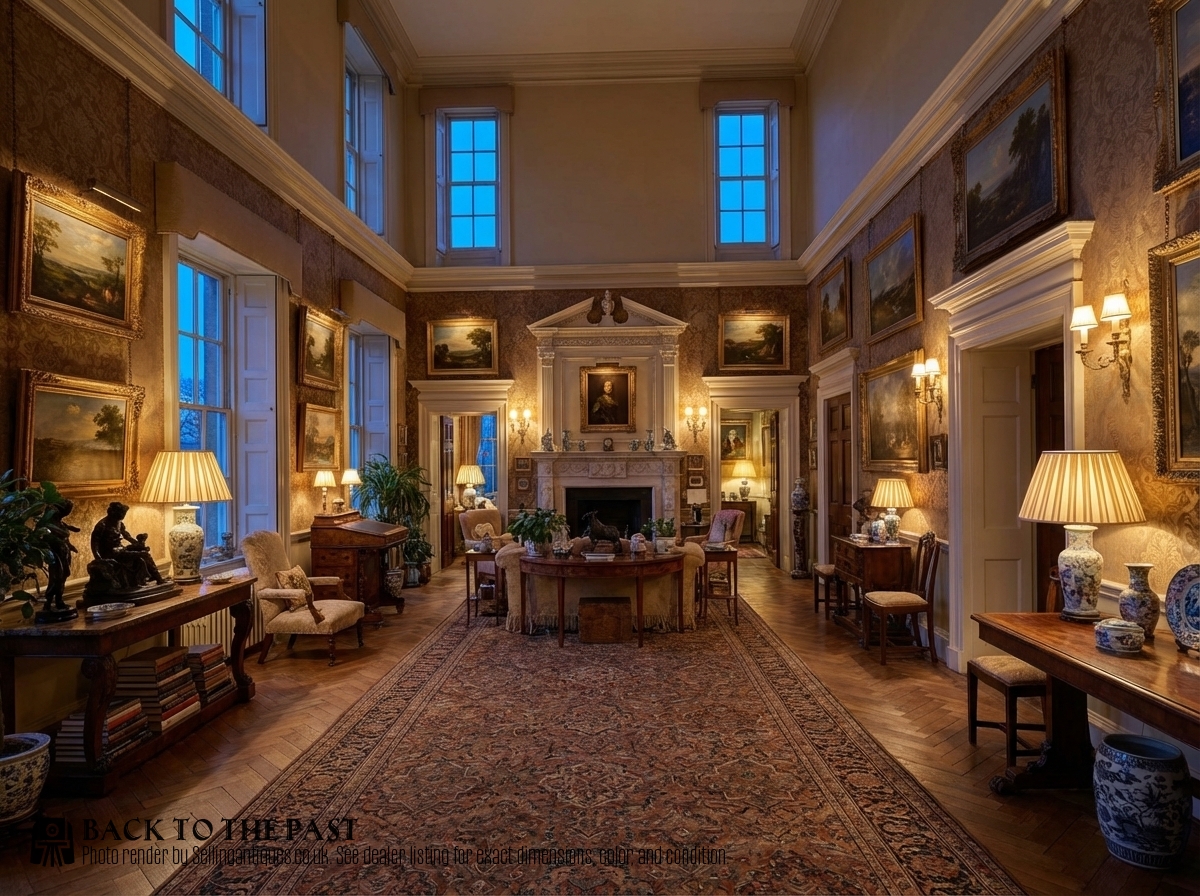
Distinctions in quality
Quality in these desks is determined by the selection and figuring of the burr walnut veneer, the precision of the marquetry inlay, and the crispness of the cabinetwork. Finer examples display balanced grain matching across multiple surfaces and intricate, well-executed floral or geometric inlay.
Retail Price Guide 2026
Typical UK retail prices for inlaid walnut davenport, calculated from the Sellingantiques database of over a million retail prices indexed since 2003. This retail price guide relies exclusively on Sellingantiques data; no external sources or auction records are used, so the figures do not describe the wider market.
Some nineteenth-century makers hid secret compartments inside, ensuring your love letters stayed safer than your biscuits.
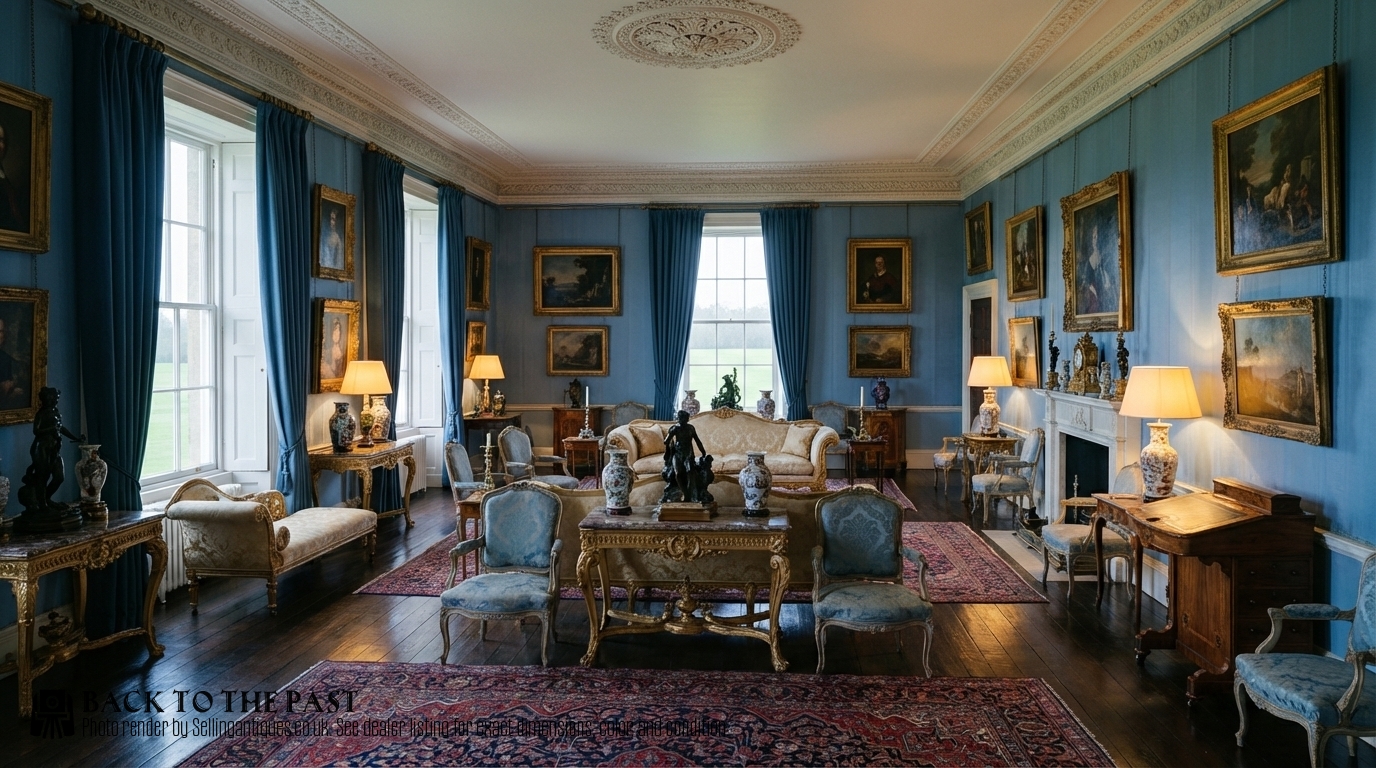
Johnson & Appleyard·James Shoolbred & Co·Gillows
The Inlaid Walnut Davenport Glossary
- Davenport
- A compact pedestal desk featuring a sloping writing surface hinged to reveal storage, typically supported by a block of drawers on one side.
- Burr walnut
- Walnut timber taken from a tree growth or burl, prized for its highly figured, swirling grain patterns used in decorative veneering.
- Marquetry
- The art of applying pieces of veneer to a structure to form decorative patterns, pictures, or floral designs.
- Crossbanding
- A narrow strip of veneer applied around the border of a panel, arranged so the grain runs perpendicular to the central field.
Frequently Asked Questions
What is a davenport desk used for?
A davenport desk serves as a compact writing and correspondence station. The sloping top provides a surface for writing letters, while internal compartments store paper and writing implements.
Drawers positioned down one side offer supplementary storage for documents and small items. Because of their small footprint, they were frequently placed in parlours, drawing rooms, or bedrooms rather than dedicated libraries.
How do I identify a Victorian davenport?
Victorian davenports are identified by their nineteenth-century construction methods, typical timber choices such as walnut and burr walnut, and characteristic proportions. They frequently incorporate brass handles, leather-lined writing slopes, and marquetry inlay.
Later Victorian and Edwardian examples may include open shelves, serpentine fronts, or mechanical pop-up stationery compartments while retaining the core pedestal form.
Are davenport desks comfortable for daily writing?
The writing slope on a davenport is fixed at an angle, which suits brief correspondence rather than extended work. The kneehole space beneath is often restricted or absent, as drawers occupy one entire side of the pedestal.
Using one day-to-day depends on personal preference and the height of the chair paired with the desk. Most owners use them for occasional writing and display rather than heavy administrative tasks.