


Piano Top Davenport
A piano top davenport is a clever nineteenth-century writing desk with a rising interior compartment, prized for combining compact storage with mechanical ingenuity.
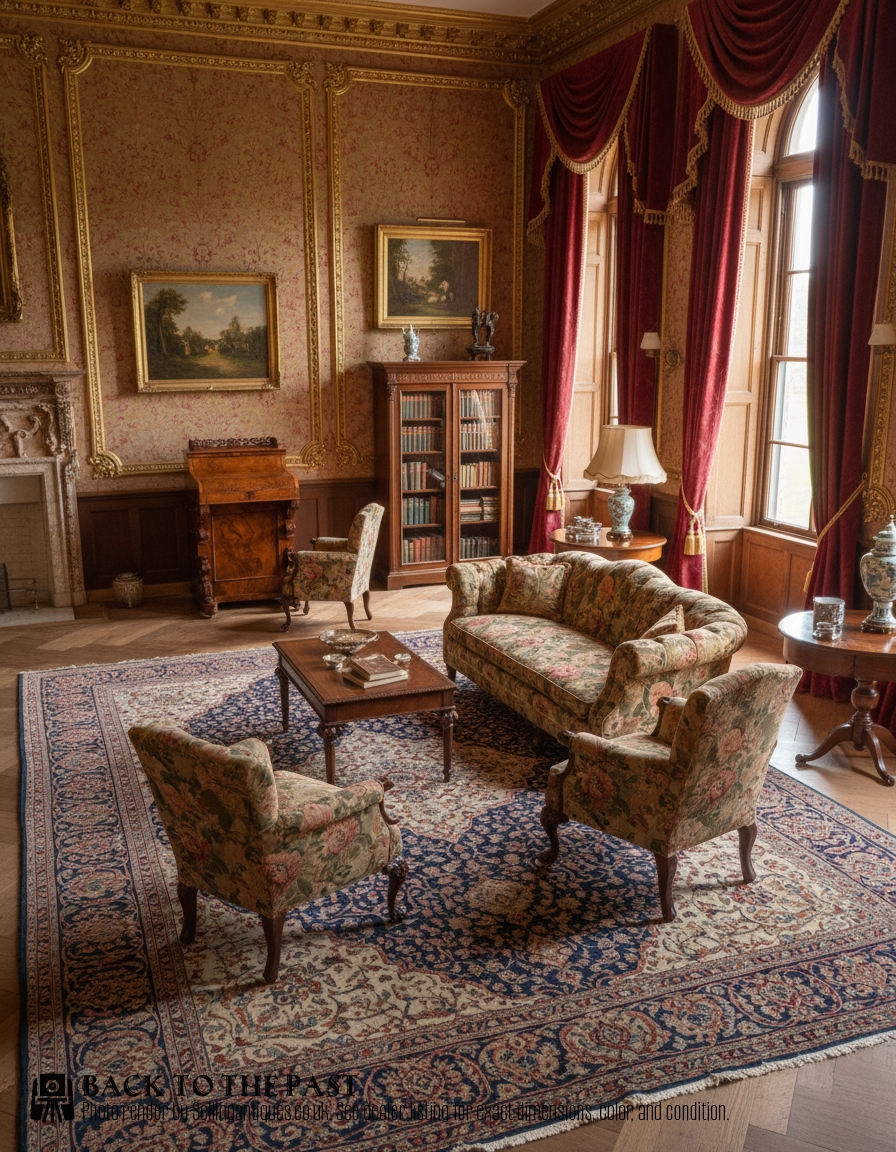
Piano Top Davenport
A piano top davenport is a compact writing desk originating from the Victorian era, built predominantly during the mid-nineteenth century around eighteen fifty to eighteen seventy. The form takes its name from the sloping, cylinder-like lid reminiscent of a piano fall, which conceals an interior writing surface and stationery fittings.
The version most commonly encountered on this page is constructed from burr walnut, often embellished with boxwood inlay or floral marquetry. These desks typically incorporate a pop-up mechanism that raises small drawers or compartments when the main lid is opened.
Collectors seek out these desks for their ingenious space-saving design and complex internal mechanics. They function as both decorative furniture and practical writing stations within a study or drawing room.
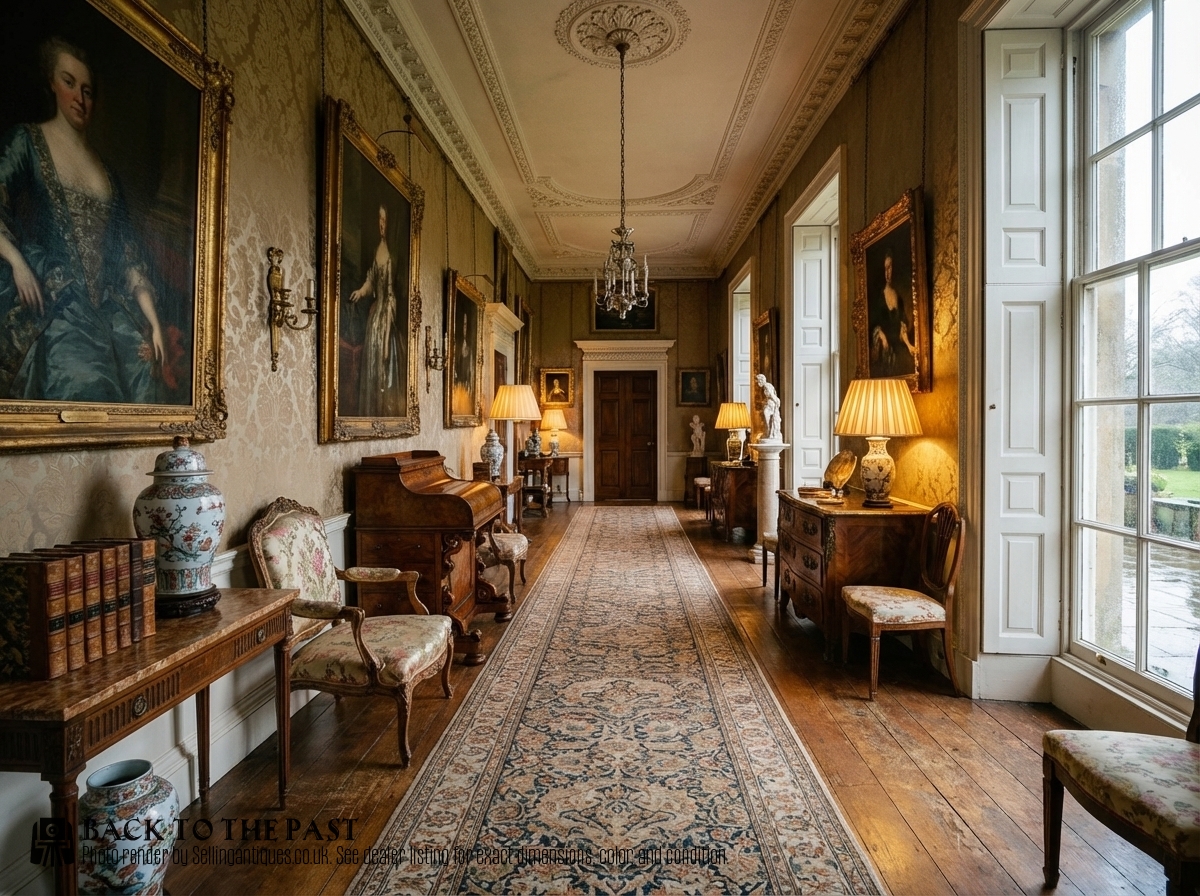
How they were made
Cabinet makers built the primary carcass using walnut, applying highly figured burr walnut veneers to the exterior surfaces to create striking grain patterns. Boxwood inlay and floral marquetry were frequently set into the timber to provide geometric and botanical contrast.
The distinctive pop-up mechanism relied on concealed springs, weights, and brass fittings that synchronised the movement of the cylinder lid with the rising interior compartments. Leather writing surfaces were inset into the pull-out slopes, often bordered with gold tooling.
Internal drawers and side compartments required precise carpentry to operate smoothly within a restricted footprint. Brass hardware, including castors and locks, completed the construction of these elaborate writing desks.
Piano Top Davenport Retail Price Guide 2026
Typical asking prices for piano top davenport among the pieces listed under this phrase on Sellingantiques today, from the lower quarter to the upper quarter. They describe what is for sale here now, not the wider market.
Every listed piece utilises walnut, with burr walnut serving as the dominant veneer across both Victorian and mid-Victorian examples.
What varies in quality
The sophistication of the internal mechanism largely determines the status of a piano top davenport. Desks with smooth, reliable pop-up action demonstrate superior original engineering compared to stiffer or modified mechanisms.
The selection and matching of the burr walnut veneer dictate visual appeal across the exterior surfaces. Finer examples display carefully aligned grain patterns and crisp, undamaged marquetry or boxwood stringing.
The integrity of the secondary timbers and the original leather writing surface contribute to the overall standard of preservation. Pieces retaining their fitted interior stationery compartments command greater interest from collectors.
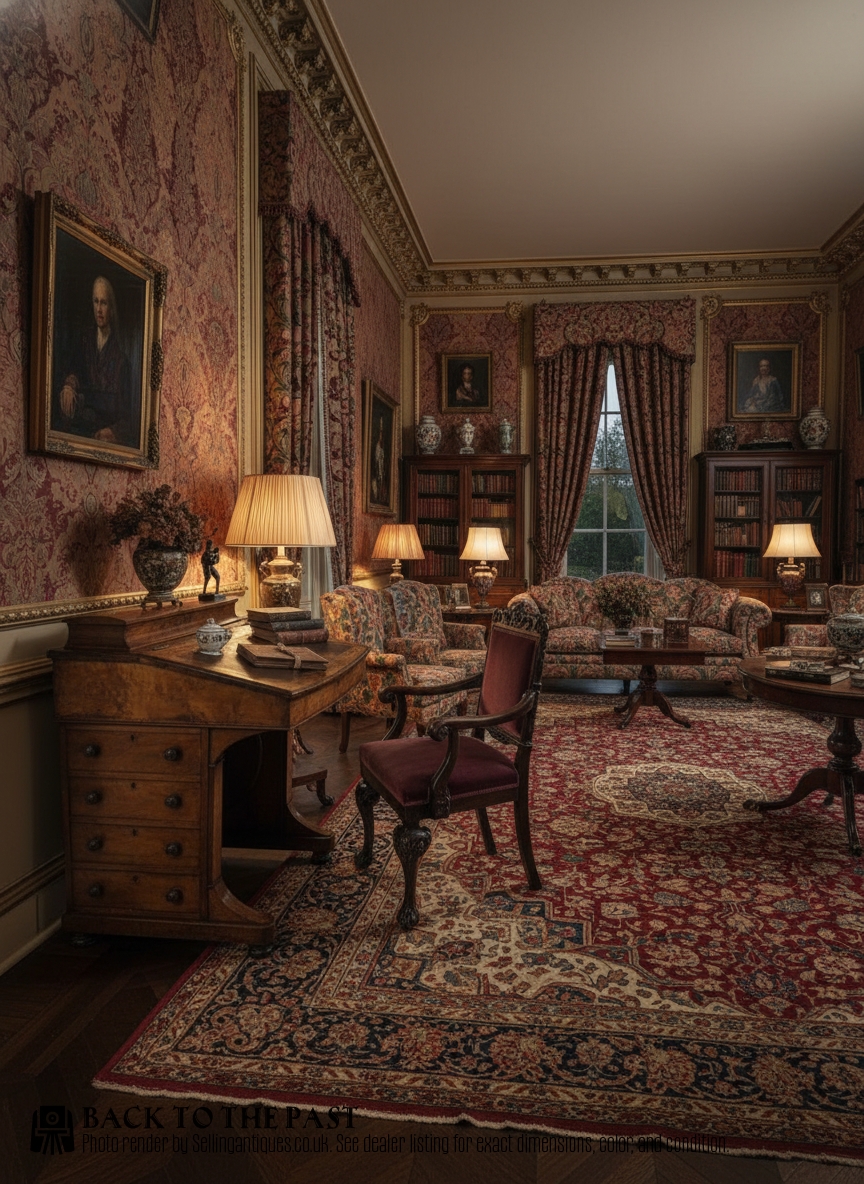
James Shoolbred and Co
The Piano Top Davenport Glossary
- Burr walnut
- A figured wood veneer harvested from the growth warts of walnut trees. It yields swirling, highly decorative patterns across the desk exterior.
- Pop-up mechanism
- The internal spring-loaded or weighted assembly that causes stationery compartments to rise when the main cylinder lid is opened. This ingenious system defines the piano top variety.
- Marquetry
- Inlaid pieces of wood veneer fitted together to form decorative floral or pictorial designs. It appears on the lids and panels of many Victorian examples.
- Boxwood inlay
- Narrow strips or motifs of pale boxwood set flush into darker walnut surfaces. This technique creates sharp linear borders and geometric patterns.
Piano Top Davenport: Frequently Asked Questions
How does the piano top mechanism work?
The mechanism connects the sliding cylinder lid to an internal platform via hidden levers or counterweights. Opening the desk automatically lifts the concealed stationery compartments into view.
When the lid is closed, the internal boxes descend back into the body of the desk. This coordinated movement protects the writing supplies while saving space.
What periods do these desks date from?
These writing desks date almost entirely from the Victorian era, specifically between eighteen fifty and eighteen seventy. Mid-Victorian cabinet makers produced the vast majority of surviving examples.
Stylistic shifts during this twenty-year window are subtle, though the presence of floral marquetry often points towards the middle decades of the nineteenth century.
Where were davenports used in the home?
Owners placed these compact desks in drawing rooms, boudoirs, or studies where floor space was at a premium. They served as personal writing desks for correspondence and record keeping.
Because all sides were finished for display, they frequently stood away from walls rather than being pushed flat against them.