
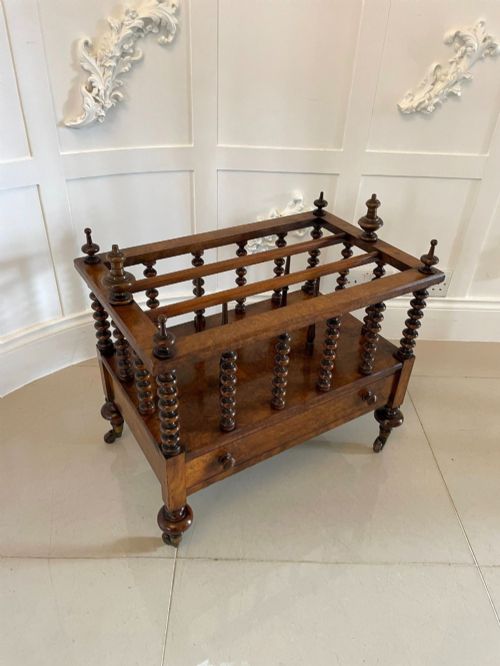
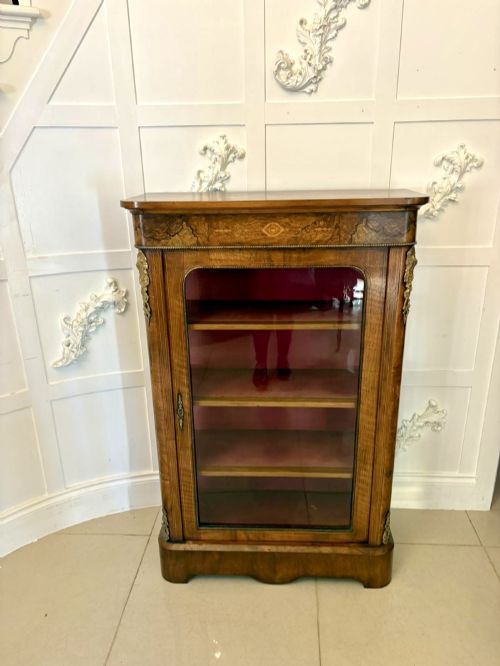
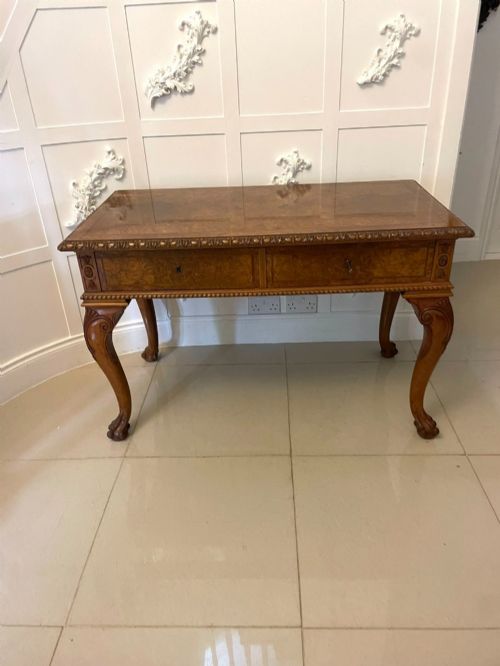
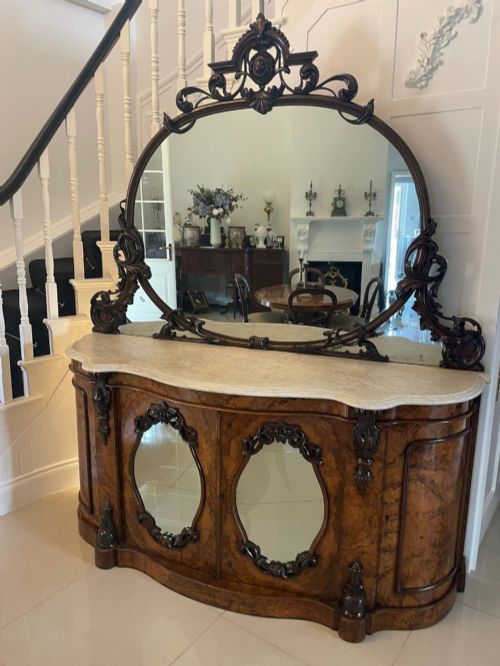
Victorian Burr Walnut
Victorian burr walnut brings warmth and complex grain patterns into rooms through tables, cabinets and desks made during the nineteenth century.
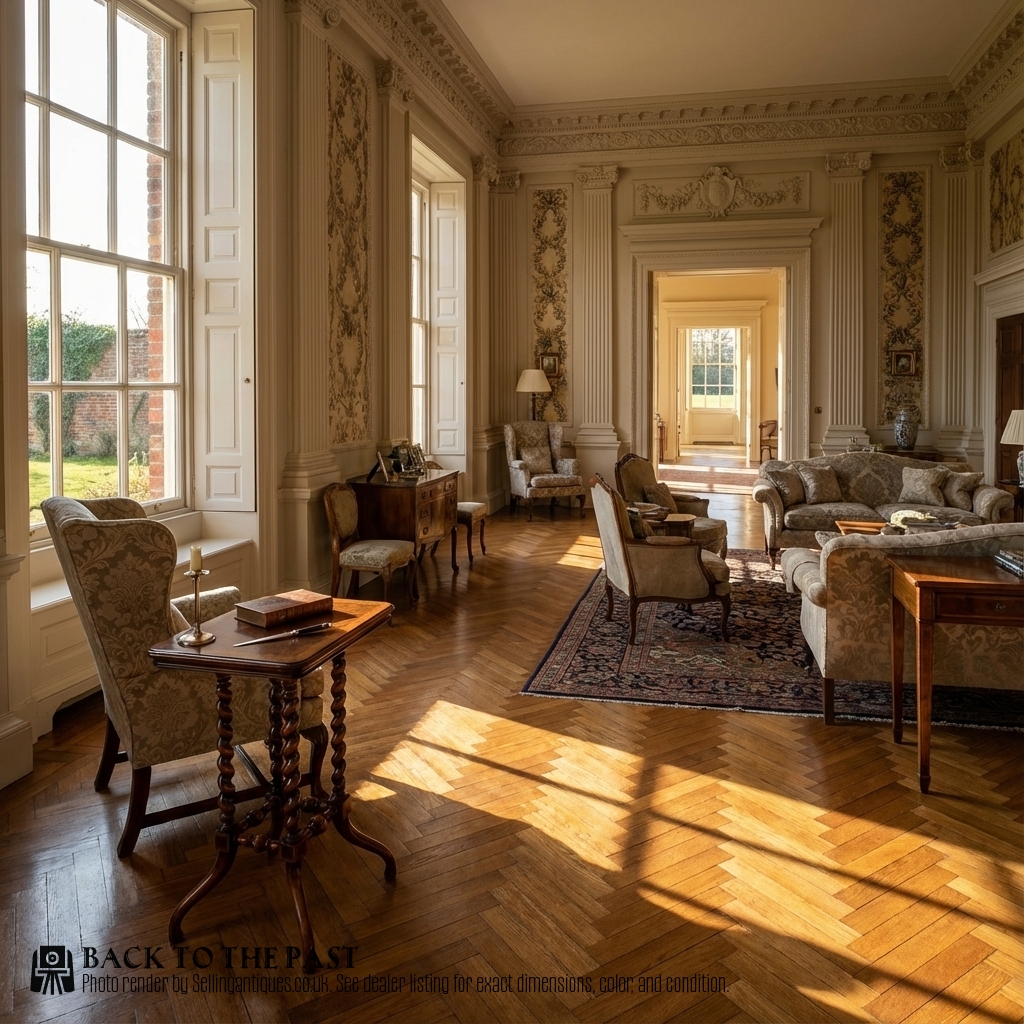
Victorian Burr Walnut
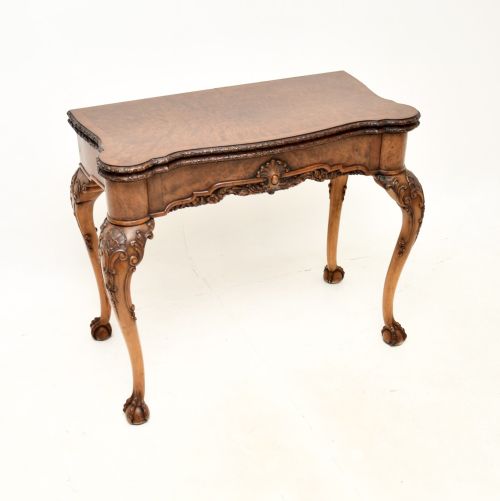
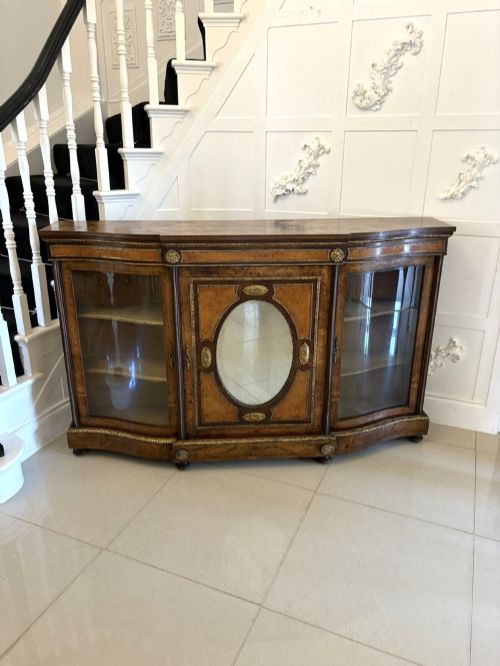
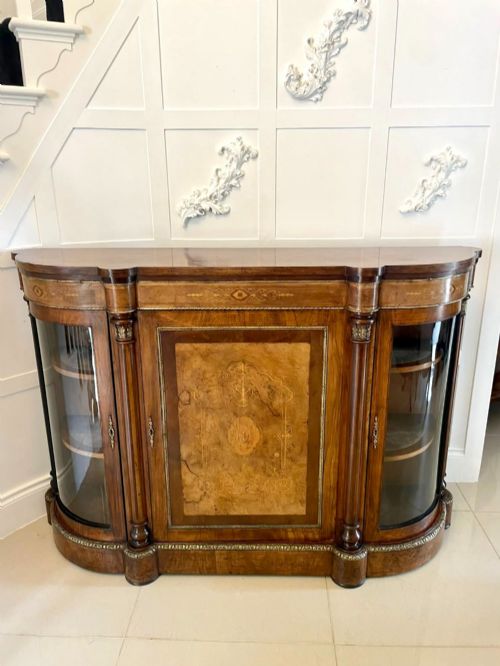
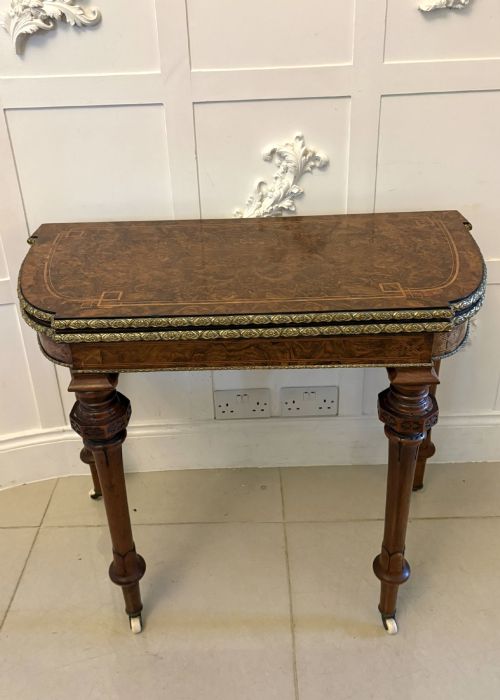
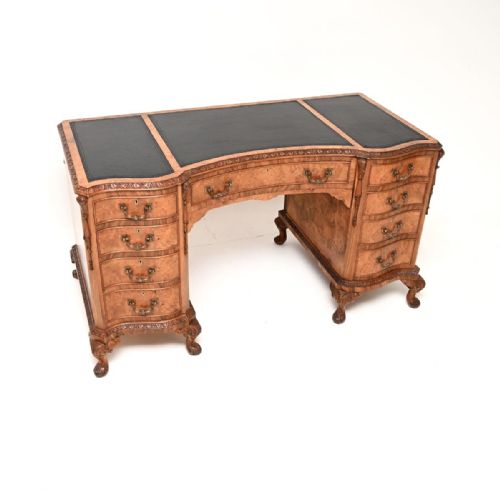
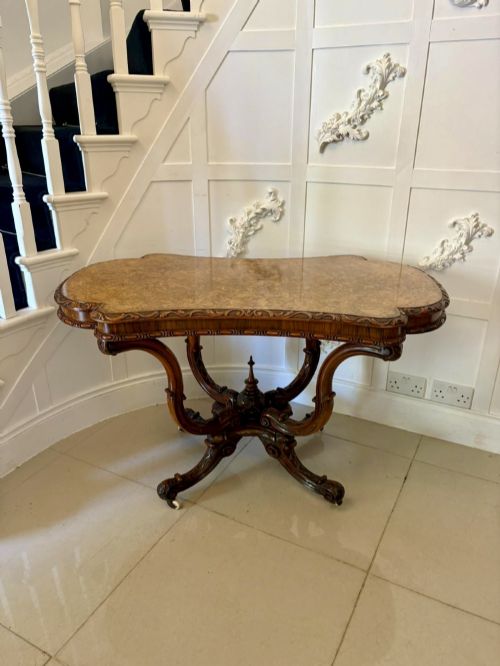
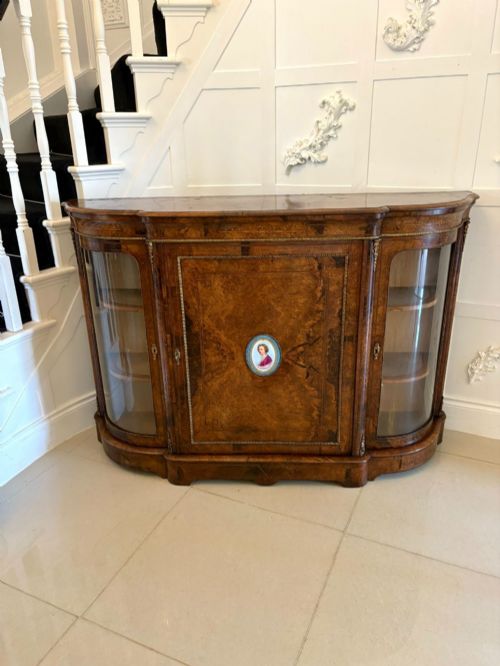
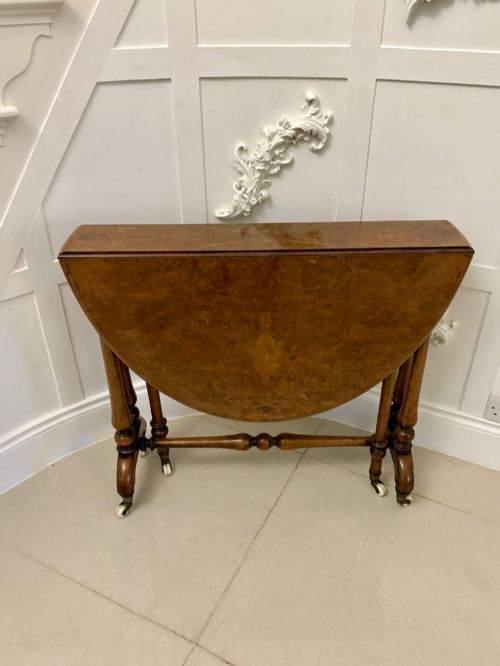
When buyers search for victorian burr walnut, they encounter a range of nineteenth-century furniture designed for the home, spanning the 1850s to the turn of the century. The selections on this page feature frequent examples of occasional tables, centre tables, credenzas, sideboards, canterburys, desks and games tables.
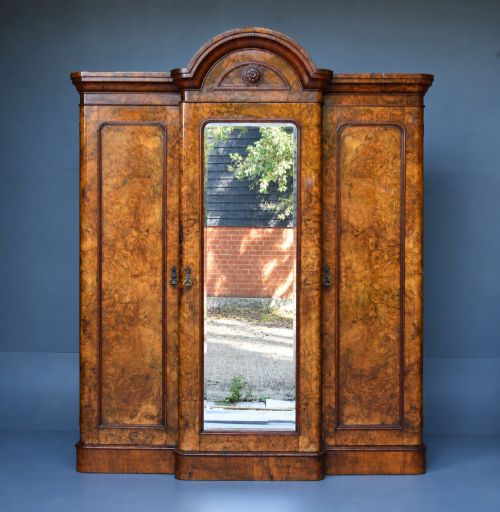
Smaller items like lamp tables, sewing tables and bedside chests appear alongside large wardrobes, bookcases and credenzas. Pieces range from plain timber surfaces to heavily inlaid designs influenced by French revival, Queen Anne revival and the Aesthetic movement.
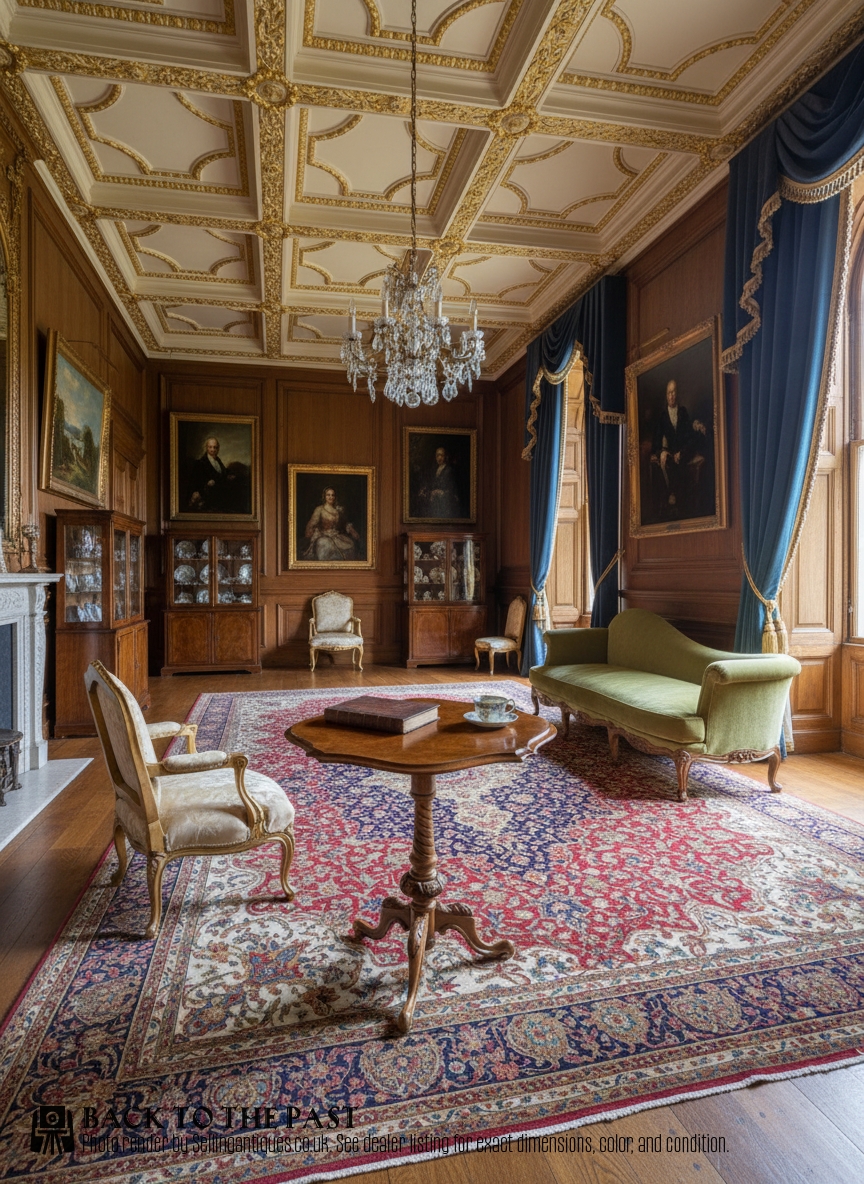
How victorian burr walnut pieces were made
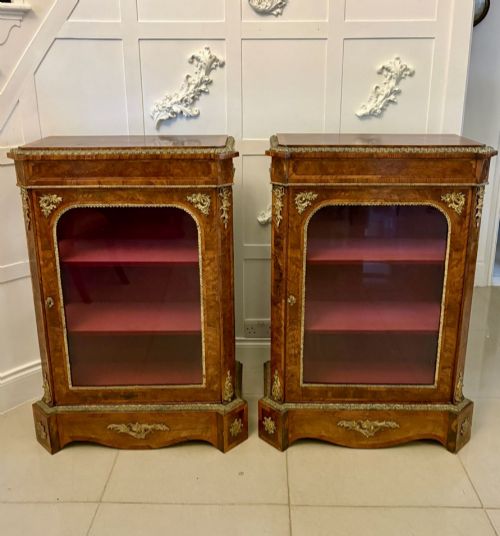
Cabinet makers utilised thin veneers of burr walnut sliced from knot growths, glued over solid structural carcases to display swirling, decorative grain patterns. These wooden surfaces were frequently accented with contrasting marquetry inlays, brass mounts, ormolu, porcelain plaques and glazed panels.
Working tables, games tables and desks often incorporated leather inserts, velvet linings, and internal compartments made from secondary timbers. Structural supports involved turned pedestals, carved brackets and cabriole legs shaped from solid walnut or ebonised wood.
Victorian Burr Walnut Retail Price Guide 2026
Typical asking prices for victorian burr walnut among the pieces listed under this phrase on Sellingantiques today, from the lower quarter to the upper quarter. They describe what is for sale here now, not the wider market.
Materials appearing alongside burr walnut include ormolu mounts, porcelain plaques, brass hardware, and velvet or leather inserts.
What varies in quality
The standard of a piece depends heavily on the selection and symmetry of the burr grain veneer used across the primary surfaces. Finer items display continuous, well-matched figuring on drawer fronts and table tops, whilst lesser examples show disjointed grain patterns or heavy patching.
Execution of decorative elements defines the upper tiers of the range, visible in crisply carved woodwork, precise marquetry inlay, and secure, heavy mounts of ormolu or brass. Superior cabinet work ensures that drawers run smoothly, fold-over mechanisms align correctly, and structural joints remain stable.

Edward Holmes Baldock·Johnstone and Jeanes
The Victorian Burr Walnut Glossary
- Burr walnut
- A figured veneer sliced from tree growths containing numerous small knots and distorted grain patterns. This material provides the highly decorative surface character seen on Victorian furniture.
- Credenza
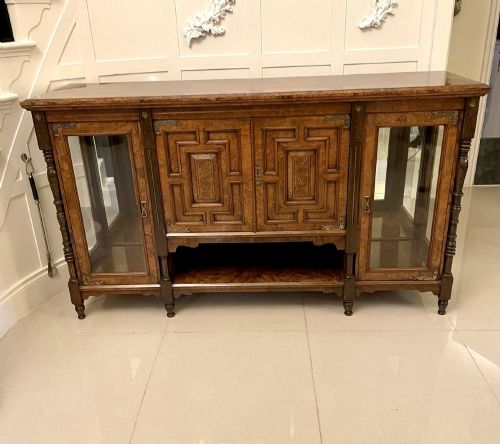
- A large freestanding cabinet used for storage and display, often featuring central doors flanked by curved glass cabinets. They frequently incorporate ormolu mounts and porcelain plaques.
- Canterbury
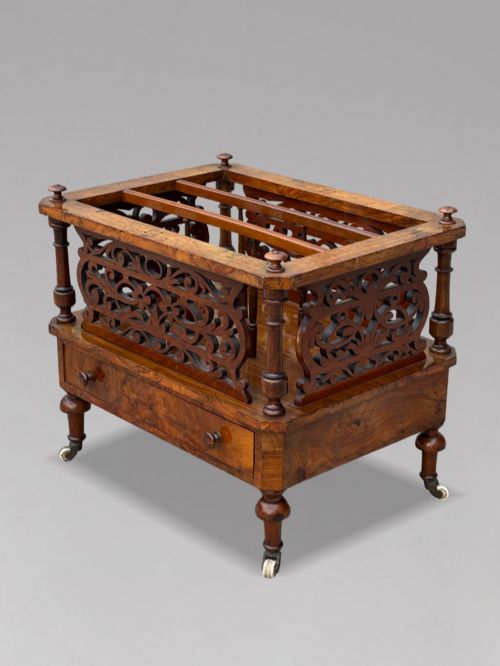
- A low multi-section stand originally designed to hold sheet music, folios or magazines. Victorian examples typically rest on castors and include lower drawer storage.
- Marquetry
- The art of applying decorative veneer pieces of various woods to a structured surface to form pictorial patterns. It is commonly found on table tops and cabinet doors.
- Loo table
- A large round or oval card and conversation table popular in the Victorian period. Many feature tilt-top mechanisms supported on a central column and carved feet.
Victorian Burr Walnut: Frequently Asked Questions
How do I care for burr walnut furniture?
Keep wooden surfaces away from direct sunlight and excessive heat sources to prevent the thin veneer from drying out or cracking. Regular dusting with a soft, dry cloth maintains the polished finish without moisture damage.
Avoid placing damp items directly onto tables and desks. Use coasters and protective mats to safeguard the french polished surface from water rings and scratches.
How can I tell the period of a walnut piece?
Examine the secondary timbers inside drawers and behind panels, as nineteenth-century pieces often utilise oak or pine frames beneath the walnut veneer. Construction methods such as hand-cut dovetails and timber movement allowances help distinguish period items from later reproductions.
Stylistic indicators like French revival mounts, Aesthetic movement ebonising or Queen Anne revival cabriole legs align with specific decades between 1850 and 1900. Documentation or maker stamps can provide further chronological context.
Where should I place a credenza?
A credenza suits dining rooms, hallways or living spaces where long, low storage and display space is required. Their finished backs occasionally allow them to stand freestanding, though they typically sit flat against a wall.
Ensure adequate floor space is available for doors to open fully without striking surrounding furniture. Placing them away from heavy foot traffic protects delicate glass panels and ormolu mounts.