








Burr Walnut Whatnot
Burr walnut whatnot pieces are tiered open display furniture prized for their figured wood grain and elegant utility in Victorian interiors.
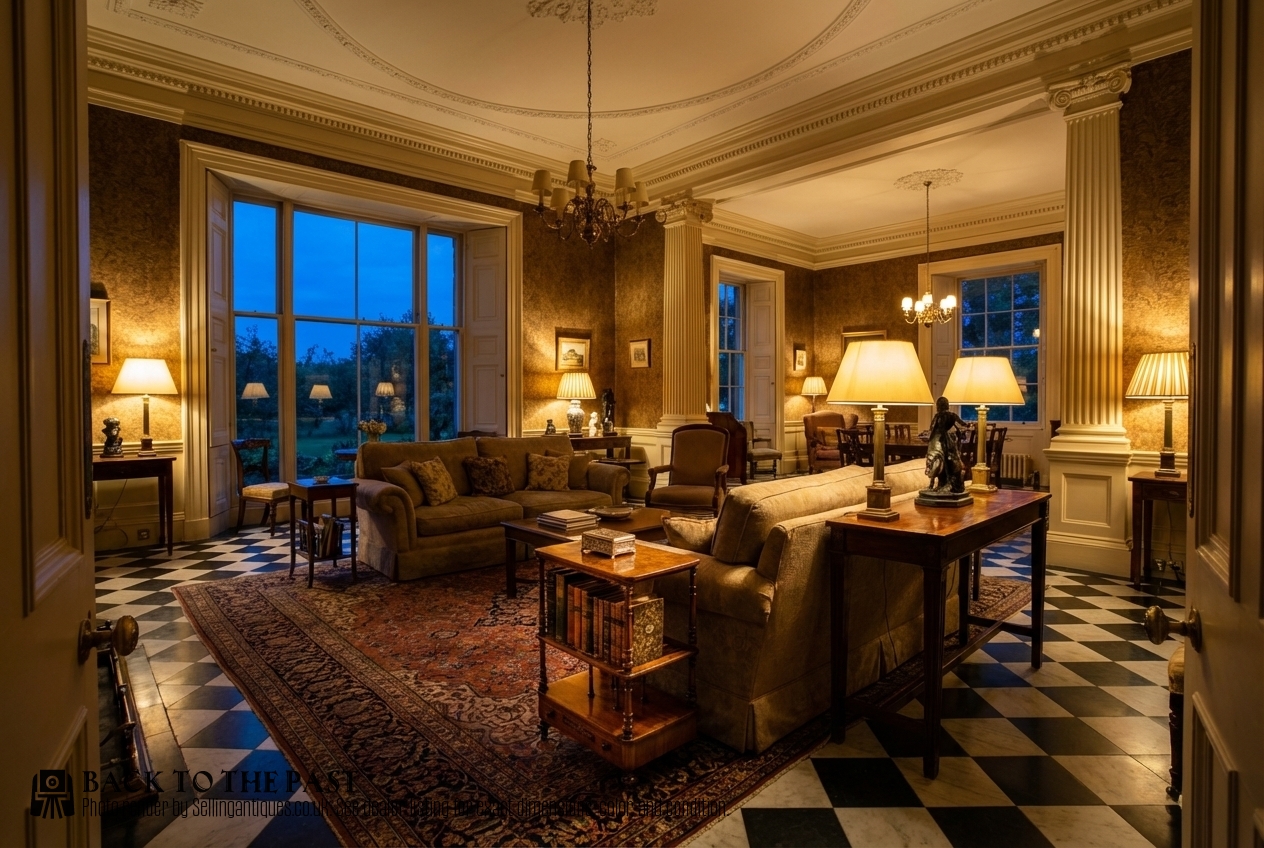
Burr Walnut Whatnot
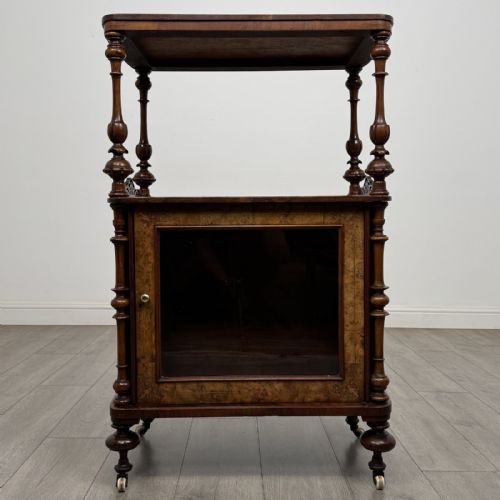
A burr walnut whatnot is a multi-tiered shelving unit or display stand designed for holding books, ornaments, and small decorative objects in nineteenth-century drawing rooms.
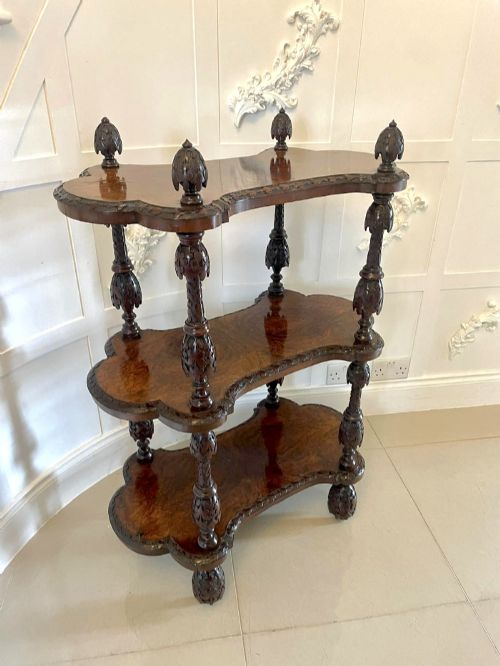
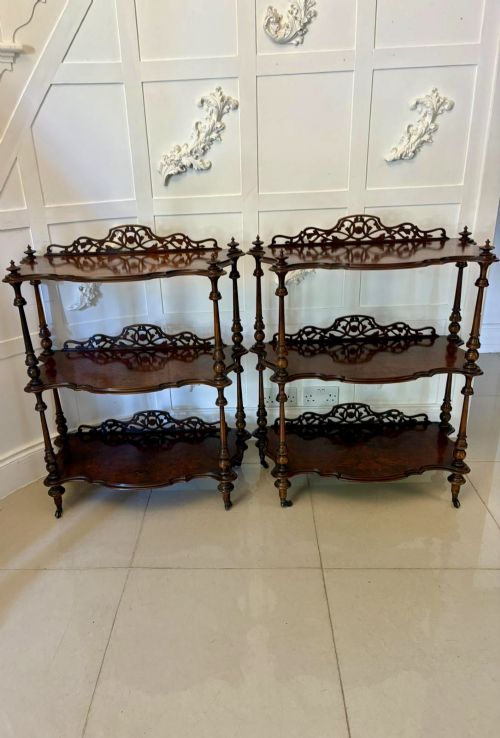
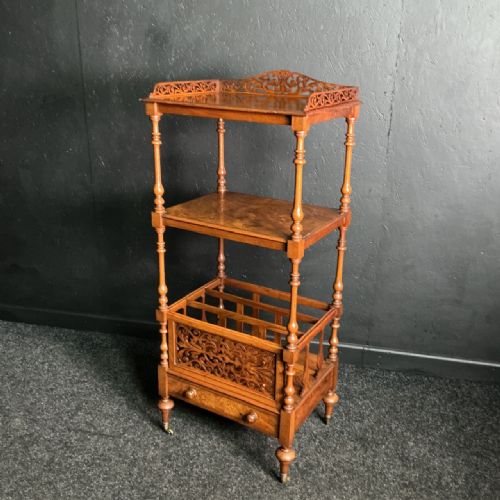
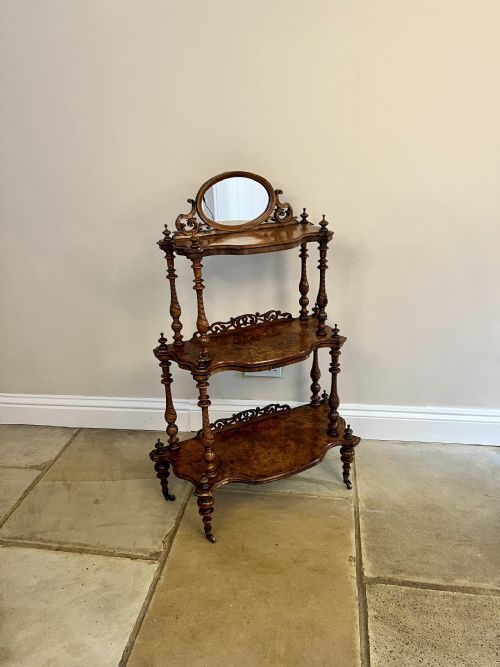
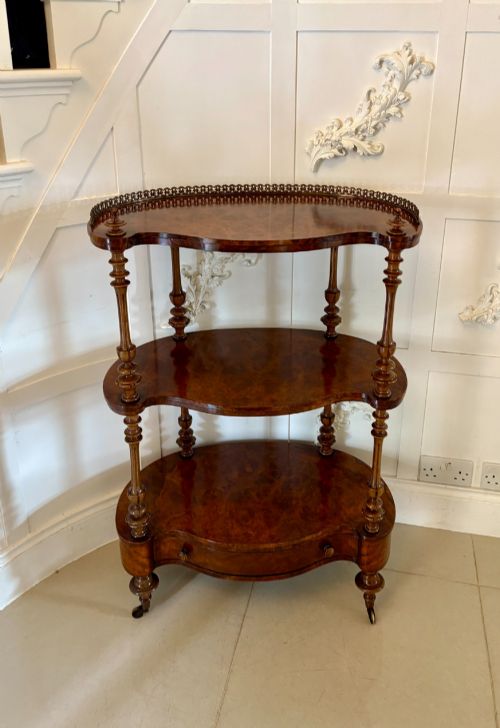
The version most commonly encountered on this page dates from the Victorian era, spanning several tiers supported by turned columns or uprights.
Many examples incorporate specialised forms such as the Canterbury with its partitioned base for sheet music, or corner models built to fit neatly into domestic spaces.
Materials and Construction
Cabinet makers applied thin slices of burr walnut veneer over solid secondary timbers to achieve the characteristic swirling, mottled grain patterns on flat surfaces.
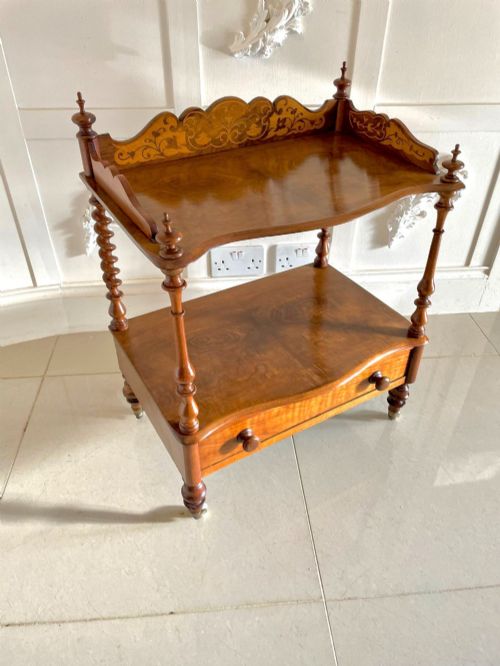
Construction frequently utilised brass hardware, ceramic castors, and intricate marquetry or ebony inlay to accent the rich dark tones of the walnut carcass.
Burr Walnut Whatnot Retail Price Guide 2026
Typical asking prices for burr walnut whatnot among the pieces listed under this phrase on Sellingantiques today, from the lower quarter to the upper quarter. They describe what is for sale here now, not the wider market.
Some Victorian makers added miniature shamrock carvings to their walnut shelves, perhaps to satisfy a collector's quiet desire for a touch of Irish luck.
Assessing Quality and Execution
Superior examples display exceptional figuration in the burr veneer across every tier, paired with crisp hand-carving on the structural supports and finely detailed inlay.
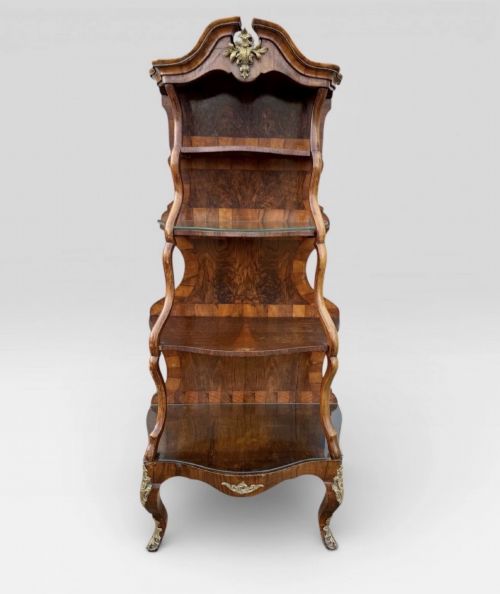
The presence of integrated drawers, serpentine shaping, and robust freestanding forms distinguishes exhibition pieces from standard utilitarian shelving.
T Wilson of London
The Burr Walnut Whatnot Glossary
- Whatnot
- A multi-tiered piece of movable furniture intended for the display of ornaments. It originated in the eighteenth century and remained popular through the Victorian period.
- Canterbury
- A low stand featuring vertical partitions, originally designed to hold sheet music or books. These often form the base section of combined whatnot units.
- Étagère
- A French term for a tiered display shelf or stand. It is frequently used interchangeably with the English whatnot.
- Burr Walnut
- Wood taken from the gnarled growth on a walnut tree, yielding a highly decorative, swirling grain pattern. Cabinet makers valued this veneer for high-status furniture.
- Serpentine
- A furniture outline characterised by a wavy or undulating edge. This curved form requires advanced woodworking skill to execute properly.
- Marquetry
- The art of applying pieces of veneer to a structure to form decorative patterns. Craftsmen used various contrasting woods to create floral or geometric designs.
Burr Walnut Whatnot: Frequently Asked Questions
What is a burr walnut whatnot used for?
These tiered stands served as practical display furniture in Victorian homes for holding ornaments, small clocks, and decorative ceramics. They kept prized possessions visible and organised within the drawing room.
Certain variations included lower compartments or drawers for storing books and sheet music. Their open shelving made them ideal for everyday access while maintaining a formal appearance.
How do I identify a Victorian whatnot?
Victorian examples typically feature rich walnut timbers, turned upright supports, and multi-tiered shelving. Many incorporate detailed inlay or serpentine shaping characteristic of mid-nineteenth-century cabinet making.
They often rest on small ceramic castors to allow easy movement across carpets. The joinery and wood finishing reflect the industrial and handcraft standards of the period between eighteen-fifty and eighteen-ninety.
Where should I place a corner whatnot?
Corner whatnot pieces are specifically built with right-angled backs to fit snugly into room corners. This makes them useful for utilising empty wall junctions without obstructing traffic flow.
They provide vertical display space in smaller rooms where a freestanding central table might crowd the floor. Positioning them away from direct sunlight protects the delicate burr veneer from fading.
What is the difference between a whatnot and a Canterbury?
A standard whatnot consists purely of stacked open shelves for display purposes. A Canterbury includes partitioned vertical sections at the base designed specifically for storing folios, books, or music sheets.
Many nineteenth-century pieces combine both forms, placing musical storage at the bottom and decorative display shelves above. This hybrid design offered multi-functional utility in domestic parlours.