






Walnut Music Rack
A walnut music rack provides a sturdy, elegant vessel for folios and journals, anchoring a room with rich timber tone.
Walnut Music Rack
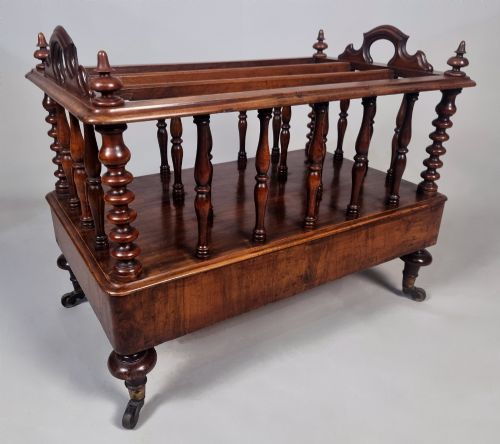
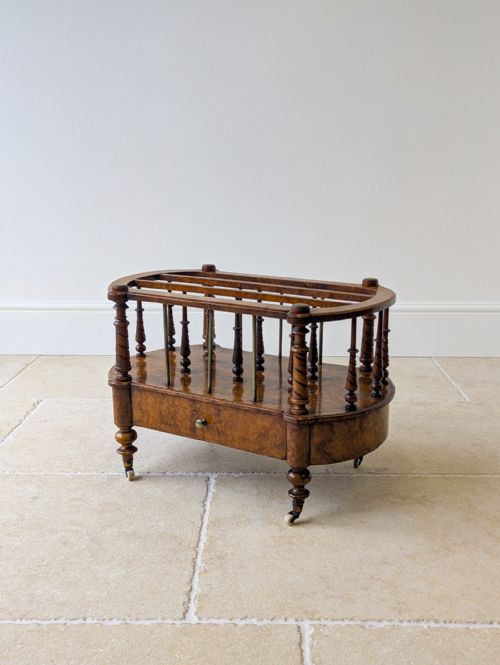
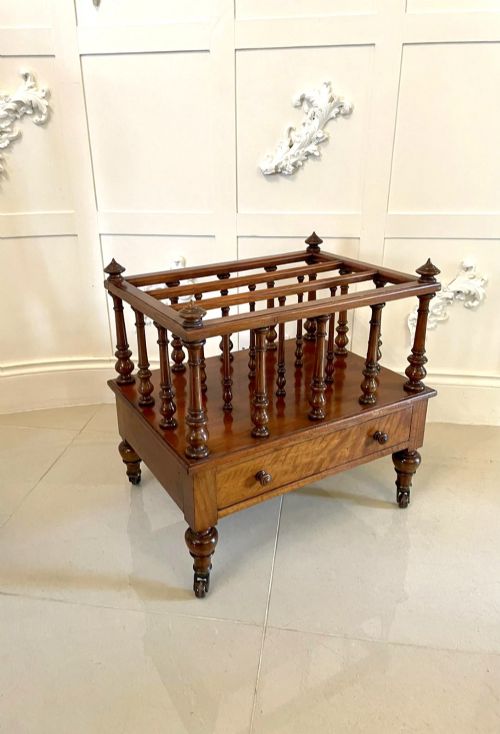
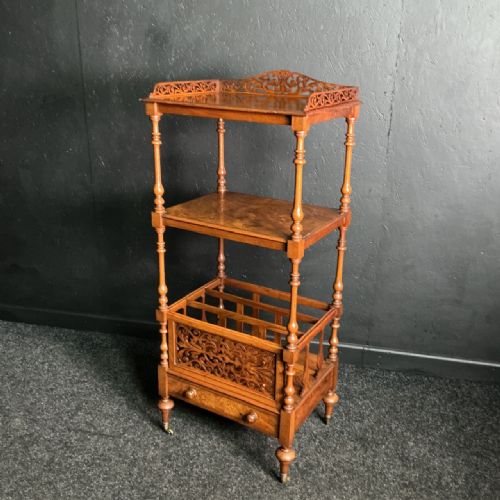
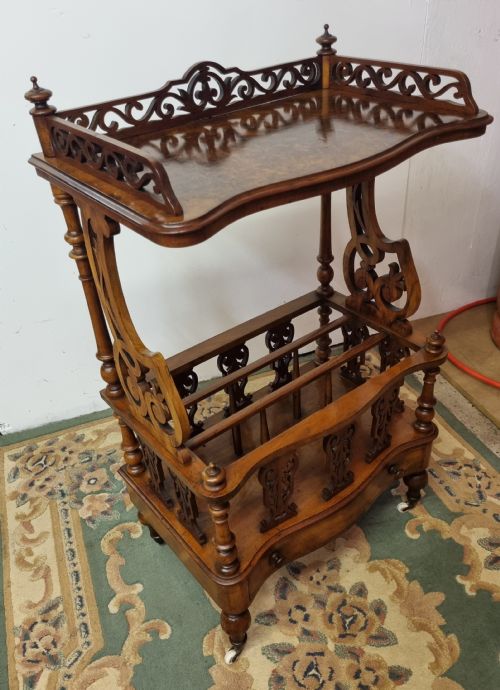
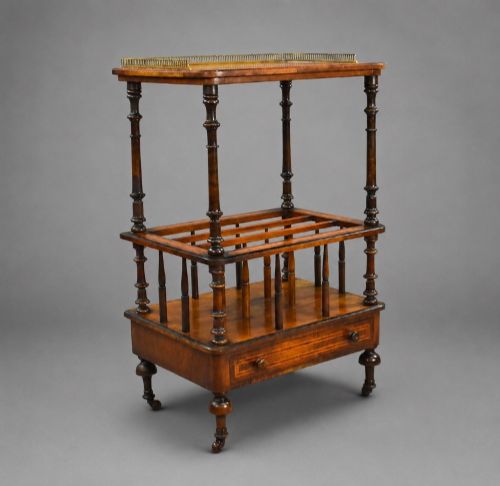
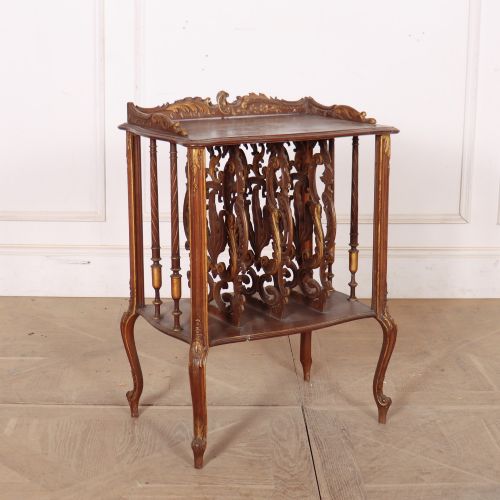
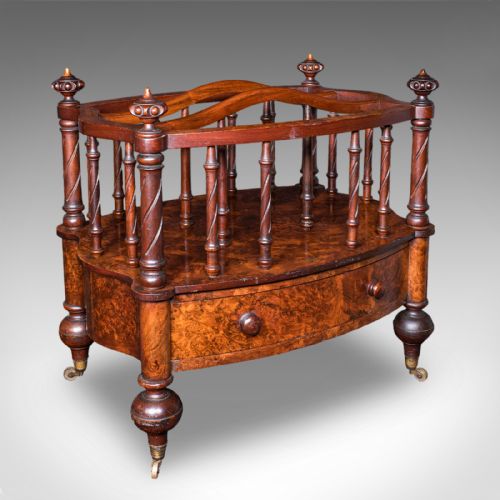
When you search for a walnut music rack, you encounter a range of nineteenth-century pieces designed to hold scores, folios, and periodicals. The selection on this page is dominated by Victorian items, spanning specific decades from the mid-nineteenth century through to the end of the 1800s.
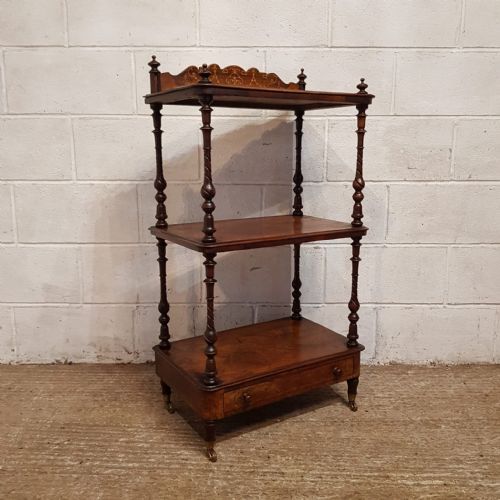
The dominant form you meet is the Canterbury, often combined with a whatnot or etagere tier, alongside dedicated music stands and occasional tables. These pieces originated in the Regency and Victorian eras, serving domestic parlours and music rooms as practical repositories for paper.
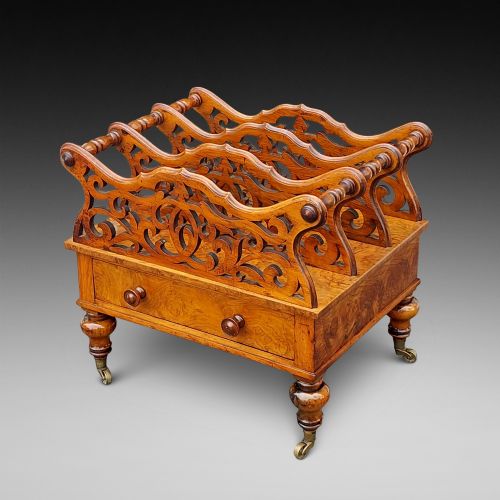
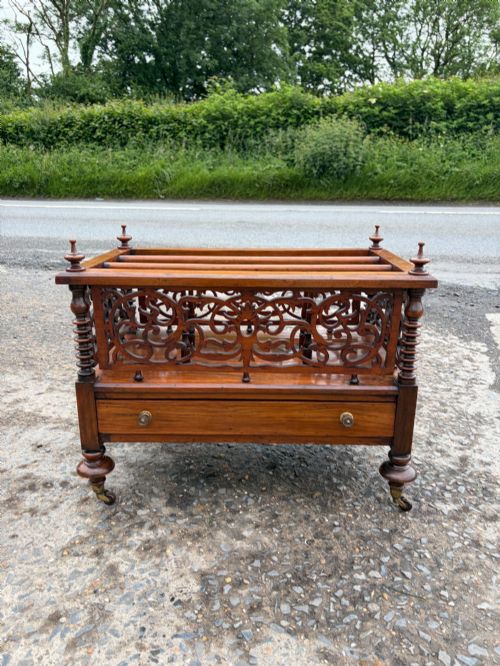
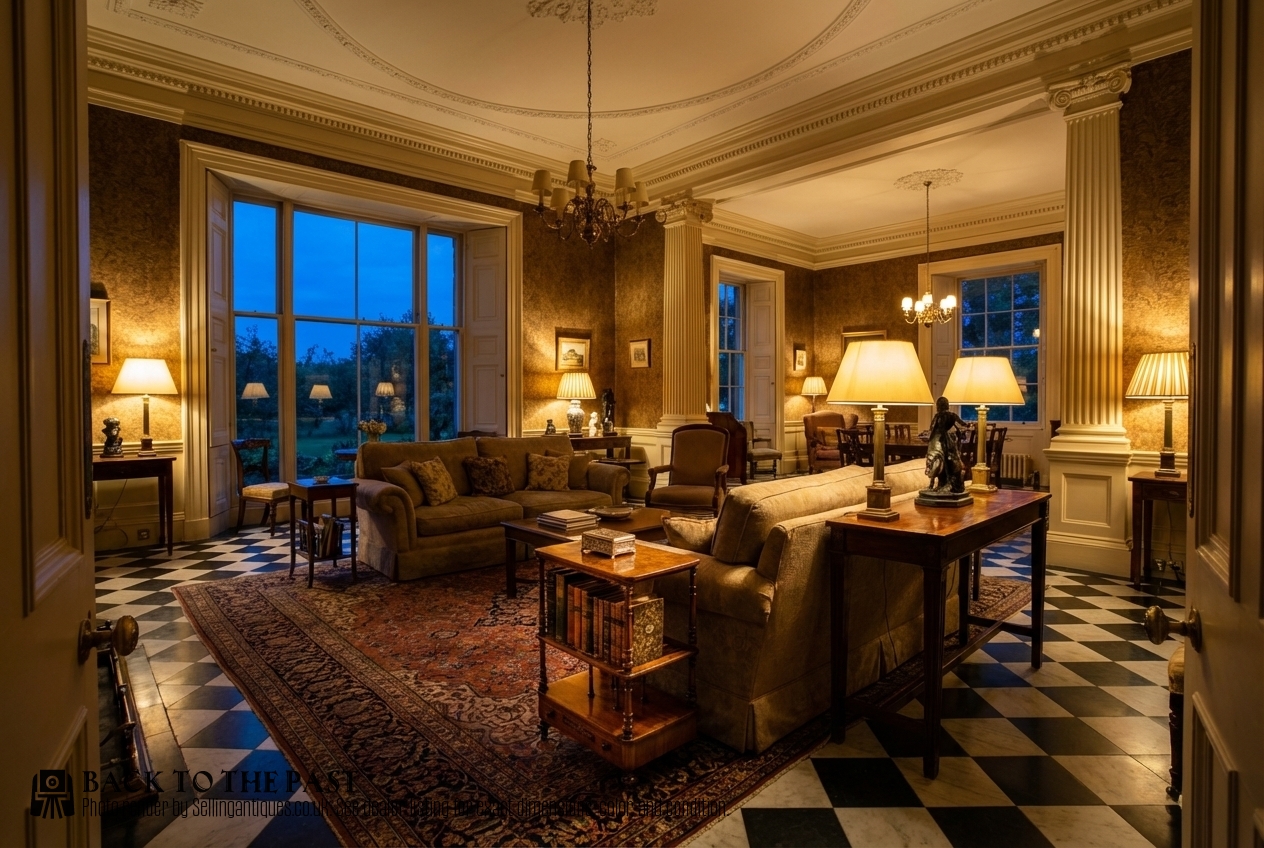
Makers and craftsmen utilised diverse configurations, including serpentine shapes, multi-section divisions with pierced fretwork, and lower drawers for smaller accessories. Pieces frequently double as lamp tables or display stands, uniting utility with the rich figuring of burr walnut.

What varies in quality
Quality reveals itself in the choice of timber and the ambition of the joinery, particularly where burr walnut veneers are matched symmetrically across top surfaces and divider slats. Pieces exhibiting crisp pierced fretwork, fine boxwood or ebony inlay, and well-executed marquetry stand apart from plainer, utilitarian examples.
Walnut Music Rack Retail Price Guide 2026
Typical asking prices for walnut music rack among the pieces listed under this phrase on Sellingantiques today, from the lower quarter to the upper quarter. They describe what is for sale here now, not the wider market.
Listings feature walnut, burr walnut, and black walnut across Victorian and Regency periods.
Edwards and Roberts·Shoolbred
The Walnut Music Rack Glossary
- Canterbury
- A low stand fitted with divisions to hold sheet music, folios, or newspapers, often mounted on castors. This form developed in the eighteenth century and remained popular throughout the Victorian period.
- Burr Walnut
- Timber sliced from the gnarled growths of a walnut tree, yielding dense, highly decorative circular grain patterns. Cabinet makers prized this veneer for the principal surfaces of high-status furniture.
- Whatnot
- An open set of freestanding shelves used for displaying ornaments, books, or small objects. They frequently combine with canterburys to form multi-tier occasional furniture.
- Marquetry
- Decorative patterns formed by the insertion of contrasting pieces of veneer into a solid wood ground. Makers utilised this technique to create floral or geometric motifs on table tops and fall-fronts.
- Fretwork
- Ornamental design executed by cutting patterns through thin boards with a piercing saw. Victorian makers applied this technique to the partitions of music racks to lighten their visual weight.
Walnut Music Rack: Frequently Asked Questions
What is a Canterbury music stand?
A Canterbury music stand is a partitioned low rack designed specifically to store sheet music, folios, and newspapers within easy reach. They often feature multiple vertical sections to keep papers upright and separated.
Many examples also incorporate shelving tiers or small drawers, allowing them to function simultaneously as occasional tables or display pieces in a Victorian parlour.
How do I date a Victorian walnut rack?
Dating relies on observing the combination of stylistic cues, timber choice, and construction methods. Pieces utilising heavily figured burr walnut alongside detailed boxwood inlay and fretwork commonly point towards the middle and later decades of the nineteenth century.
Makers' stamps, where present, offer the most precise attribution, while general forms evolve from the earlier Regency lines into the more ornate French Rococo Revival styles of the 1860s and 1870s.
Were these racks only used for music?
While originally designed for holding bound musical scores and loose sheet music, their vertical partitions made them equally suited for contemporary periodicals and journals. Victorian households utilised them flexibly in drawing rooms and libraries for daily reading materials.
As domestic habits shifted toward leisure reading, many pieces accommodated newspapers and magazines alongside traditional musical folios.
How do I care for burr walnut furniture?
Burr walnut requires stable environmental conditions away from direct heat sources and strong sunlight, which can dry out and fade the delicate veneer. Regular dusting with a soft, dry cloth preserves the polished surface.
Occasional application of appropriate wax polish helps maintain the timber's natural lustre without building up heavy residue on the fine grain.