





Antique Walnut Magazine Holder
An antique walnut magazine holder brings refined Victorian utility to a room, offering a dedicated vessel for periodicals crafted in rich timber.
Antique Walnut Magazine Holder
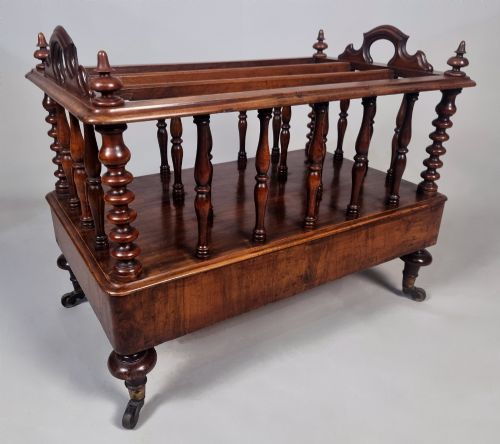
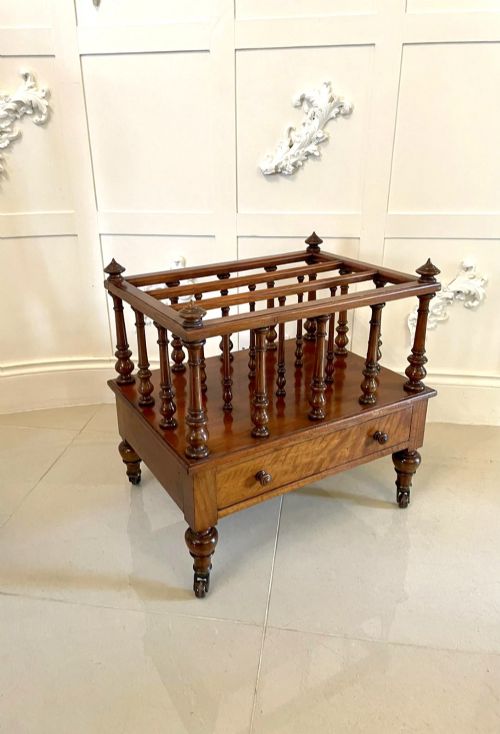
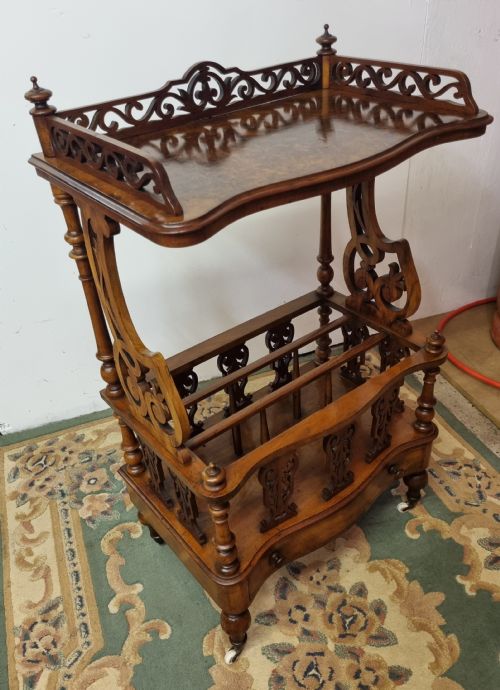
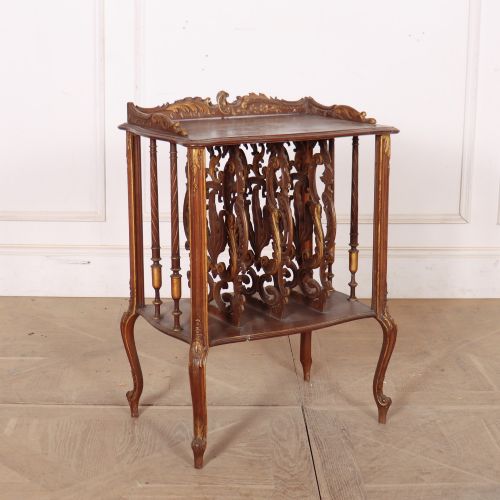
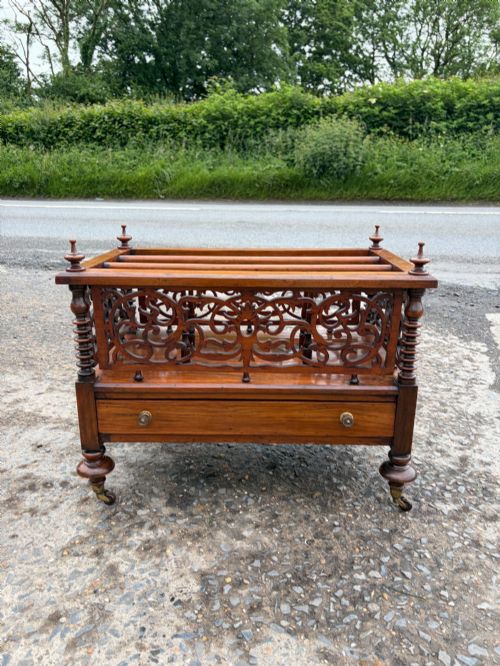
An antique walnut magazine holder typically manifests as a Canterbury or music stand, designed to keep folios, newspapers, and sheets organised in a parlour or study. These pieces span the nineteenth century, with Victorian examples dominating the selection alongside Regency and French Rococo Revival pieces.
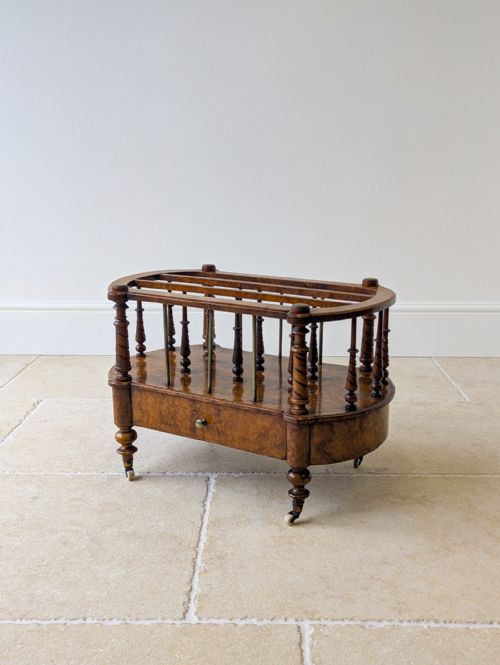
The form frequently combines partitioned vertical sections for paper storage with lower drawers and occasional table tops. Walnut, burr walnut, and figured veneers provide the primary visual character, often complemented by intricate wood inlay or brass details.
Materials and construction methods
Cabinetmakers utilised solid walnut and decorative burr walnut veneers to construct the main frames and partitions of these stands. Figured grain patterns were carefully selected to catch the light on serpentine shapes and flat panels.
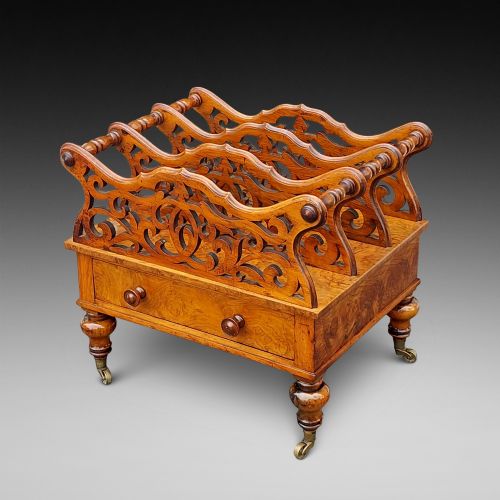
Makers incorporated specialist techniques such as pierced fretwork, marquetry inlay, and carved ornamentation. Brass handles, castors, and copper accents frequently completed the functional elements of the stands.
Antique Walnut Magazine Holder Retail Price Guide 2026
Typical asking prices for walnut magazine holder among the pieces listed under this phrase on Sellingantiques today, from the lower quarter to the upper quarter. They describe what is for sale here now, not the wider market.
Period styles represented include Victorian, Regency, French Rococo Revival, and Black Forest designs.
Distinctions in quality
The superiority of a piece rests on the choice of timber figure, such as richly patterned burr walnut, and the precision of inlaid marquetry work. Substantial proportions and well-executed serpentine forms distinguish finer examples from standard production.
Attention to detail in subsidiary elements, including pierced fretwork partitions and integrated drawers, marks out workshop quality. Named makers such as Edwards & Roberts or Shoolbred also signify a higher standard of period craftsmanship.
Edwards & Roberts·Shoolbred
The Antique Walnut Magazine Holder Glossary
- Canterbury
- A low stand with partitioned sections for holding sheet music, newspapers, and magazines. It often includes a single drawer beneath the main compartments and stands on short legs with castors.
- Burr walnut
- A veneer taken from the knotted growth of a walnut tree, prized for its swirling, highly decorative grain patterns. Cabinetmakers applied this to the most prominent exterior surfaces of quality furniture.
- Marquetry
- The art of forming decorative patterns on a wooden surface by fitting together small pieces of veneer. Various coloured woods are shaped to create floral or geometric designs.
- Fretwork
- Ornamental woodwork pierced with a pattern using a scroll saw or piercing saw. This technique creates lightweight, intricate screens and dividers within the magazine racks.
- Serpentine
- A curved line or shape that undulates inward and outward in a gentle wave. This contour is frequently seen on the edges of tabletops and shelves.
Antique Walnut Magazine Holder: Frequently Asked Questions
What is a Canterbury?
A Canterbury is a low stand originally built to hold sheet music, folios, and periodicals. Nineteenth-century examples often feature divided compartments above a small drawer.
Over time, these pieces adapted well to holding modern magazines and newspapers in a sitting room.
How do I date a walnut Canterbury?
Dating relies on stylistic clues like Regency classical lines, high Victorian carving, or specific wood inlay techniques. Most examples date from the nineteenth century.
Makers' marks or stamps, when present, can provide a more precise point of origin.
Where should I place a magazine stand?
These stands suit placement beside an armchair, sofa, or desk where reading materials are frequently used. Their compact footprints allow them to fit easily into corners or beside occasional tables.
The finished backs and polished wood grain mean they look correct when viewed from any angle in a room.
How do I care for burr walnut?
Burr walnut requires dusting with a soft cloth and protection from direct sunlight and extreme humidity changes. Maintaining a stable environment preserves the delicate veneers and polished finish.
Applying a light wax periodically helps nourish the timber without building up heavy residues.