


Antique Wooden Magazine Stand
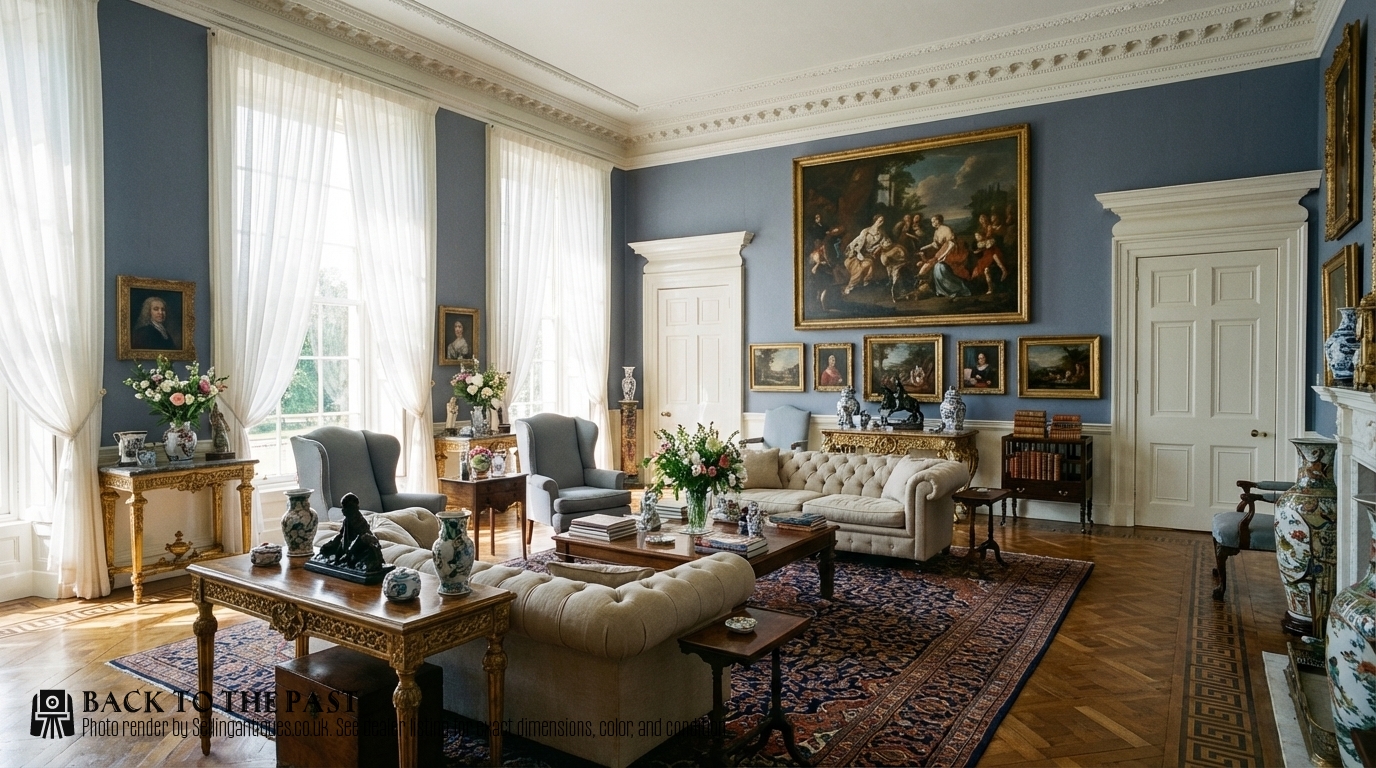
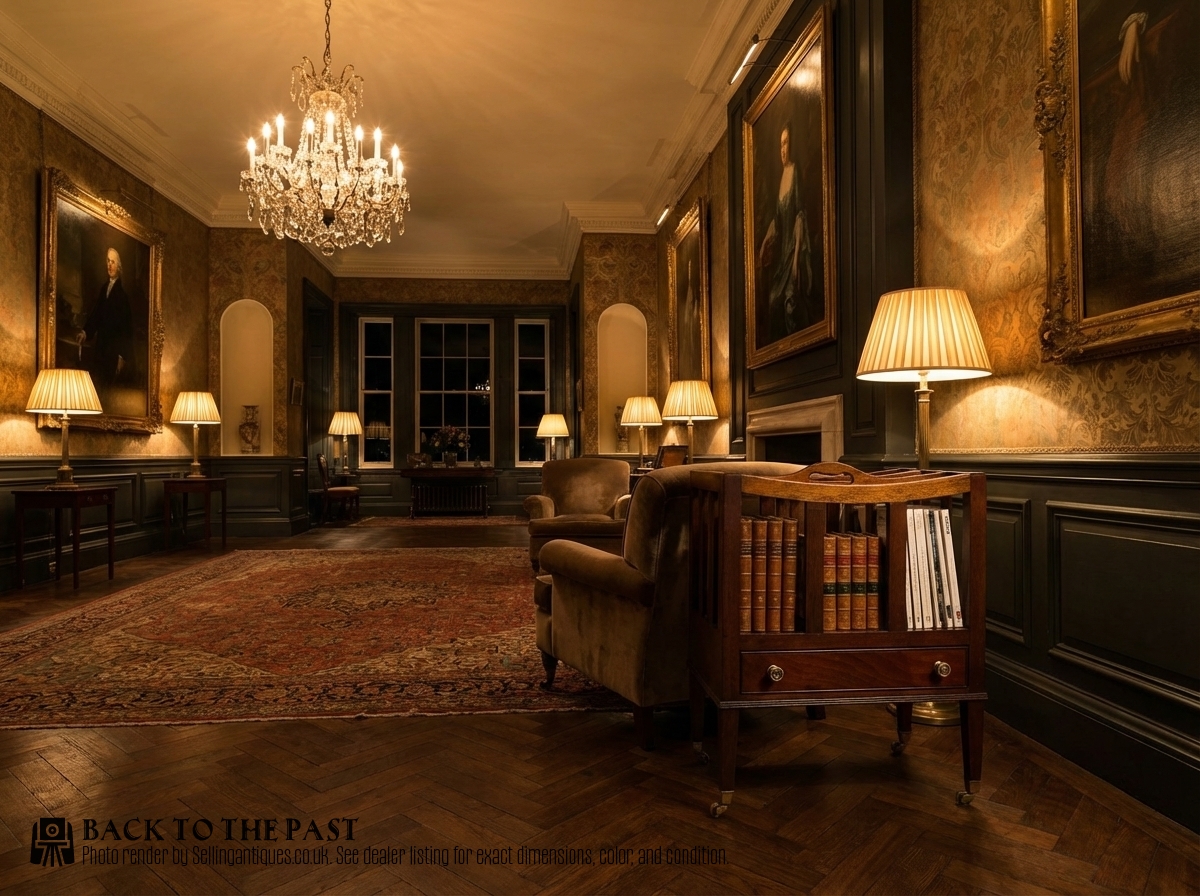
An antique wooden magazine stand brings traditional timber grain and purposeful compartment design into a modern sitting room.
Antique Wooden Magazine Stand
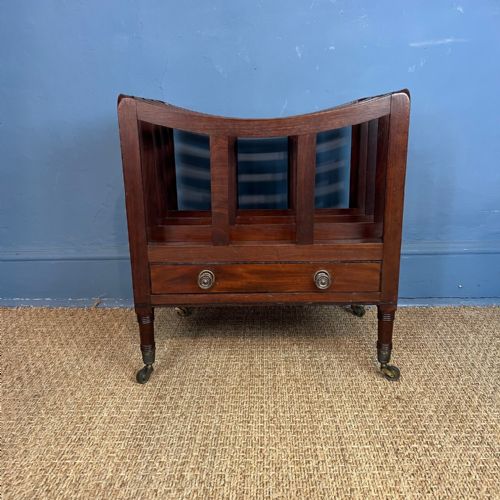
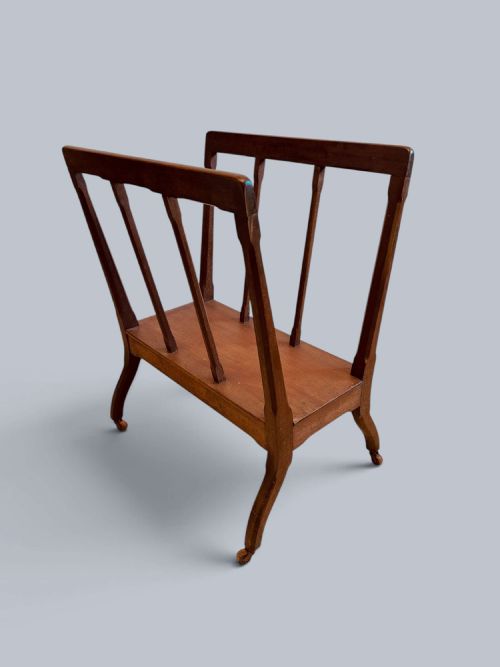
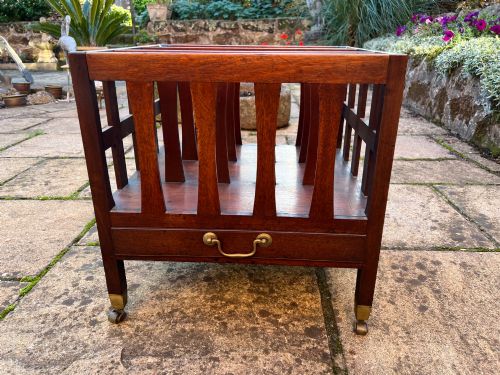
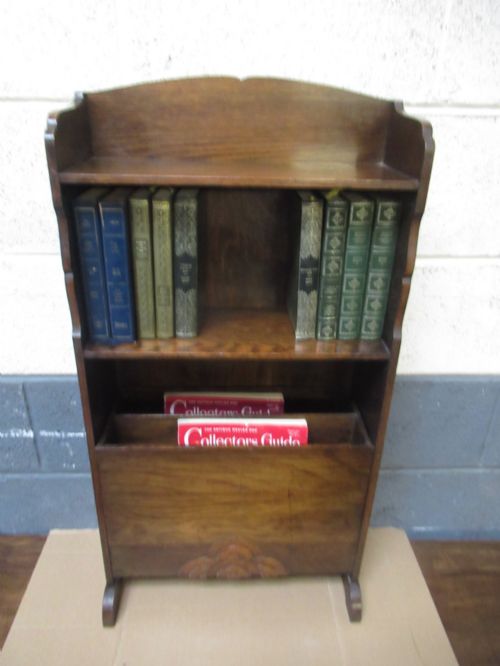
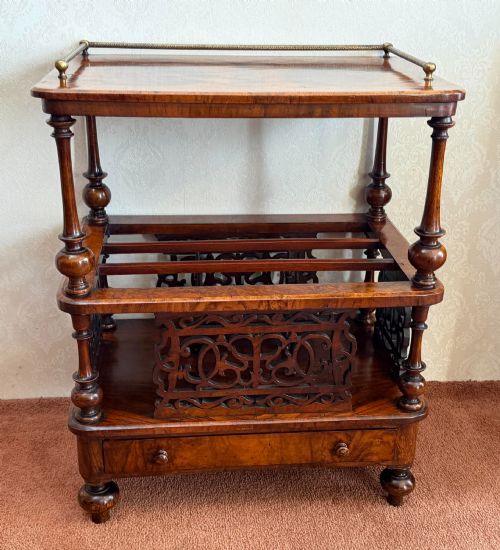
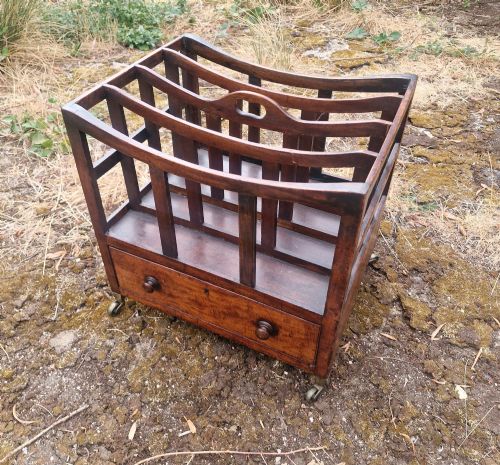
When searching for an antique wooden magazine stand, buyers encounter pieces primarily designated as canterburys, book stands, and magazine racks spanning the Georgian, Regency, Victorian, and Edwardian periods.
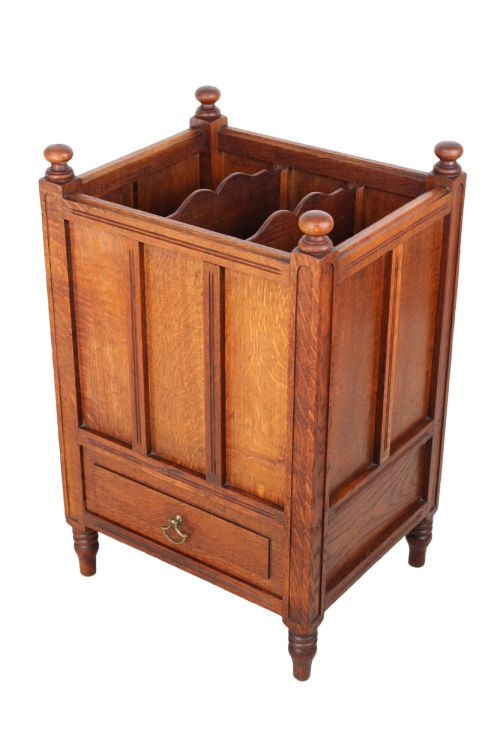
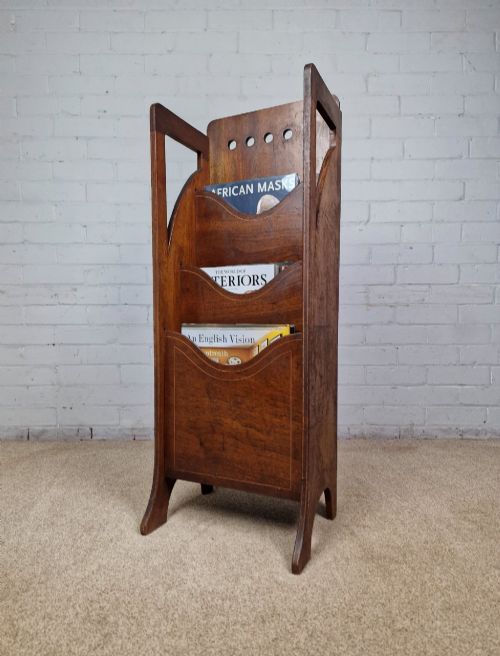
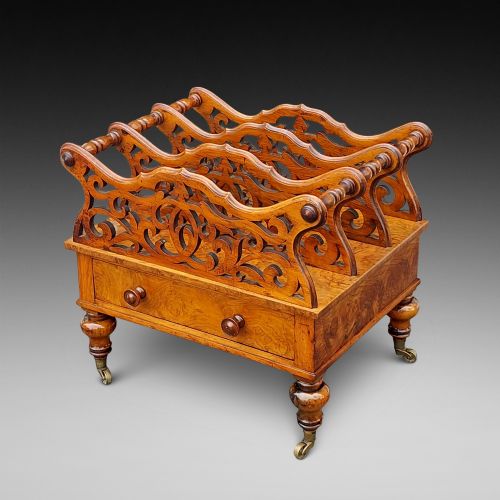
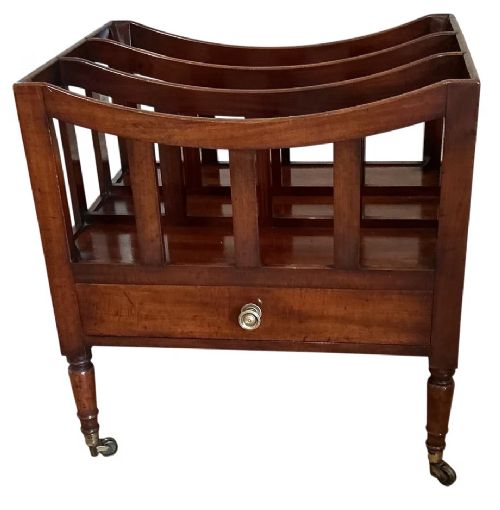
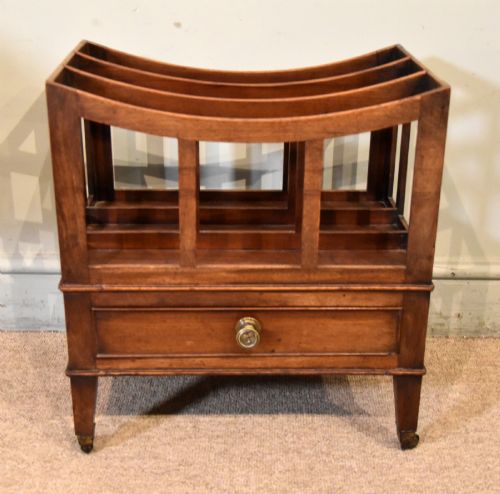
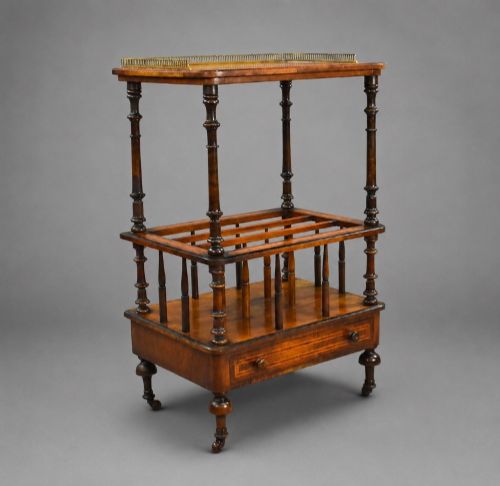
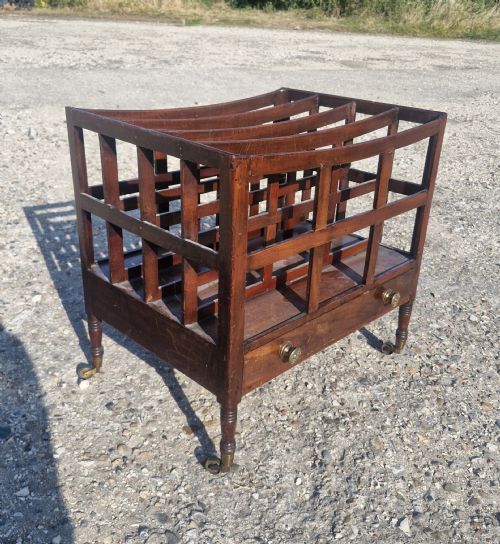
The most common forms on this page include mahogany canterburys with slotted partitions and low legs, alongside oak or burr walnut magazine racks and book troughs from the later nineteenth and early twentieth centuries.
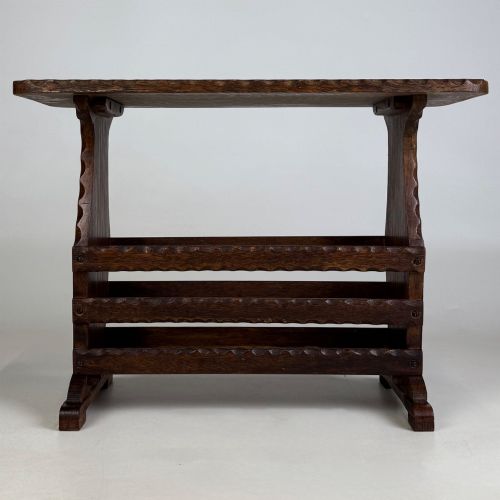
Originating largely from British cabinet-making traditions, these items range from formal Regency boat-shaped designs to utilitarian Arts and Crafts oak receptacles built for domestic reading materials.

Materials and construction methods
Cabinet makers utilised dense hardwoods such as mahogany, walnut, rosewood, and oak, often selecting burr or flame veneers to accentuate natural grain patterns on flat panels and surfaces.
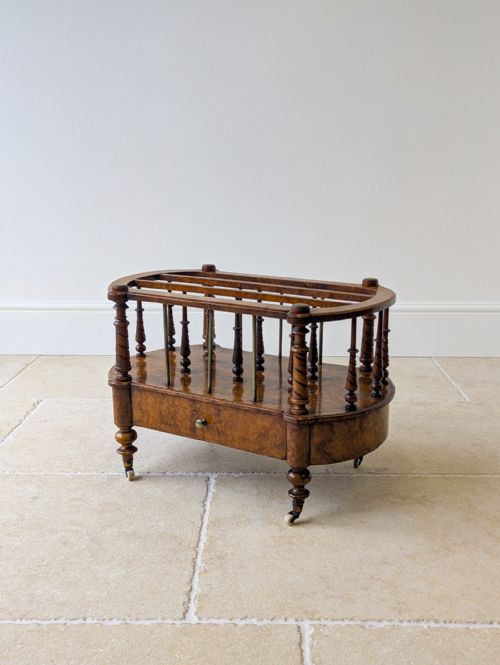
Joinery techniques combined pegged frames and slotted upright divisions with turned legs, frequently fitted with brass castors to allow smooth movement across carpets and floorboards.
Decorative embellishments relied on subtle inlays, mother of pearl highlights, and carved wooden details rather than heavy applied ornamentation, preserving the structural integrity of the compartments.
Antique Wooden Magazine Stand Retail Price Guide 2026
Typical asking prices for wooden magazine stand among the pieces listed under this phrase on Sellingantiques today, from the lower quarter to the upper quarter. They describe what is for sale here now, not the wider market.
Some nineteenth-century stands feature tiny castors designed to glide smoothly across thick carpets while readers reached for the morning paper.
Distinctions in construction and finish
Superior examples demonstrate careful timber selection, where highly figured mahogany or burr walnut is matched symmetrically across the divisions and baseboards.
The finesse of the upright supports and turned legs distinguishes finer workshop output from more utilitarian household items, as does the crispness of any inlaid borders.
Structural resilience depends on the tightness of the joinery within the slatted partitions, which endure significant physical weight from bound volumes and periodicals.
The Antique Wooden Magazine Stand Glossary
- Canterbury
- A low, multi-tiered stand fitted with upright divisions, originally designed to hold sheet music and periodicals near a piano or seating area.
- Book trough
- An open-topped wooden receptacle with sloping sides designed to rest on a table or floor for holding volumes upright.
- Burr walnut
- Timber taken from the gnarled growth of a walnut tree, yielding intricate, swirling grain patterns highly prized for decorative veneer work.
- Turned leg
- A pillar shaped on a lathe to create decorative circular profiles, commonly found supporting the corners of tables and stands.
- Castor
- A small wheel mounted in a swivel frame attached to the base of a leg to facilitate rolling the piece across the floor.
Antique Wooden Magazine Stand: Frequently Asked Questions
What was a canterbury originally used for?
Originally, these pieces served musicians by holding portfolios of sheet music and scores close to the drawing room piano.
Over time, households adapted the partitioned sections to store newspapers, books, and periodicals within easy reach of armchairs.
How do I date an antique wooden magazine stand?
Dating relies on identifying stylistic markers such as Regency boat shapes, Georgian proportions, or later Edwardian inlay techniques.
Timber choices also guide attribution, with dense Cuban mahogany appearing more frequently in earlier pieces and oak dominating later Arts and Crafts examples.
Where should I place a magazine stand at home?
These stands fit naturally beside a reading chair, sofa, or desk where periodicals and books accumulate throughout the day.
Free-standing versions with castors can move easily between rooms depending on where seating areas are arranged.
Are these stands sturdy enough for modern magazines?
Traditional construction using solid hardwoods and pegged joints provides ample strength to support heavy contemporary publications.
The vertical partitions distribute weight evenly across the base, preventing the timber from sagging under daily domestic use.