

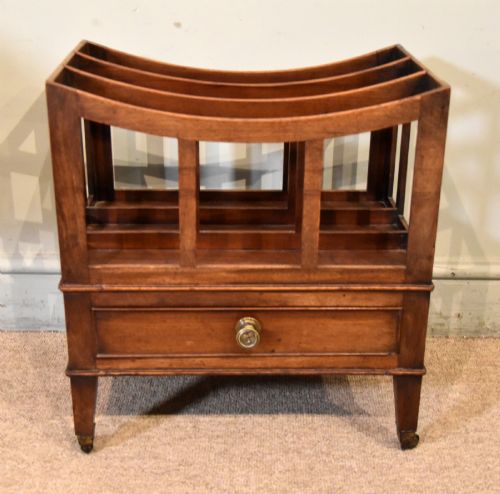
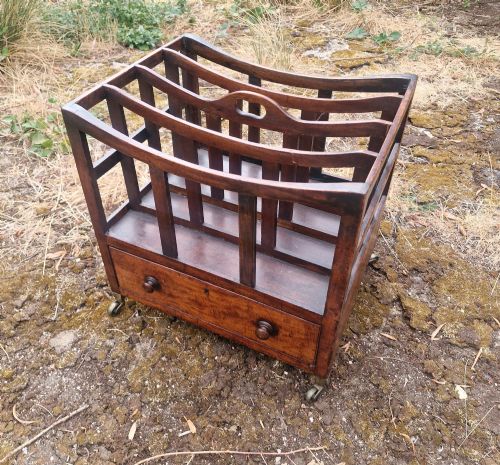
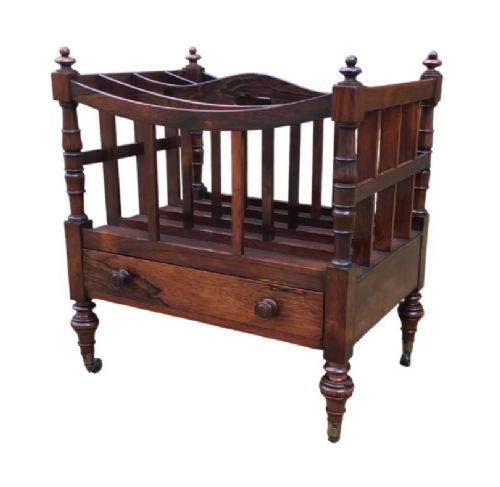
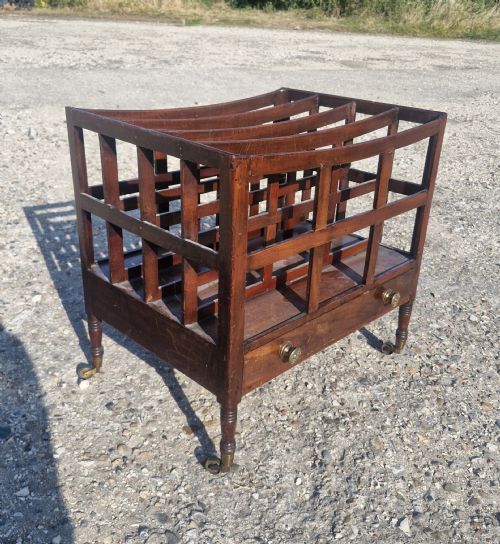
Mahogany Music Canterbury
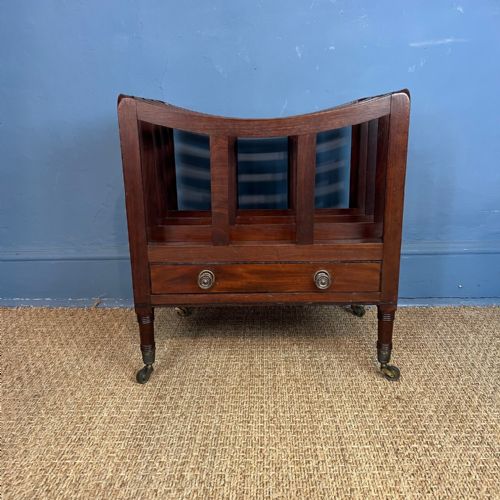
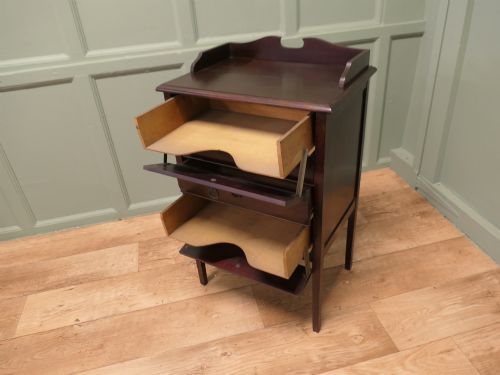
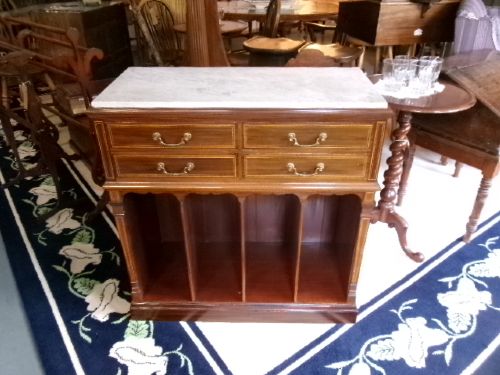
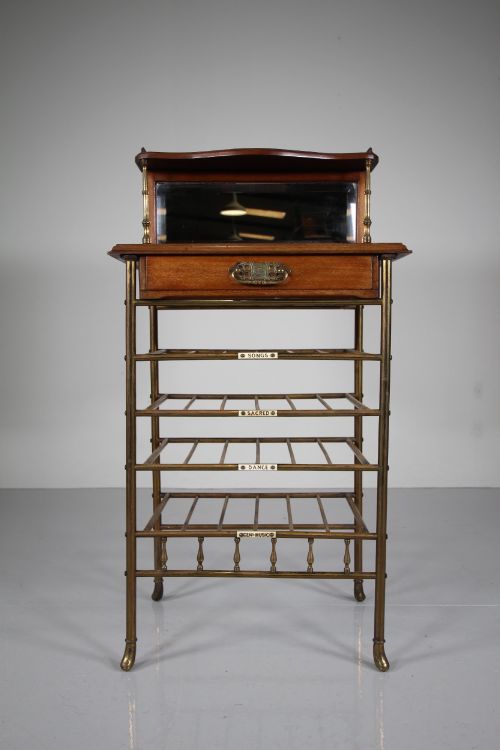
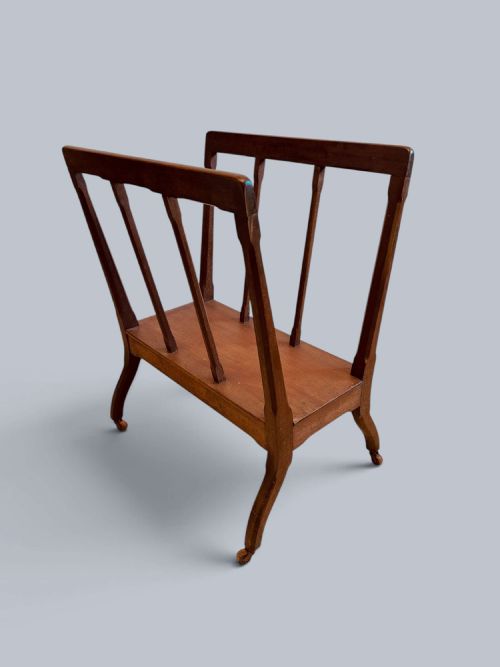
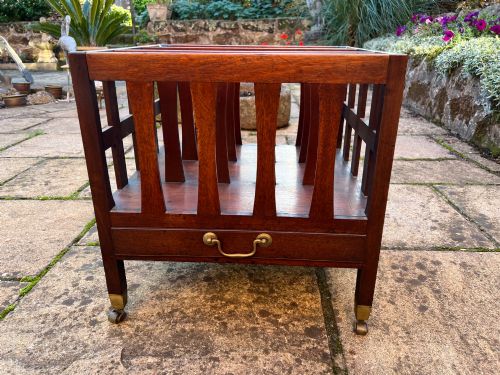
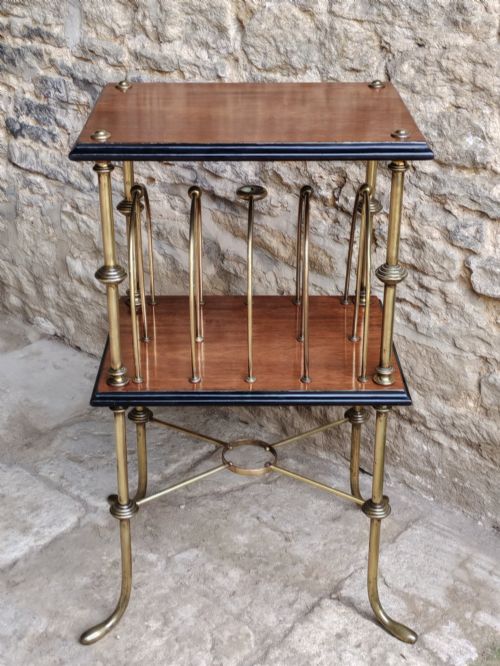
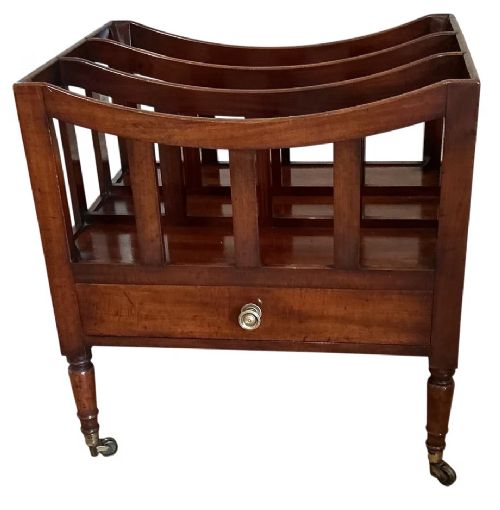
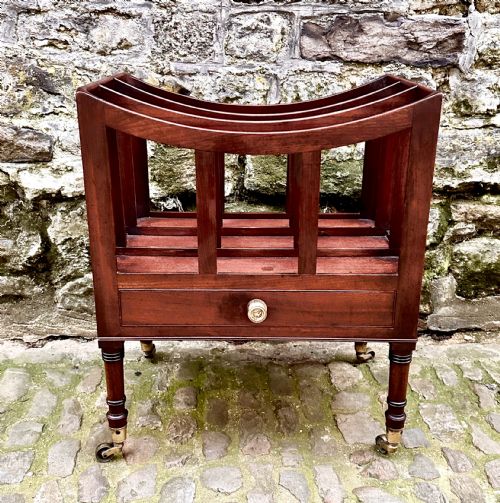
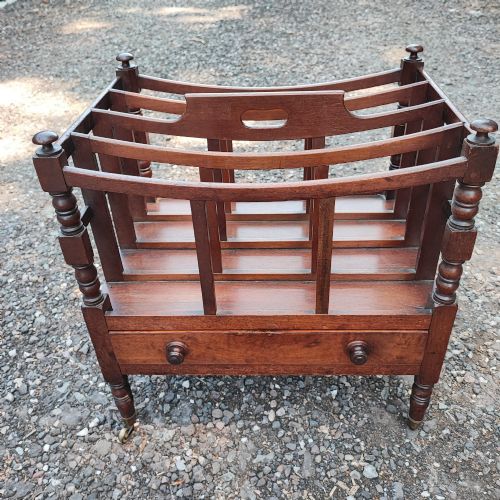
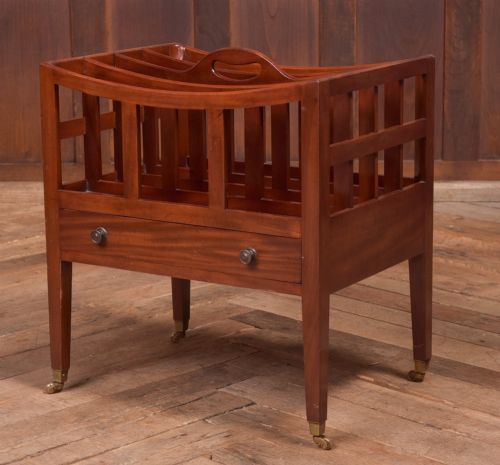
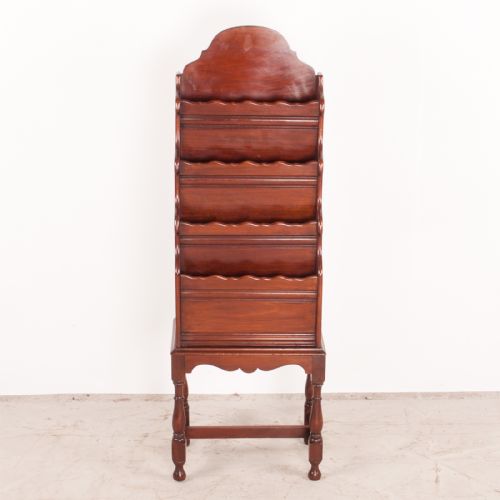
A mahogany music canterbury organises scores and sheets with slotted tiers and turned supports, combining utility with refined timber figure.
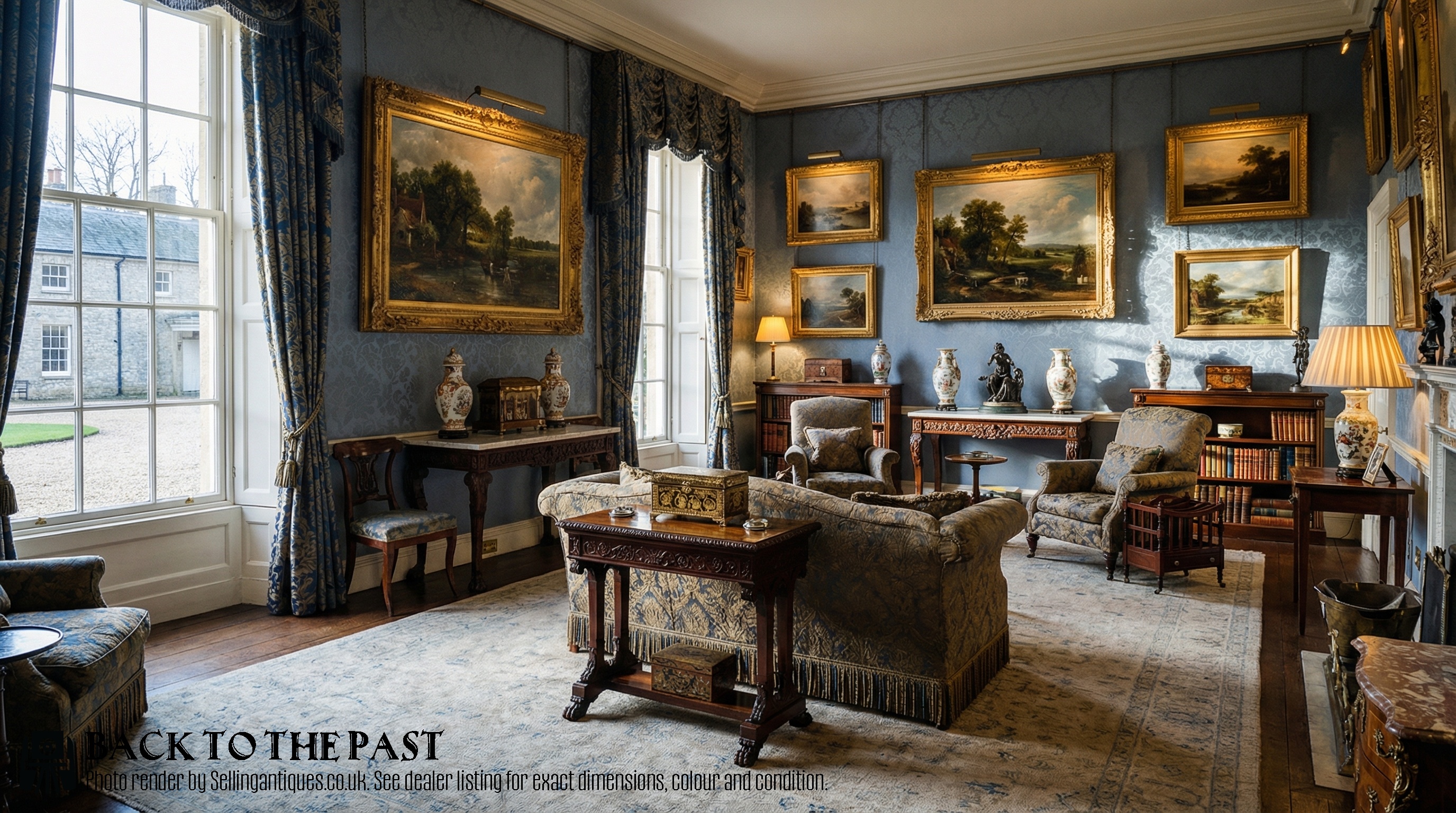
Mahogany Music Canterbury
Most examples encountered span the Georgian, Regency and Victorian periods, with variations ranging from boat-shaped designs to tiered music stands. These pieces served both functional storage and display purposes in nineteenth-century drawing rooms.
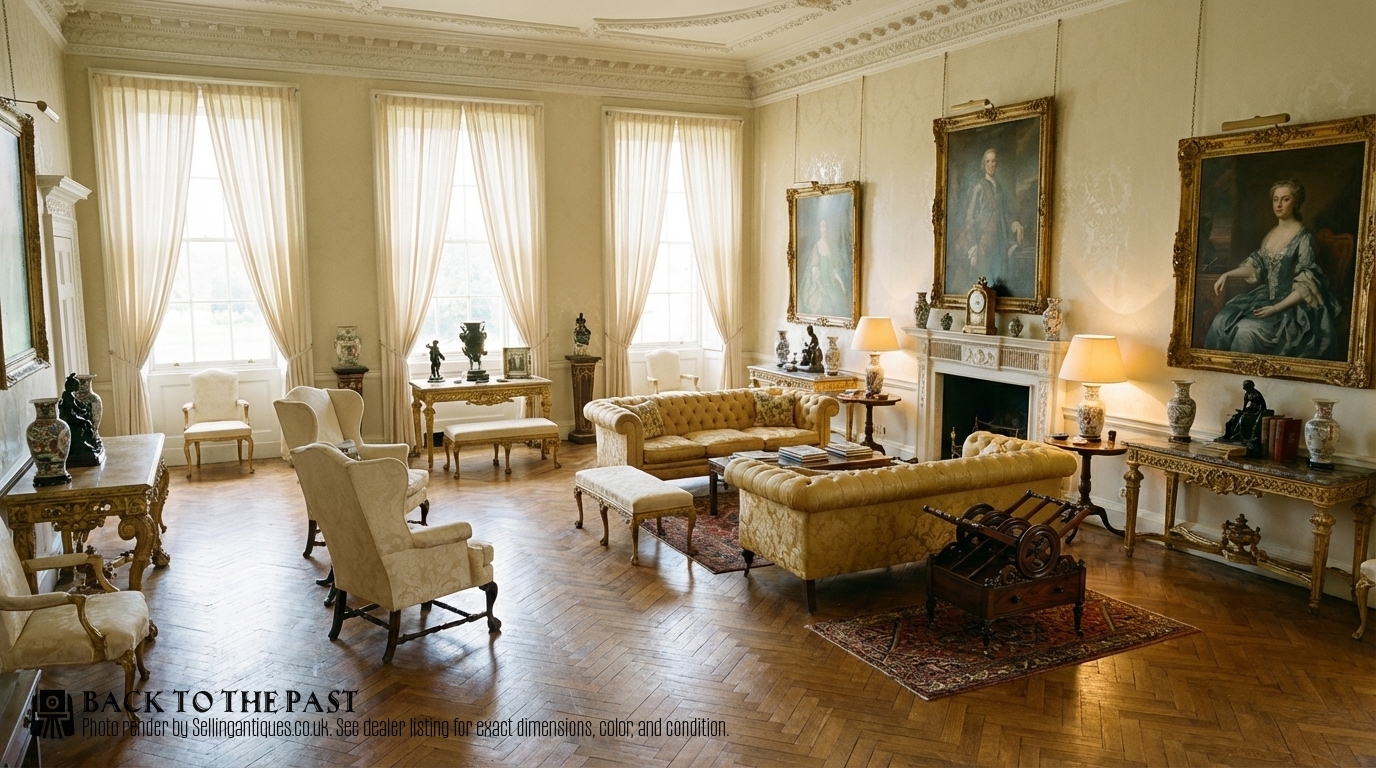
How They Were Made
Makers utilised solid mahogany and Cuban mahogany for structural frames, sometimes selecting figured grain for visible surfaces. Secondary timbers were employed for internal drawer linings and hidden framing.
Brass fittings such as castors and handles appear frequently across Regency pieces, whilst inlay and ebony banding provide linear contrast on select Georgian and Victorian iterations.
Mahogany Music Canterbury Retail Price Guide 2026
Typical asking prices for mahogany music canterbury among the pieces listed under this phrase on Sellingantiques today, from the lower quarter to the upper quarter. They describe what is for sale here now, not the wider market.
Listings feature mahogany, Cuban mahogany, brass, glass, and ebony across Georgian, Regency, and Victorian periods.
What Varies in Quality
Quality rests upon the crispness of turned legs, the precision of joinery within the slatted divisions, and the depth of the mahogany figure. Finer items exhibit thoughtful proportion and careful timber selection across all visible angles.
The integration of functional elements, such as smooth-running drawers and original brass castors, distinguishes standard production from more ambitious cabinet work.
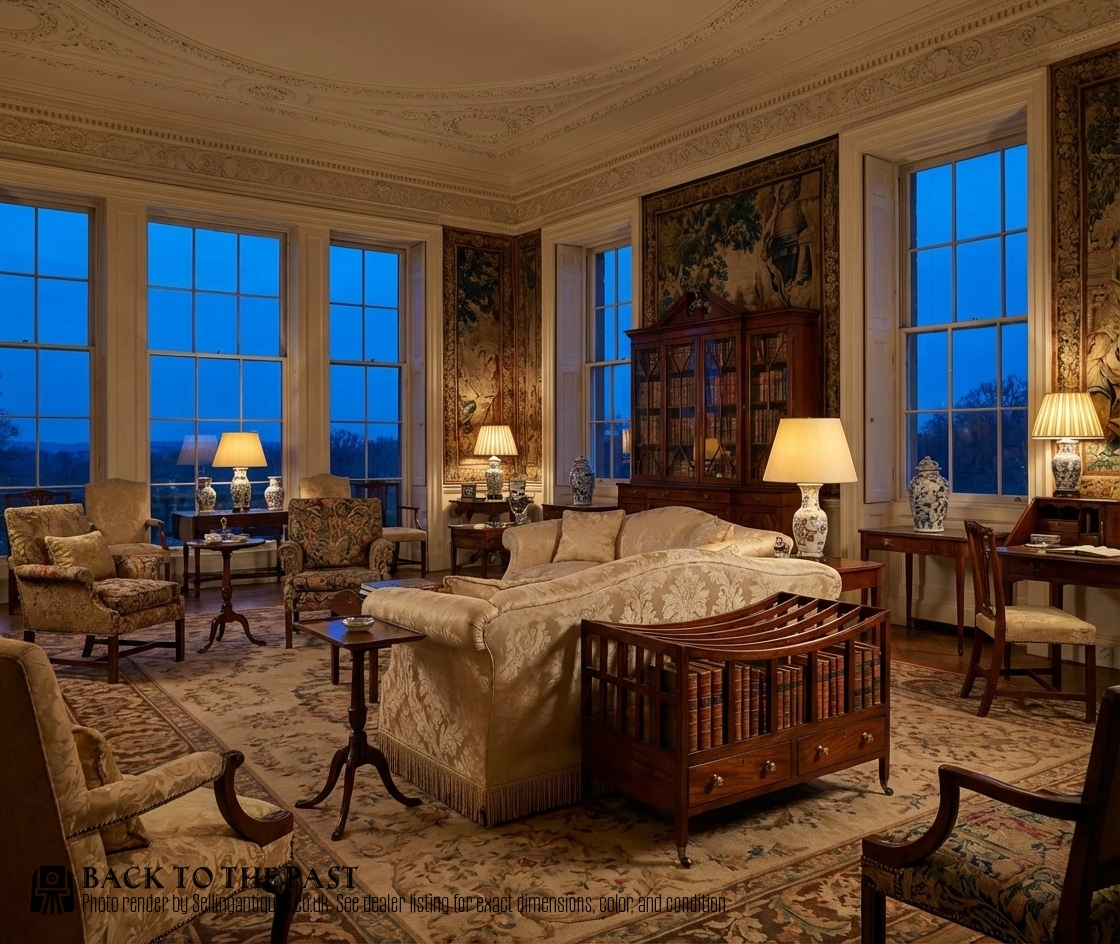
The Mahogany Music Canterbury Glossary
- Canterbury
- A low stand with partitioned vertical sections used originally for sheet music and later for newspapers. The name derives from the Archbishop of Canterbury, who commissioned the first known design.
- Cuban mahogany
- A dense, heavy timber prized for its rich colour and dark figuring. Cabinet makers favoured it during the eighteenth and early nineteenth centuries for high-status furniture.
- Dip top
- A curved or scalloped upper edge to the partition dividers, common in Regency examples. This contour allows easier retrieval of smaller scores.
- Undershelf
- An additional lower platform fitted between the legs of the stand. It provides extra space for storage or display beneath the main tier.
Mahogany Music Canterbury: Frequently Asked Questions
What is a music canterbury used for?
These stands were designed to hold sheet music, folios and song books near a piano or music room seating.
Today, they function well for organising magazines, newspapers and modern periodicals in living spaces.
How do I identify a Regency canterbury?
Regency pieces often feature boat-shaped frames, delicate turned legs, and brass castors for movement.
They frequently display clean classical lines without heavy Victorian ornamentation.
Are drawers standard on a canterbury?
Many examples incorporate a shallow drawer beneath the slotted partitions for smaller accessories.
Some simpler models omit the drawer, relying entirely on the open upper tiers.
How do I care for mahogany furniture?
Keep the timber away from direct heat sources and strong sunlight to prevent the polish from fading.
Apply a traditional wax polish occasionally to nourish the grain and maintain the surface sheen.