

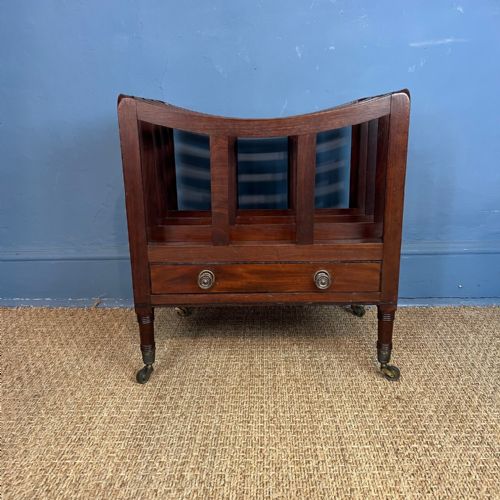
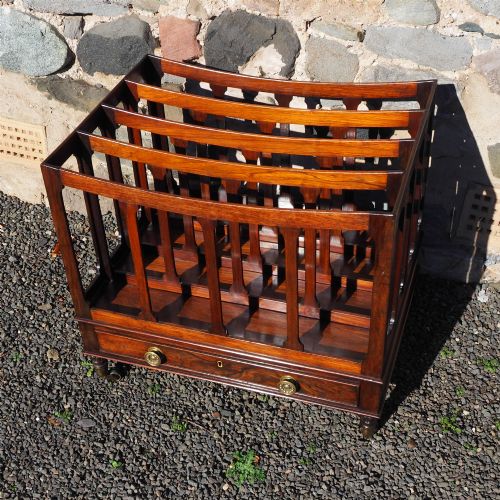
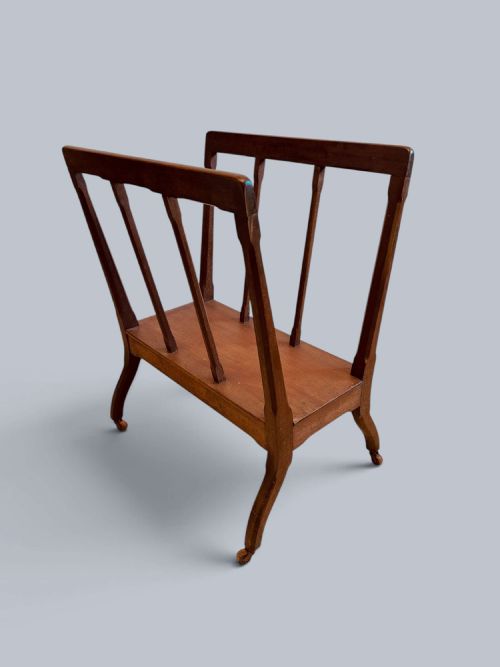
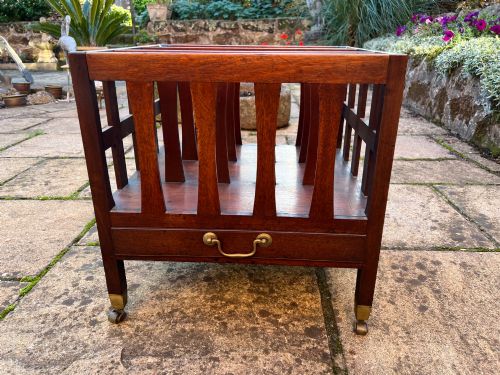

Georgian Music Canterbury
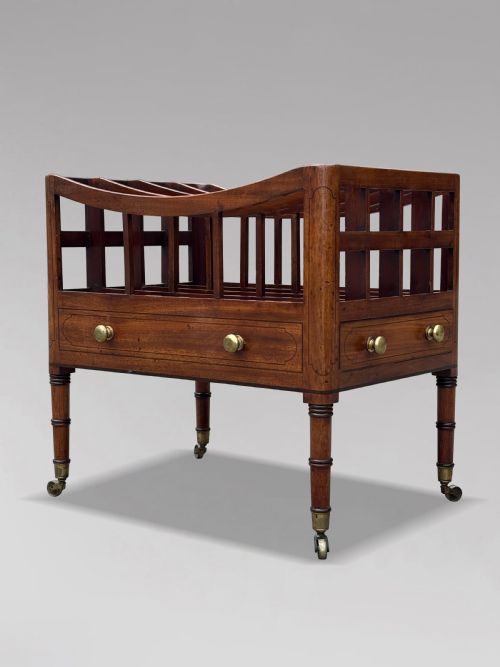
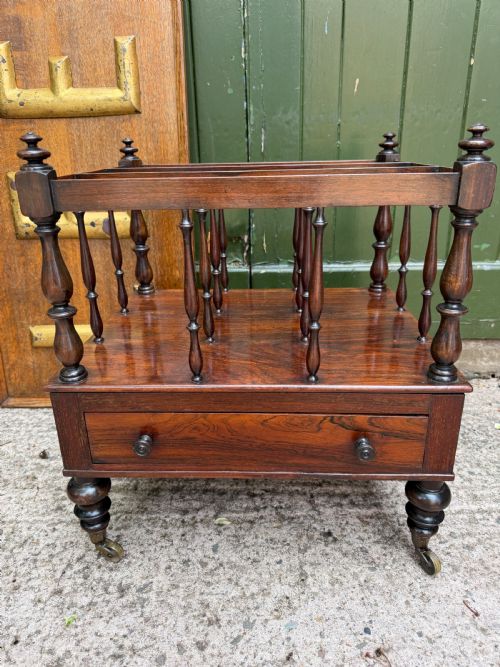
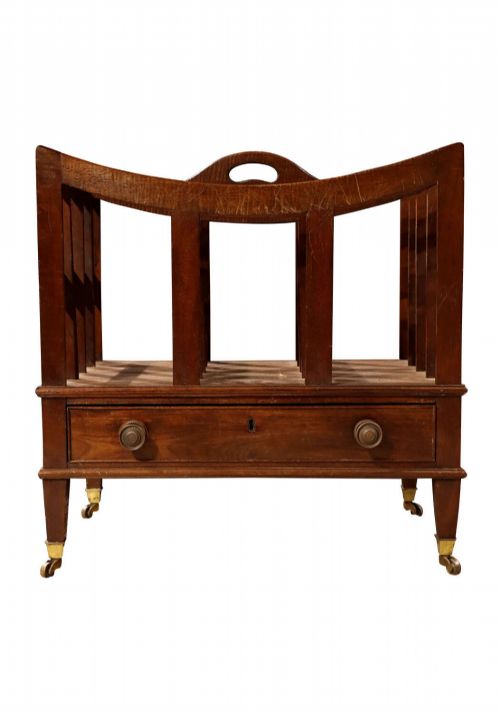
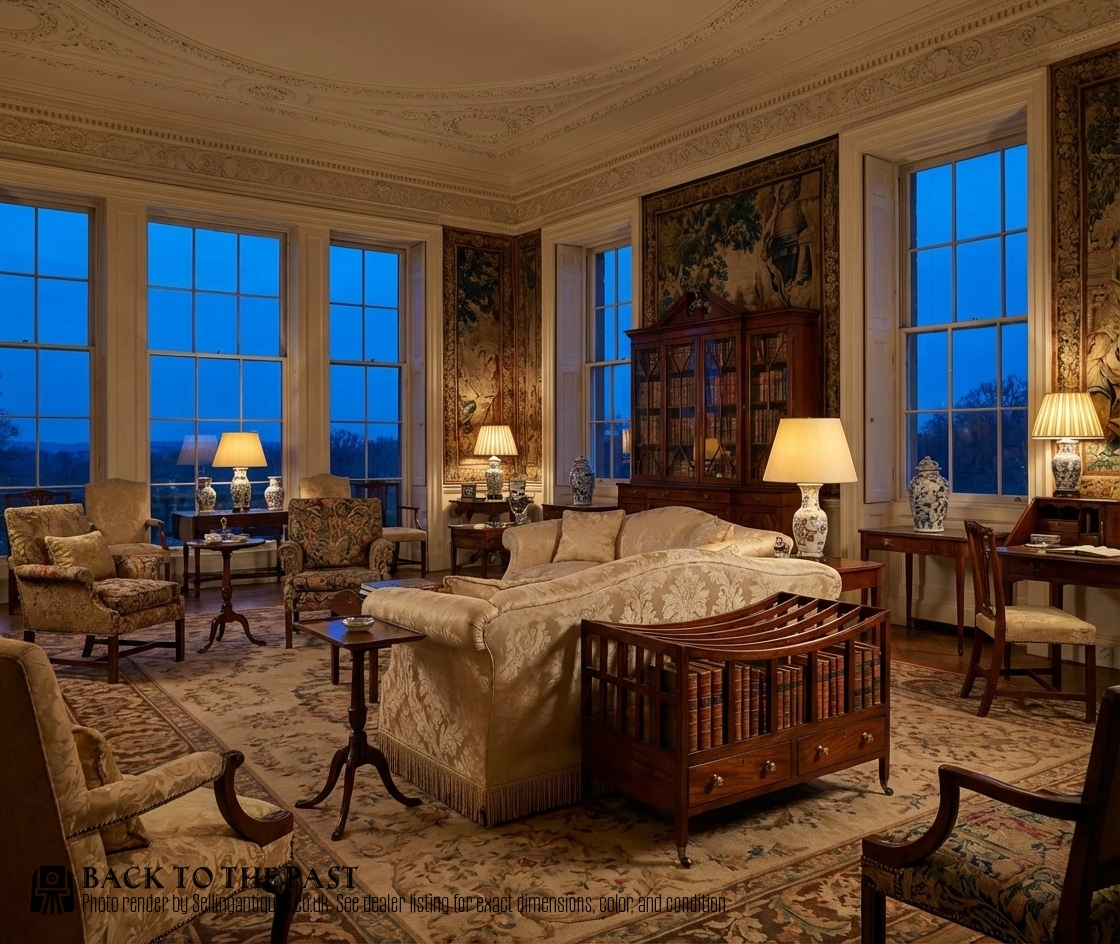
A Georgian music canterbury keeps scores and folios tidy beside the pianoforte.
Georgian Music Canterbury
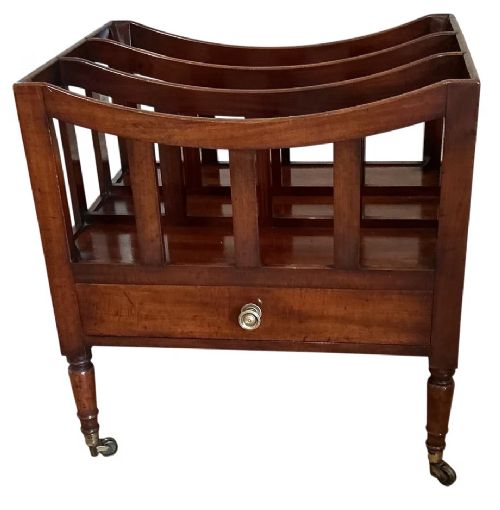
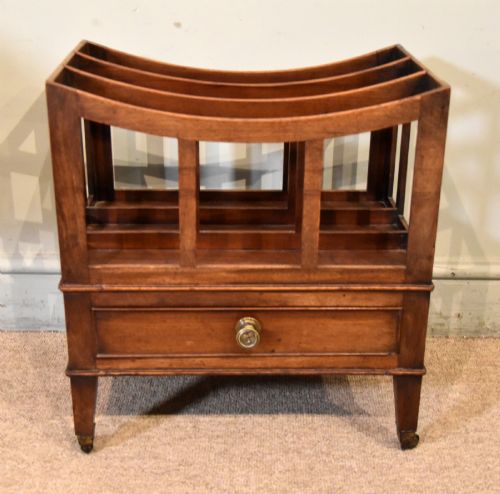
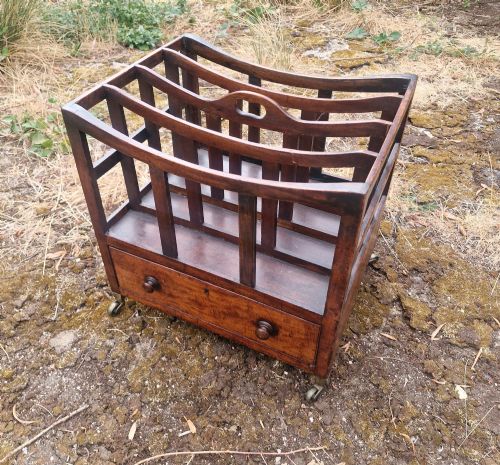
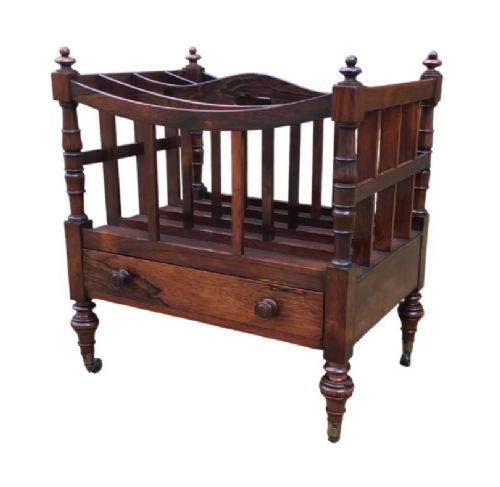
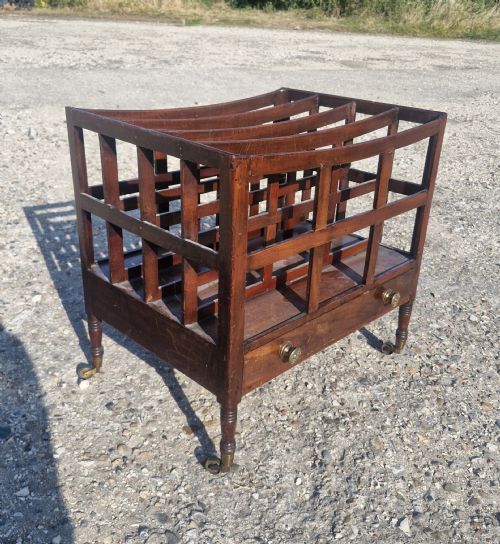
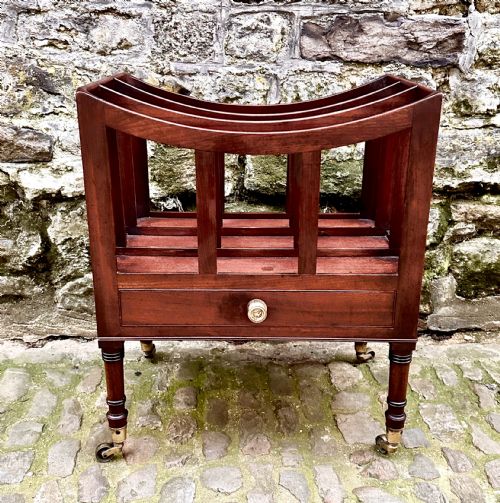
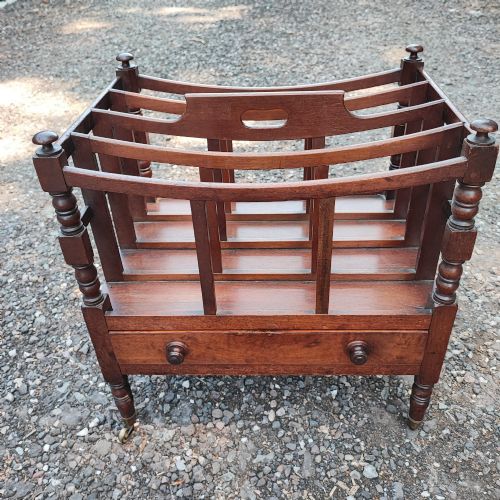
Most examples found here date from the late eighteenth and early nineteenth centuries, spanning the Georgian, Regency, George III and William IV periods. Mahogany and rosewood predominate, frequently shaped into boat outlines or rectangular frames.
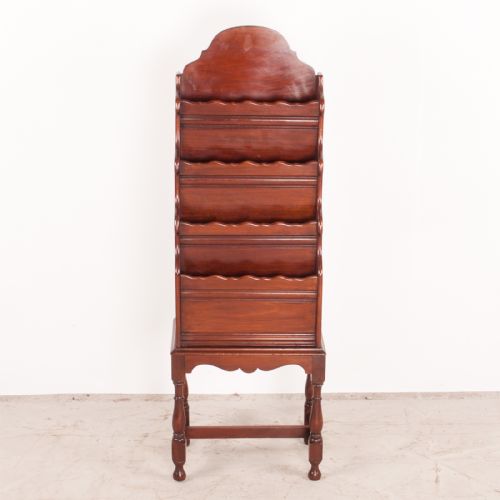
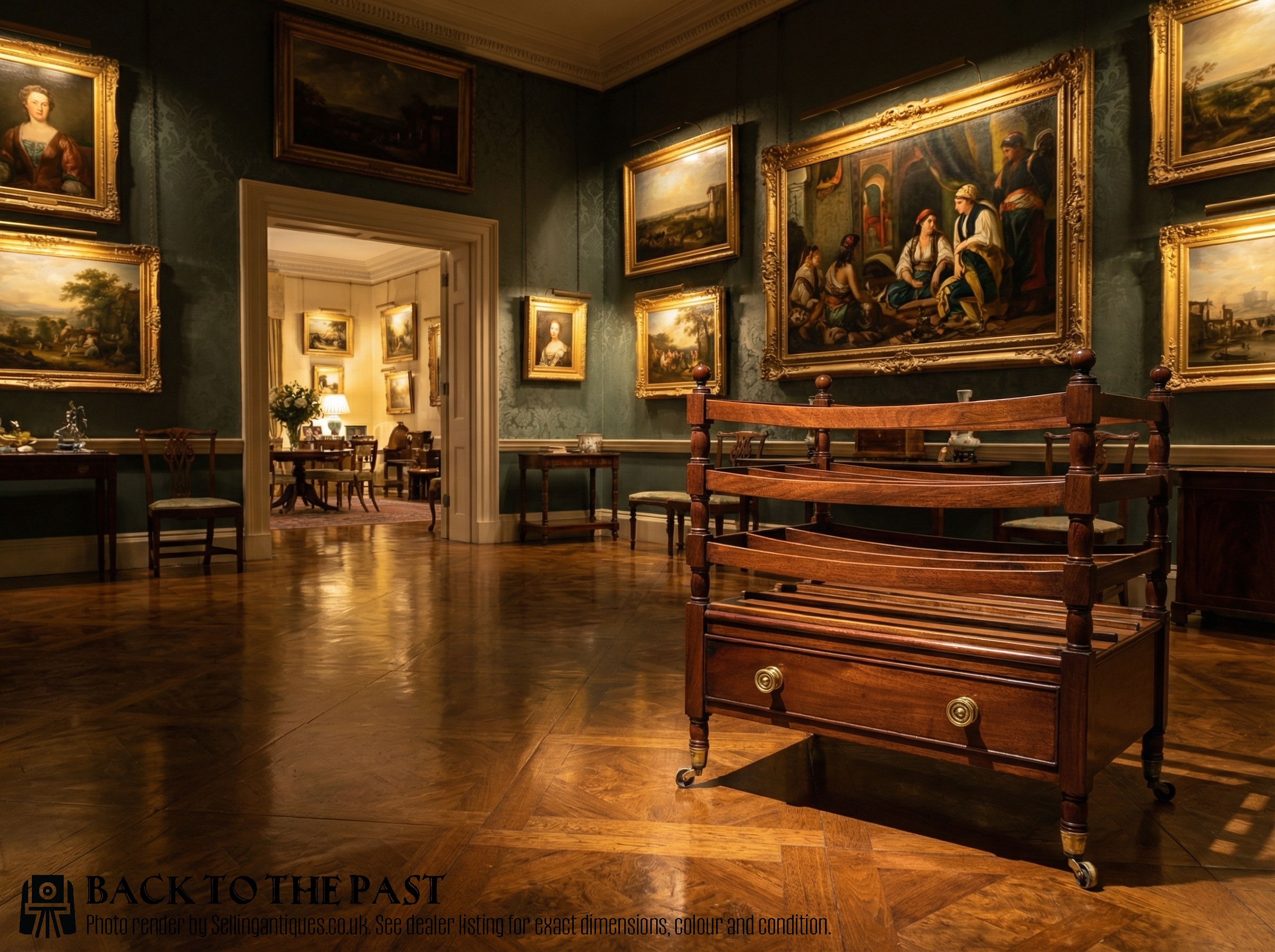
While many serve as magazine racks today, their original purpose was the storage of unbound musical scores. The four-division layout remains the standard form across both Georgian and later revival pieces.
Assessing quality and finish
The choice of timber dictates much of the visual weight, with richly figured Cuban mahogany and highly grained rosewood sitting at the upper end of the scale. Subtle details like ebony stringing and crisp turnings separate standard utility pieces from finer cabinet work.
Structural integrity relies on the robust joinery of the vertical dividers and the smooth operation of any base drawer. Pieces that retain their original castors and surface patina demonstrate superior preservation over time.
Georgian Music Canterbury Retail Price Guide 2026
Typical asking prices for georgian music canterbury among the pieces listed under this phrase on Sellingantiques today, from the lower quarter to the upper quarter. They describe what is for sale here now, not the wider market.
Materials range from standard mahogany and rosewood to figured Cuban mahogany with ebony banding.

The Georgian Music Canterbury Glossary
- Canterbury
- A low stand with upright divisions used for holding sheet music, newspapers or magazines. The name derives from the Archbishop of Canterbury, who is said to have commissioned the first such rack.
- Boat shaped
- A distinct framing style where the curved ends of the rack sweep upward like the bow and stern of a vessel. This silhouette appears frequently in Regency examples.
- Rosewood
- A dense, heavily figured timber valued for its dark purple-brown hue and dramatic black grain patterning. It was favoured by Regency makers for high-status pieces.
- Cuban mahogany
- A superior grade of mahogany known for its deep colour and rich grain. Cabinetmakers utilised it extensively during the eighteenth and early nineteenth centuries.
- Stringing
- Thin lines of contrasting wood, such as ebony, inlaid into the primary surface of a piece to create decorative borders. It defines panel edges and tabletops.
Georgian Music Canterbury: Frequently Asked Questions
What is a georgian music canterbury used for?
These low stands were originally designed to hold sheet music and bound musical scores near a piano or harp in the parlour. Today, they function equally well for organising current newspapers, periodicals and oversized books.
The partitioned divisions keep soft-covered folios standing upright so titles remain visible and pages avoid creasing. Their compact footprint allows them to sit neatly beside seating or against empty wall space.
How do I date a georgian music canterbury?
Dating relies on timber choice, leg style and overall silhouette, moving from straight-legged George III designs toward curved Regency boat shapes and heavy William IV proportions. Finer grain in the mahogany and crisper turning on the legs generally point toward the earlier end of the nineteenth century.
Later Victorian and Edwardian revival pieces often heavier timber dimensions and machine-cut details that distinguish them from genuine Georgian and Regency examples.
Are all these stands made of mahogany?
Mahogany is the dominant timber across the inventory, appearing in standard forms as well as highly figured Cuban variants. Rosewood also occurs frequently, particularly among Regency examples.
Accents of ebony and subtle inlay work frequently appear on mahogany frameworks, while structural carcases rely entirely on these durable hardwoods.
Can I use a music canterbury as a magazine rack?
The vertical divisions match the dimensions of modern periodicals, weekly journals and large format publications perfectly. Many owners repurpose them precisely for this task beside a reading chair.
The open slatted construction allows quick access to daily newspapers and magazines while keeping living spaces tidy.