

Mahogany Magazine Stand
A mahogany magazine stand organises periodicals with classic timber grain and practical division.

Mahogany Magazine Stand
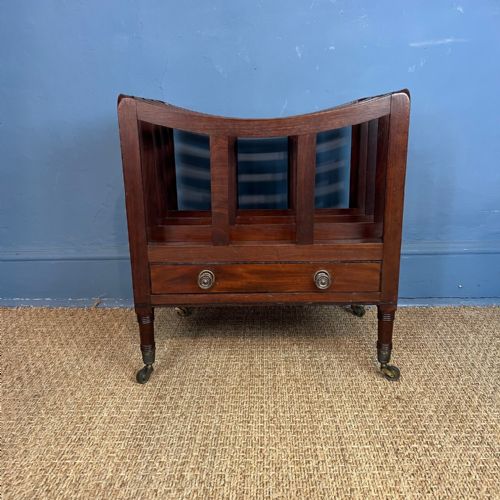
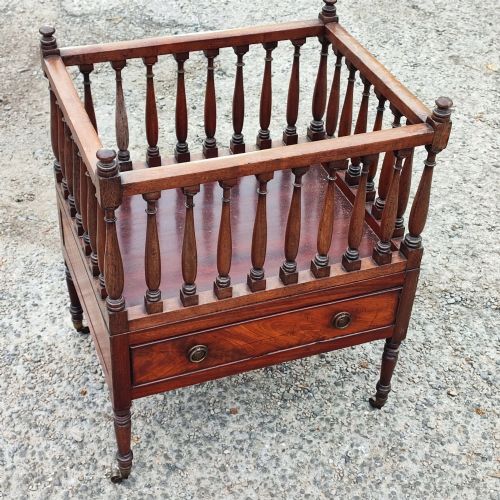
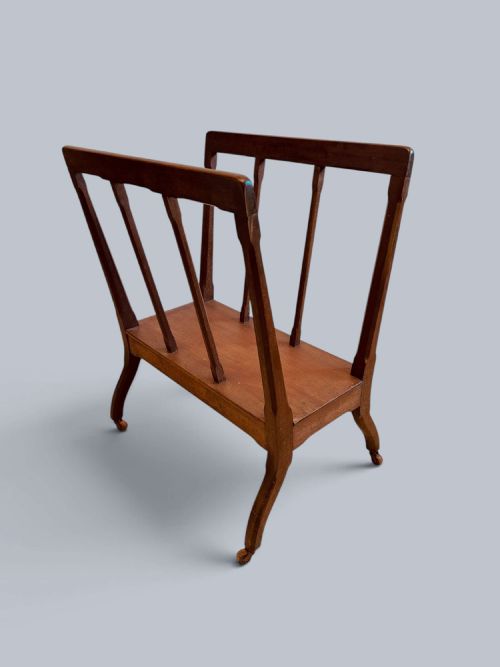
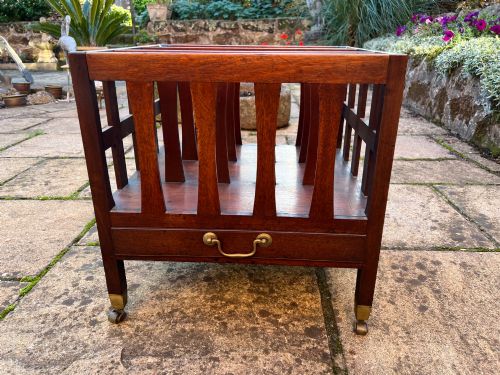
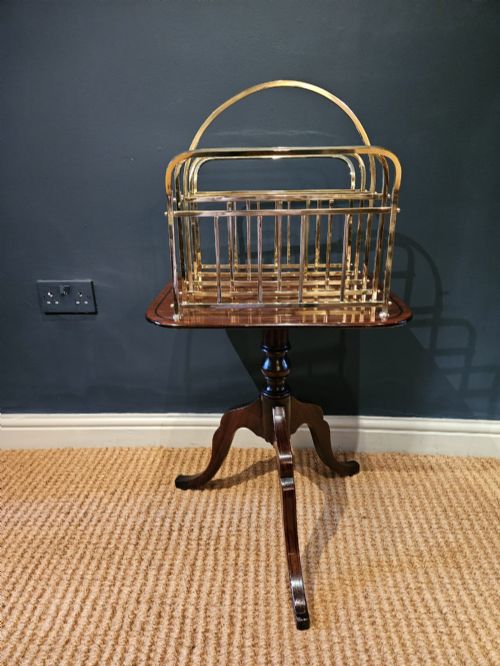
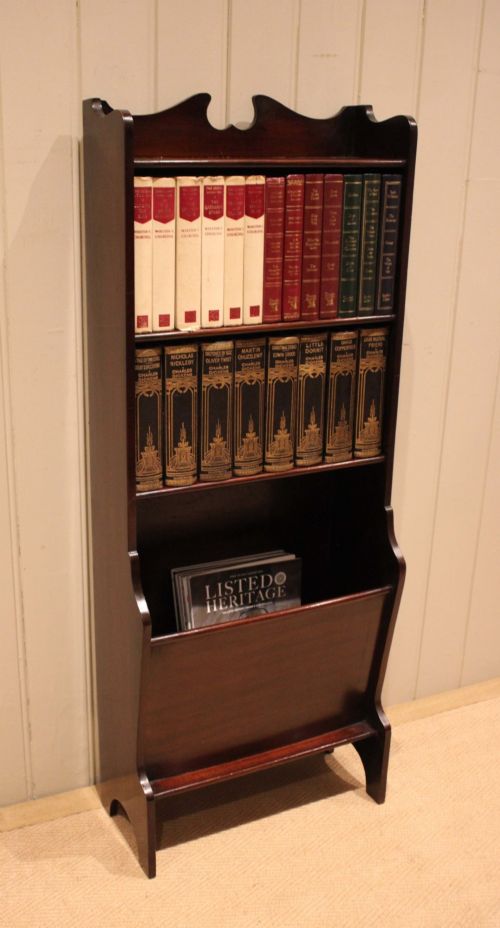
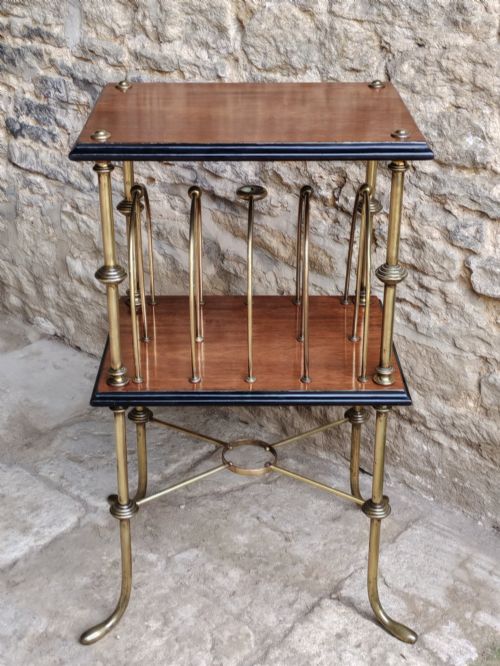
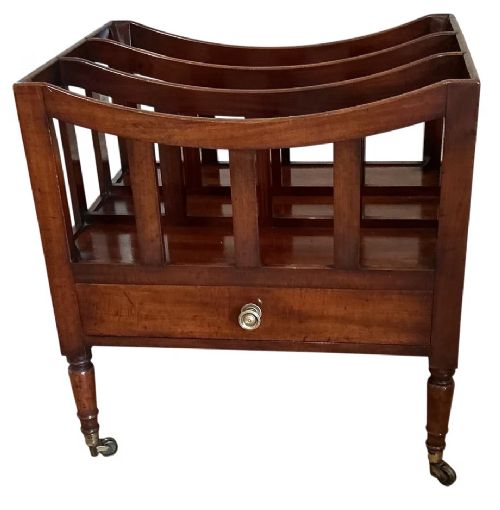
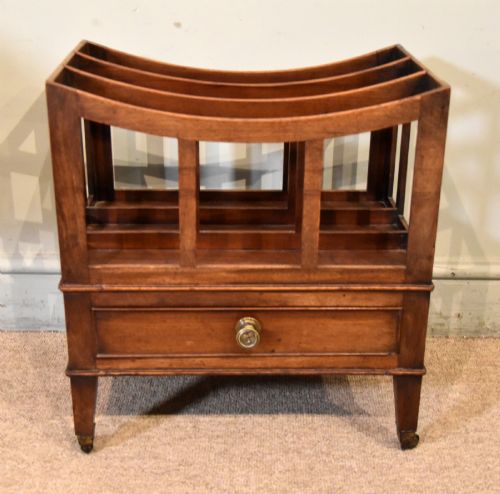
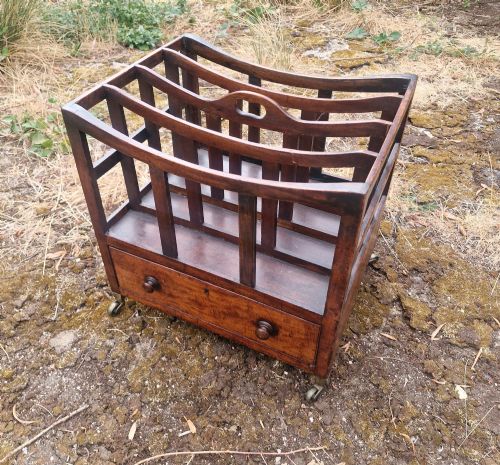
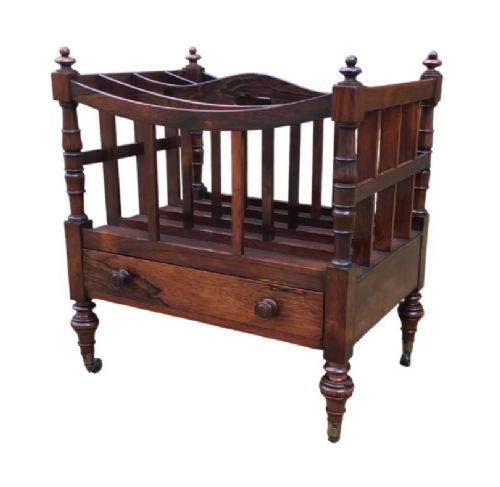
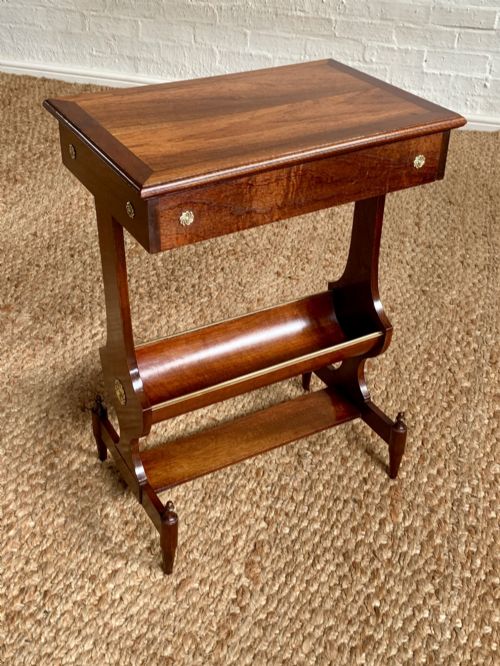
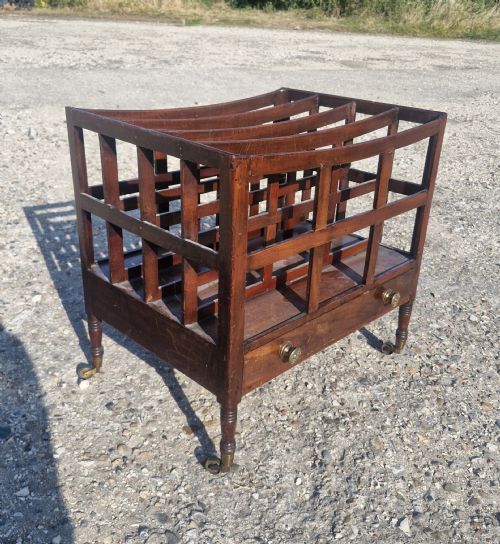
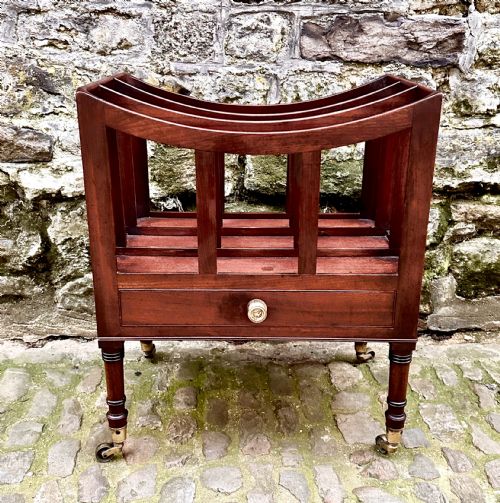
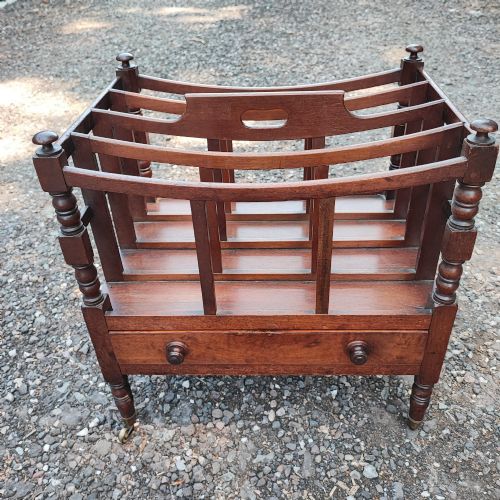
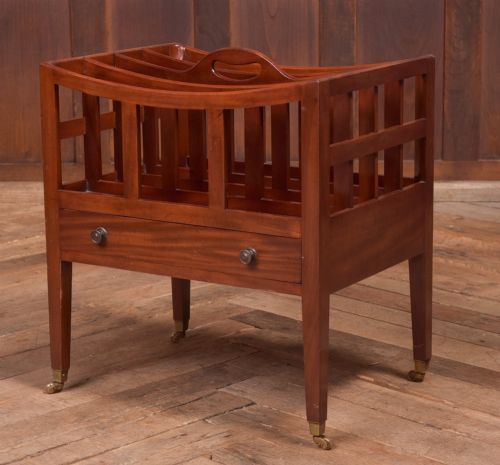
A mahogany magazine stand takes many forms across the inventory, appearing as traditional canterburys, tiered racks, revolving bookcases, and folio stands. These pieces serve the practical purpose of holding newspapers, music sheets, and periodicals within domestic spaces.
The selection ranges across several distinct periods, including George III, Regency, William IV, Victorian, Edwardian, and the early twentieth century around 1920. Buyers frequently encounter canterburys alongside revolving designs and simple book troughs.
Origins span Georgian workshops through to Edwardian and later twentieth-century production. The recurring presence of canterburys highlights a sustained demand for partitioned storage within library and living spaces.
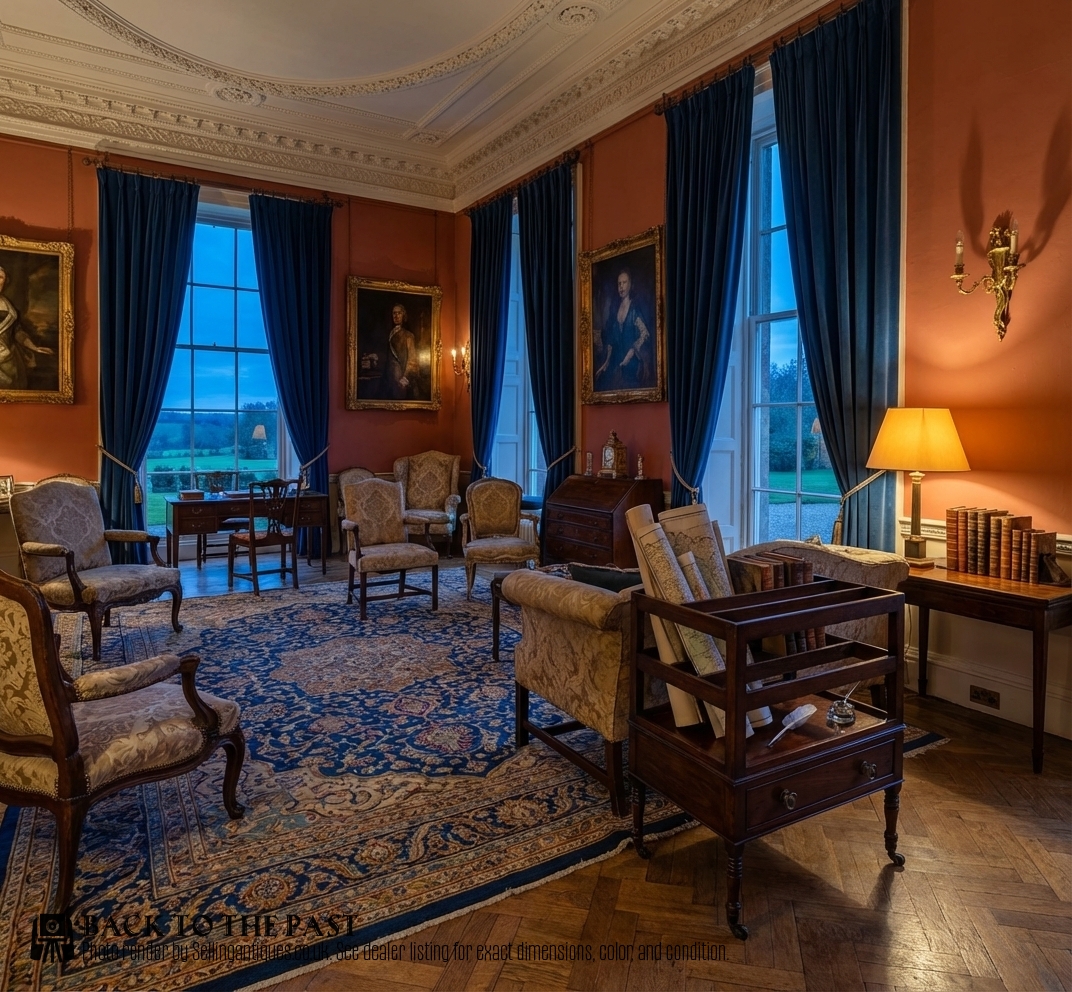
Markers of construction and design
Quality separates pieces through the selection of timber, such as figured Cuban mahogany, and the crispness of turned legs and brass castors. Finer examples display deliberate proportions and integrated inlay work rather than plain utility.
Structural integrity depends on the rigidity of divisions and the smoothness of revolving mechanisms or movement on castors. Maker attribution, such as Gillow's or Liberty, distinguishes standard workshop production from notable design houses.
Mahogany Magazine Stand Retail Price Guide 2026
Typical asking prices for mahogany magazine stand among the pieces listed under this phrase on Sellingantiques today, from the lower quarter to the upper quarter. They describe what is for sale here now, not the wider market.
Listings feature mahogany, brass, satinwood inlay, and Cuban mahogany across pieces dated from the eighteenth to the twentieth century.
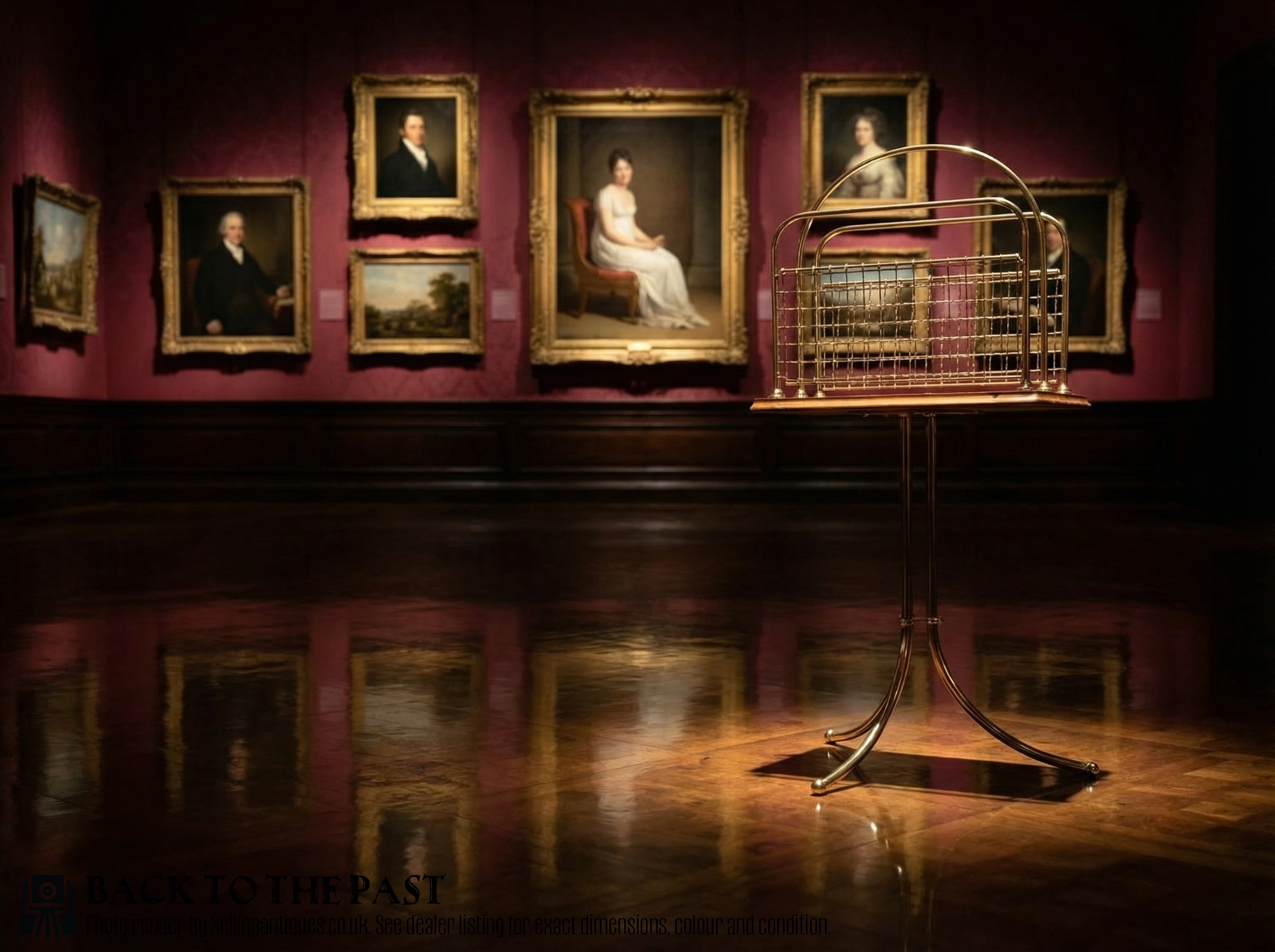
Liberty·Redman & Hales Ltd
The Mahogany Magazine Stand Glossary
- Canterbury
- A low stand with partitioned sections for holding sheet music, newspapers, or magazines, often fitted with castors. This form developed in the eighteenth century and remained popular through the Victorian era.
- Folio Stand
- An adjustable or folding stand designed to hold large books, prints, or portfolios. These often feature grand scale construction.
- Cuban Mahogany
- A dense, dark timber harvested in the Caribbean, prized for rich grain patterns and heavy weight. Furniture makers utilised this material for high-status pieces.
- X Frame
- A structural support formed by intersecting diagonal members. This configuration appears on music canterburys and provides rigid division.
- Revolving Bookcase
- A rotating stand mounted on a central axis and brass base, allowing access to books and periodicals from any angle.
Mahogany Magazine Stand: Frequently Asked Questions
What is a canterbury?
A canterbury is a low, partitioned stand originally designed for sheet music and newspapers. These pieces typically feature vertical divisions and small legs fitted with castors for easy movement.
Over time, the form adapted to hold modern periodicals and magazines while retaining its signature compartmentalised layout.
How do I identify a Regency piece?
Regency items often display classical restraint, clean lines, and architectural details. Turned legs and brass mounts appear frequently on pieces from this era.
Cuban mahogany and polished brass castors further signal the Regency period within this furniture category.
Where were these stands used?
These stands belonged in libraries, drawing rooms, and music rooms of period homes. They kept daily newspapers and current reading material close to seating areas.
Music canterburys sat near pianos to hold scores, while revolving book stands occupied corners or desk sides.
How should I care for mahogany?
Mahogany requires minimal maintenance, benefiting from dusting with a soft cloth and occasional application of appropriate furniture wax. Direct sunlight and sudden temperature changes should be avoided to protect the timber finish.
Preserving the polish maintains the depth of grain visible in Cuban and standard mahogany varieties.