


Wooden Magazine Holder
When you search for a wooden magazine holder, you are looking at functional nineteenth- and early twentieth-century furniture designed to keep periodicals tidy.

Wooden Magazine Holder
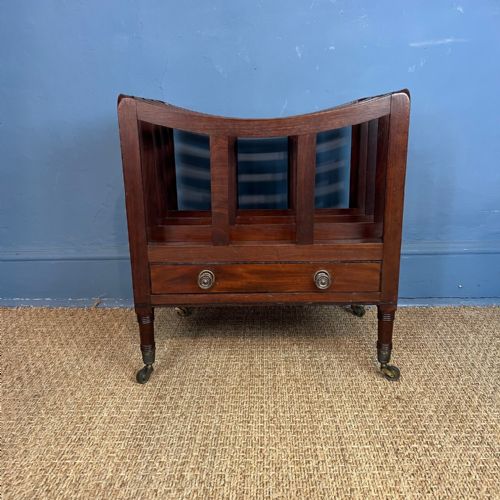
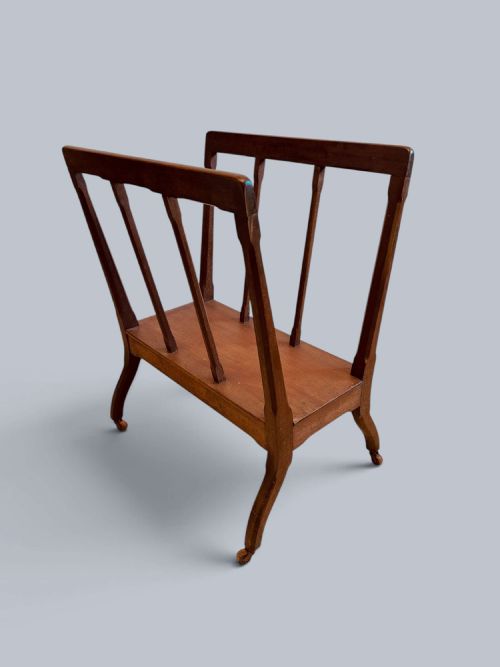
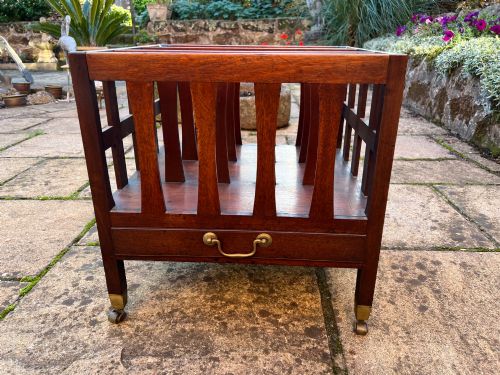
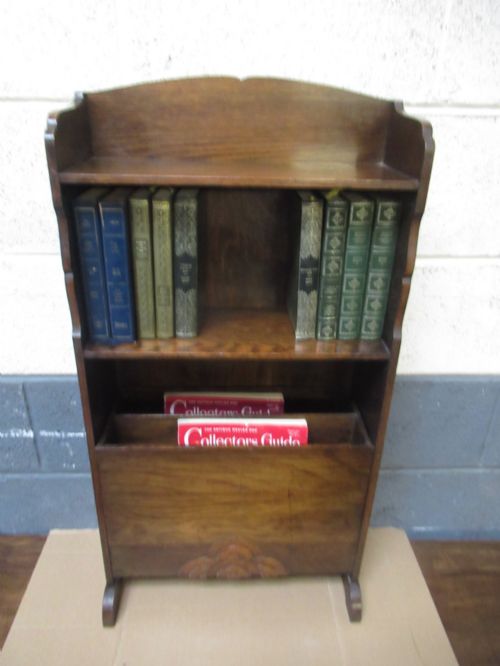
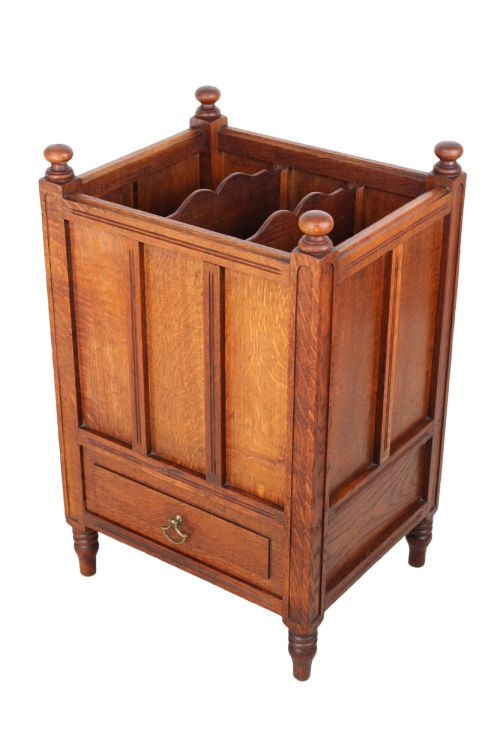
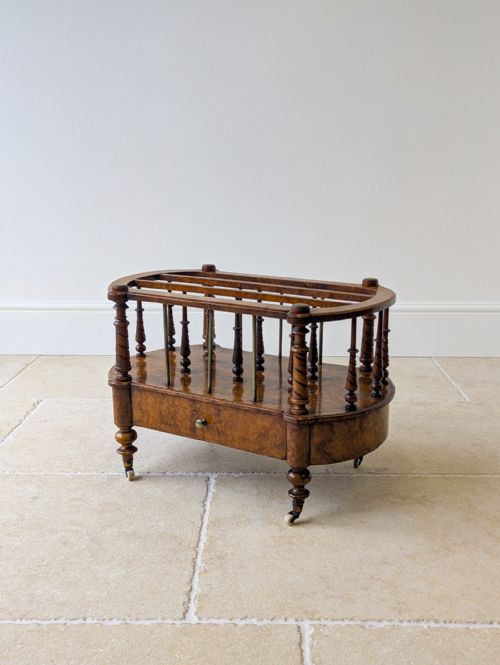
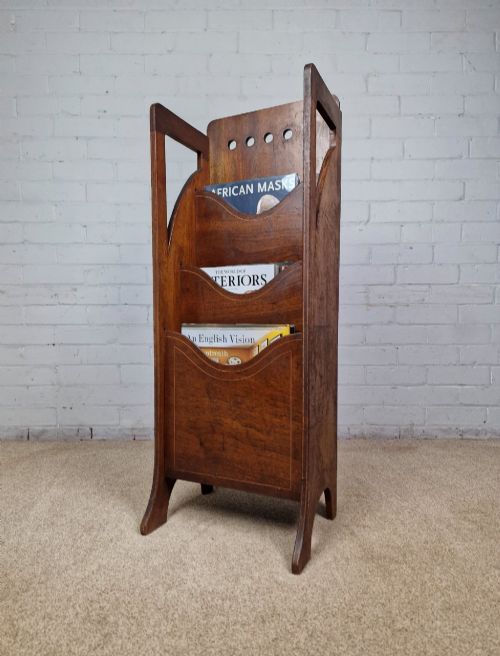
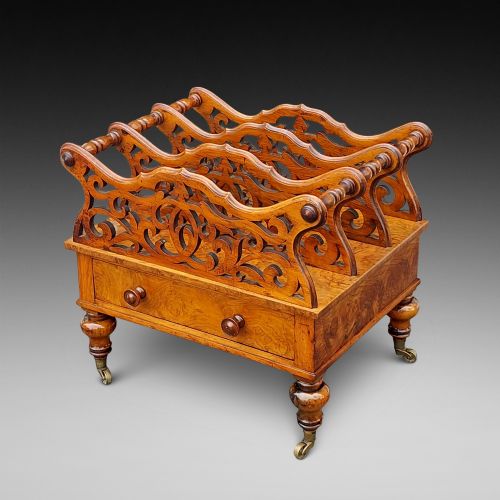
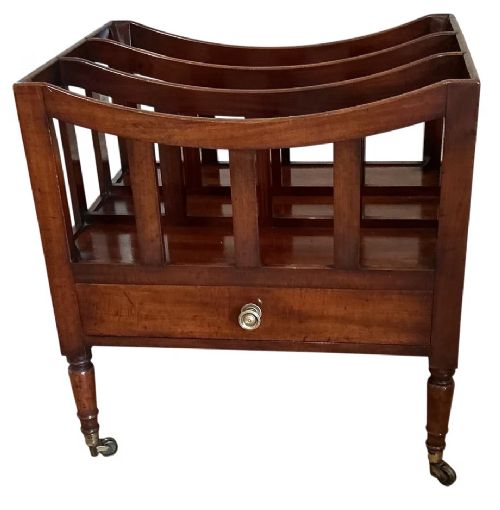
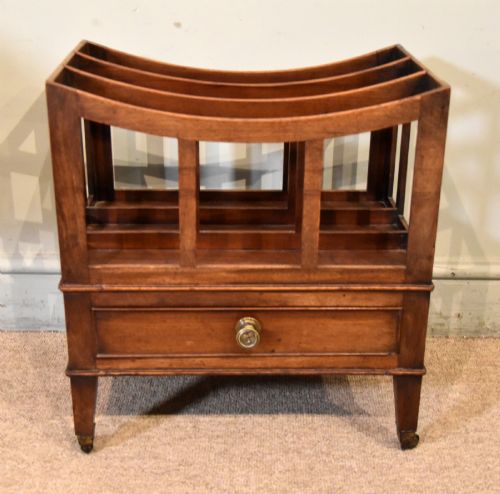
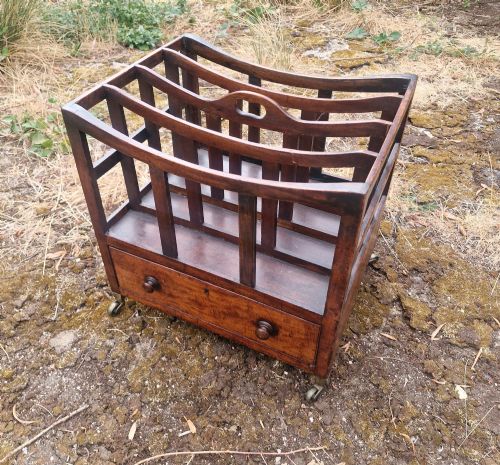
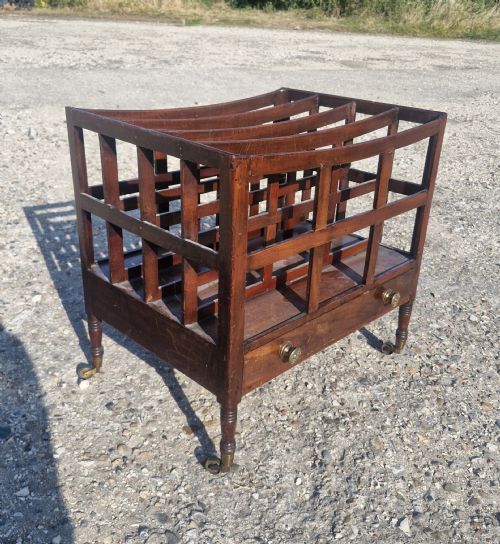
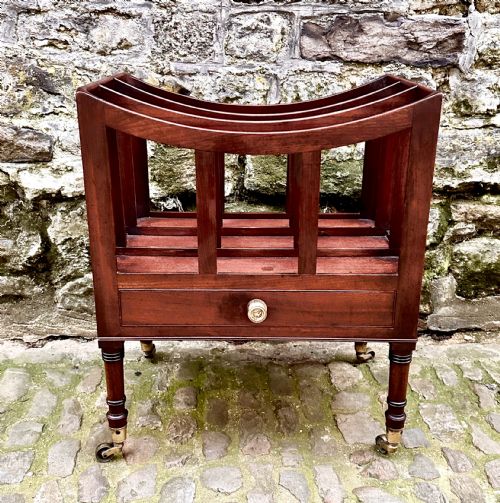
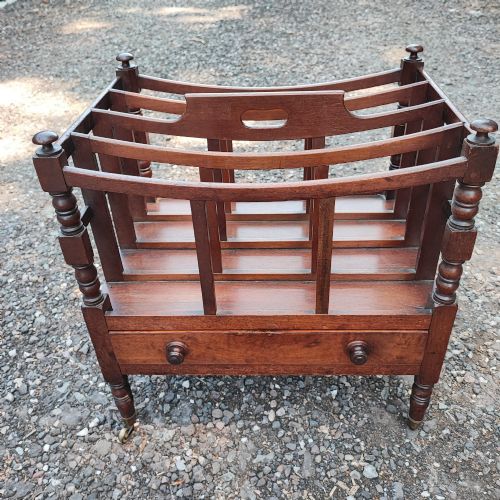
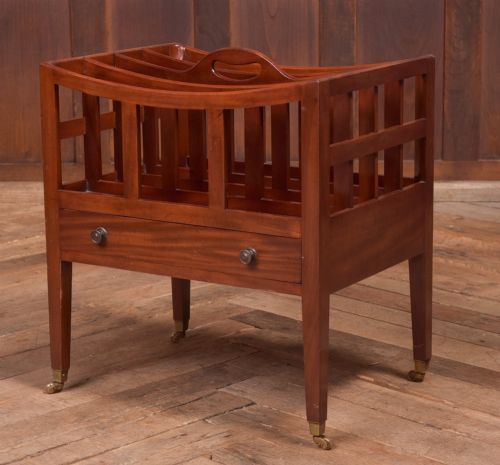
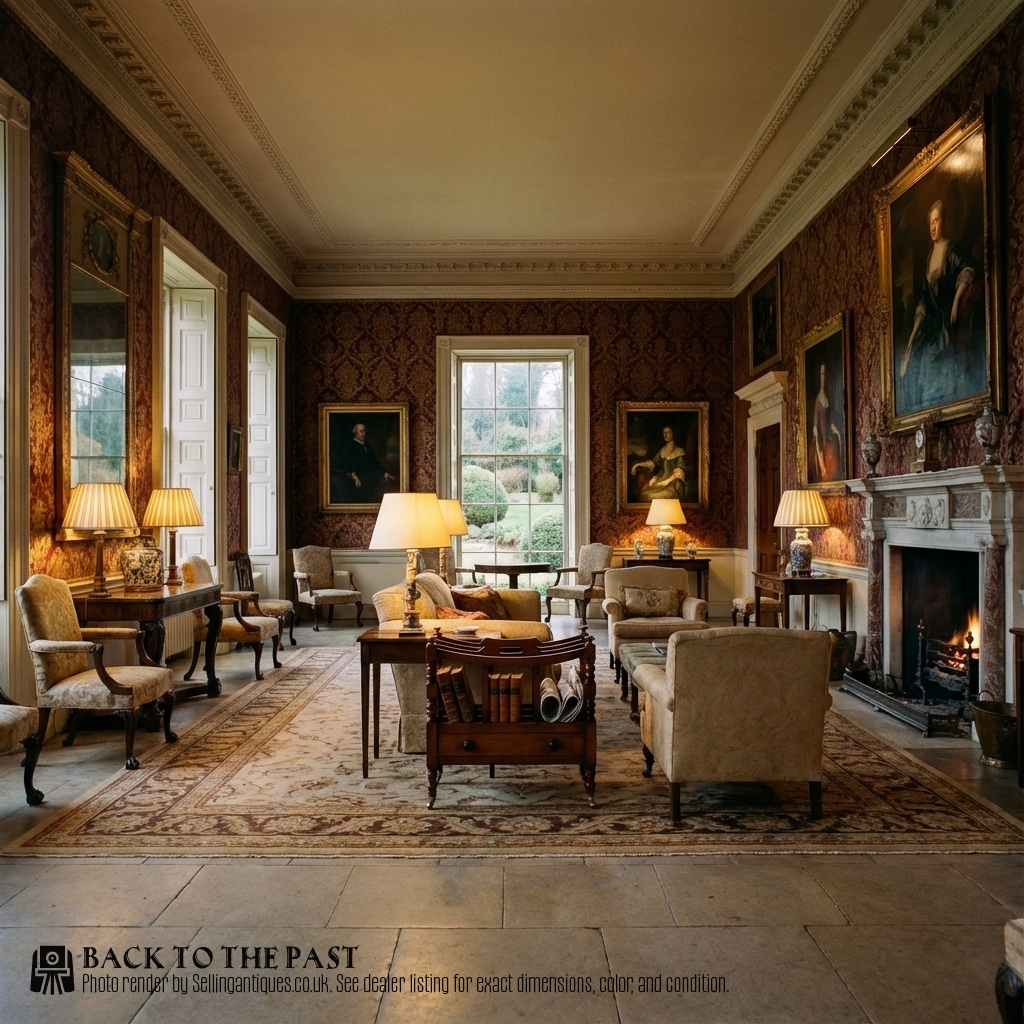
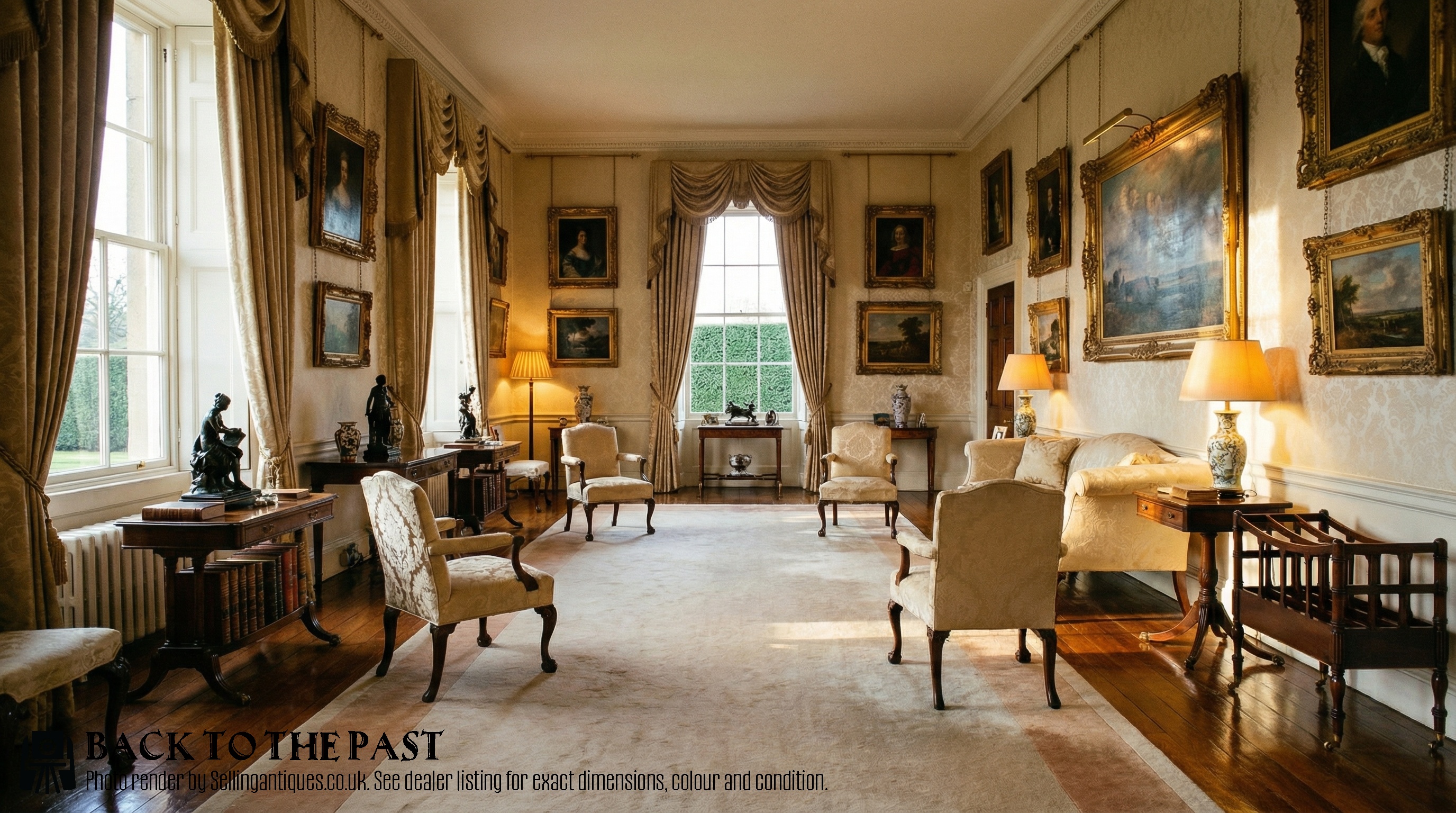
A wooden magazine holder most commonly takes the form of a Canterbury, a traditional piece featuring compartmented dividers designed to hold newspapers, music sheets, and periodicals. These pieces span several distinct eras, appearing in Georgian, Regency, Victorian, Edwardian, and Arts and Crafts guises. Alongside standard floor-standing racks and canterburys, the selection includes wall shelves, music stands, and fireside book troughs.
The materials reflect the prevailing cabinet-making woods of their respective periods, dominated by mahogany, walnut, burr walnut, rosewood, oak, and fruitwood. Many examples incorporate subsidiary materials such as brass fittings, ceramic accents, or porcelain elements to enhance their utility and appearance. Forms range from boat-shaped designs and multi-tier shelving units to simple open-front slope-shelf stands.
How they were made
Cabinet makers utilised dense hardwoods like mahogany, walnut, and rosewood, often selecting figured veneers such as burr walnut to create visually striking surfaces. Oak and fruitwood appear frequently in country house and Arts and Crafts pieces, where simpler construction methods highlight the natural grain. Joinery relied on traditional techniques to form the vertical divisions, drawers, and lower shelves typical of canterburys and stands.
Metal components played a practical role in daily use, with brass castors fitted to the legs of Regency and Victorian examples for ease of movement. Turned legs, carved details, and integrated drawers for smaller items required precise carpentry skills. These construction choices ensured that pieces made for daily handling in domestic rooms could endure decades of service.
Wooden Magazine Holder Retail Price Guide 2026
Typical asking prices for wooden magazine holder among the pieces listed under this phrase on Sellingantiques today, from the lower quarter to the upper quarter. They describe what is for sale here now, not the wider market.
Some nineteenth-century canterburys came equipped with castors so eager readers could wheel their newspapers closer to the hearth.
What varies in quality
Quality reveals itself in the choice of timber and the handling of the wood, with figured mahogany and burr walnut representing the upper end of cabinet-making standards. Finer pieces demonstrate superior joinery in the division frames, tighter veneer matching, and more refined turnings on the legs and uprights. Subsidiary materials like cast brass fittings add distinction compared to simpler iron or plain wooden elements.
The proportion and architectural presence of a piece dictate its standing within the range. Pieces from the Georgian and Regency periods often exhibit crisper carving and more harmonious proportions than later revival items. The presence of integrated drawers or multi-tier shelving adds complexity that separates standard newspaper racks from master-built canterburys.
The Wooden Magazine Holder Glossary
- Canterbury
- A low, freestanding wooden stand with compartmented dividers used originally for sheet music, newspapers, and magazines. It often incorporates a small drawer beneath the divisions.
- Burr walnut
- A highly prized wood veneer taken from the warted growth of a walnut tree, showing intricate swirling patterns. It is found on high-status Victorian pieces.
- Regency
- A style period dating from the early nineteenth century defined by classical restraint, elegant turned legs, and boat-shaped outlines. Pieces from this era often utilise rich rosewood or mahogany.
- Arts and Crafts
- A movement prioritising visible hand-craftsmanship and simple construction, typically executed in plain oak. These items eschew heavy ornamentation in favour of honest structural form.
Wooden Magazine Holder: Frequently Asked Questions
How do I date a wooden magazine holder?
Dating relies on identifying the prevailing timber, decorative style, and structural characteristics associated with specific eras. Georgian and Regency pieces favour mahogany and rosewood with refined lines, while Victorian examples often feature burr walnut and heavier proportions.
Edwardian and 1920s items introduce simpler oak construction, sometimes incorporating Arts and Crafts influences or multi-tier shelving formats.
Were these always used for magazines?
Historically, these stands were originally created to hold sheet music and daily newspapers rather than modern glossy magazines. As domestic habits changed over the nineteenth and twentieth centuries, their utility naturally shifted toward general periodical storage.
Alternative forms like fireside book troughs and wall shelves served similar functional roles in keeping reading material close to hand.
How do I care for a vintage wooden holder?
Maintenance requires keeping the piece away from direct heat sources and strong sunlight to prevent the timber and veneers from drying out or fading. Regular dusting with a dry cloth helps preserve the polished surface of hardwoods like mahogany and walnut.
Applying a traditional beeswax occasionally will maintain the natural lustre of the wood without building up heavy chemical residues.