


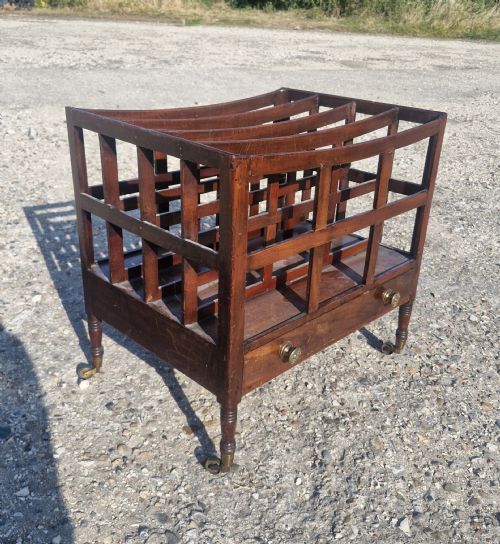
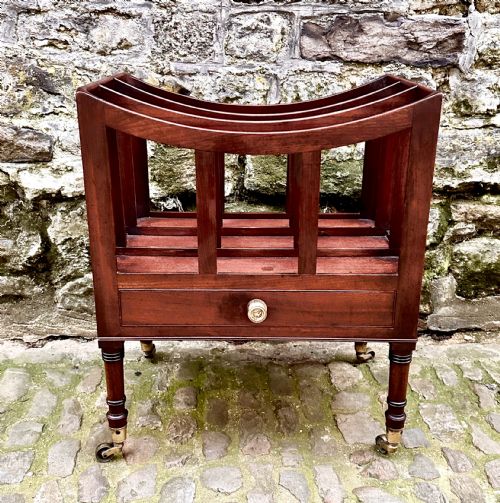
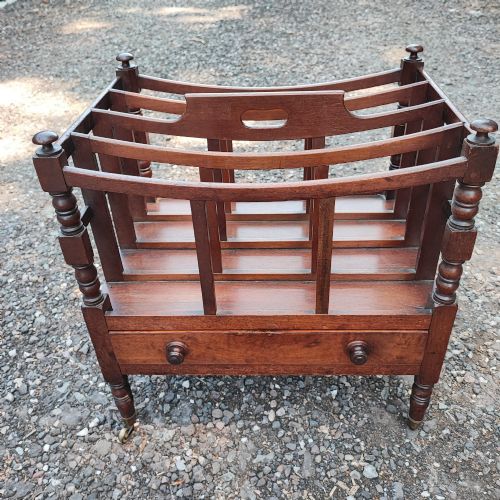
Mahogany Music Rack
A mahogany music rack serves as a practical stand for keeping scores or periodicals close at hand, fashioned in various historic periods.

Mahogany Music Rack
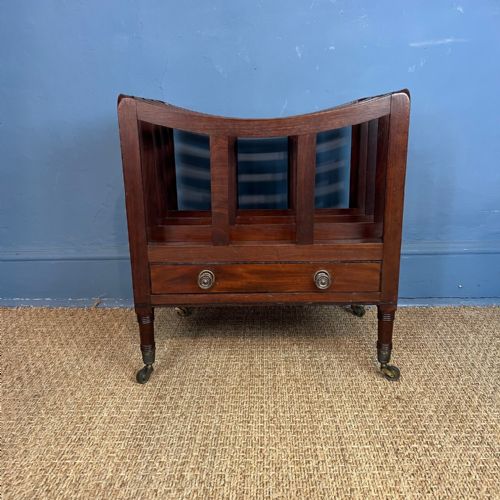
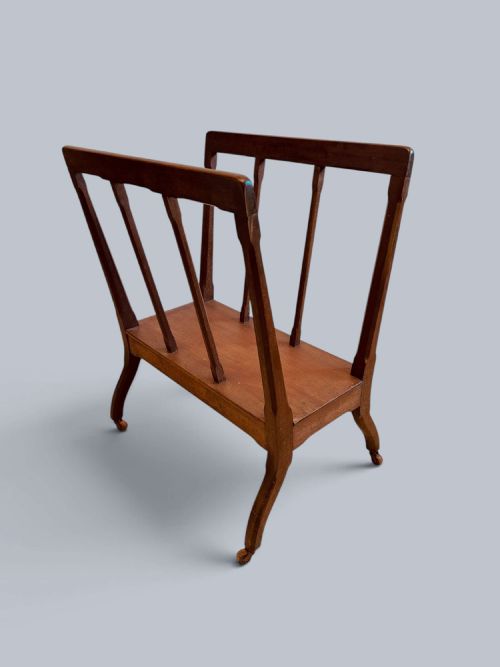
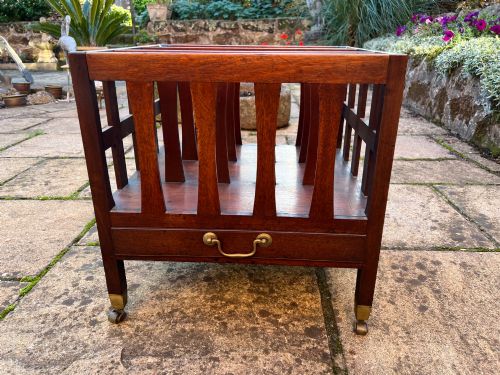
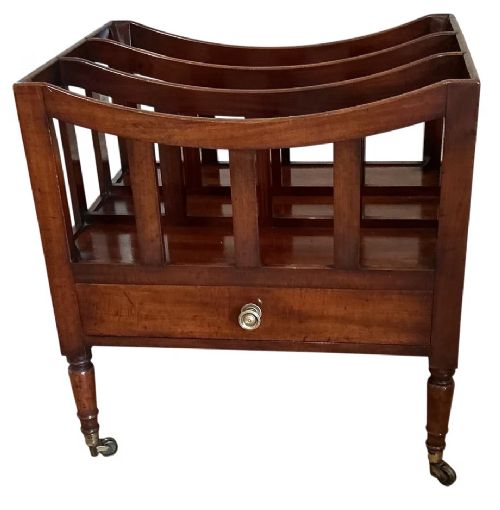
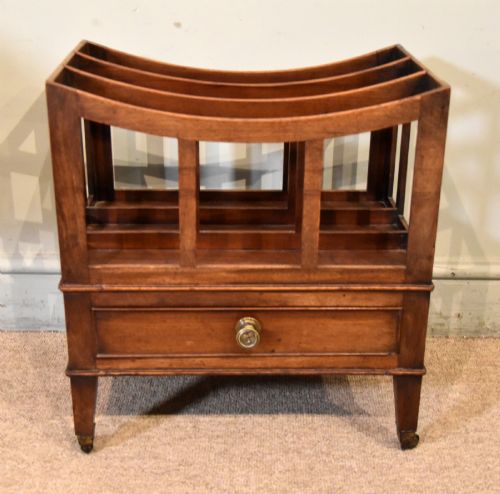
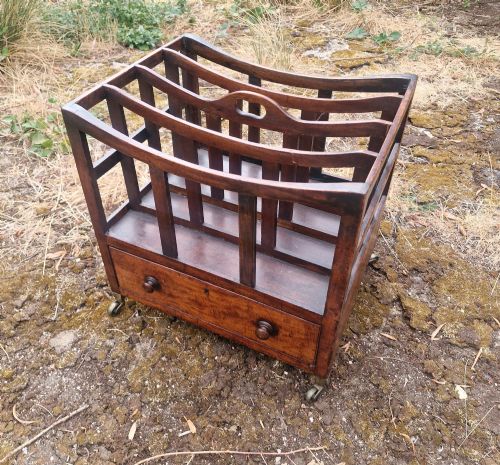
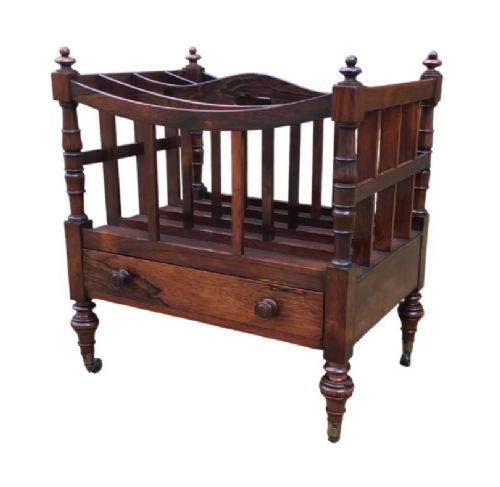
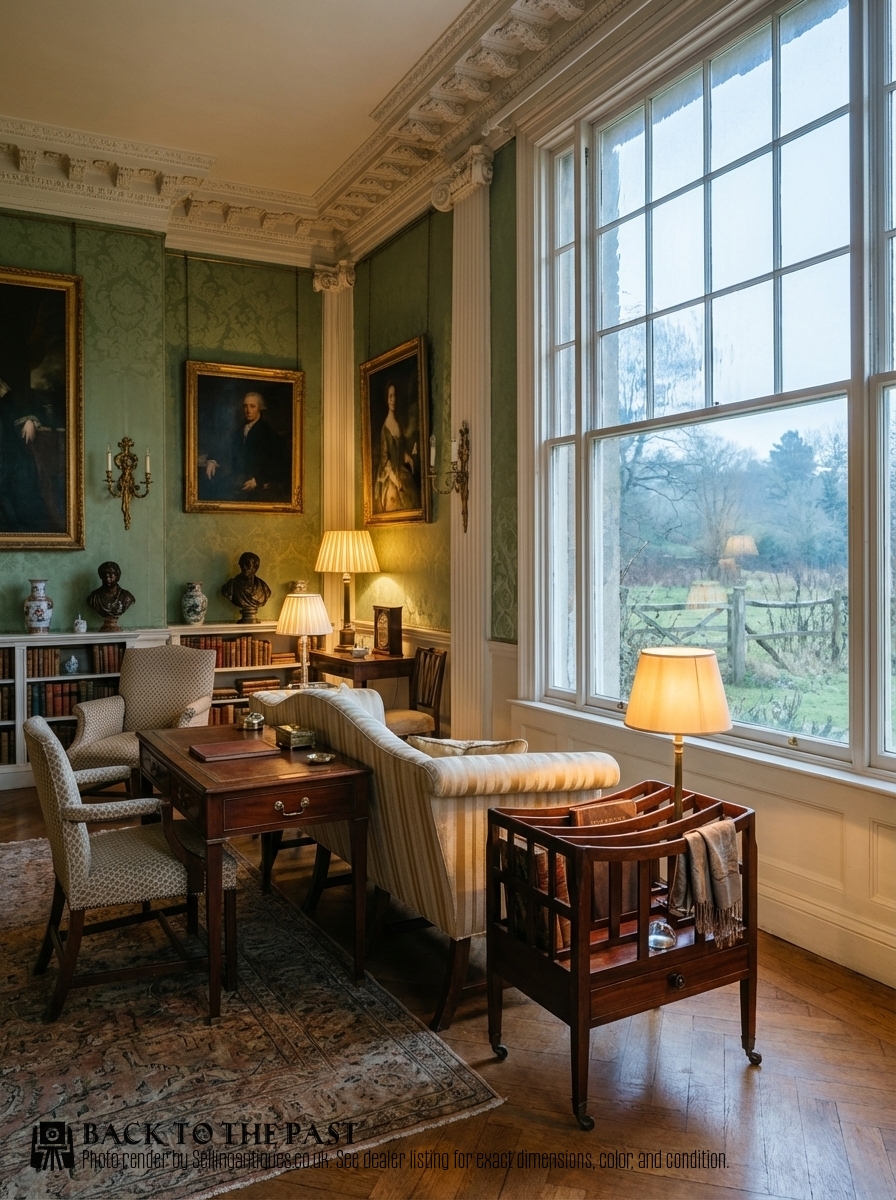
A mahogany music rack bridges the gap between functional household utility and refined furniture design, often taking the form of a freestanding canterbury with multiple partitions. These items accommodate sheet music, periodicals, and newspapers within compartmentalised bases, frequently accompanied by a single drawer underneath for smaller accessories.
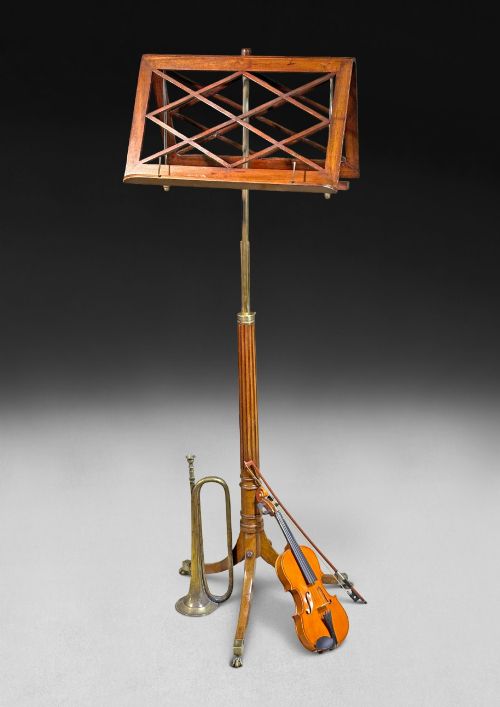
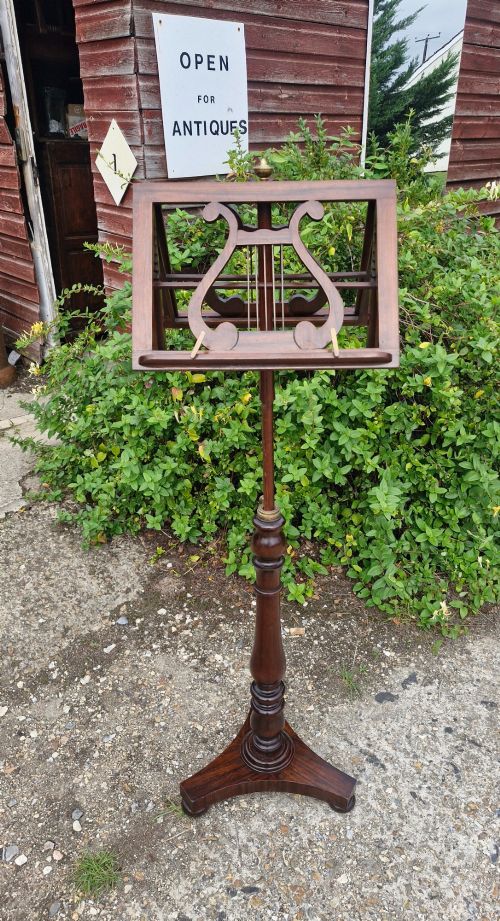
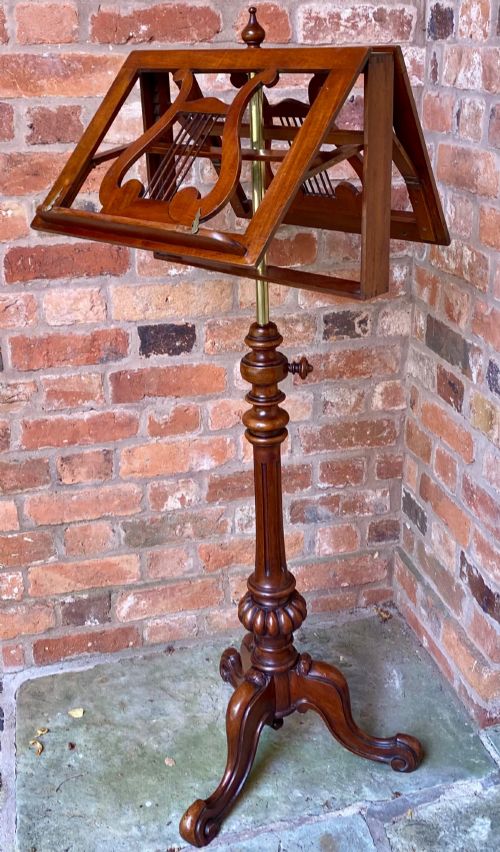
Most examples encountered on this page date from the Georgian, Regency, and Victorian eras, alongside later Edwardian iterations. Pieces range from boat-shaped canterburys on castors to adjustable duet stands and lyre-form music tables designed for parlour use.
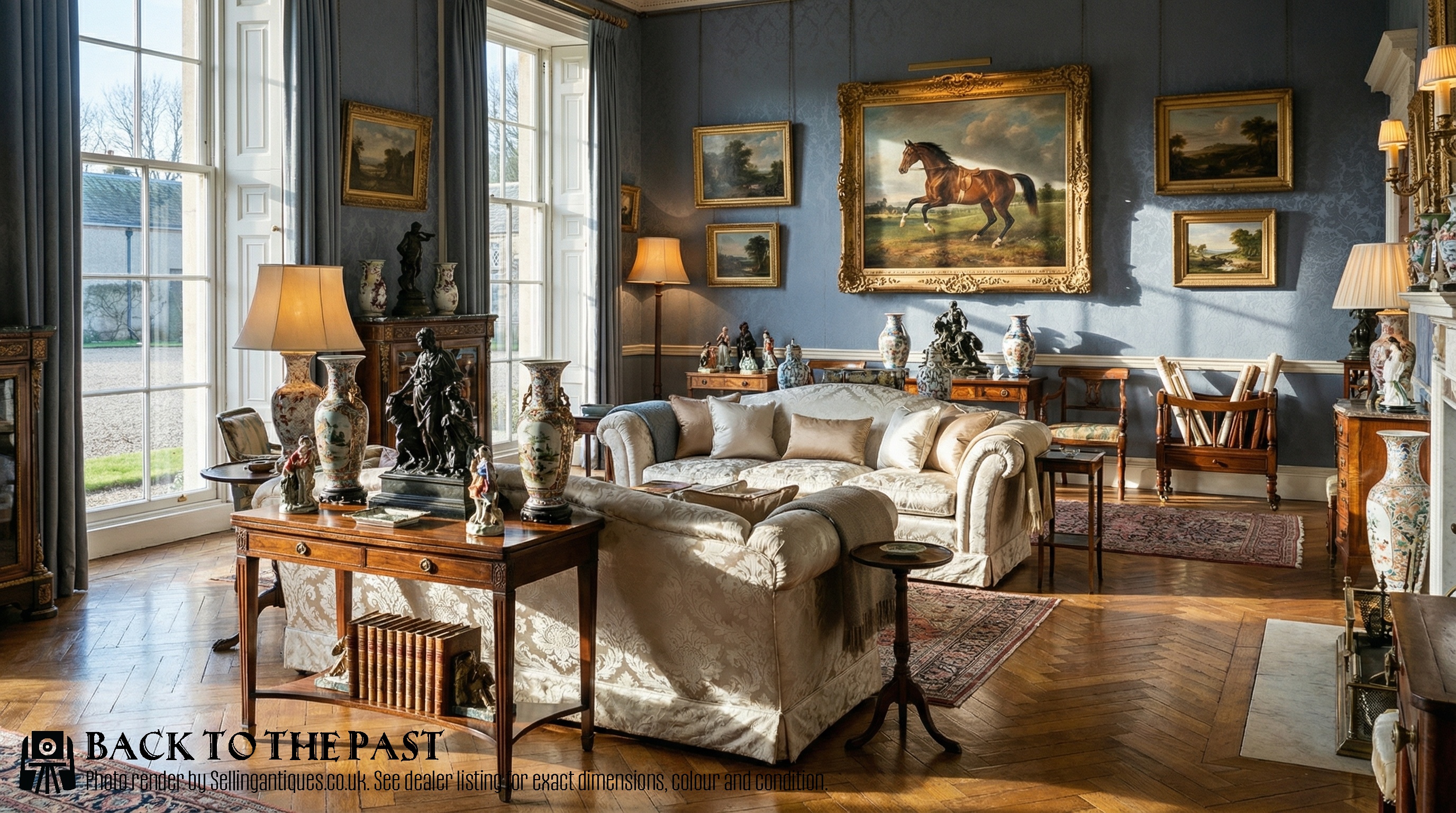
How they were made
Cabinet makers relied primarily on solid mahogany and Cuban mahogany, sometimes selecting rosewood or incorporating satinwood inlay and ebony stringing for decorative contrast. Structural joints often integrated turned legs fitted with brass castors to allow smooth mobility across carpets.
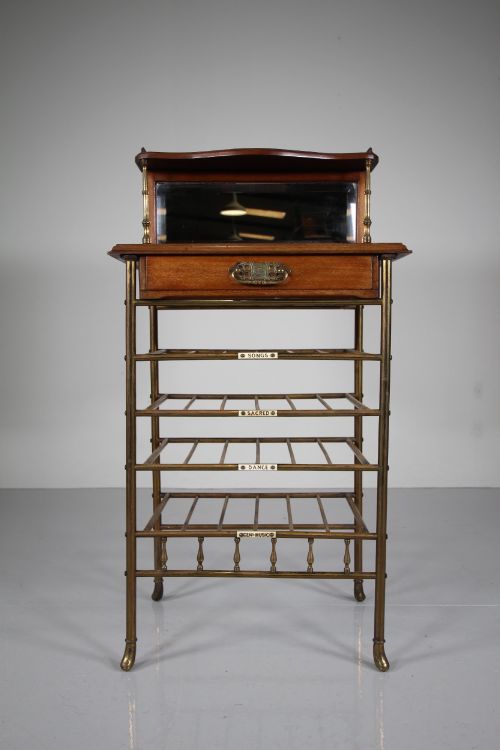
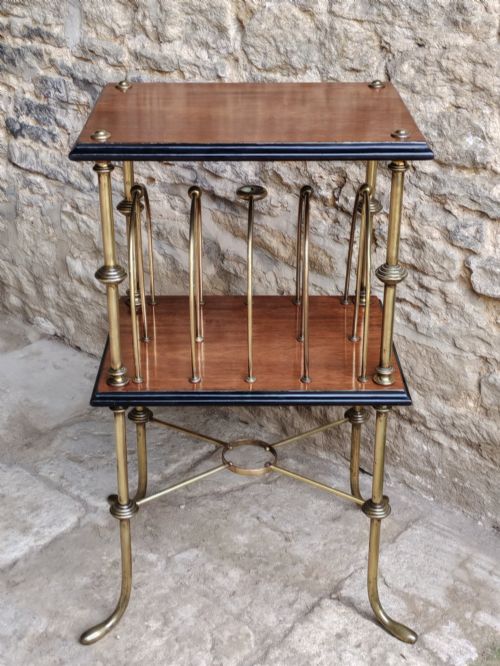
Brass fittings such as carrying handles, rests, and adjustable mechanisms appear regularly alongside glazed panels or delicate fretwork partitions. These metal elements were chosen for both durability and visual accent against the dark timber.
Mahogany Music Rack Retail Price Guide 2026
Typical asking prices for mahogany music rack among the pieces listed under this phrase on Sellingantiques today, from the lower quarter to the upper quarter. They describe what is for sale here now, not the wider market.
Some nineteenth-century makers evidently expected musicians to misplace their pencils, building tiny drawers specifically for stray graphite.
What varies in quality
The standard of a piece rests heavily on the selection of timber grain, particularly where figured Cuban mahogany or crisp satinwood inlay is deployed. Superior examples display thoughtful proportions, balanced division work, and cleanly turned columns or legs.
Execution of moving parts, such as the ratchet mechanisms on adjustable music stands and the smooth travel of fitted drawers, separates workshop production from standard domestic utility. The integration of solid brass hardware rather than plated alternatives elevates the overall finish.
The Mahogany Music Rack Glossary
- Canterbury
- A low, open-partitioned stand designed for holding sheet music, folios, or periodicals, usually featuring a drawer below.
- Cuban Mahogany
- A dense, richly figured timber imported from the Caribbean, prized by cabinet makers for its deep colour and durability.
- Duet Music Stand
- A larger stand engineered to hold open two scores simultaneously for shared musical performance.
- Lyre-Form
- A decorative motif shaped like an ancient stringed instrument, frequently incorporated into the upright supports of music stands.
Mahogany Music Rack: Frequently Asked Questions
What is a canterbury used for?
A canterbury functions as a compartmented low stand for organising sheet music, folios, and periodicals near a piano or seating area.
Many versions also incorporate a shallow drawer beneath the divisions for smaller items like tuning keys or writing materials.
How do I date a mahogany music rack?
Dating relies on observing structural characteristics, timber choice, and stylistic details associated with periods like the Regency or Victorian eras.
For instance, boat-shaped partitions and turned legs often point to Regency production, whereas later Edwardian pieces may display lighter framing.
Are these racks suitable for modern magazines?
Most divisions easily accommodate contemporary periodicals, newspapers, and modern sheet music collections.
The open partitions provide straightforward access while keeping paper goods upright and orderly.