


Wooden Magazine Rack
A wooden magazine rack offers a practical and elegant way to organise periodicals, spanning forms from the Regency period to the Edwardian era.
Wooden Magazine Rack
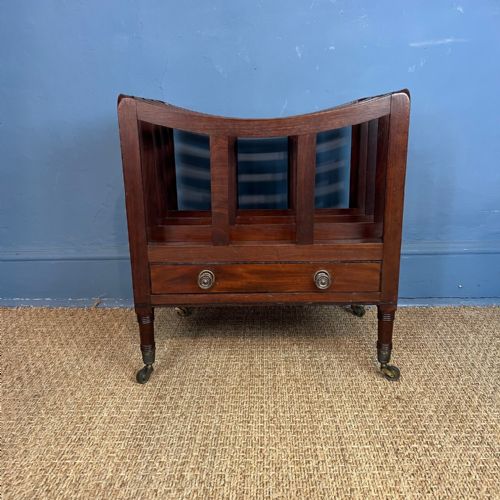
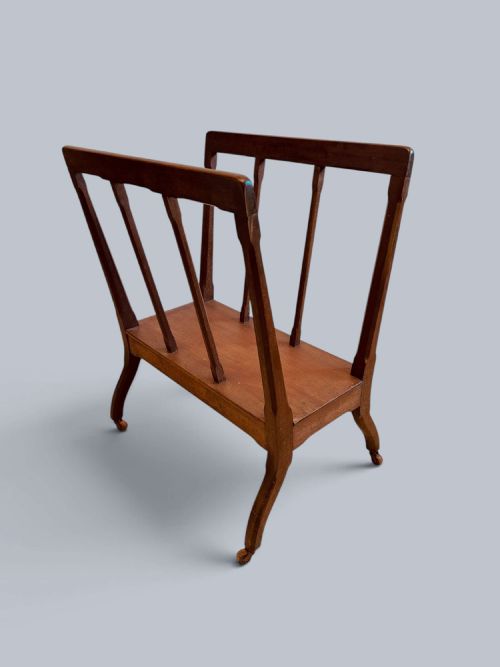
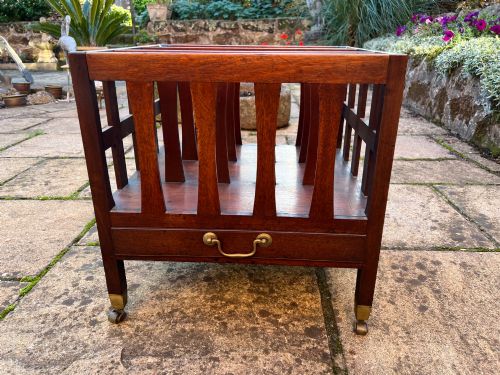
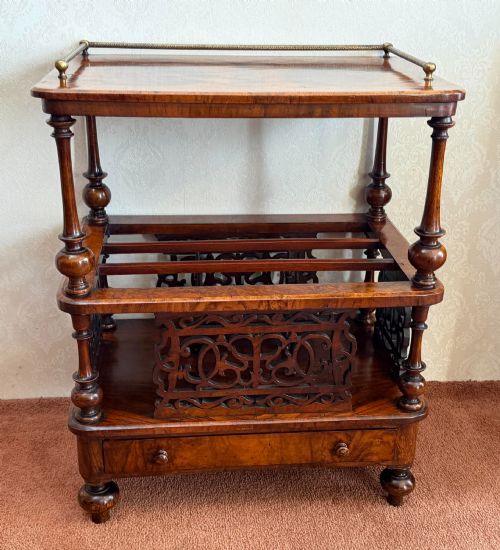
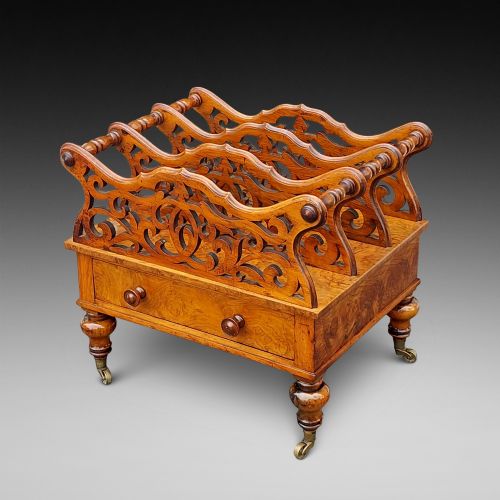
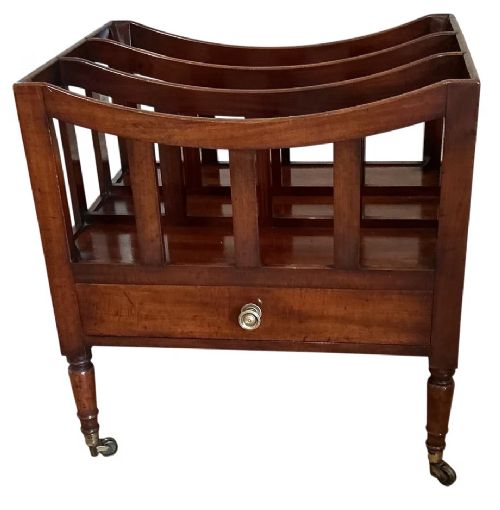
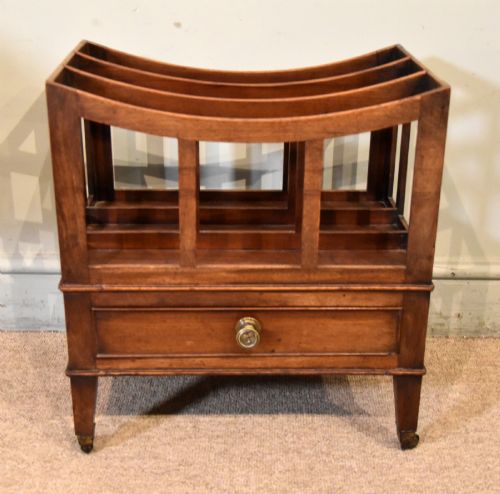
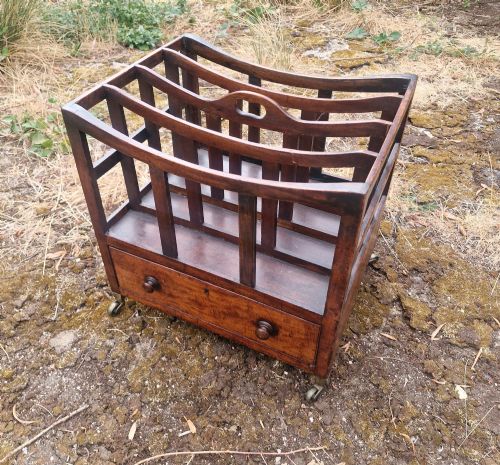
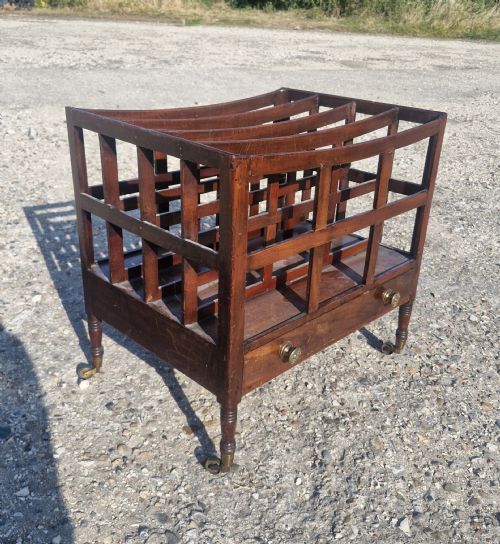
When you search for a wooden magazine rack, you encounter a range of traditional English and continental forms designed to hold newspapers, folios and journals. The most common form on this page is the Canterbury, a partitioned stand originally created to hold sheet music before evolving to accommodate magazines.
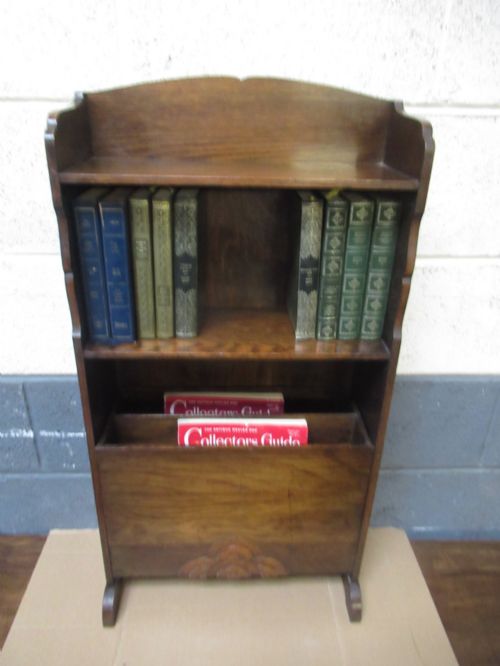
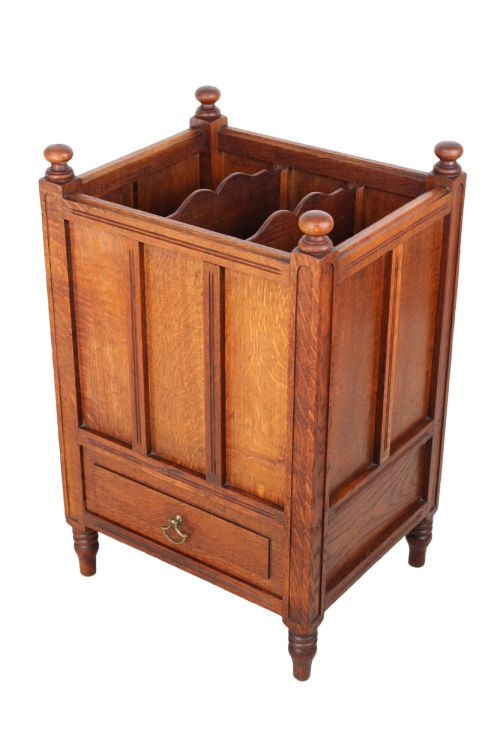
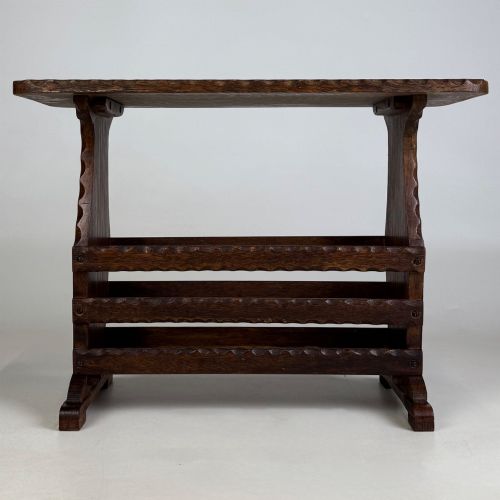
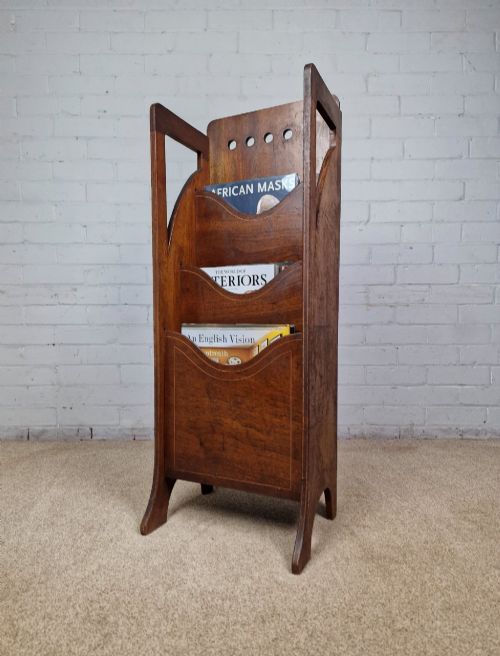
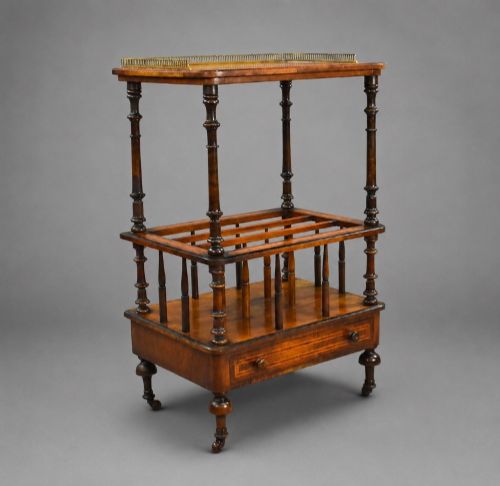
The material record spans centuries, moving from the refined mahogany of the Georgian and Regency periods through to the figured burr walnut favoured by Victorian makers. Edwardian pieces often utilise oak or inlaid mahogany, while later twentieth-century examples embrace the simpler lines of the Arts and Crafts movement.
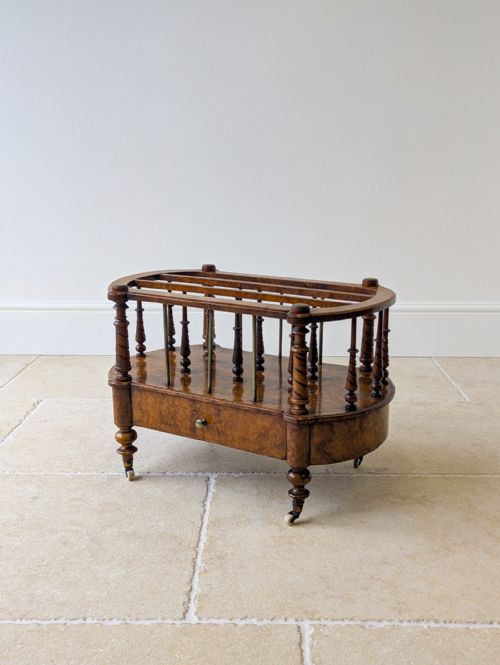
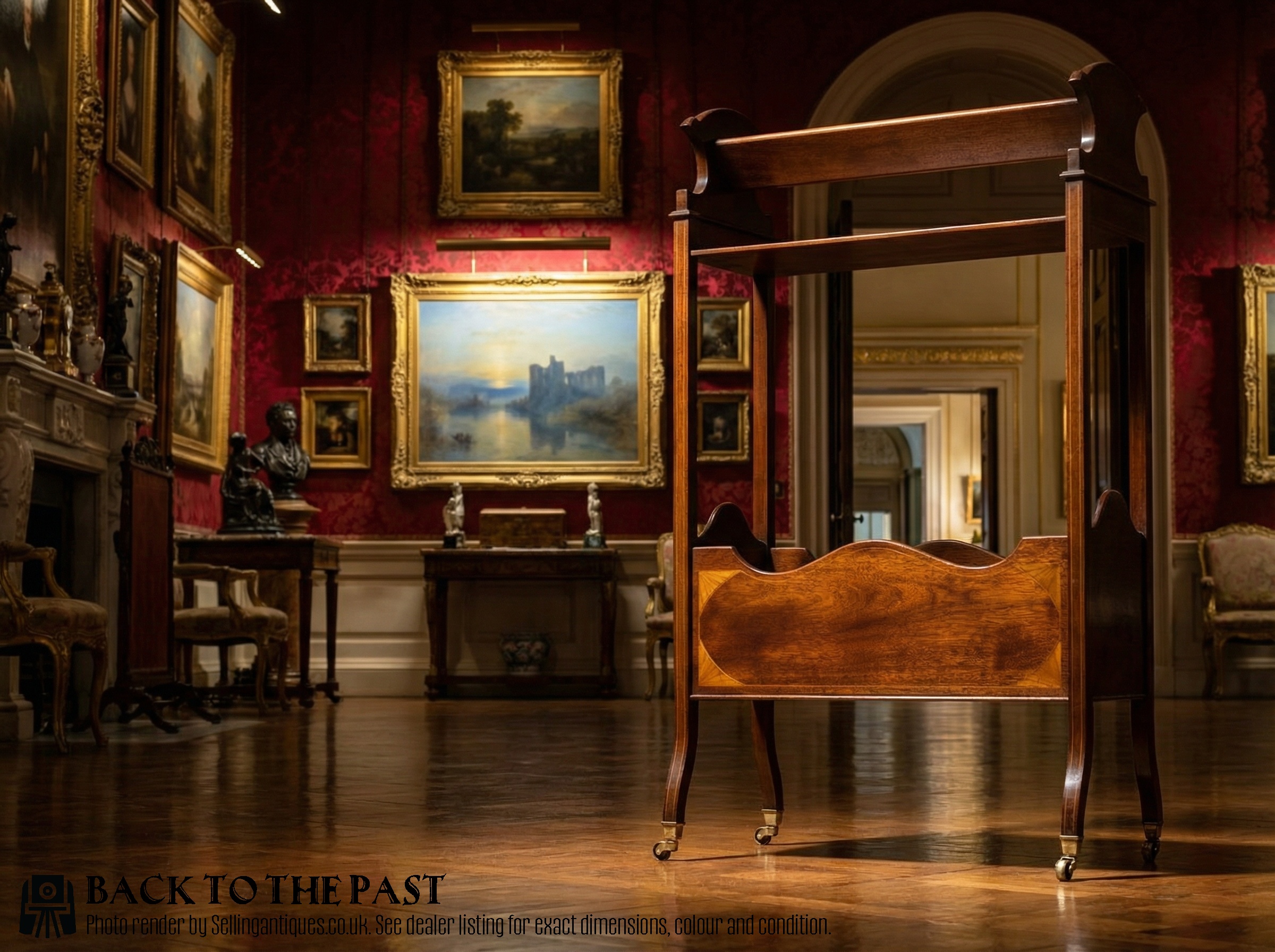
Makers produced these pieces as freestanding floor stands, boat-shaped units, and occasional tables with integrated compartments. Wall-mounted shelves and slope-shelf book troughs also appear among the selections, reflecting diverse domestic requirements across the nineteenth and early twentieth centuries.
Materials and construction
Cabinet makers relied heavily on dense hardwoods such as mahogany, rosewood, walnut and oak to ensure stability in freestanding magazine racks and canterburys. Burr walnut and flame mahogany veneers provided striking surface figures, often accented with satinwood inlay or mother-of-pearl.
Structural integrity depended on traditional joinery, turned spindles, and elevated legs fitted with castors for ease of movement across carpets. Open-front partitions and slatted dividers required precise carpentry to separate compartments without adding excessive weight to the piece.
Wooden Magazine Rack Retail Price Guide 2026
Typical asking prices for wooden magazine rack among the pieces listed under this phrase on Sellingantiques today, from the lower quarter to the upper quarter. They describe what is for sale here now, not the wider market.
Some nineteenth-century canterburys rolled across the drawing room on castors so nobody had to stand up to fetch the evening broadsheet.
Judging quality and design
The distinction between standard domestic items and superior examples lies in the selection of timber and the crispness of the carving or inlay. Finely figured burr walnut, rich rosewood, and substantial Cuban mahogany elevate a piece far above utilitarian workshop production.
Design sophistication also separates the range, visible in elegant turned legs, shaped divisions, and well-executed joinery rather than purely functional assembly. Pieces that successfully combine storage utility with refined aesthetic proportions command greater attention.
The Wooden Magazine Rack Glossary
- Book trough
- A compact, open-topped container designed to hold books or periodicals upright on a table or floor. These often feature sloping sides to keep volumes stable.
- Burr walnut
- A prized timber harvested from walnut tree growths, displaying complex, swirling grain patterns. Cabinet makers used veneers of this wood on high-status Victorian furniture.
- Castor
- A small swivelling wheel attached to the base of furniture legs. Regency and Victorian examples frequently employed brass castors to allow smooth repositioning.
- Inlay
- A decorative technique where contrasting materials such as satinwood or mother-of-pearl are embedded into the wood surface. This creates intricate patterns and borders on cabinetwork.
Wooden Magazine Rack: Frequently Asked Questions
What is the difference between a canterbury and a magazine rack?
A canterbury is a traditional partitioned stand originating in the eighteenth century, originally designed for sheet music before adapting to periodicals. A magazine rack often encompasses a broader range of forms, including wall shelves, troughs, and occasional tables.
While both serve the purpose of holding reading materials, canterburys typically feature distinct vertical divisions and low drawers. Magazine racks span simpler twentieth-century utility designs alongside traditional stands.
How do I date a wooden magazine rack?
Dating relies on identifying the prevailing timber choices, hardware, and stylistic traits associated with specific periods. Georgian and Regency pieces favour mahogany with refined turned supports, whereas Victorian examples frequently showcase burr walnut and rosewood.
Edwardian and later twentieth-century pieces often utilise oak or simpler inlaid mahogany designs. Examining construction methods and the presence of original castors also helps narrow down the era of manufacture.
Were these pieces always used for magazines?
No, many of the earlier forms originated specifically to hold loose sheets of music near a piano or harp. As domestic habits changed through the nineteenth century, households repurposed these compartmented stands for newspapers, journals and books.
By the Edwardian period, makers designed specific book troughs and side tables with dedicated slots for periodicals. This evolution reflects the growth of mass-market publishing and daily newspapers in the home.
How should I care for an antique wooden rack?
Maintain the timber by keeping the piece away from direct heat sources and strong sunlight, which can dry out and fade fine veneers. Dust regularly with a dry, soft cloth and apply a quality beeswax periodically to nourish the wood.
Avoid using modern liquid polishes that contain silicone, as they can build up and damage antique finishes. Ensure heavy volumes are distributed evenly across compartments to prevent structural strain on the dividers.