



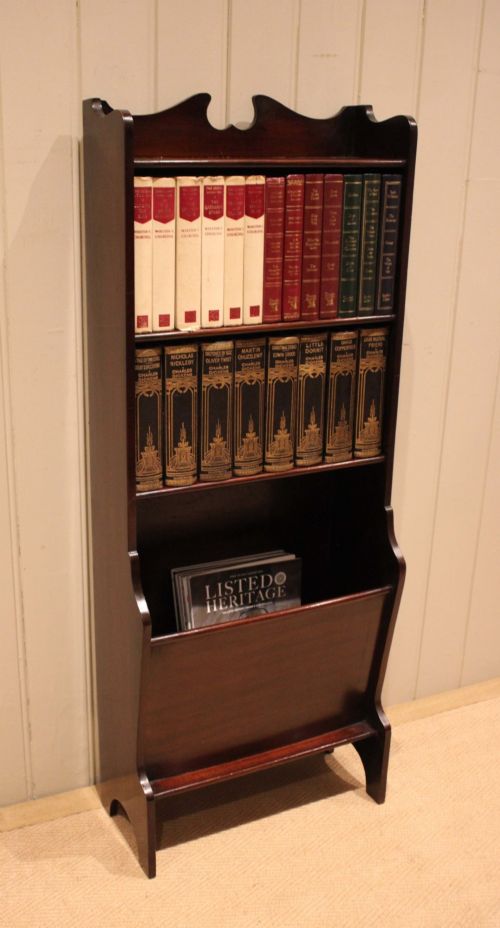
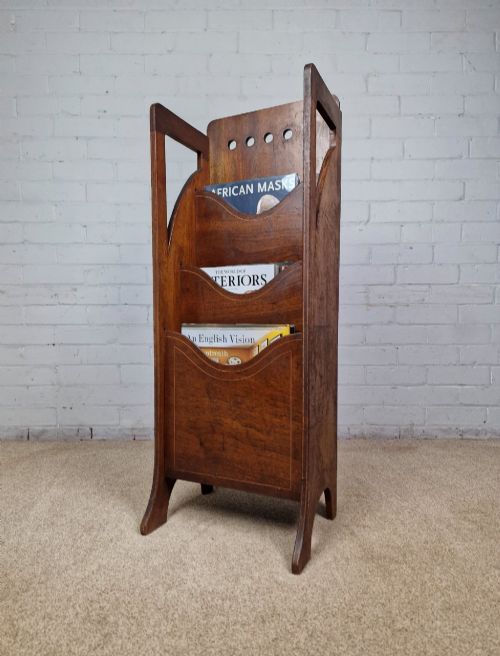
Antique Canterbury Magazine Rack
An antique canterbury magazine rack serves as a tidy repository for periodicals and sheet music, blending practical division with refined period cabinetwork.
Antique Canterbury Magazine Rack
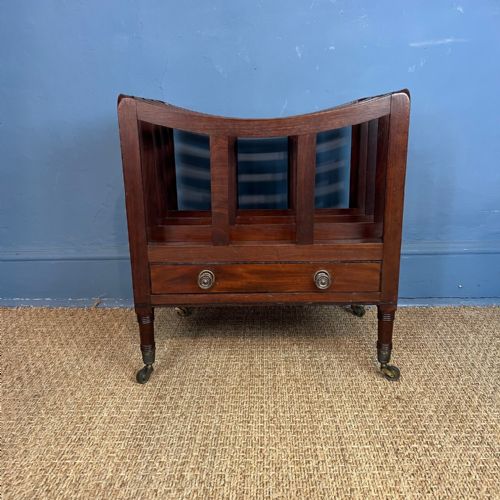
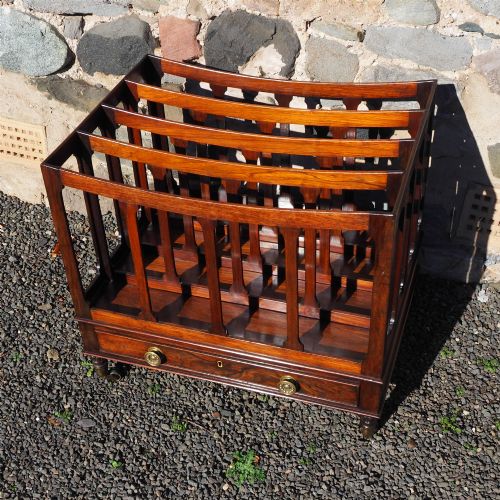
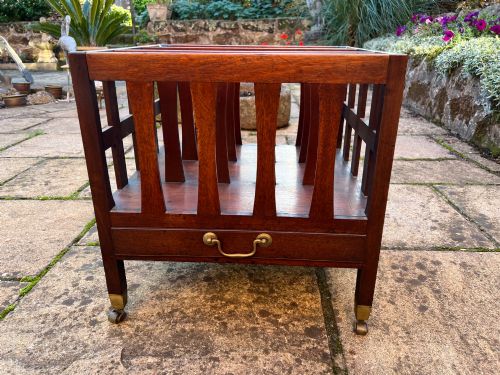
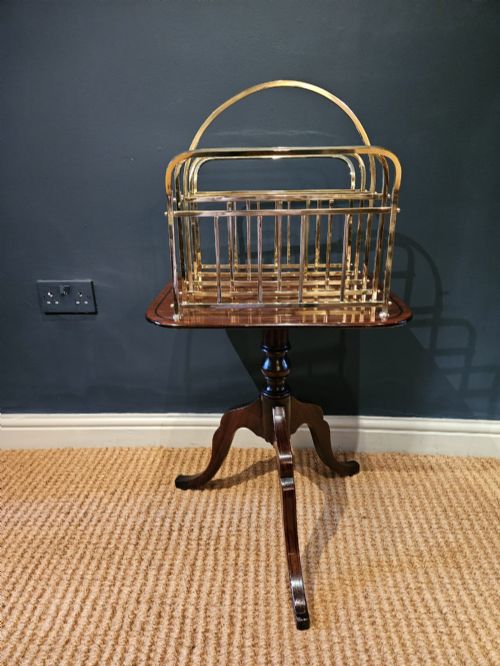
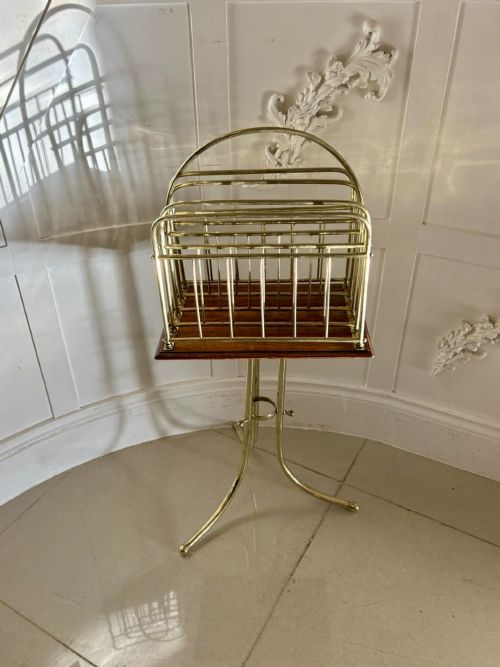
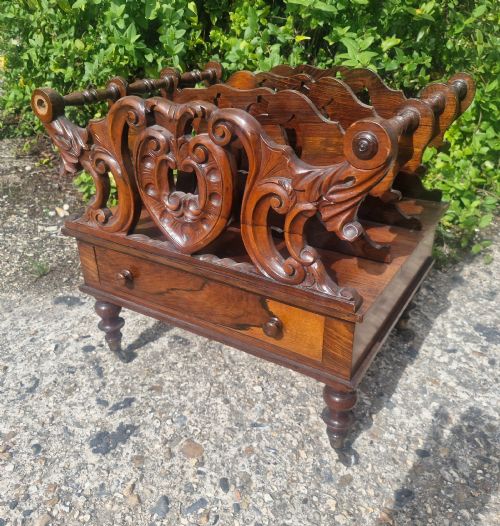
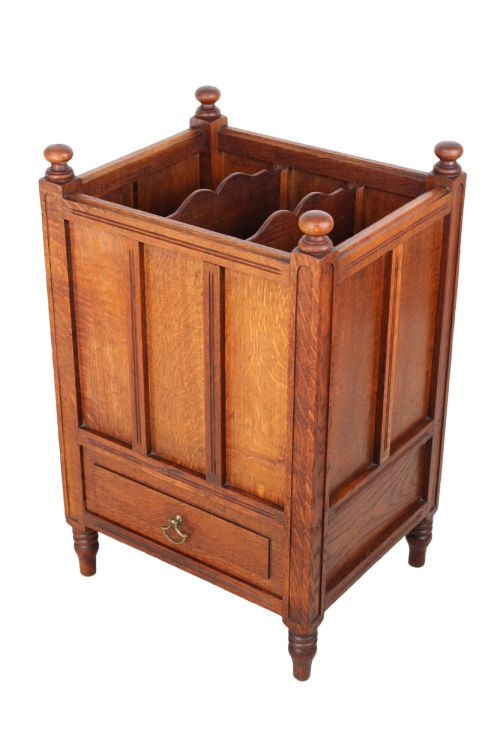
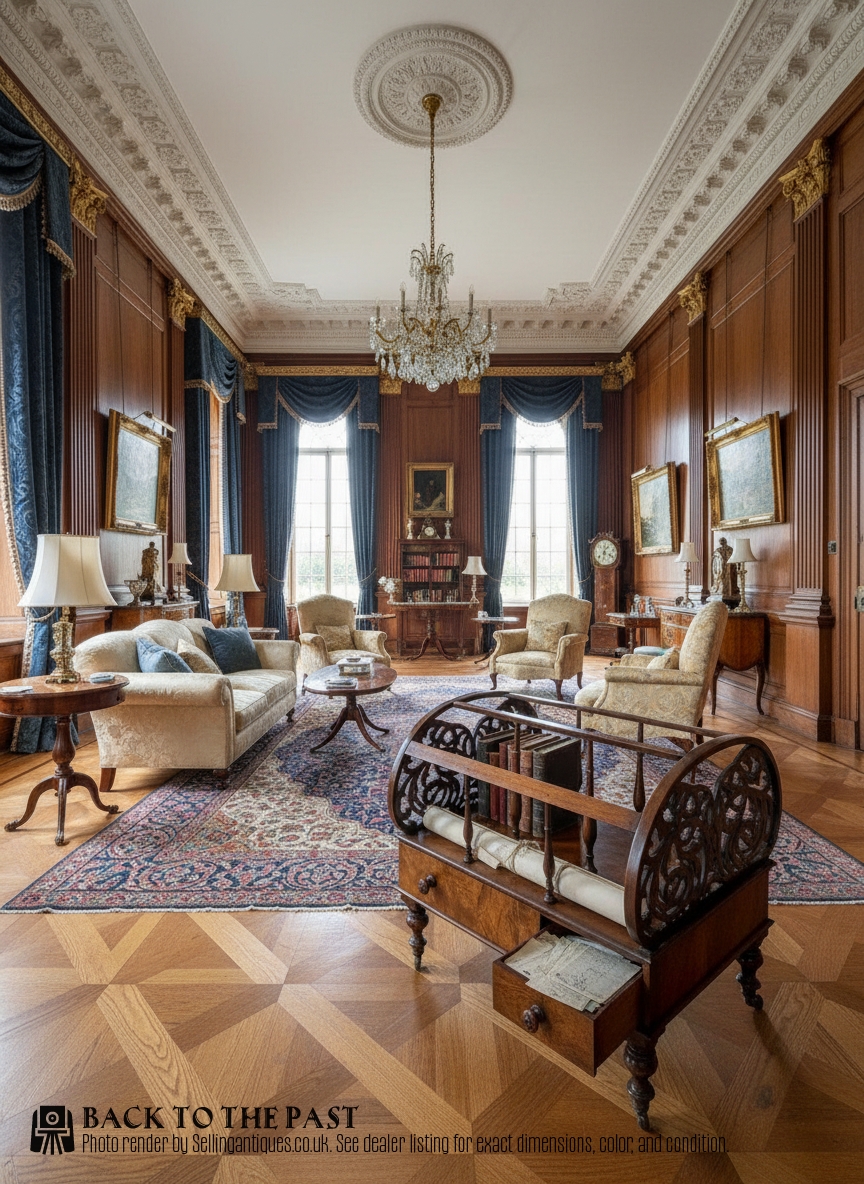
When searching for an antique canterbury magazine rack, buyers encounter low-slung compartmentalised stands originally designed to hold newspapers, folios and musical scores beside seating areas. The pieces listed here span the Georgian, Regency, William IV, Victorian and Edwardian periods, stretching from the late eighteenth century into the early twentieth.
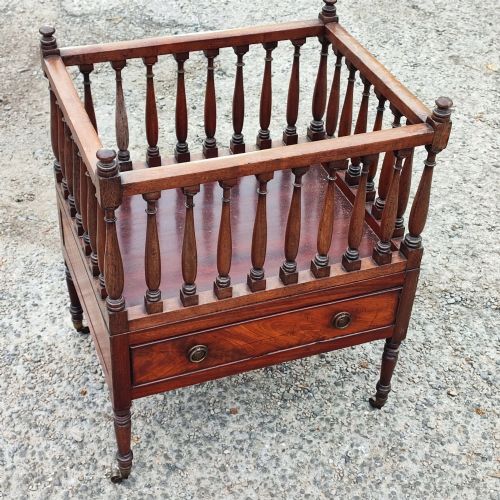
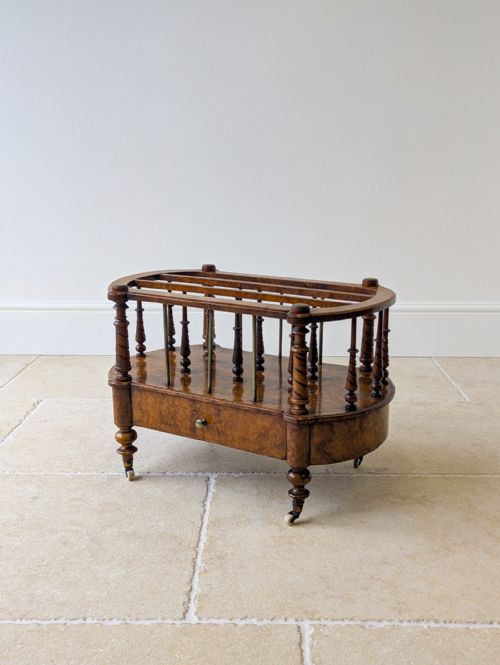
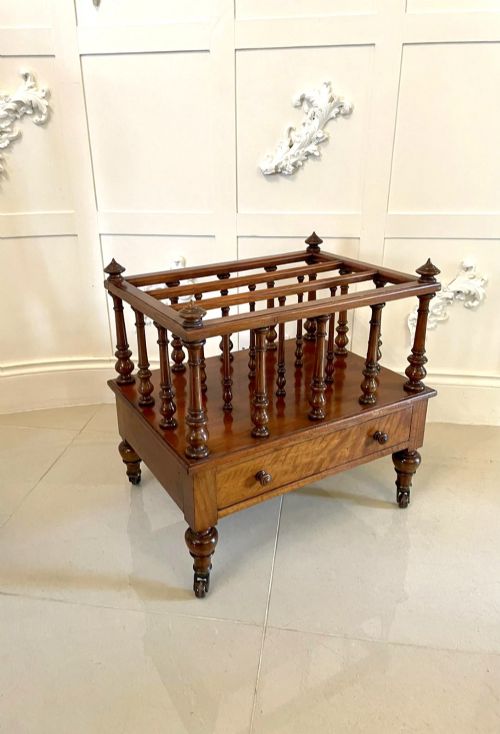
Mahogany and burr walnut dominate the selection, appearing alongside rosewood, oak and bamboo variants from the Aesthetic Movement. Many examples incorporate turned spindles, low drawers for smaller items, or combined configurations functioning as occasional tables and small bookcases.
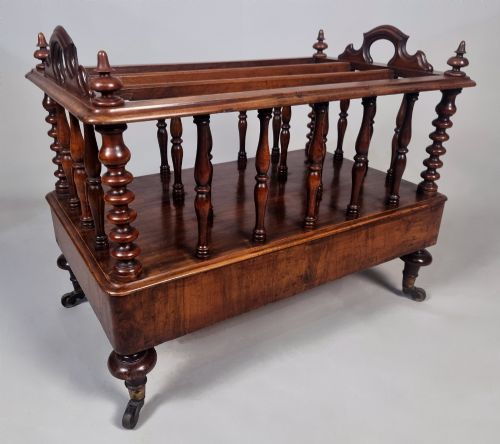
The most frequent form met on this page is the Victorian burr walnut Canterbury, often featuring shaped divisions and castors for mobility. Regency models frequently display boat-shaped partitions and slender upright supports in rich mahogany.
Materials and Construction
Cabinetmakers utilised dense native and imported timbers, selecting figured mahogany and burr walnut for decorative surfaces while employing secondary woods for internal partitions and drawer linings. Fine grain patterns were accentuated through French polishing, bringing out the natural warmth of the walnut and rosewood.
Joinery methods included neat dovetailing for small base drawers and precise housing joints to secure the vertical slats forming the newspaper divisions. Brass castors, finials and carrying handles added functional mobility and contrast to the dark timber frames.
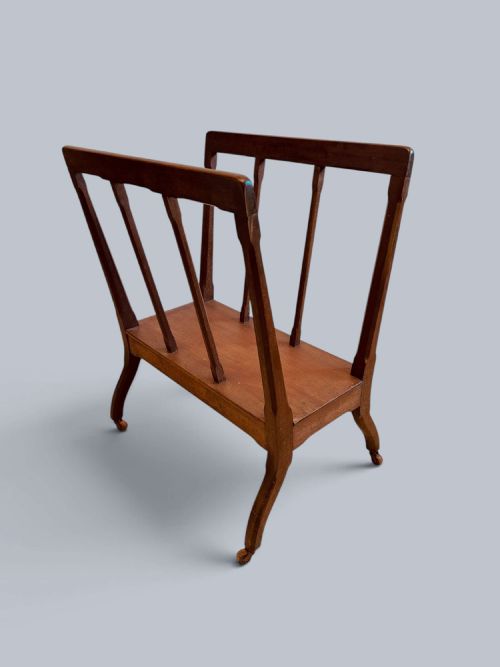
Alternative interpretations utilised bent bamboo and split cane tied with binding, reflecting late nineteenth-century exotic tastes, whilst Arts and Crafts iterations employed hammered copper accents alongside plain oak.
Antique Canterbury Magazine Rack Retail Price Guide 2026
Typical asking prices for canterbury magazine rack among the pieces listed under this phrase on Sellingantiques today, from the lower quarter to the upper quarter. They describe what is for sale here now, not the wider market.
Named after an Archbishop of Canterbury who supposedly commissioned the first music stand of this form, these stands became an essential Victorian status symbol.
Quality Variations
Distinctions in quality rest upon the selection of timber veneers and the intricacy of the cabinetwork. Pieces utilising highly figured burr walnut or meticulously matched rosewood grain demonstrate greater ambition from the maker.
Refinement appears in the turning of spindles, the presence of subtle inlay or marquetry, and the integration of a functional drawer with hand-cut dovetails. Simpler versions rely on plain mahogany planks and straightforward slatted divisions without auxiliary storage.
Edwards and Roberts
The Antique Canterbury Magazine Rack Glossary
- Whatnot
- A set of open shelves supported by slender pillars, occasionally combined with a Canterbury base. These versatile pieces served to display ornaments while storing reading material.
- Marquetry
- The art of applying thin pieces of veneer to a structure to form decorative patterns or pictures. Craftsmen utilised various coloured woods to create floral or geometric motifs on the top surfaces.
- Turned spindle
- A cylindrical wooden rod shaped on a lathe to create decorative swelling and tapering profiles. They form the open partitions and gallery rails on many Victorian examples.
- Boat-shaped
- A descriptor for Canterbury frames featuring curved, concave ends resembling the hull of a vessel. This contour is characteristic of Regency design.
Antique Canterbury Magazine Rack: Frequently Asked Questions
What is a Canterbury used for?
Originally devised in the eighteenth century, these stands held daily newspapers, unbound music scores and periodicals close to the fireplace or reading chair. The vertical partitions kept publications upright and sorted.
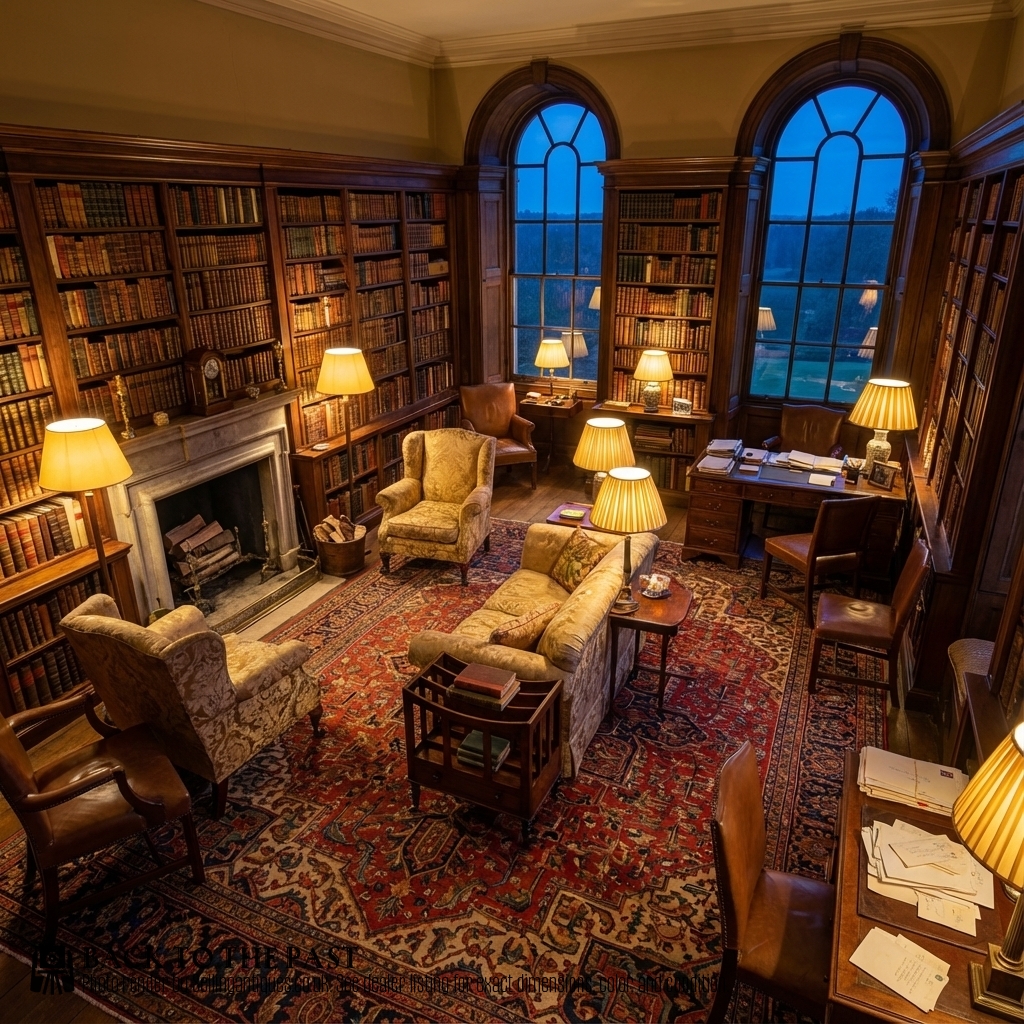
Over time, they evolved to accommodate lighter reading material and frequently doubled as small side tables or stands for decorative objects in the drawing room.
How do I date an antique Canterbury?
Dating relies upon timber choice, hardware and stylistic cues inherent to specific eras. Georgian and Regency examples favour solid mahogany with linear partitions, whereas Victorian pieces often showcase elaborate burr walnut veneers and turned spindles.
Later Edwardian and Arts and Crafts iterations display simpler oak construction or utilise alternative materials such as bamboo. Secondary wood types and drawer dovetailing methods provide additional clues to the decade of manufacture.
Can I use these for modern magazines?
Most antique partitions accommodate standard modern periodicals, though very thick publications may require selective placement. The slotted divisions organise contemporary reading material just as effectively as nineteenth-century newspapers.
Placing felt pads inside the base can protect delicate antique timber from moisture or heavy use. Care should be taken not to overload fragile bamboo or slender spindle structures.
Where should I place a Canterbury at home?
These compact stands suit living rooms beside armchairs or sofas, functioning naturally as low occasional tables. Their finished backs and compact footprints allow placement away from walls without disrupting room flow.
Placing them out of direct sunlight preserves the rich tones of mahogany and walnut veneers. Regular polishing with a traditional wax maintains the lustre of the polished wood surfaces.