

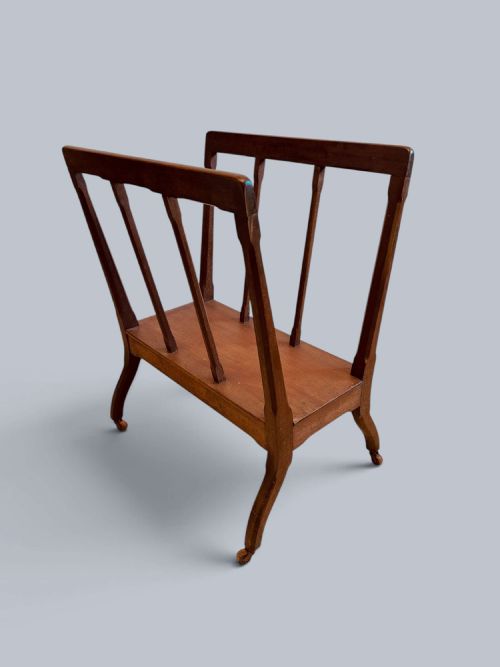
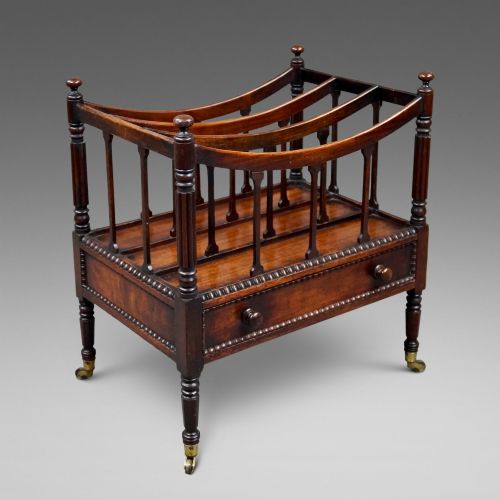


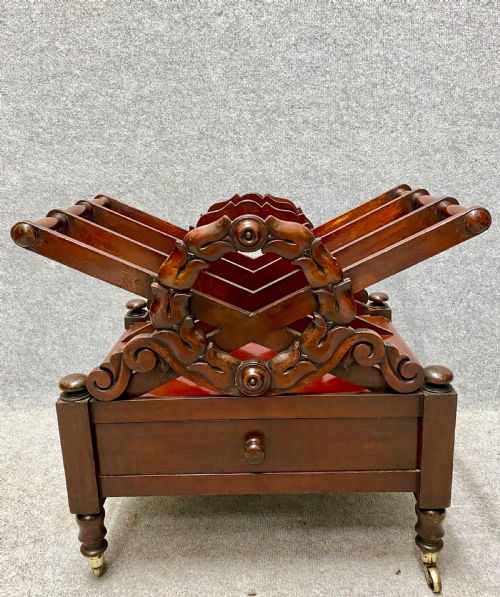


William IV Canterbury
A william iv canterbury brings distinct 19th-century utility and elegance to a room, holding sheets of music or journals in divided compartments.
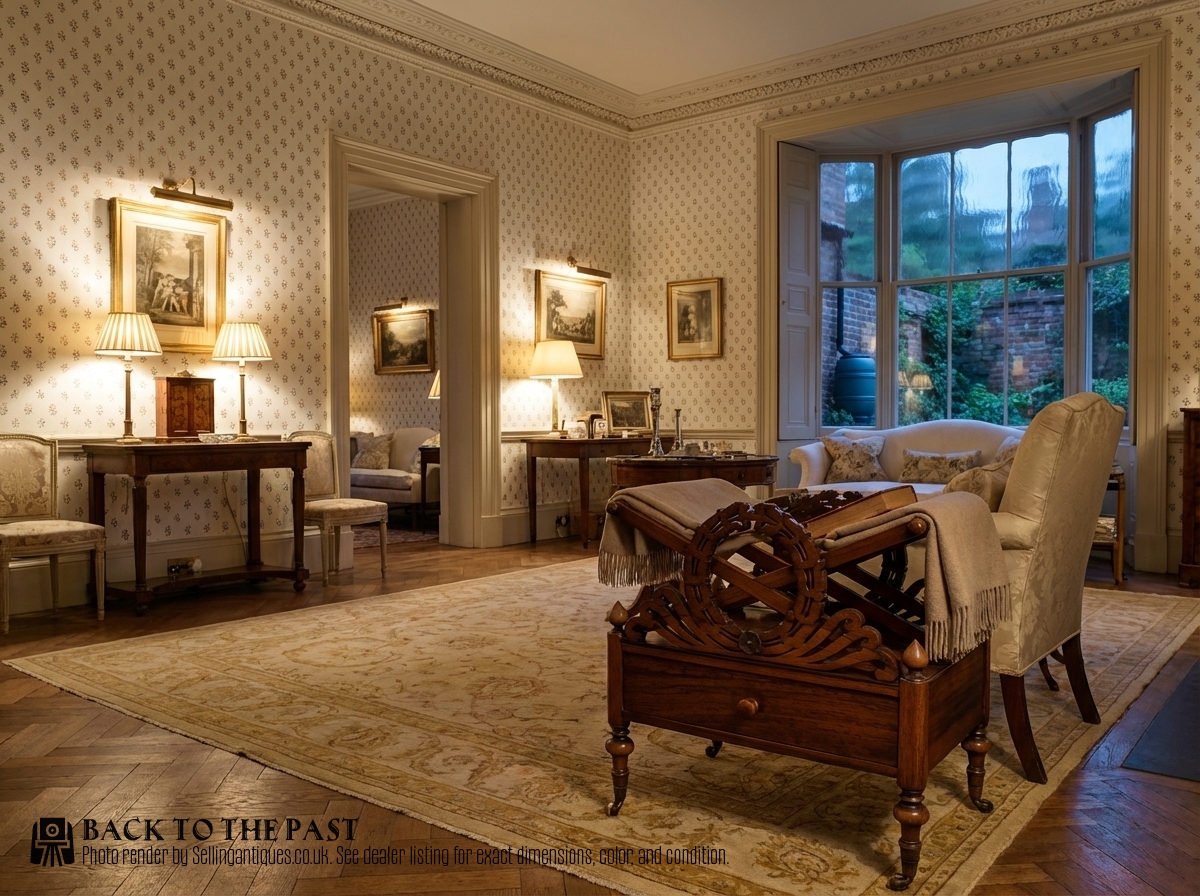
William IV Canterbury
A william iv canterbury is a low, compartmentalised stand designed to hold music folios, newspapers, or magazines near a piano or seating area. Pieces matching this search phrase typically date from the 19th century, drawing upon Georgian proportions and moving towards Victorian comfort.
The most common version encountered here is fashioned from rich mahogany or figured rosewood, often featuring slatted or X-frame divisions above a single low drawer. These items frequently double as music stands and magazine racks, reflecting the domestic pursuits of their period.
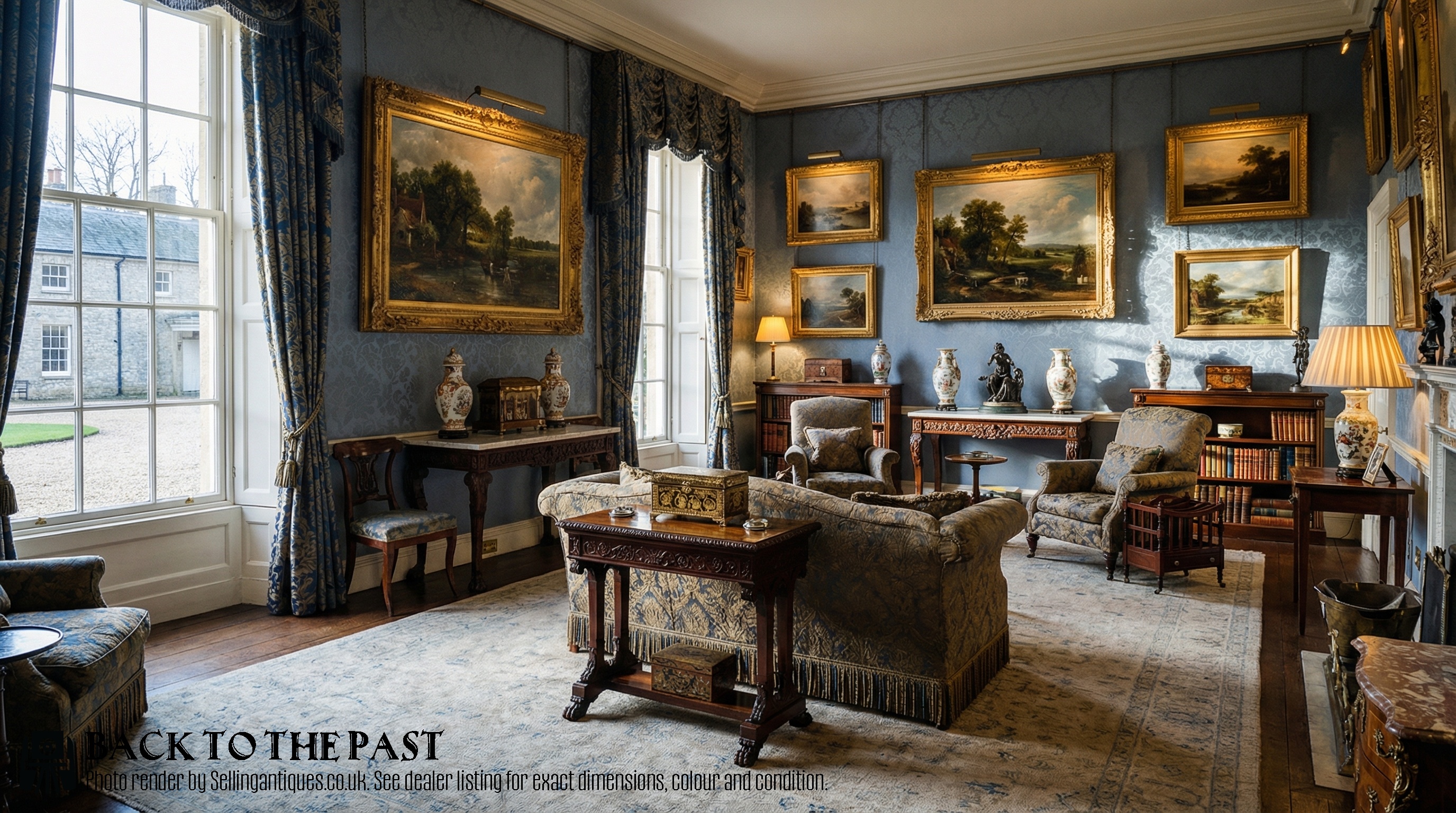
Materials and Construction
Cabinet makers utilised dense tropical hardwoods like mahogany and rosewood, chosen for their strength and deep colour when polished. These woods were turned for legs, carved with restrained foliage, or accented with subtle inlay work.
Divisions were constructed using slender vertical slats or intersecting X-frames to support paper goods upright without adding excessive weight. Brass castors were frequently fitted to the legs to allow easy movement across carpets.
William IV Canterbury Retail Price Guide 2026
Typical asking prices for william iv canterbury among the pieces listed under this phrase on Sellingantiques today, from the lower quarter to the upper quarter. They describe what is for sale here now, not the wider market.
Named after an Archbishop of Canterbury who requested a small music stand, these pieces ended up holding newspapers instead.
Judging Quality
The distinction between ordinary and superior pieces rests upon the choice of timber and the crispness of the carving. Finely figured rosewood veneers and well-defined turned supports elevate an item above simpler utilitarian examples.
Proportion and structural integrity define the better specimens, where divisions remain firmly joined and drawers operate smoothly within the frame. Details such as original brass castors and deliberate carving contribute further distinction.
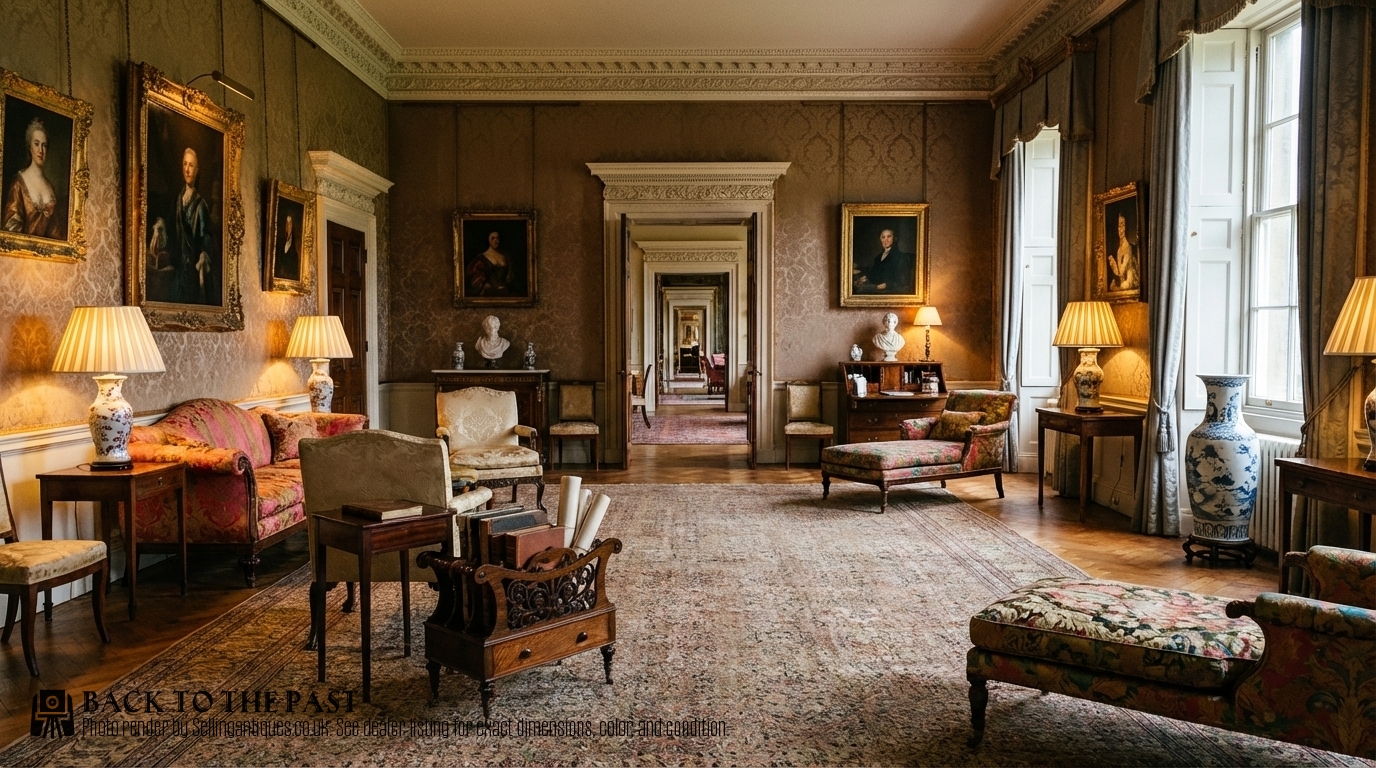
J.C Loudon·Smee
The William IV Canterbury Glossary
- Canterbury
- A low stand with divisions for holding books, music, or newspapers, usually fitted with castors. Originating in the late 18th century, it became a staple of the furnished drawing room.
- Mahogany
- A durable, reddish-brown tropical hardwood favoured by 19th-century cabinet makers for its stability and fine grain. It takes a high polish and resists warping.
- Rosewood
- A heavy, dark timber marked by distinctive dark brown or black grain patterns. It was frequently selected for high-status pieces during the William IV period.
- X-frame
- A structural arrangement where members cross in the shape of an X, often utilised in the divisions or leg supports of music stands.
- Drawer
- A sliding box-like compartment incorporated into the base of certain stands for storing smaller accessories. It provides enclosed storage beneath the open rack.
William IV Canterbury: Frequently Asked Questions
What is a william iv canterbury used for?
These stands were originally designed to hold sheet music near a piano or in a music room. Over time, households adapted them to organise newspapers, journals, and books.
They sit low to the floor, allowing them to fit neatly beside seating or tables without obstructing the room.
How do I care for rosewood furniture?
Protect rosewood surfaces from direct sunlight and excessive heat to prevent the timber from fading or drying out. Dust regularly with a soft, dry cloth and apply occasional wax polish suited for antique hardwoods.
Avoid placing damp items directly onto the wood to protect the polished finish.
Are these stands sturdy enough for daily use?
Most pieces were built to withstand regular domestic handling, using robust hardwoods and sturdy joinery. The vertical divisions and X-frames provide stable support for paper and thin volumes.
Care should be taken when moving them, especially if they roll on their original castors.
How do I distinguish William IV pieces?
William IV items sit between the late Georgian and early Victorian eras, typically combining robust proportions with restrained classical ornament. Look for dense rosewood or mahogany timbers, turned legs, and subtle carved details.
Makers such as J.C. Loudon published designs that influenced the distinct character of these stands.