

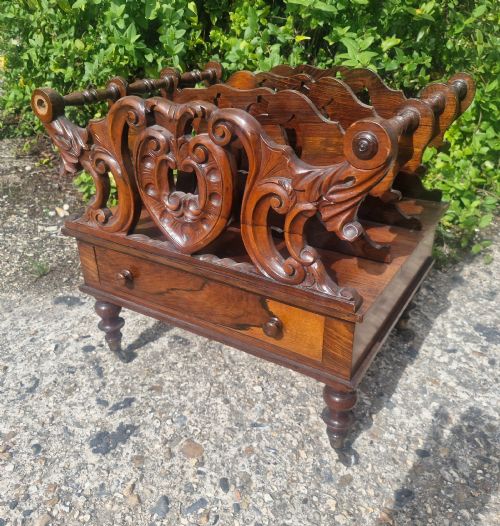
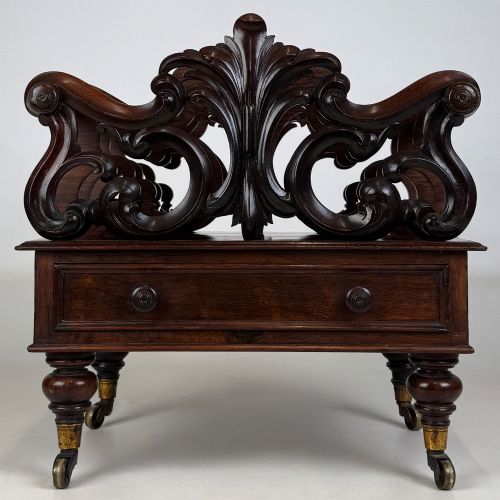


Carved Rosewood Canterbury
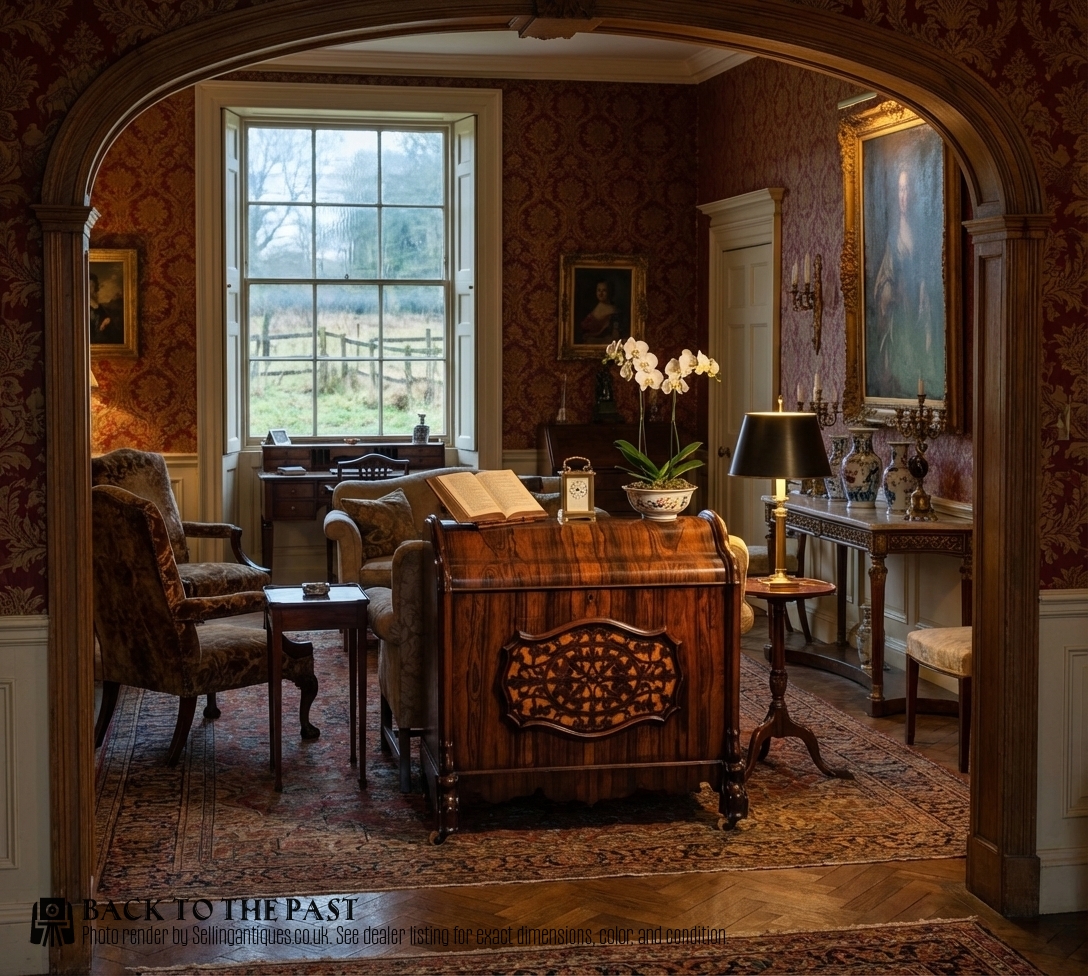
These carved rosewood canterbury pieces are refined nineteenth-century stands designed to hold folios, sheets of music, and periodicals with elegance.
Carved Rosewood Canterbury
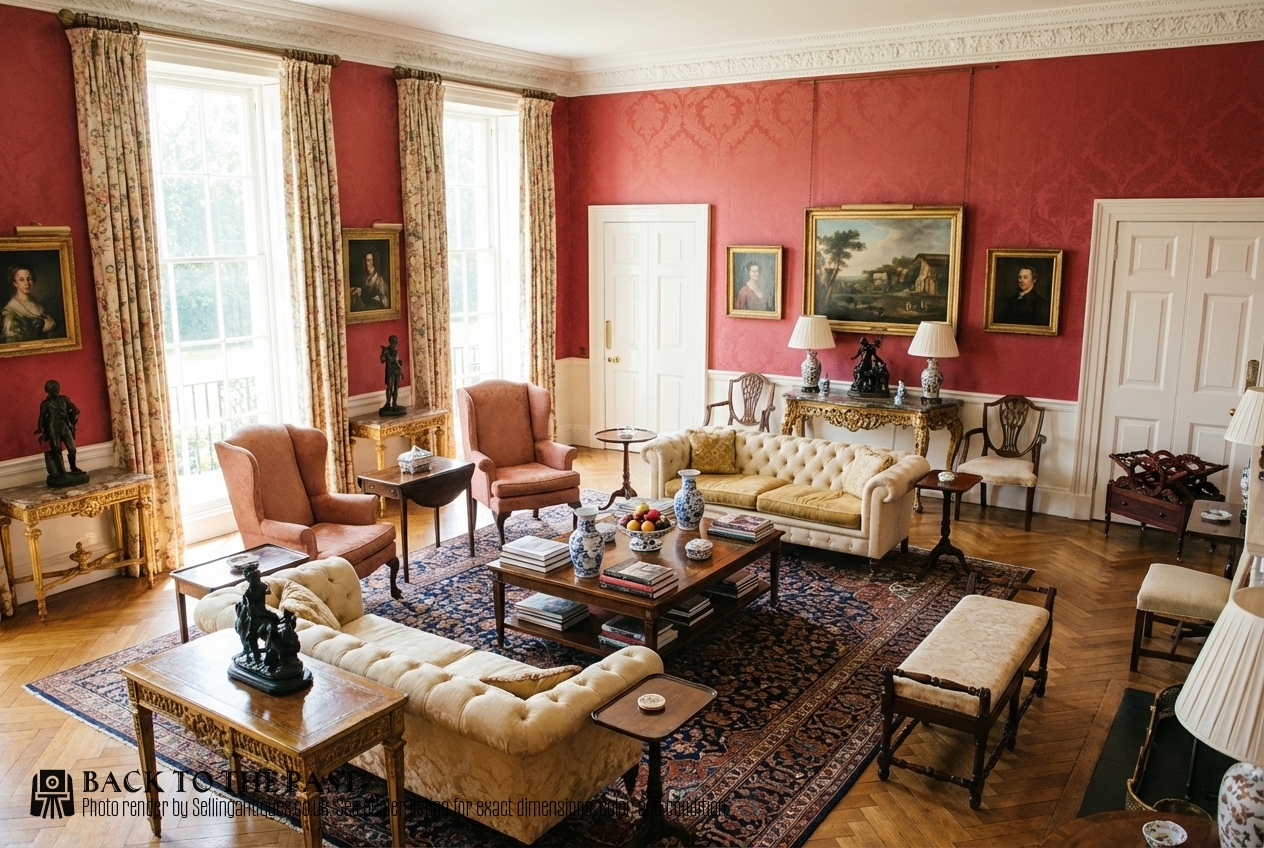
A carved rosewood canterbury is a distinct piece of nineteenth-century furniture originally designed to organise sheet music, newspapers, and magazines in the home. The pieces found here span the Regency, William IV, and Victorian periods, showcasing the evolving tastes of English, French, and American makers.
Most examples you will encounter combine partitioned vertical slats with a low drawer and turned supports, often set upon castors. They appear as music canterburys, newspaper racks, and general magazine stands, reflecting their versatile utility in period drawing rooms and libraries.
How they were made
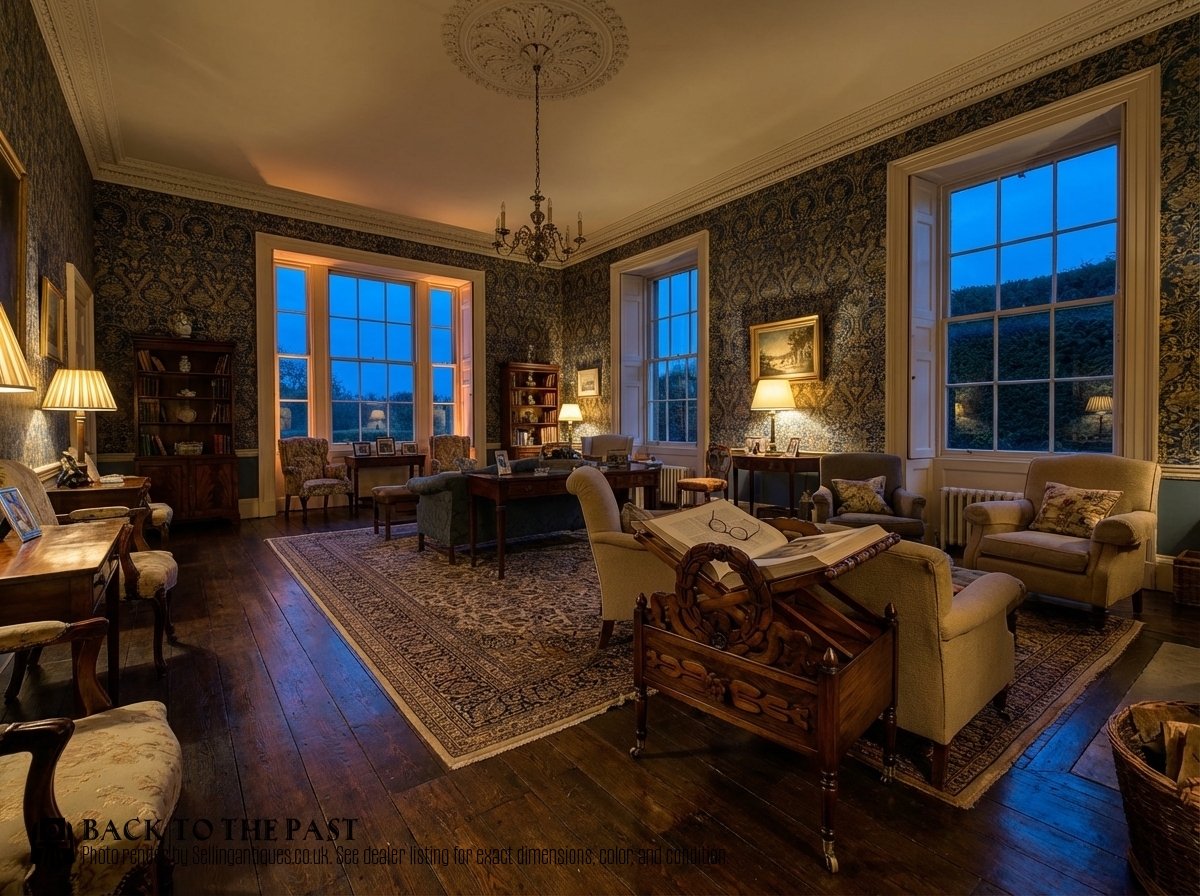
Cabinet makers utilised dense rosewood timber for its rich grain and deep colour, frequently pairing it with brass fittings, ceramic elements, and secondary woods such as mahogany. The structural framework relies on traditional joinery to support the weight of heavy paper stacked within the partitions.
Carving was executed by hand to render foliate motifs, scrollwork, and specific emblems such as the Prince of Wales feathers. Metal castors and hinges were integrated carefully into the base and drawer assemblies to ensure smooth movement.
Carved Rosewood Canterbury Retail Price Guide 2026
Typical asking prices for carved rosewood canterbury among the pieces listed under this phrase on Sellingantiques today, from the lower quarter to the upper quarter. They describe what is for sale here now, not the wider market.
Listings feature rosewood, mahogany, brass, and ceramic materials spanning the Regency, William IV, Victorian, and Gothic Revival styles.
What varies in quality
The standard of a carved rosewood canterbury depends heavily on the crispness of the hand-carving and the selection of the timber veneer. Finer examples display deeply undercut foliage and balanced proportions across the upright dividers and the base drawer.
Construction details also dictate the tier of the piece, from the thickness of the rosewood slats to the integration of high-grade brass castors and turned pillars. Simpler provincial items contrast with masterworks bearing refined stylistic references to designers like J C Loudon or distinct Gothic revival details.
The Carved Rosewood Canterbury Glossary
- Canterbury
- A low stand featuring upright partitions for holding sheet music, newspapers, or periodicals. It typically includes a single drawer below and is mounted on castors.
- Rosewood
- A dense, heavy timber prized for its dark purple-brown hues and striking dark grain patterns. It took a high polish and was favoured for principal nineteenth-century cabinet work.
- Regency
- An English stylistic period spanning roughly from the early nineteenth century into the 1830s. It draws upon classical antiquity and clean architectural lines.
- William IV
- A transitional stylistic period bridging Regency and early Victorian design during the 1830s. Pieces from this era often feature robust scrolling and bolder carved ornamentation.
- Foliate
- Ornamentation modelled on leaves, flowers, or foliage. It is frequently seen carved in low relief along the rails and framing of these stands.
Carved Rosewood Canterbury: Frequently Asked Questions
What is a canterbury used for?
These stands were originally built to hold sheet music, folios, newspapers, and daily periodicals within sitting rooms or music parlours.
Today, they serve the exact same purpose for contemporary magazines and vinyl records, combining practical tidy storage with historical character.
How do I date a rosewood canterbury?
Dating relies on identifying stylistic markers, such as the classical restraint of Regency examples versus the heavier carving seen on Victorian or William IV pieces.
Turned leg profiles, construction methods, and hardware like brass castors also provide clear clues to the decade of manufacture.
Are all these stands English?
While the majority of pieces originating from this period follow English cabinet-making traditions, French and American examples also appear.
Regional distinctions often emerge through the specific choice of secondary timbers, carving depth, and subtle variations in regional furniture design.
Can I use a music canterbury for vinyl records?
The vertical partitions designed for sheet music and folios accommodate modern LP records remarkably well.
The sturdy rosewood divisions keep sleeves upright and organised, making them a functional choice for music enthusiasts.