

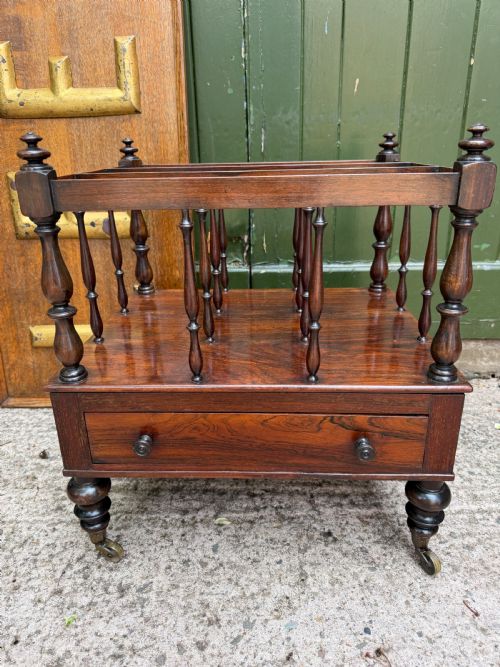


Rosewood Sheet Music Stand
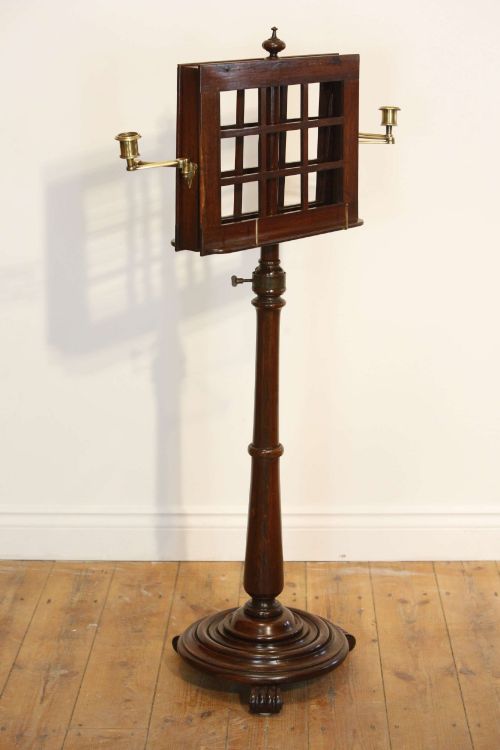
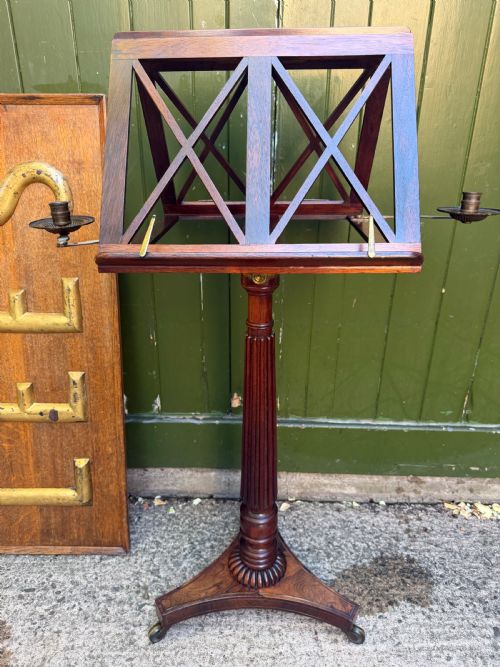
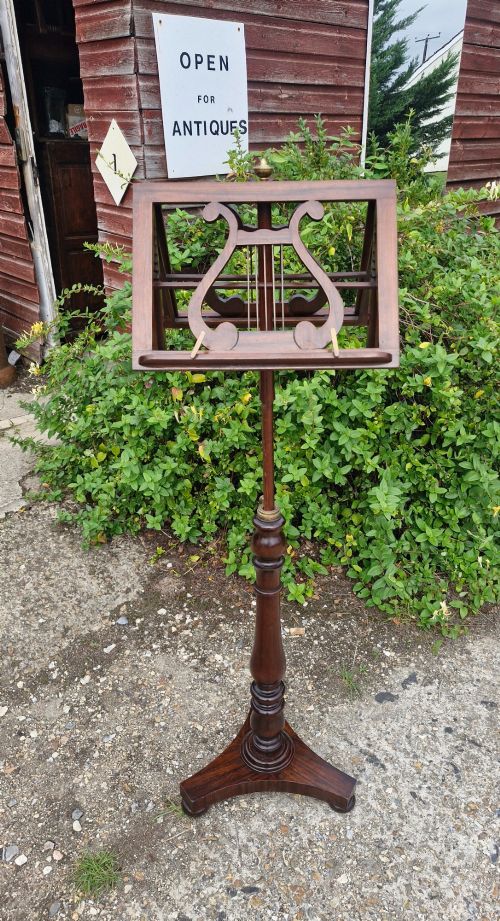
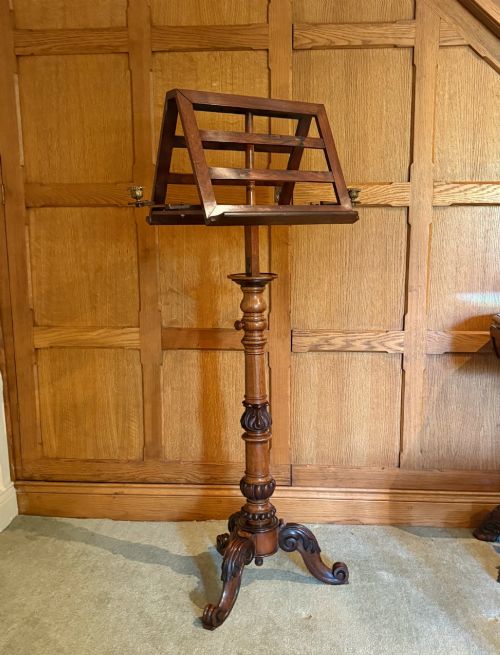
A rosewood sheet music stand holds scores and papers neatly in the parlour while bringing rich grain and brass detail to the room.
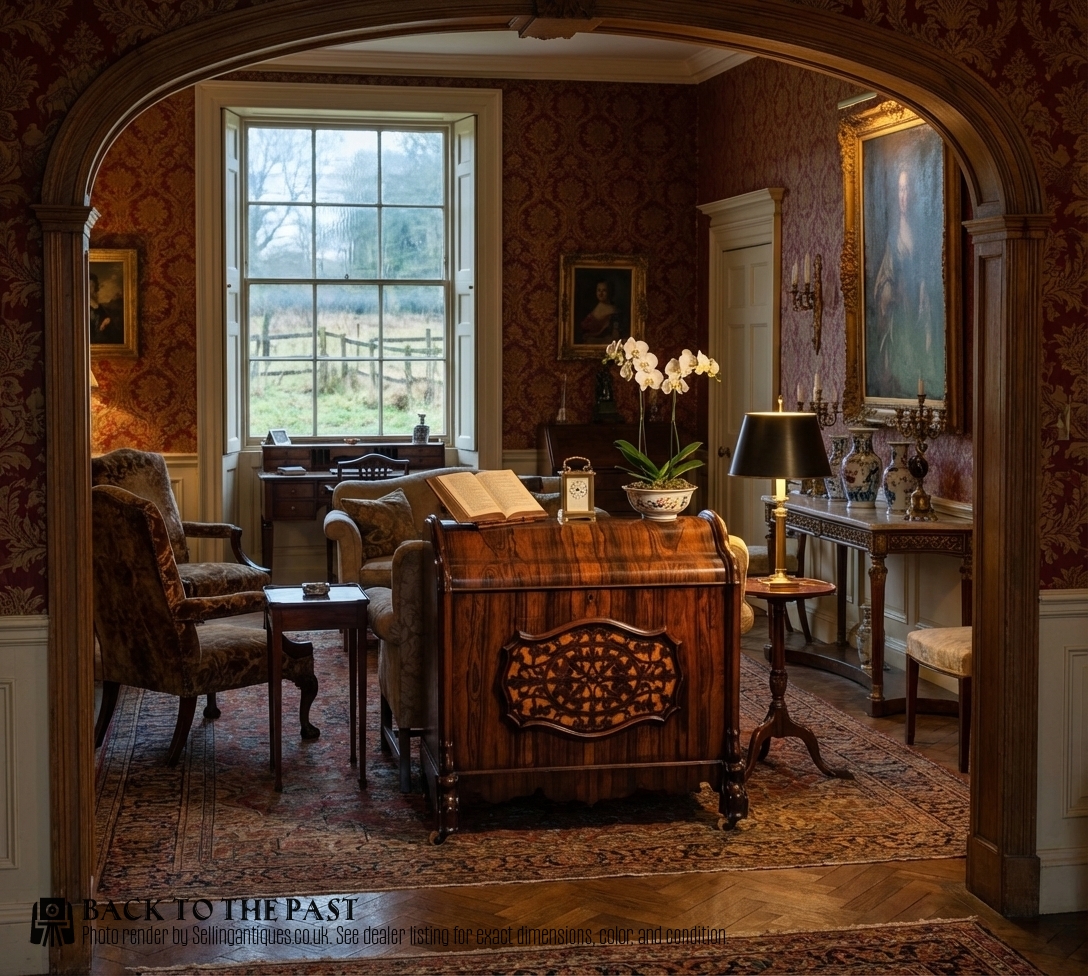
Rosewood Sheet Music Stand
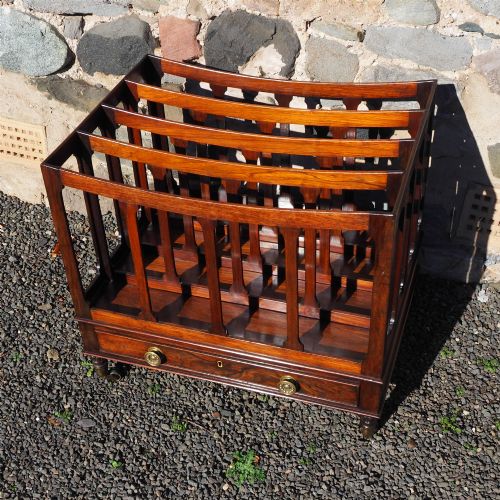
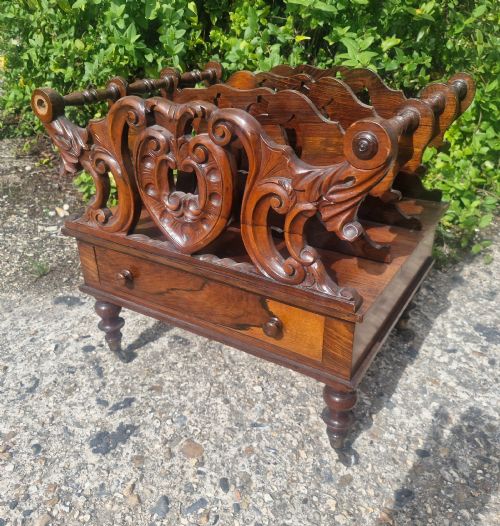
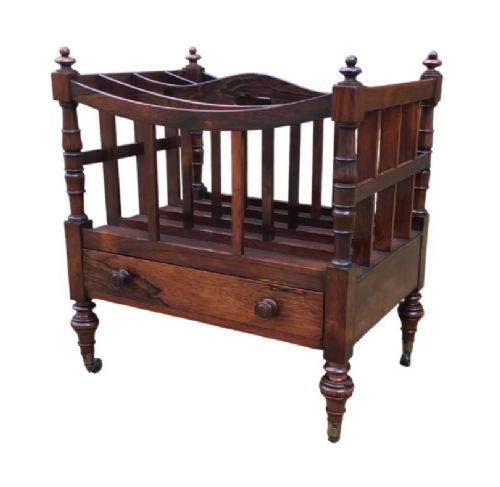
A rosewood sheet music stand, commonly known as a canterbury, serves as a dedicated rack for organising folios, scores, and papers in the home. These pieces appear most frequently from the 19th Century, spanning the Regency, George IV, and William IV periods, alongside examples in the Gothic Revival style.
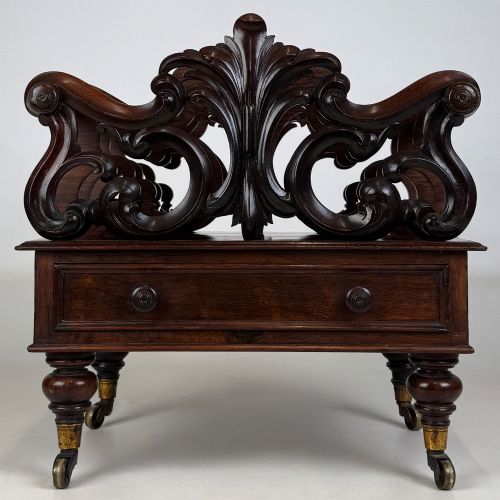
The typical form comprises divided vertical sections above a low drawer or plinth, often fitted with carrying handles and small castors. Variations include three-division and four-division models, as well as multi-functional magazine and newspaper racks.
Originating predominantly from English workshops, these stands reflect the refined cabinet-making standards of the Georgian and Victorian eras. Buyers encounter pieces ranging from plain functional stands to carved examples bearing motifs such as the Prince of Wales feathers.

How they were made
Cabinet makers utilised dense, richly figured rosewood for the primary frames and vertical divisions, bringing out the dark grain through polishing. Brass components, including carrying handles and small structural mounts, provide both functional support and contrast against the timber.
Construction techniques involve finely joined divisions and uprights secured to low plinths, occasionally incorporating ceramic castors for mobility. Decorative elements such as carved details are worked directly into the rosewood framework.
Rosewood Sheet Music Stand Retail Price Guide 2026
Typical asking prices for rosewood sheet music stand among the pieces listed under this phrase on Sellingantiques today, from the lower quarter to the upper quarter. They describe what is for sale here now, not the wider market.
Listings feature pieces from the 19th Century, including Regency, George IV, William IV, and Victorian periods, constructed from rosewood, brass, and ceramic.
What varies in quality
Quality reveals itself in the depth of the rosewood grain and the crispness of carved details like the Prince of Wales feathers. Finer pieces demonstrate superior joinery in the divisions and heavier, well-cast brass hardware rather than simple fittings.
The sophistication of the overall proportion and the integration of functional elements such as carrying handles distinguish standard production from exceptional cabinet work.
Gillows
The Rosewood Sheet Music Stand Glossary
- Rosewood
- A heavy, durable timber prized for its dark colour and striking grain patterns. Cabinet makers selected it for high-status furniture throughout the 19th century.
- Regency
- A style period spanning the early 19th century characterised by classical restraint and elegance. Furniture from this era often incorporates brass inlay and bold timber grains.
- Gothic Revival
- An architectural and decorative style drawing on medieval forms. Pieces in this aesthetic feature pointed arches and ecclesiastical motifs.
- Castor
- A small wheel fitted to the base of furniture for ease of movement. These are frequently made of brass or ceramic.
Rosewood Sheet Music Stand: Frequently Asked Questions
What is a music canterbury?
A music canterbury is a low piece of furniture designed with upright divisions to hold sheet music, folios, and newspapers off the floor.
Cabinet makers in the 19th century built these stands to keep parlour scores organised and accessible near a piano or seating area.
How do I date a rosewood stand?
Dating relies on stylistic clues and construction methods associated with periods like the Regency, George IV, and William IV eras. Comparing the hardware, timber selection, and carved motifs helps place the piece within the 19th century.
Earlier examples often display cleaner classical lines, while later Victorian and Gothic Revival pieces introduce more ornate or ecclesiastical detailing.
Were these stands only for music?
While originally designed for scores and sheet music, many examples served wider domestic purposes in the parlour or drawing room.
They frequently held newspapers, periodicals, and general paperwork alongside musical folios.
How do I care for rosewood furniture?
Rosewood benefits from a stable environment away from direct sunlight and sudden temperature changes to protect the timber grain. Regular dusting with a soft, dry cloth preserves the polished finish.
Harsh chemical polishes should be avoided in favour of traditional beeswax applied sparingly.