


Antique Sheet Music Rack
An antique sheet music rack organises folios and scores, offering structured storage that keeps household paper goods tidy and upright.
Antique Sheet Music Rack
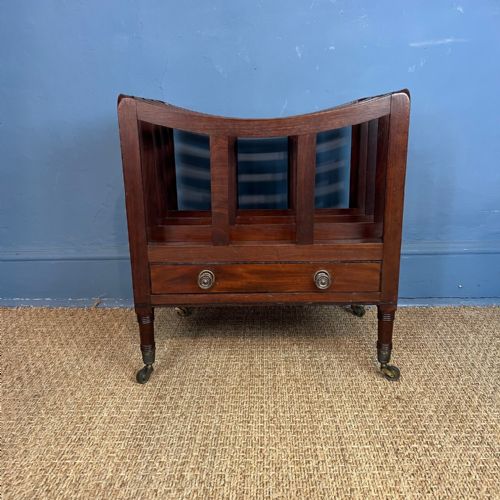
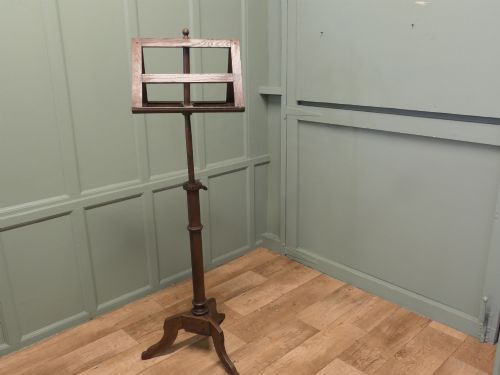
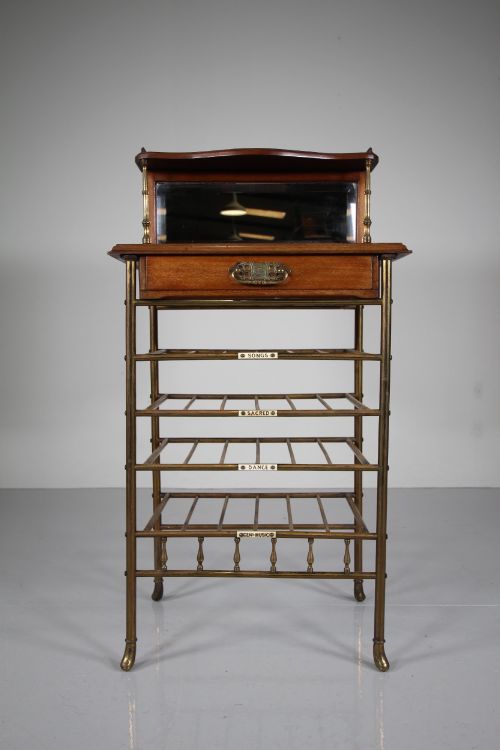
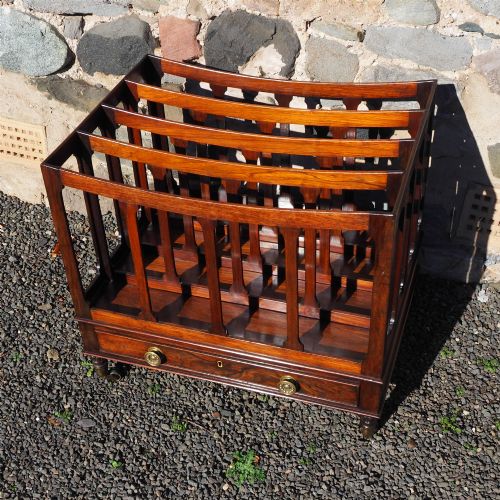
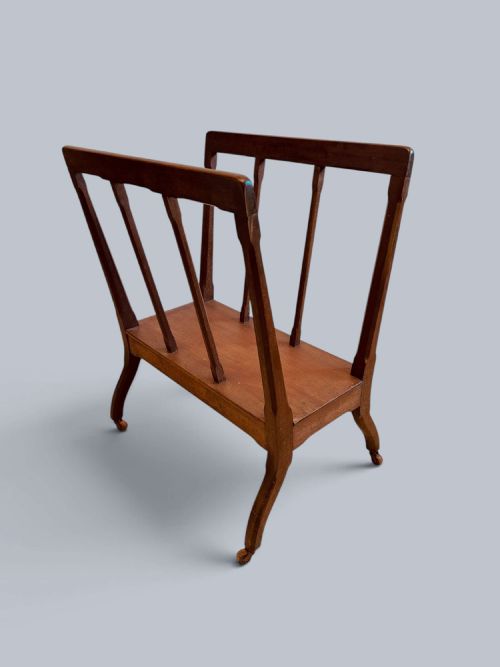
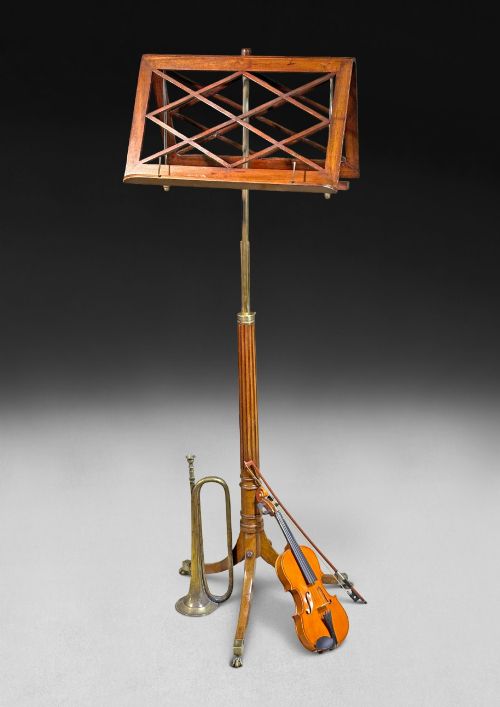
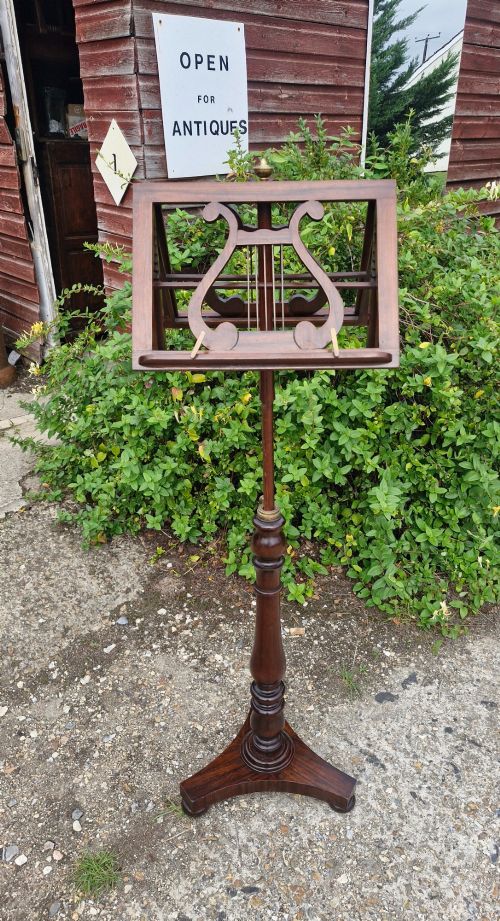
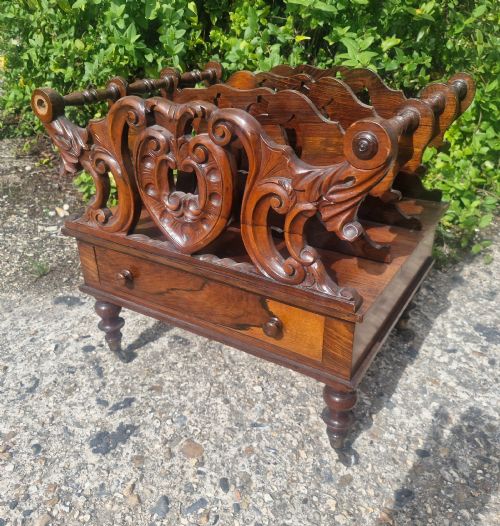
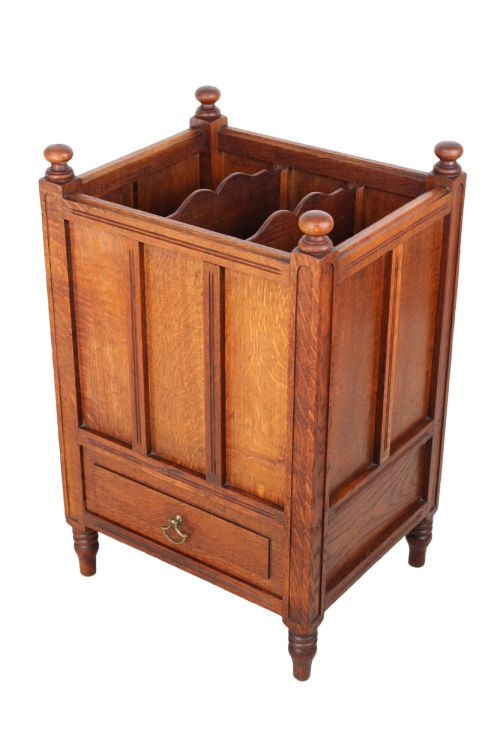
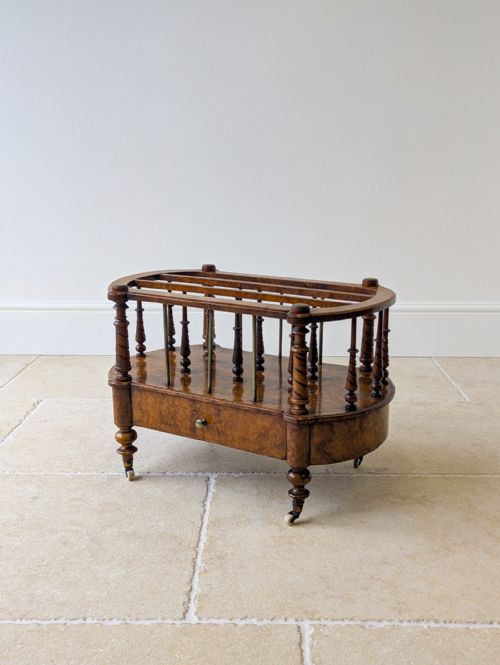
When buyers search for an antique sheet music rack, they encounter freestanding domestic stands designed to hold folios, scores, newspapers, and magazines in domestic parlours and music rooms. The most common forms on this page include canterburys, music stands, and magazine racks originating across the Georgian, Regency, William IV, Victorian, and Edwardian periods.
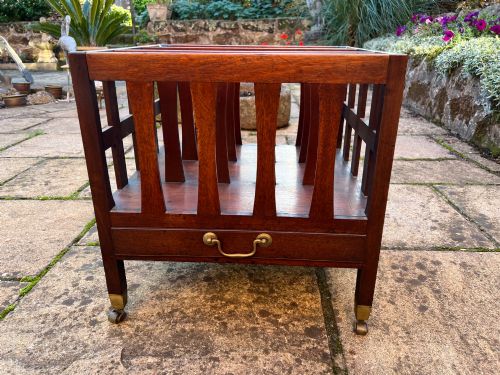
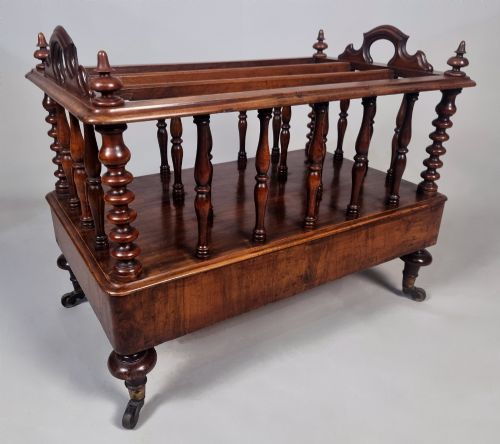
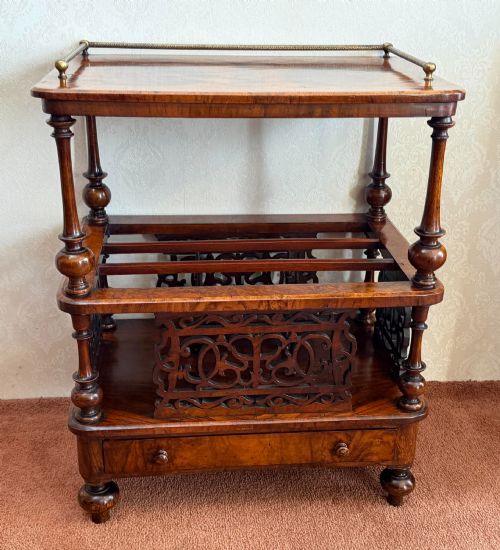
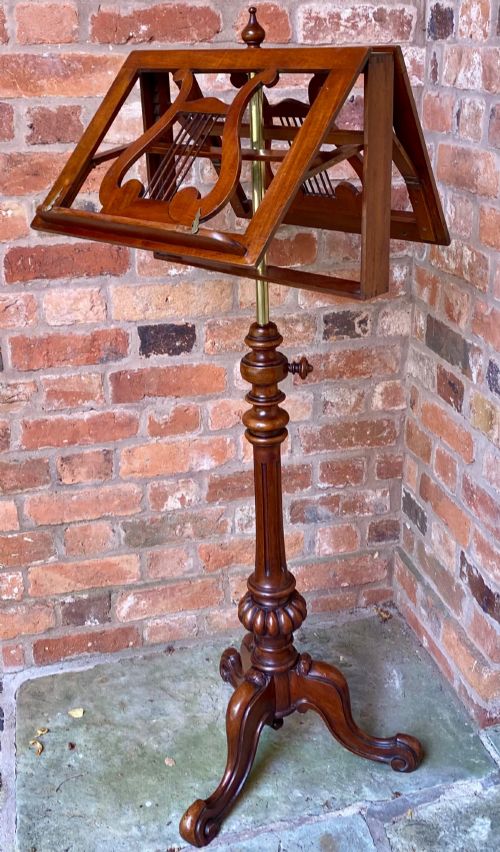
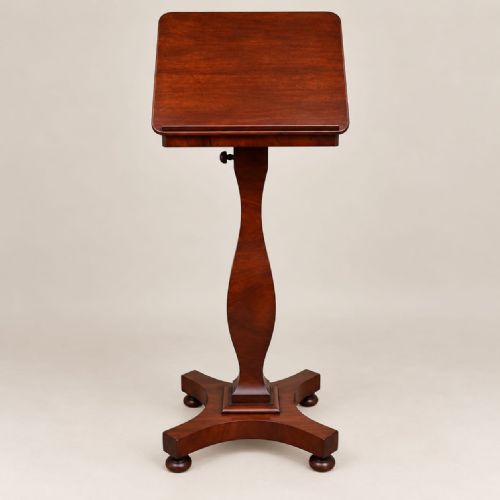
Canterburys appear frequently, often featuring divided wooden partitions above a low drawer, while music stands provide adjustable reading surfaces or lyre-shaped supports. These pieces emerge in styles ranging from early nineteenth-century mahogany designs to later aesthetic movement bamboo and burr walnut constructions.
Materials and Technique
Cabinetmakers utilised dense cabinet timbers such as mahogany, walnut, burr walnut, and rosewood, frequently applying decorative veneers to visible surfaces. Bamboo and ceramic also appear in specific late nineteenth-century iterations, adding contrasting textures to the framework.
Joinery methods involved precise framing for slatted partitions and turned supports, alongside brass castors and adjustable metal mechanisms on music stands. Carved details, inlay work, and serpentine shaping demonstrate the manual dexterity applied to functional domestic furniture.
Antique Sheet Music Rack Retail Price Guide 2026
Typical asking prices for sheet music rack among the pieces listed under this phrase on Sellingantiques today, from the lower quarter to the upper quarter. They describe what is for sale here now, not the wider market.
Some nineteenth-century makers concealed extra storage drawers deep beneath the music racks, keeping tuning keys safely out of sight.
Distinctions in Execution
The distinction between standard domestic items and superior examples lies in the selection of timber figures, such as highly figured burr walnut or rich mahogany grain. Finer pieces display refined craftsmanship through intricate inlay, precise joinery, and well-executed carved elements rather than plain surfaces.
Edwards & Roberts
The Antique Sheet Music Rack Glossary
- Canterbury
- A low freestanding stand with divided partitions, originally designed to hold sheet music and folios. It frequently incorporates a drawer beneath the slatted storage section.
- Lyre-Form
- A decorative motif shaped like an ancient stringed instrument, commonly utilised in the central supports of music stands and canterburys.
- Burr Walnut
- Timber taken from the growth excrescence of a walnut tree, prized by cabinetmakers for its swirling, highly figured grain patterns on decorative surfaces.
- Serpentine
- A curved line that undulates gently with a convex centre flanked by concave curves, often defining the shaped edges of tabletops and shelves.
- Duet Music Stand
- An adjustable stand configured to hold two open scores simultaneously, allowing two musicians to read side by side.
Antique Sheet Music Rack: Frequently Asked Questions
How were canterburys used originally?
Canterburys were utilised in period drawing rooms to hold sheet music, unbound scores, and daily newspapers upright and within reach. The divided sections prevented folios from slumping, while lower drawers provided space for smaller accessories.
Over time, owners adapted them to store general reading materials, magazines, and books as domestic habits shifted through the Victorian and Edwardian eras.
How do I identify a Regency music stand?
Regency music stands and canterburys typically display clean classical lines, dark mahogany timbers, and brass accents such as castors or adjustable stems. They often incorporate lyre-shaped wooden elements and balanced proportions typical of early nineteenth-century design.
Later Victorian interpretations tend towards heavier burr walnut veneers, serpentine shaping, and more ornate carving compared to the restrained Regency aesthetic.
Where should I place a music stand at home?
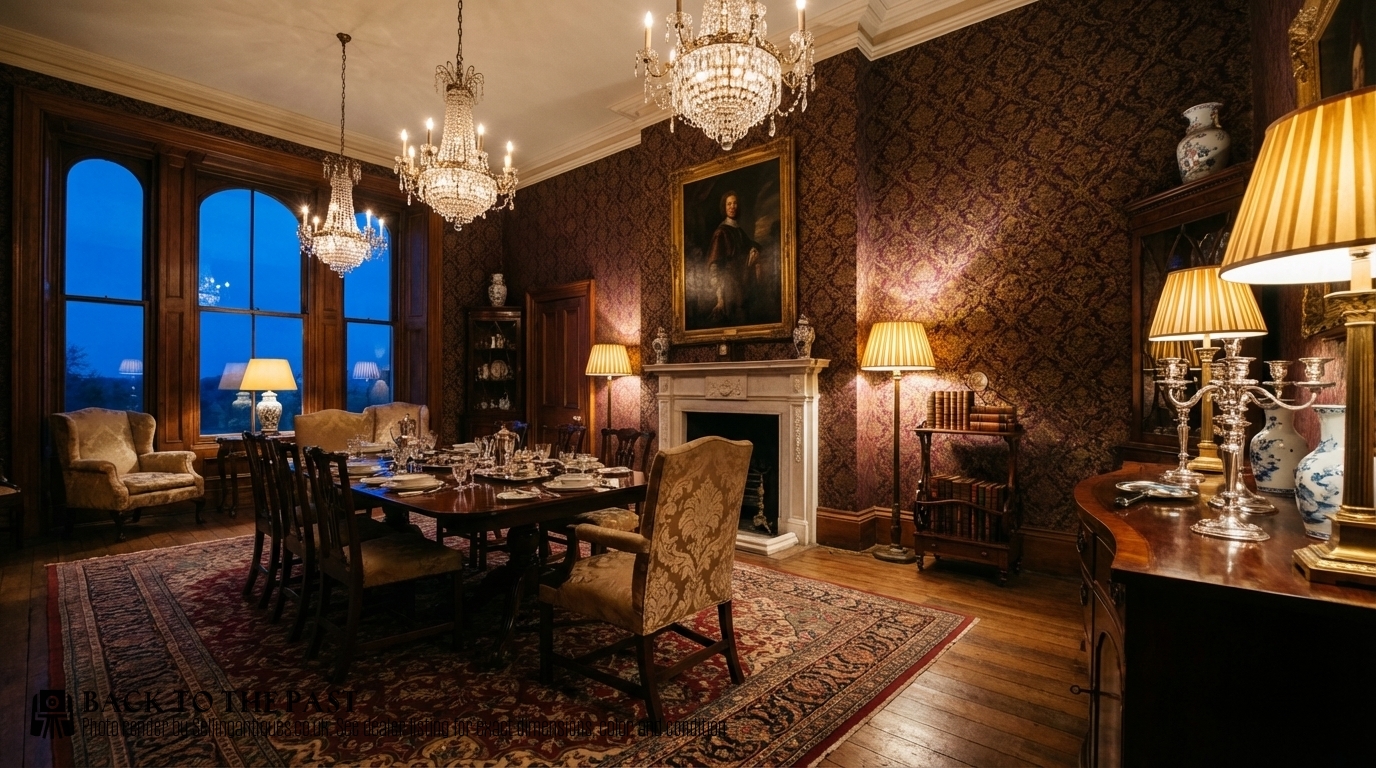
These freestanding pieces suit studies, living rooms, and music corners where their timber grain and compartmentalised structure complement other occasional furniture. Placing them away from direct heat sources protects the polished wood veneers and joins.
They function effectively beside armchairs or sofas as practical holders for current reading matter and periodicals.