


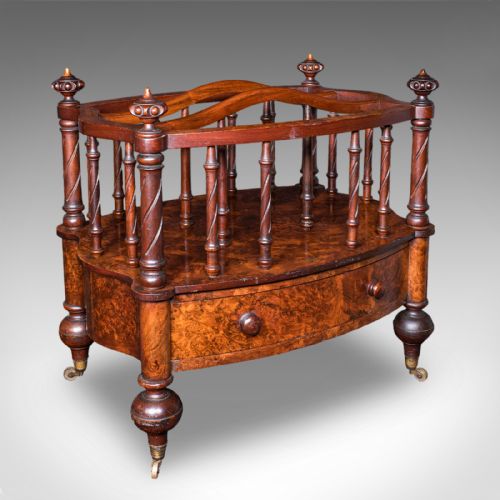


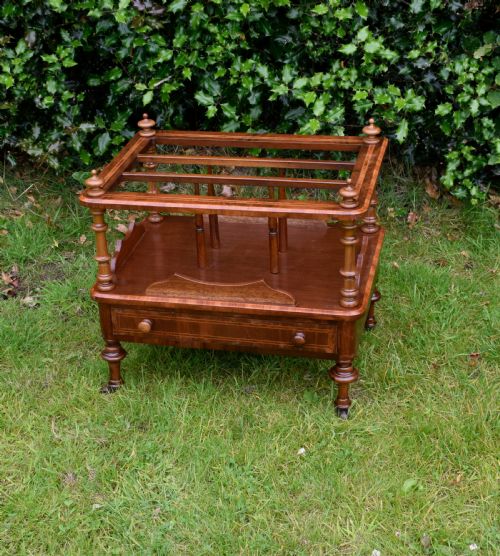


Walnut Newspaper Stand
These walnut newspaper stand items are practical occasional pieces designed to hold periodicals, combining rich timber with functional compartment dividers.
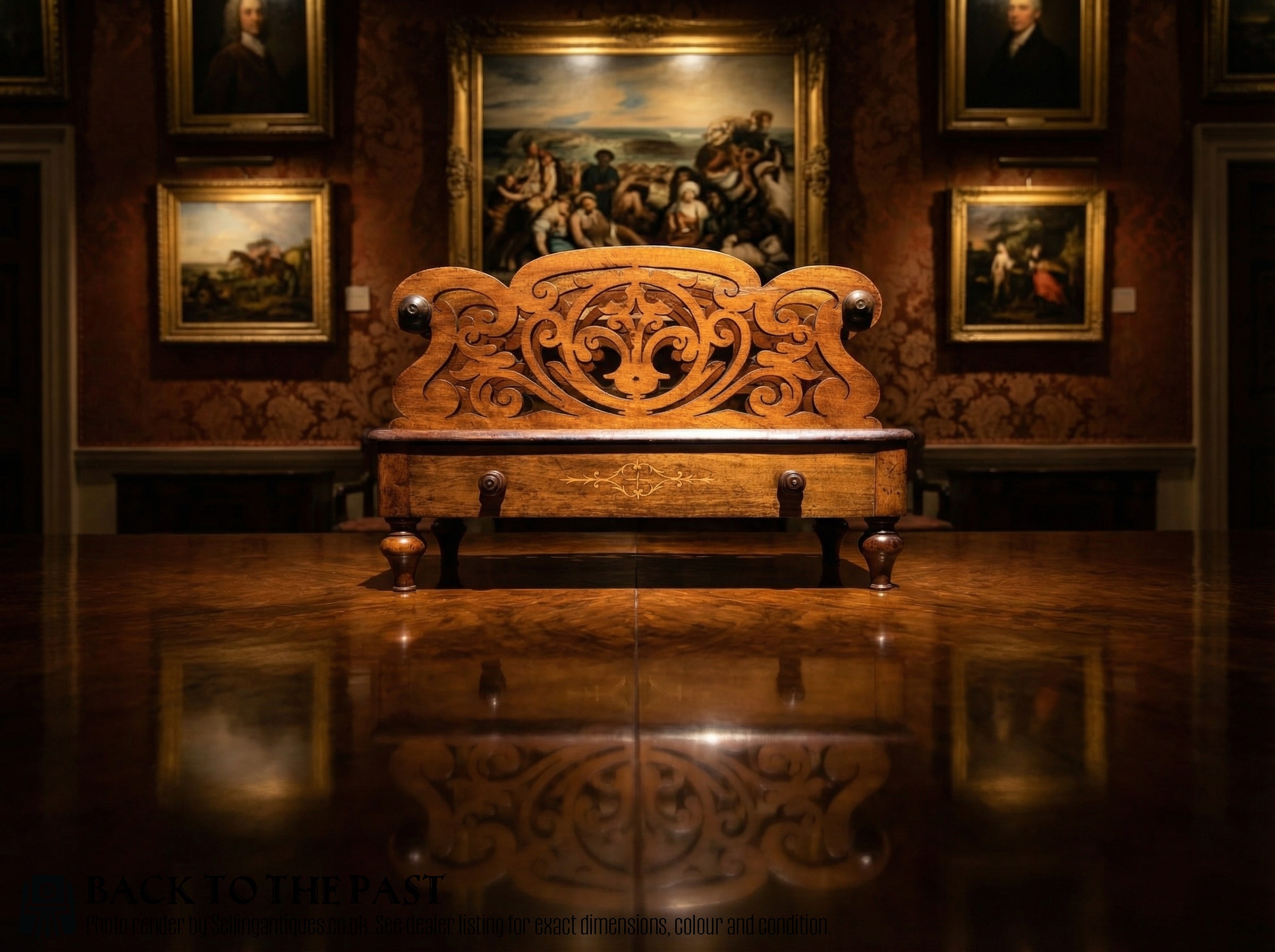
Walnut Newspaper Stand
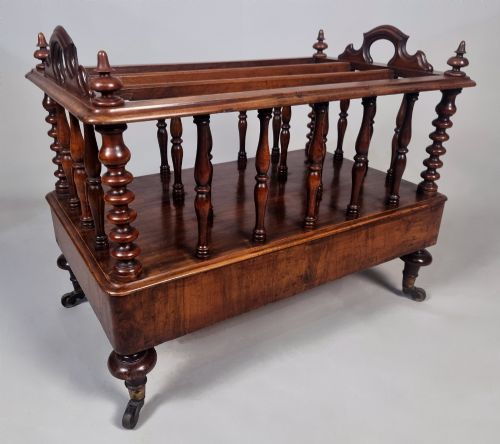
A walnut newspaper stand serves as a dedicated holder for periodicals and journals, taking the form of a Canterbury or magazine rack. These items appear across nineteenth century styles, ranging from Regency influences to high Victorian designs.
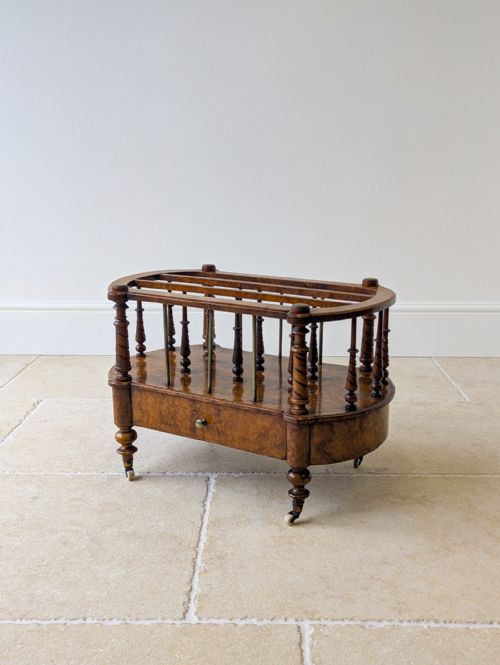
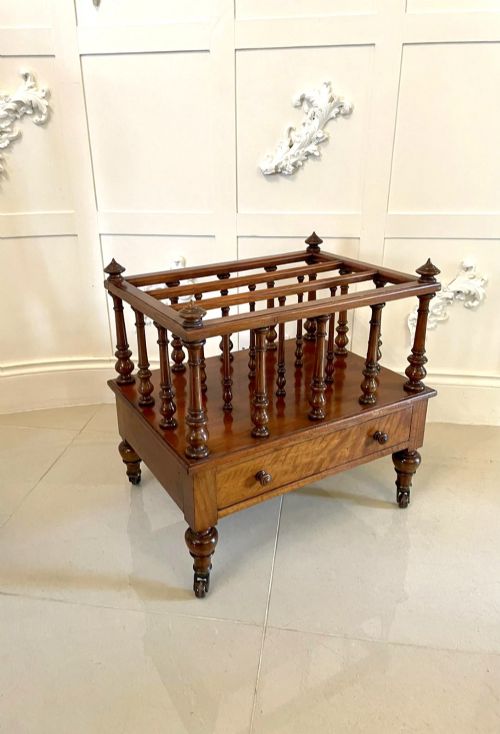
The most frequent form encountered on this page is the Victorian Canterbury, often incorporating divisions for papers alongside lower drawers or shelves. Pieces range from freestanding magazine stands to oval lamp tables fitted with rack sections.
Origins span English and French workshops, utilising woods like burr walnut and figured walnut. Makers such as Edwards and Roberts and Shoolbred produced notable examples during this era.
How they were made
Construction relies heavily on walnut, burr walnut, and figured walnut veneers applied to supportive timber frames, frequently enhanced by boxwood and wood inlay. Cabinetmakers utilised these figured veneers to create striking decorative grain patterns across flat surfaces and divider panels.
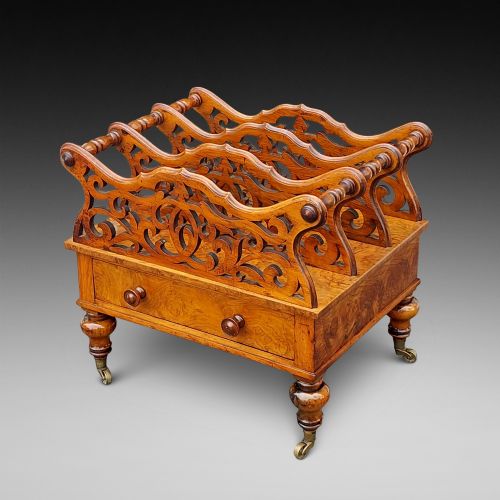
Metal elements such as brass and copper appear in handles, castors, and structural mounts, contrasting with the dark timber. Turned wooden pillars and finely carved fretwork divisions support the paper compartments.
Joinery techniques of the period allow for freestanding stability in multi-tiered items like canterbury whatnots and lamp tables.
Walnut Newspaper Stand Retail Price Guide 2026
Typical asking prices for walnut newspaper stand among the pieces listed under this phrase on Sellingantiques today, from the lower quarter to the upper quarter. They describe what is for sale here now, not the wider market.
Listings span the nineteenth century, featuring Victorian, Regency, and mid-Victorian periods alongside materials like brass, copper, and burr walnut.
What varies in quality
The choice of timber surface defines much of the distinction, with highly figured burr walnut commanding greater visual depth than plain walnut boards. Inlay work also varies, from simple stringing to intricate boxwood floral motifs.
Structural complexity separates basic magazine racks from elaborately designed pieces featuring lower drawers, turned supports, and multi-functional tiered surfaces like lamp tables. Maker attribution introduces another layer of distinction among nineteenth century examples.
Edwards and Roberts·Shoolbred
The Walnut Newspaper Stand Glossary
- Canterbury
- A low stand with upright divisions for holding music sheets, newspapers, or books, often featuring a small drawer below. This form became popular in the late eighteenth century and remained a staple through the Victorian period.
- Burr walnut
- A veneer taken from the grotesque growths or burls of a walnut tree, prized for its swirling, highly figured grain patterns. Cabinetmakers utilised this timber for the primary display surfaces of high-end furniture.
- Figured walnut
- Timber exhibiting attractive, natural grain distortions that catch the light, selected by cabinetmakers for decorative effect. It offers a subtler pattern than burr walnut while maintaining rich colour variation.
- Whatnot
- An open set of freestanding shelves used for displaying ornaments or holding books and papers. Victorian examples sometimes combined this open shelving with a lower Canterbury section.
- Stringing
- A narrow strip of contrasting wood inlay used to outline panels, drawers, or table tops. Boxwood was frequently utilised for this purpose against dark walnut backgrounds.
Walnut Newspaper Stand: Frequently Asked Questions
What is a Canterbury stand?
A Canterbury is a specific type of low stand featuring vertical divisions designed to hold newspapers, magazines, or sheet music. They frequently include a small drawer underneath the main compartment.
Originating in the late Georgian era, these pieces evolved through the Victorian period into freestanding stands and combination lamp tables.
How do I identify a Victorian piece?
Victorian examples often display rich burr walnut veneers, elaborate wood inlay, and turned wooden pillars. They frequently take the form of substantial canterburys or magazine stands with brass and copper hardware.
Stylistic markers include the use of boxwood stringing and multi-tiered structures such as whatnots.
Where were these stands made?
The pieces listed originate primarily from English and French workshops of the nineteenth century. Makers working in London produced many of the refined examples found today.
Cabinetmakers utilised continental and domestic timbers, applying traditional framing and veneering techniques.
How do I care for walnut furniture?
Walnut furniture benefits from stable indoor environments away from direct sunlight and strong heat sources. Regular dusting with a soft cloth preserves the polished timber surface.
Avoid excessive moisture and chemical polishes, allowing the natural grain of the burr or figured walnut to endure.