


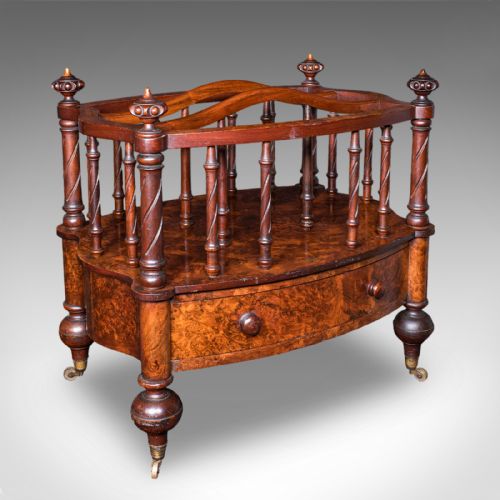

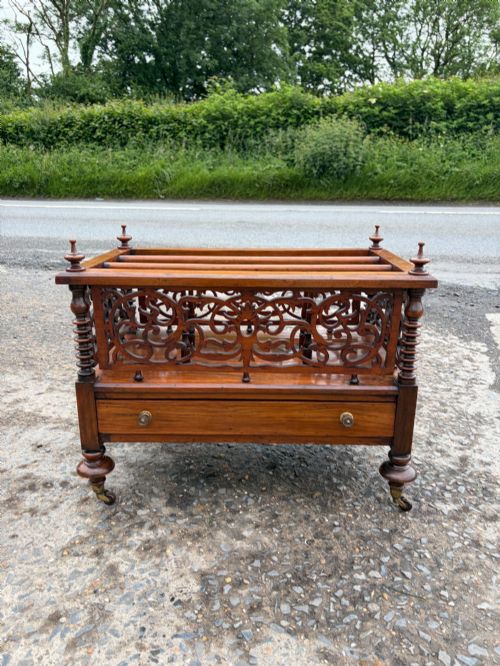
Antique Walnut Canterbury
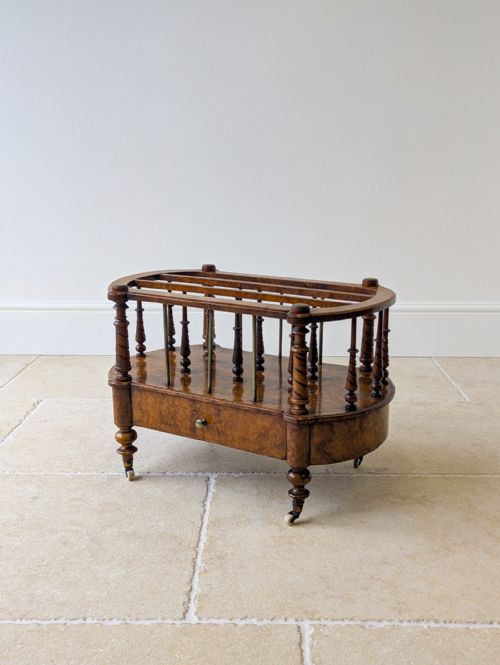
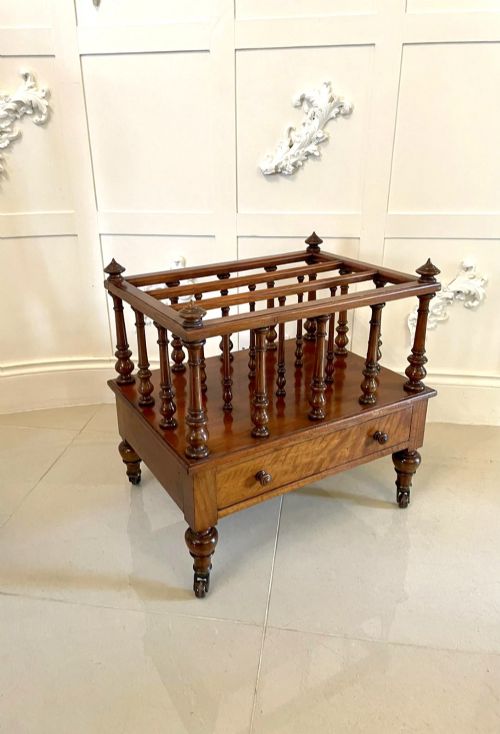
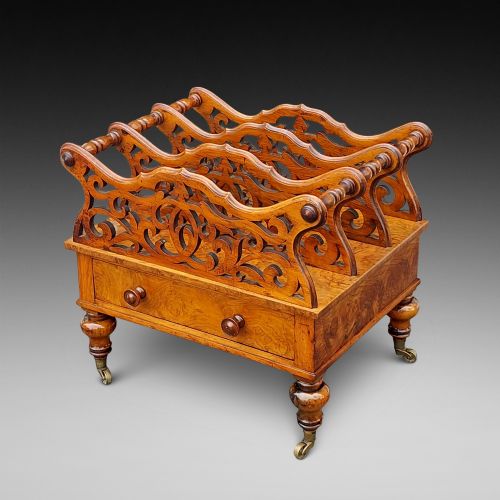
An antique walnut canterbury is a low, multi-tiered piece designed to hold sheet music and periodicals.
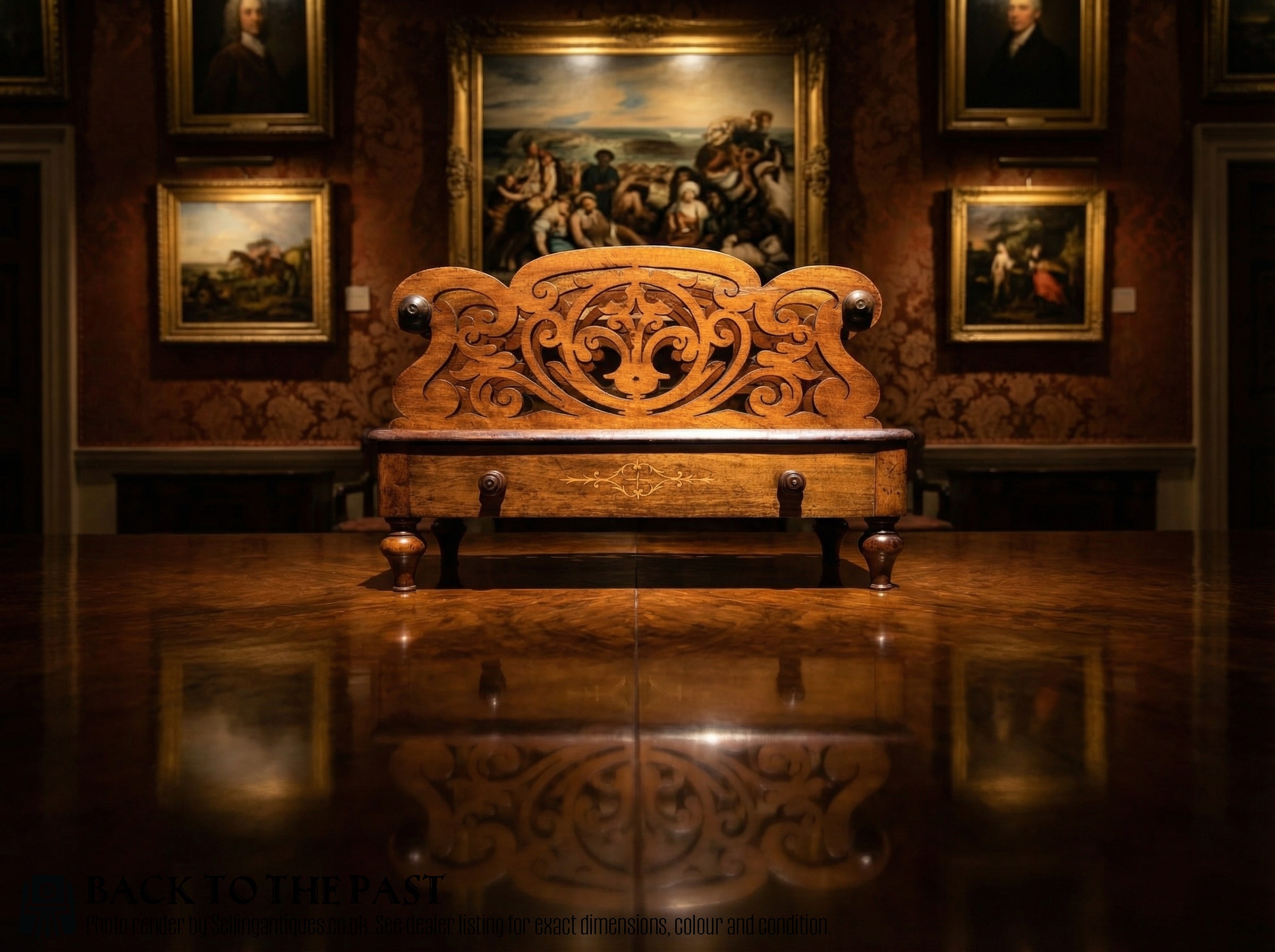
Antique Walnut Canterbury
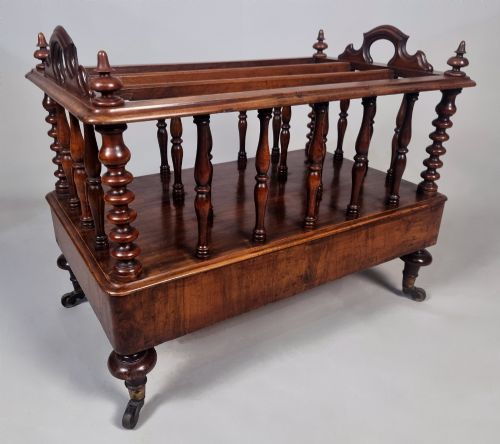
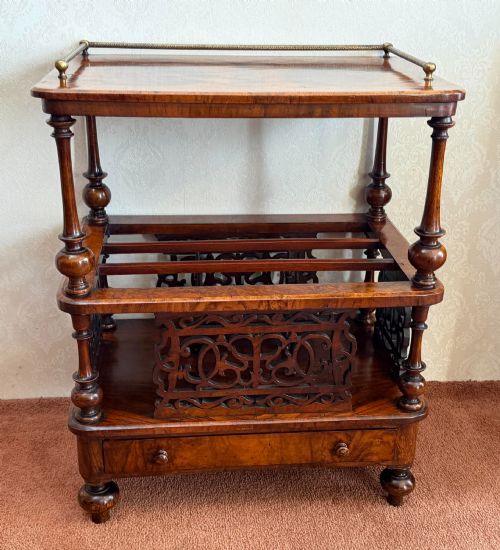
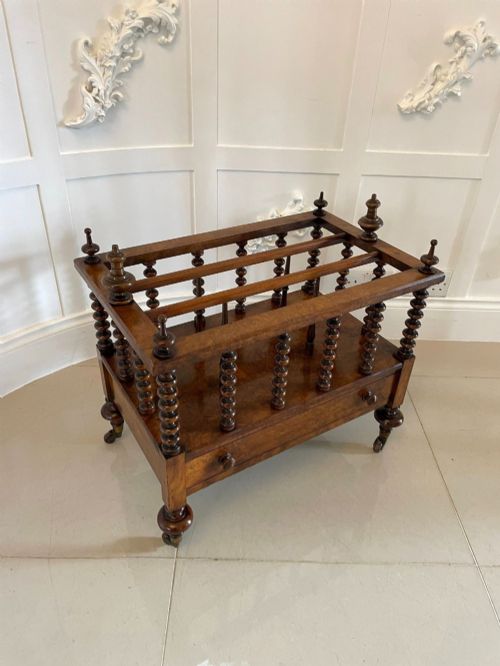
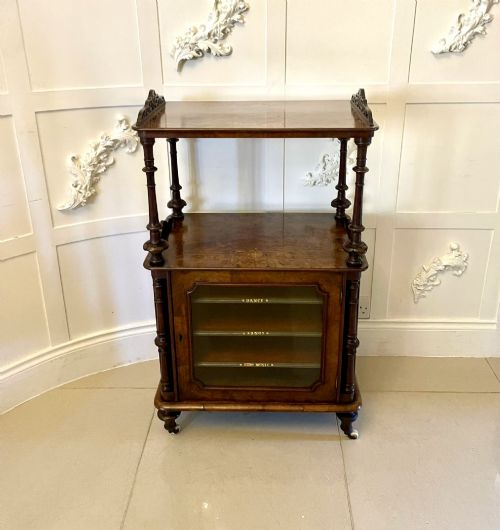
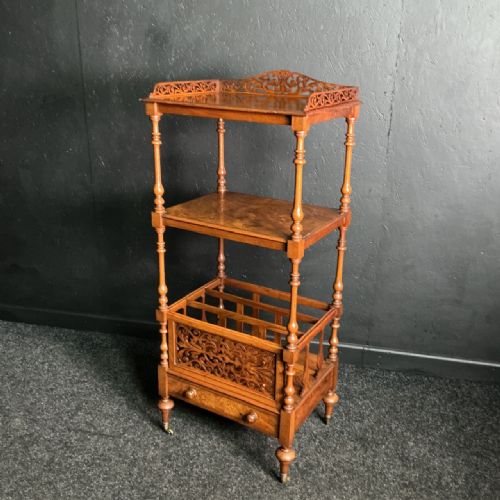
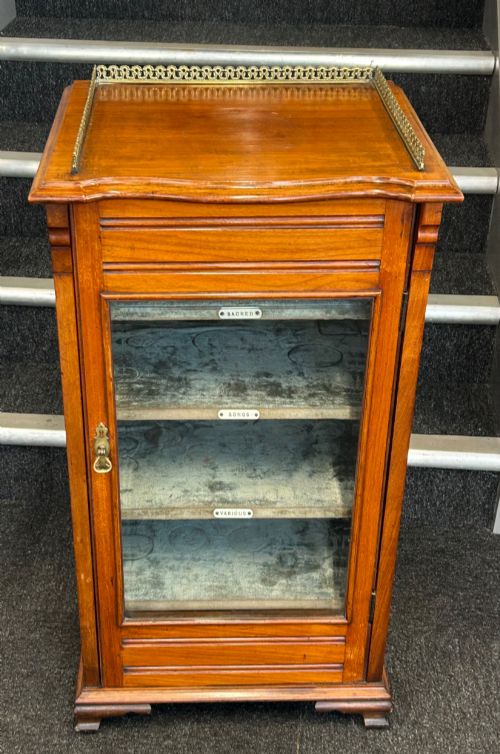
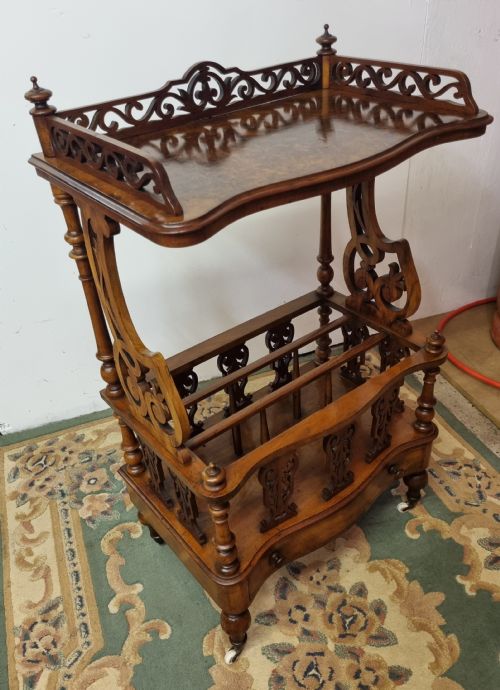
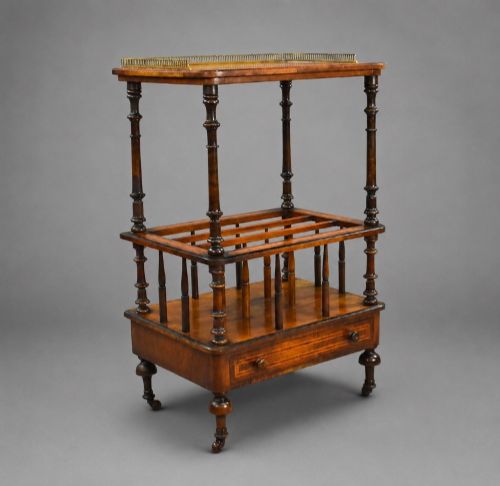
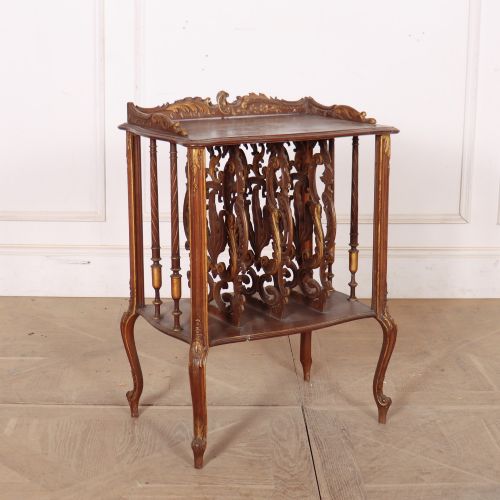
When you search for an antique walnut canterbury, you encounter low multi-tiered stands primarily designed to store sheet music, newspapers, and periodicals in the nineteenth-century parlour. The forms span open-partitioned magazine racks, freestanding music cabinets with doors, and combined whatnot tables featuring stacked display shelves above the lower compartments.
Materials and construction
Maker construction relies heavily on solid walnut and decorative burr walnut veneers selected for striking grain patterns, sometimes enhanced by ebonised wood or contrasting wood inlay and marquetry. Workshops incorporated brass castors on slender legs to permit easy movement across carpets during the nineteenth century.
Structural complexity varies from open slatted divisions joined to a low drawer base to enclosed cabinetry fitted with glass panels, ceramic components, and ormolu mounts. The timber surfaces received hand-rubbed finishes that accentuate the natural figure and warm tones of the walnut.
Antique Walnut Canterbury Retail Price Guide 2026
Typical asking prices for walnut canterbury among the pieces listed under this phrase on Sellingantiques today, from the lower quarter to the upper quarter. They describe what is for sale here now, not the wider market.
Several pieces conceal miniature drawers beneath their music racks, perfect for misplacing small nineteenth-century pencils.
Judging quality and distinction
Quality reveals itself in the selection of timber veneers, where highly figured burr walnut and precise marquetry inlay distinguish finer cabinetwork from plain walnut surfaces. The crispness of turned columns, the snugness of drawer joints, and the integration of upper whatnot tiers indicate the original maker's skill and ambition.
Proportion and structural integrity separate standard utility pieces from exhibition-grade examples featuring serpentine fronts, integrated work tops, or branded maker attribution. The refinement of brass fittings and the preservation of the original wood finish carry significant weight in assessing an individual stand.
Edwards & Roberts·Shoolbred
The Antique Walnut Canterbury Glossary
- Canterbury
- A low stand featuring divided partitions for holding sheet music or periodicals, often fitted with a small drawer below. Originating in the late eighteenth century, the form expanded during the Victorian era to include combined display shelves and occasional tables.
- Burr Walnut
- Timber sliced from the irregular growth excrescences of a walnut tree, yielding dense, highly figured swirling grain patterns. Cabinetmakers prized this veneer for creating decorative focal points on tabletops and door panels.
- Whatnot
- An open set of tiered shelving used for displaying ornaments and books, frequently mounted above a canterbury base. These multi-functional pieces maximised floor space in Victorian drawing rooms.
- Marquetry
- The art of forming decorative patterns by fitting together contrasting pieces of wood veneer onto a structural core. This technique appears on Victorian furniture tops and friezes.
- Etagere
- A French term for a set of tiered display shelves supported by slender columns. It functions interchangeably with the English whatnot on many nineteenth-century pieces.
Antique Walnut Canterbury: Frequently Asked Questions
What was a canterbury used for originally?
These low stands served to hold sheet music near pianos, as well as newspapers and periodicals in sitting rooms.
Their divided partitions kept unbound papers upright and accessible before the era of modern shelving.
How do I date a walnut canterbury?
Dating relies on stylistic markers such as serpentine shaping, leg turning, and the presence of upper whatnot tiers.
Victorian examples often display rich burr walnut veneer and marquetry, while Edwardian pieces lean towards enclosed sheet music cabinets.
Can I use an antique canterbury as a side table?
These pieces adapt readily to modern rooms as lamp tables or occasional side tables next to sofas.
The flat tops hold lighting while the lower partitions accommodate books and magazines.
What is the difference between a canterbury and a whatnot?
A traditional canterbury consists solely of a low partitioned rack with legs, sometimes featuring a single drawer.
When makers added multiple stacked display shelves above the rack, the piece became known as a canterbury whatnot.