

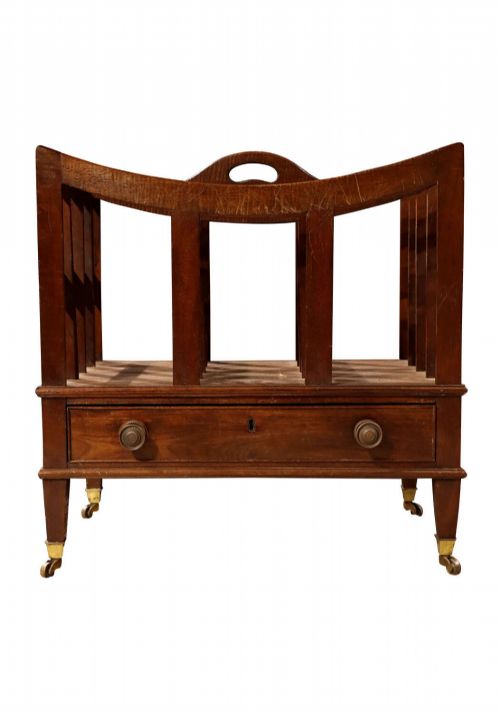


Brown Wood Canterbury
A brown wood canterbury brings timeless charm to any room, serving as a dedicated home for periodicals, folios, and sheet music.
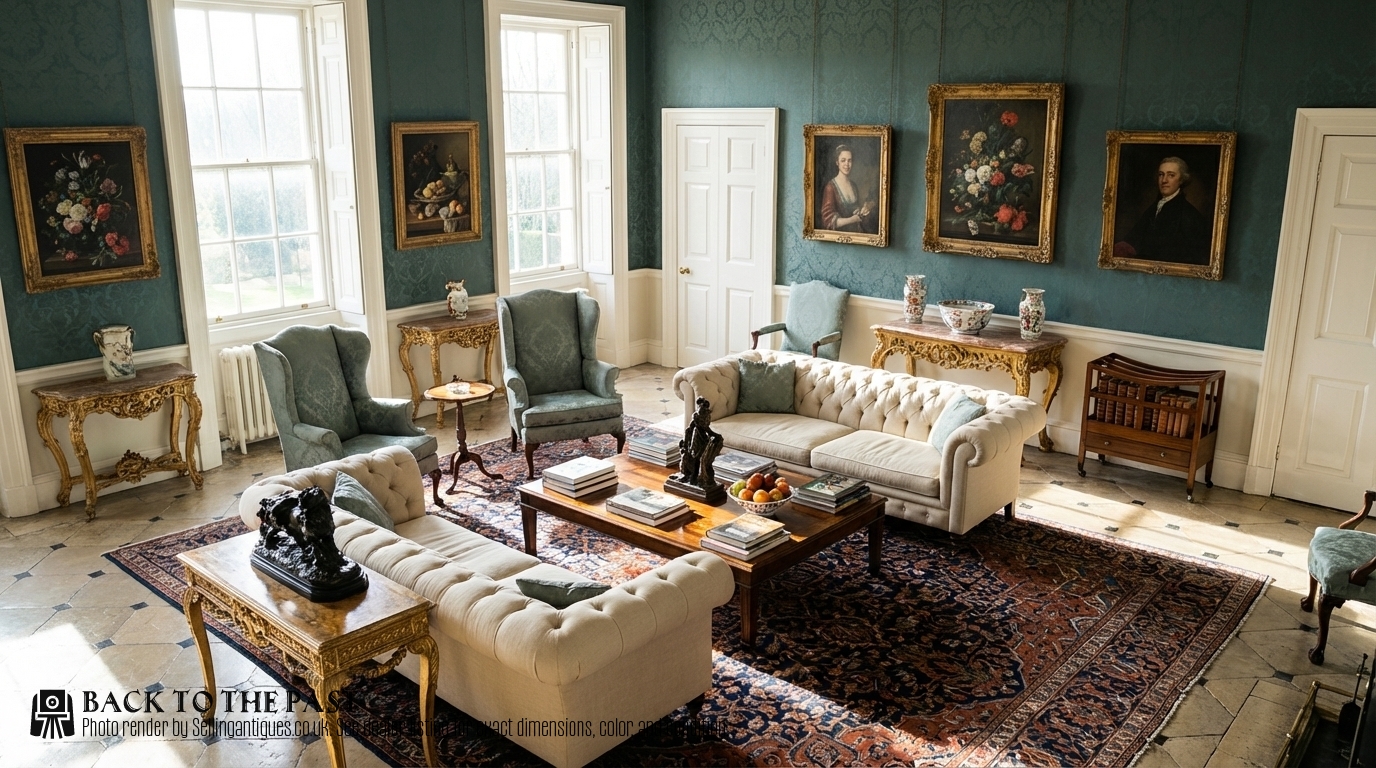
Brown Wood Canterbury
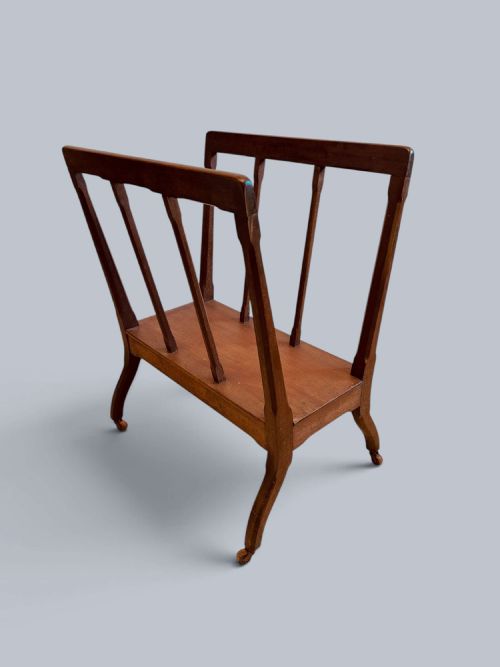
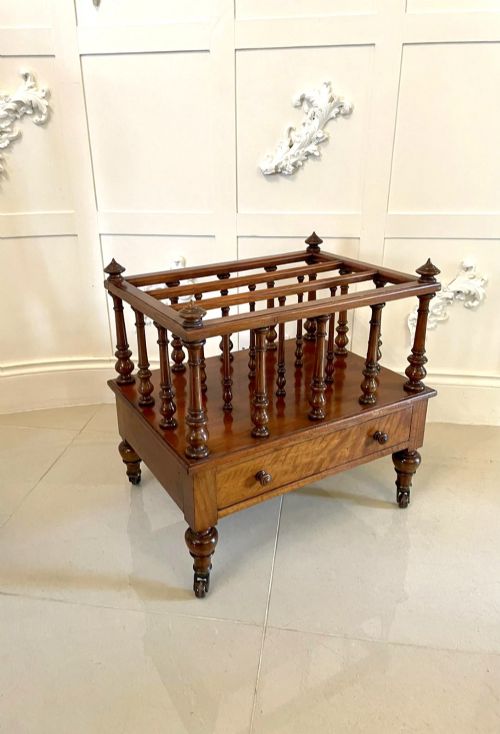
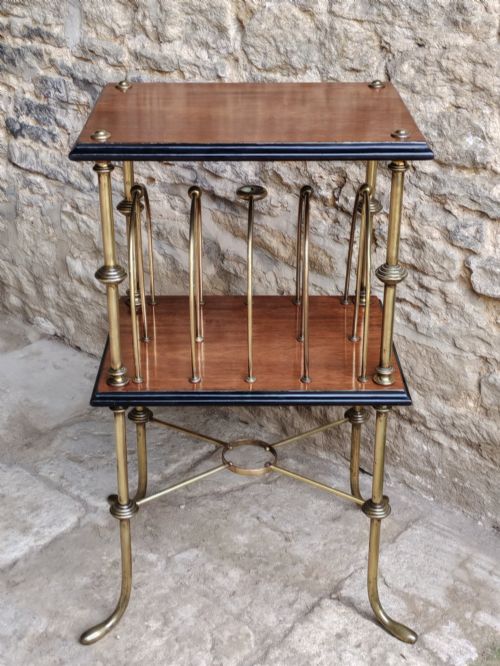
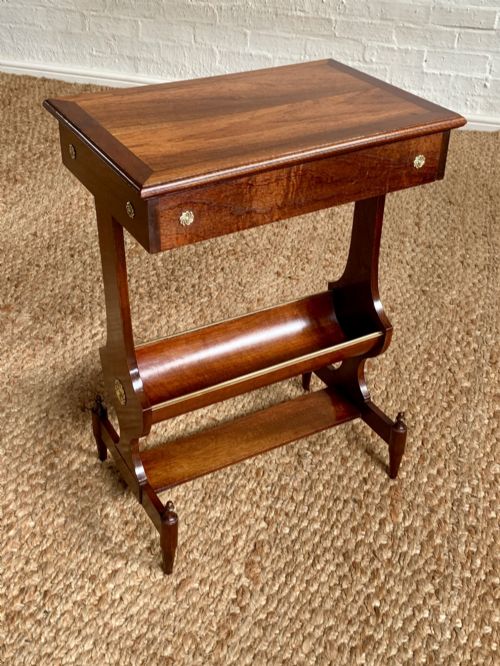
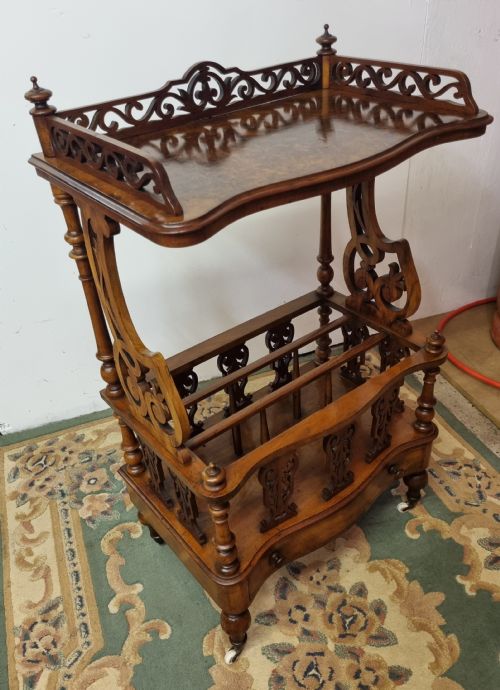
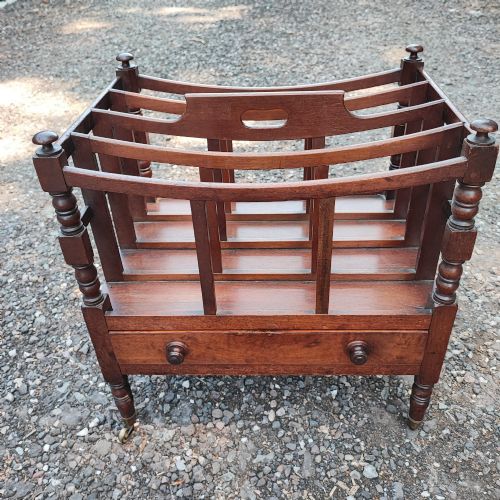
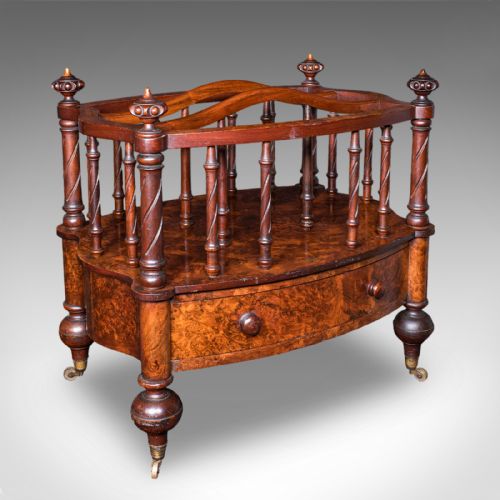
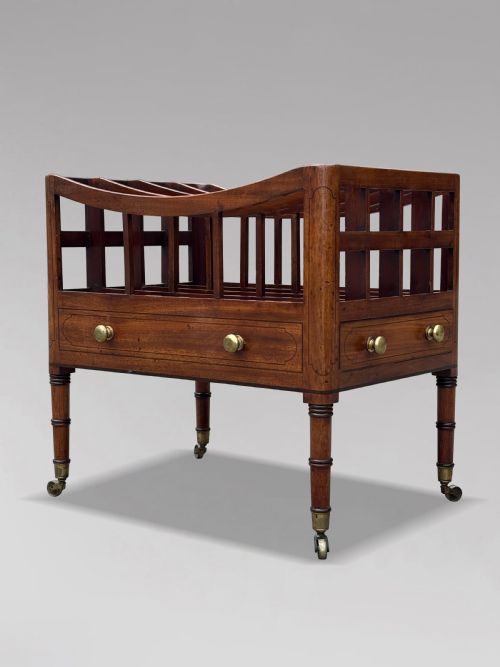
When searching for a brown wood canterbury, a buyer encounters a distinctive type of low stand designed to hold newspapers, magazines, sheet music, or folios. These pieces typically feature partitioned vertical sections for upright storage, often accompanied by a small base drawer and turned legs or castors.
The selections available span several distinct eras, with George III and Regency examples appearing alongside Victorian walnut pieces and Edwardian inlaid adaptations. Most specimens are constructed from rich timbers like mahogany or burr walnut, reflecting the evolving domestic habits of the eighteenth, nineteenth, and early twentieth centuries.
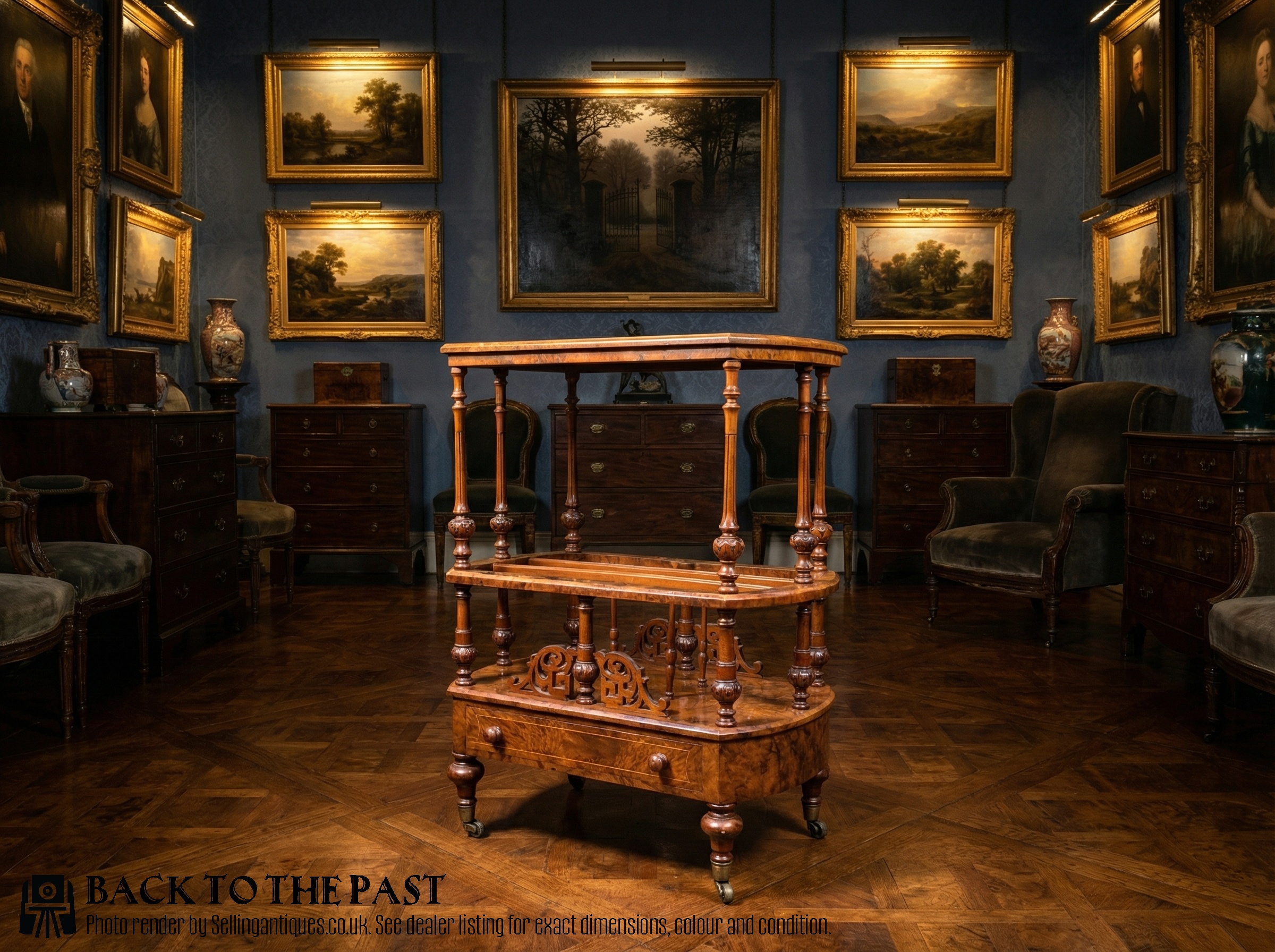
How they were made
Cabinet makers utilised choice hardwoods such as mahogany and walnut, frequently selecting burr veneers to create highly figured surfaces on the main panels and drawer fronts. Secondary woods provided structural stability for the internal partitions and framing.
Decorative detailing often involved contrasting stringing, ebony or satinwood inlay, wood marquetry, and carved elements like wreath motifs or brass castors. Joinery techniques ensured the vertical divisions and low drawer units remained sturdy under the daily weight of paper goods.
Brown Wood Canterbury Retail Price Guide 2026
Typical asking prices for brown wood canterbury among the pieces listed under this phrase on Sellingantiques today, from the lower quarter to the upper quarter. They describe what is for sale here now, not the wider market.
Current listings feature pieces spanning the Georgian, Regency, Victorian, and Edwardian periods, constructed primarily in mahogany and walnut.
What varies in quality
The degree of refinement in the timber selection and decorative embellishment sets superior examples apart from standard utility pieces. Finely figured burr walnut, crisp wood inlay, and detailed carving indicate a higher standard of workshop production.
Structural integrity and original hardware, including period brass castors and turned finials, contribute significantly to the standing of an individual piece. The subtlety of the joinery and the proportion of the vertical slats define the overall elegance of the design.
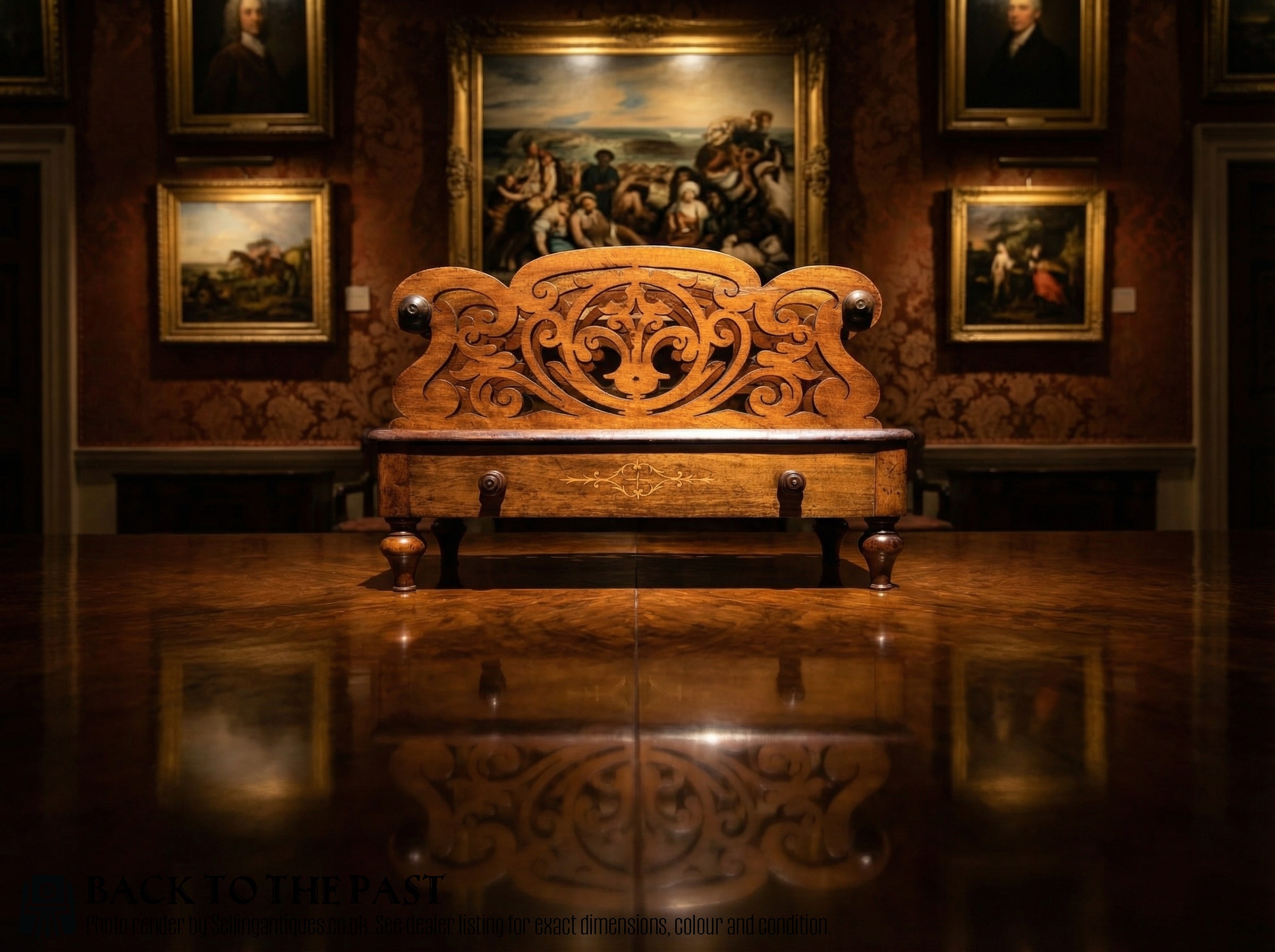
Shoolbred·J.C. Loudon
The Brown Wood Canterbury Glossary
- Canterbury
- A low stand with divisions for holding sheet music, newspapers, or books, often fitted with a drawer below. It gained popularity in the late eighteenth century and continued through the Victorian period.
- Folio stand
- A larger piece designed to hold loose prints, drawings, or large books rather than folded newspapers. These often feature adjustable or hinged frames.
- Burr walnut
- A highly prized wood veneer taken from the excrescences of a walnut tree, showing swirling, intricate grain patterns. It was frequently utilised on Victorian and Edwardian cabinet furniture.
- Marquetry
- The art of applying decorative pieces of veneer to a structure to form intricate patterns or pictures. It appears on several Edwardian and late nineteenth-century examples.
- Castor
- A small wheel fitted to the legs of furniture to permit easy movement across carpets or floors. Many examples employ brass castors on turned legs.
Brown Wood Canterbury: Frequently Asked Questions
What is a brown wood canterbury used for?
These stands were originally designed to keep sheet music, newspapers, and periodicals tidy and close to hand in a drawing room or parlour.
Today, they serve a similar practical purpose for holding modern magazines and books while adding period character to a study or living space.
How do I date a mahogany canterbury?
Dating relies on observing the stylistic details, such as the crispness of George III joinery or the ornate fretwork typical of the Victorian era.
Later Edwardian versions often incorporate marquetry inlay and lighter satinwood banding, reflecting the taste of the turn of the twentieth century.
Did these stands always have drawers?
Not all examples include a drawer beneath the slatted storage section, though many Regency and Victorian models incorporate one for smaller items.
Simpler open rack designs exist without drawers, focusing entirely on the vertical partitions for folio and paper storage.
Can I use a folio stand as a canterbury?
A folio stand functions on a similar principle of vertical paper storage, though it is typically built on a grander scale for large prints or maps.
While both accommodate paper goods, a folio stand makes a more prominent visual statement in a room compared to a standard domestic rack.