

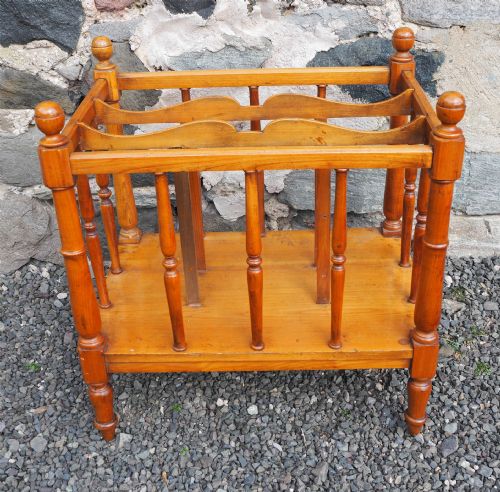


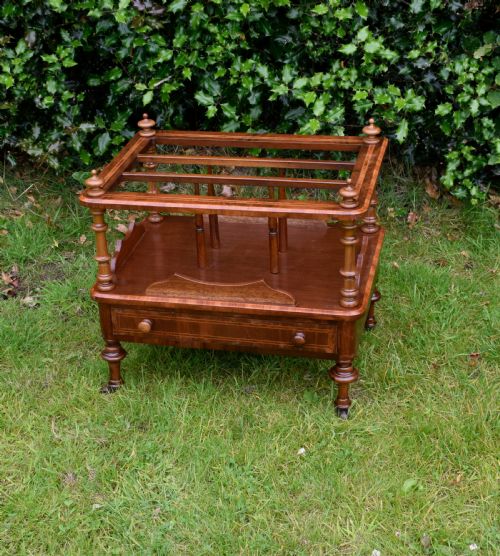


Turned Spindle Canterbury
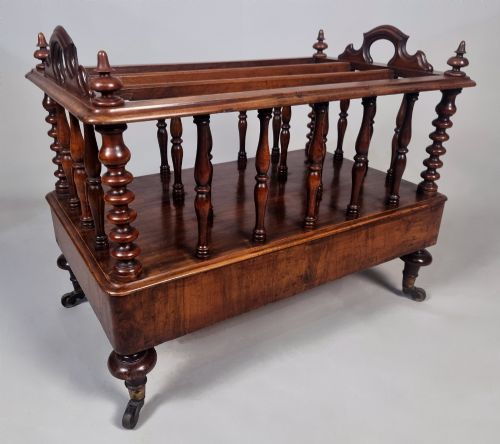
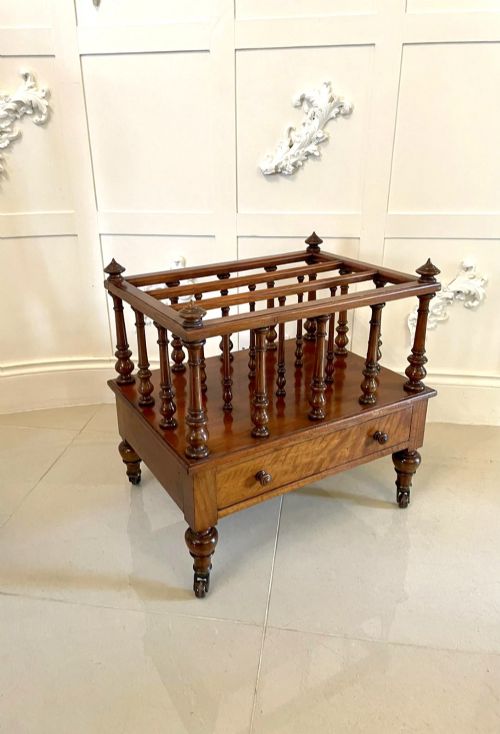
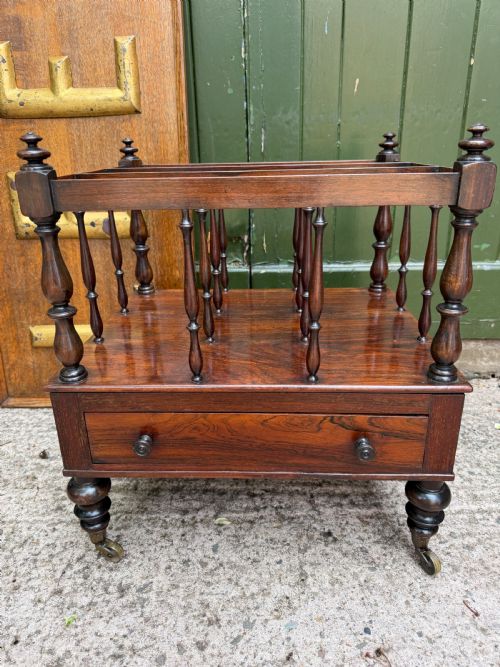
These turned spindle canterbury pieces are charming traditional items to hold sheet music or magazines with distinct turned uprights.
Turned Spindle Canterbury
When you search for turned spindle canterbury, you are looking at nineteenth-century furniture items designed to hold folios, music, or magazines. The examples seen here span the Georgian, Regency, George IV, and Victorian periods, with many pieces originating in the nineteenth century.
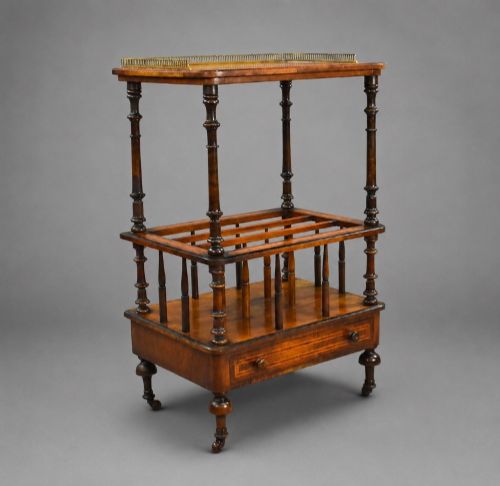
You are most likely to meet Victorian and nineteenth-century walnut, mahogany, or rosewood versions on this page. These pieces often incorporate turned spindles supporting the partitions, and some variants feature a lower drawer or multi-tier what-not construction.
The objects serve as portable compartments for holding printed matter, featuring distinct vertical divisions held together by turned uprights. Makers such as Edwards & Roberts, Gillows, and Shoolbred produced notable examples found in these records.
Materials and construction
These items are constructed from timbers such as mahogany, walnut, burr walnut, rosewood, fruitwood, and black walnut. Cabinetmakers utilised these dense hardwoods to build sturdy frames capable of supporting partitioned sections.
The defining feature is the turned spindle, formed on a lathe to create cylindrical uprights that separate the partitions. Additional materials like brass and ceramic appear in fittings or castors, while iron is occasionally recorded in the hardware.
Inlaid decoration and figured veneers enhance the surfaces of walnut and rosewood models from the Victorian era. Joinery techniques connect the base drawers, uprights, and slatted dividers into unified pieces of furniture.
Turned Spindle Canterbury Retail Price Guide 2026
Typical asking prices for turned spindle canterbury among the pieces listed under this phrase on Sellingantiques today, from the lower quarter to the upper quarter. They describe what is for sale here now, not the wider market.
Some nineteenth-century makers evidently decided that music racks needed extra tiers, resulting in the delightful hybrid known as the what-not canterbury.
Distinctions in quality
The quality of a turned spindle canterbury rests on the choice of timber, such as highly figured walnut, burr walnut, or richly grained rosewood. Finer pieces demonstrate careful selection of veneers and superior grain patterns across the main structure.
Execution of the turned spindles and joinery separates standard production from workshop pieces by makers like Gillows or Edwards & Roberts. The integration of dovetail drawers, brass castors, and delicate inlay indicates higher manufacturing standards.
Edwards & Roberts·Gillows·Shoolbred
The Turned Spindle Canterbury Glossary
- Canterbury
- A low stand with partitioned sections designed for holding sheet music, folios, or magazines. Many include a small drawer in the base.
- Turned spindle
- A cylindrical wooden rod shaped on a lathe, used here as vertical supports for the partitions. These spindles define the visual style of the piece.
- Burr walnut
- A highly prized wood veneer showing swirling grain patterns caused by growths on the walnut tree. It is frequently seen on Victorian examples.
- What-not
- A set of open shelves for displaying small objects, sometimes combined with a canterbury base. One listed item includes this multi-tier form.
Turned Spindle Canterbury: Frequently Asked Questions
What is a turned spindle canterbury used for?
These pieces were originally built to hold sheet music, folios, and books near a piano or seating area. Today they function equally well for holding magazines and papers in a living space.
Their upright partitions keep printed materials separated and upright for easy selection.
How do I identify a Victorian canterbury?
Victorian examples frequently utilise walnut, burr walnut, or ebonised mahogany. They often display turned spindle uprights and decorative inlay characteristic of the nineteenth century.
Some incorporate lower drawers and ceramic or brass castors beneath the frame.
What woods are common for these pieces?
Mahogany and rosewood appear frequently in Georgian and Regency examples. Walnut and burr walnut become predominant during the Victorian period.
Fruitwood and black walnut are also represented among the nineteenth-century listings.
Did famous makers produce canterburys?
Wrought-furniture workshops and firms such as Gillows, Edwards & Roberts, and Shoolbred manufactured fine examples. Their pieces often bear signatures or distinctive construction quality.
Such cabinetmaker attributions mark out the upper range of surviving items.