


Antique Canterbury Drawer
An antique canterbury drawer organises sheet music, newspapers and periodicals while anchoring a room with period timber.
Antique Canterbury Drawer
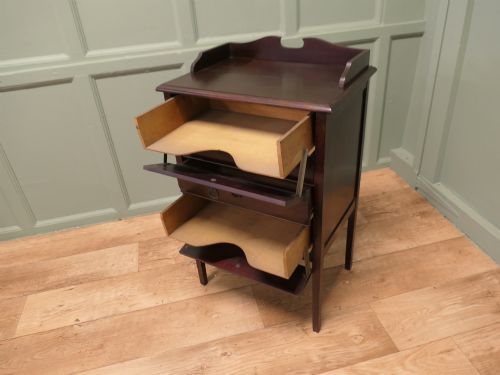
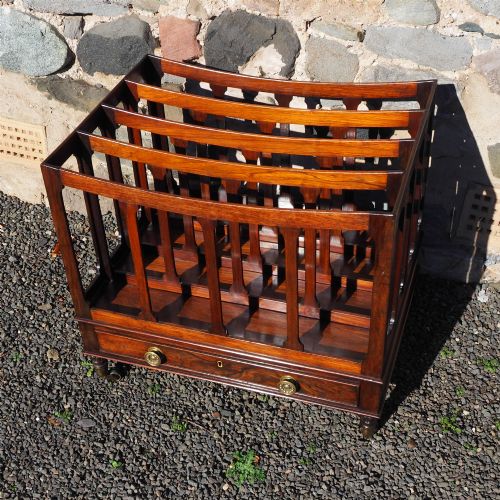
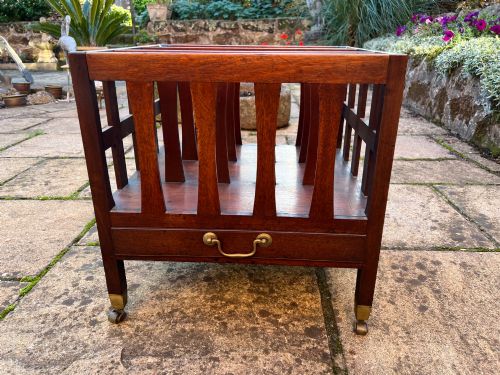
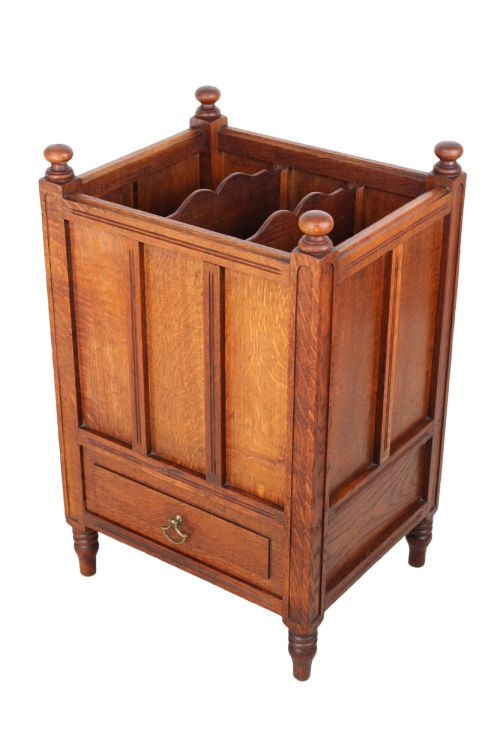
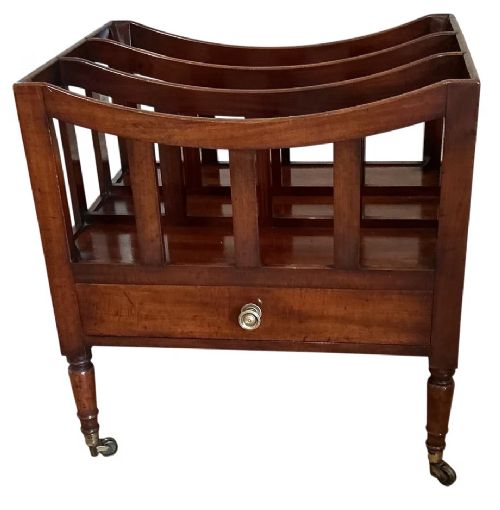
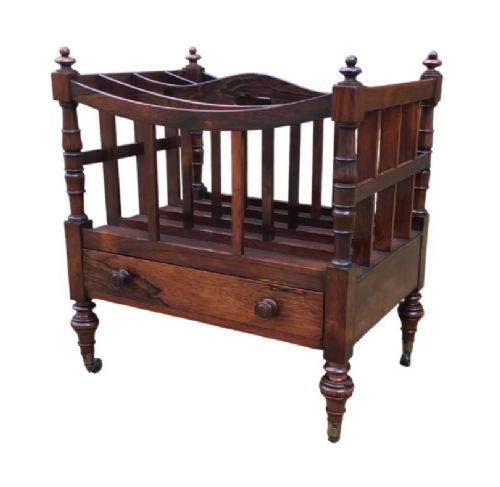
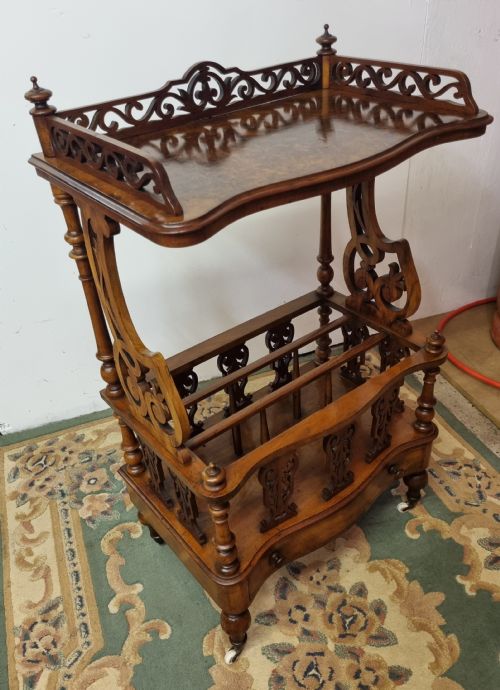
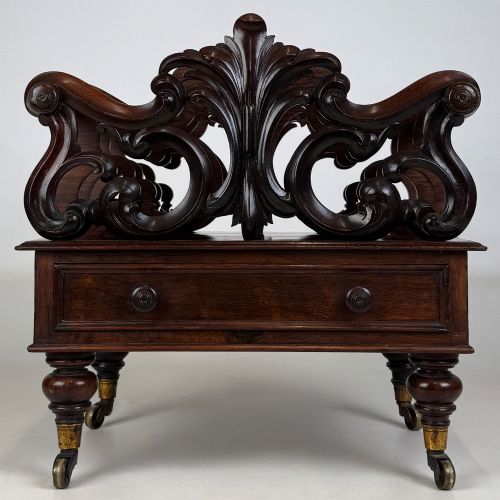
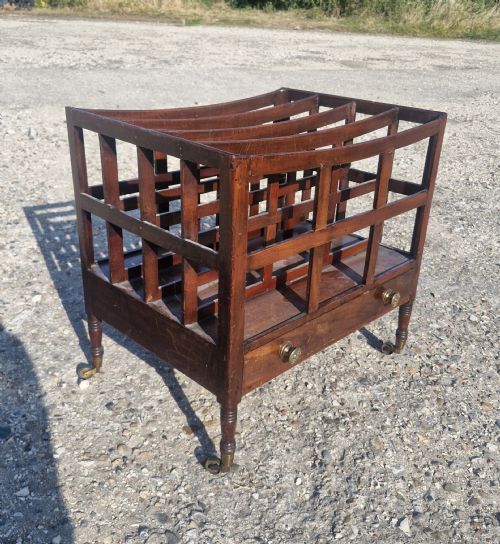
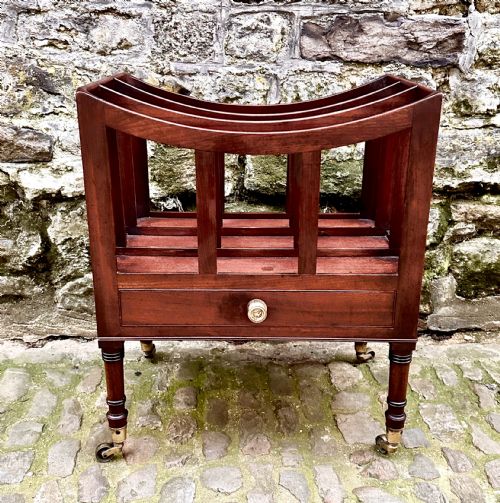
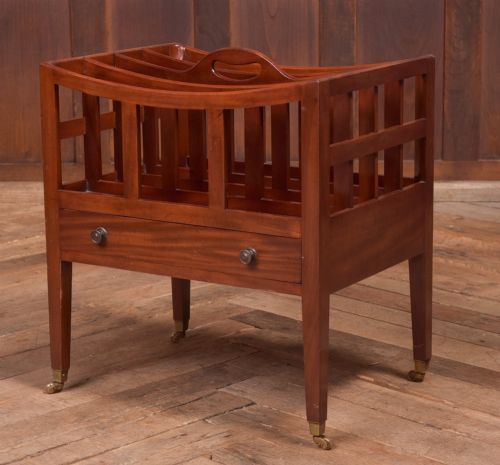
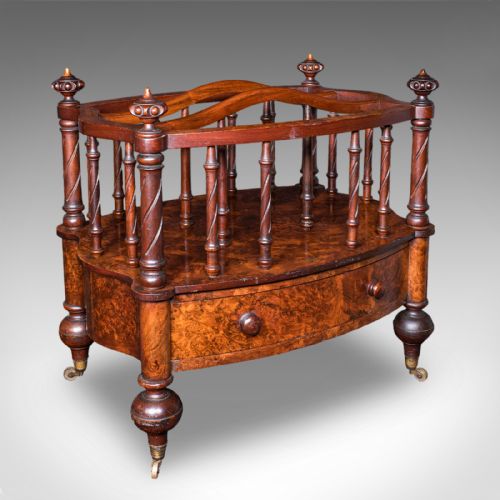
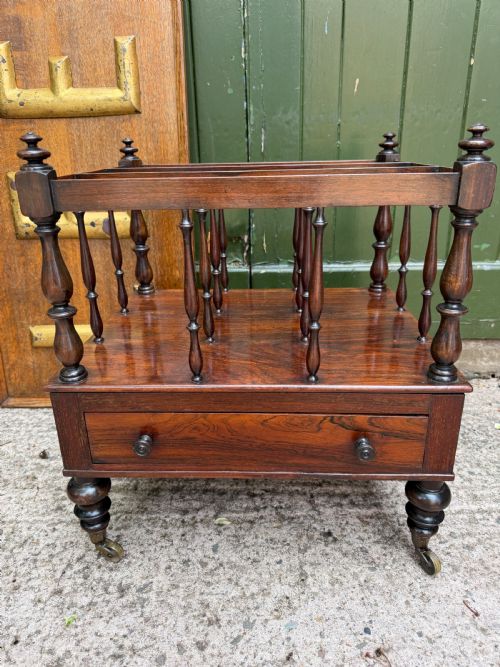
An antique canterbury drawer combines upright divisions for holding magazines, newspapers or sheet music with a functional lower drawer. The pieces on this page span several eras, with Regency, Victorian and Edwardian examples appearing most frequently.
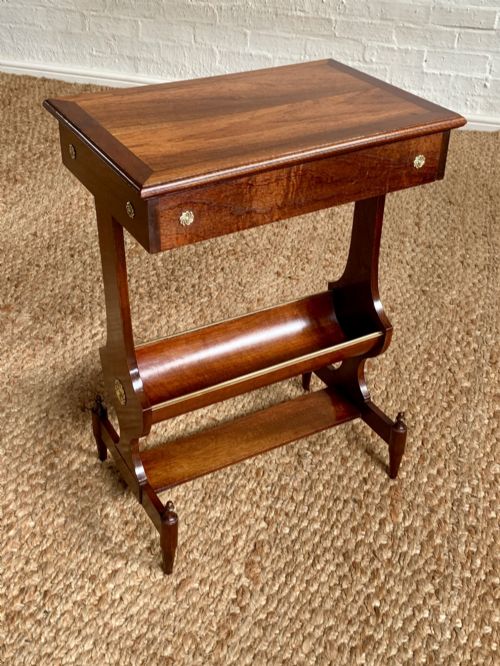
Formations range from boat-shaped designs and freestanding stands to occasional tables and music cabinets. Timber choices include mahogany, rosewood, walnut and burr walnut, often paired with brass elements.
Originating in the late 18th century as a stand for musical scores, the form evolved to serve general paper tidies in drawing rooms and libraries. Today, buyers select them for both practical storage and period character.
Materials and construction
Cabinet makers utilised dense hardwoods such as mahogany, rosewood and walnut, frequently selecting figured or burr veneers for decorative surfaces. These timbers provided the structural strength needed for slender upright divisions and moving drawer components.
Metal fittings such as brass castors, hinges and handles appear across the pieces, supporting mobility and daily use. Joinery techniques ensured that the slatted partitions remained secure within the main frame.
Antique Canterbury Drawer Retail Price Guide 2026
Typical asking prices for canterbury drawer among the pieces listed under this phrase on Sellingantiques today, from the lower quarter to the upper quarter. They describe what is for sale here now, not the wider market.
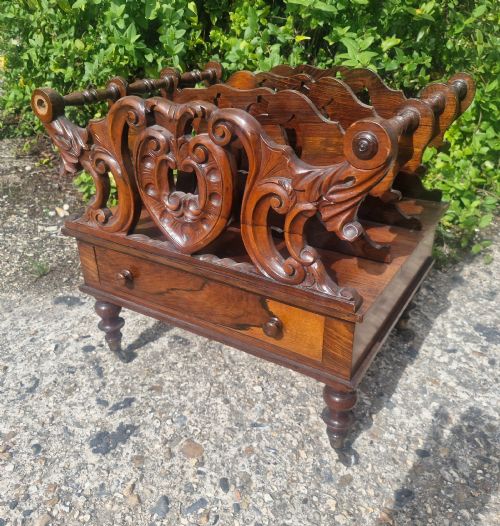
Some nineteenth-century makers added carved Prince of Wales feathers to the uprights, proving that even a humble newspaper rack required regal flair.
Quality variations in the range
Superior examples display crisp carving, finely turned legs and carefully matched veneer grains across the panels and drawer fronts. The integration of the drawer into the overall frame requires precise joinery to ensure smooth operation.
Simpler pieces rely on plain mahogany or oak construction with minimal ornamentation, prioritising utility over decorative flourishes. The complexity of the divisions, whether simple wooden slats or elaborate turned supports, alters the character of the piece.
Edwards and Roberts
The Antique Canterbury Drawer Glossary
- Canterbury
- A low stand with upright partitions designed for holding sheet music or periodicals. It typically includes a single drawer beneath the divisions.
- Whatnot
- A piece of open shelving supported by slender pillars, sometimes combined with a canterbury base for multi-purpose display.
- Boat-shaped
- A curved hull-like profile characteristic of certain Regency stands. This specific contour softens the rectangular geometry of the room.
- Burr walnut
- A highly figured timber taken from the wart or growth on a walnut tree. Cabinet makers valued it for rich, swirling patterns on drawer fronts.
- Castor
- A small wheel fitted to the legs of a freestanding stand. It allowed the furniture to move across carpets during cleaning.
Antique Canterbury Drawer: Frequently Asked Questions
What is an antique canterbury drawer used for?
These pieces were originally built to hold sheet music, scores and daily newspapers near a piano or seating area. Today, they serve a similar purpose for contemporary magazines and papers.
Their compartmentalised top section keeps printed media upright and organised, while the enclosed lower drawer stores smaller accessories.
How do I date an antique canterbury?
Dating relies on timber selection, decorative styles and construction methods. Georgian and Regency examples often feature straight mahogany with turned legs, while Victorian pieces lean towards rosewood or burr walnut.
Later Edwardian versions can incorporate softer lines or alternative cabinet configurations. Examining the handles and internal drawer joints provides further clues to the manufacturing decade.
Can I use a canterbury as a side table?
Many designs incorporate a flat top surface, making them suitable to function as small occasional tables next to a sofa or armchair. The combination of surface space and lower storage adds utility to smaller rooms.
Care should be taken with delicate rosewood or burr walnut finishes when placing drinks or liquid containers on the surface.