

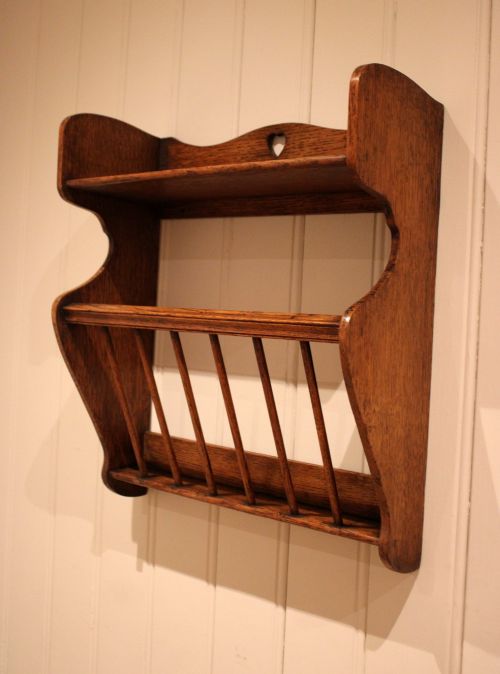

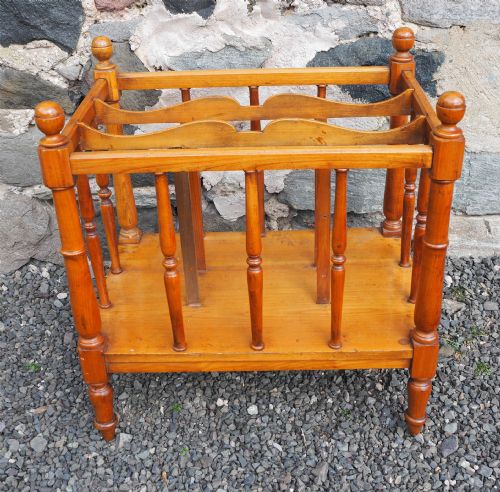
Wooden Newspaper Rack
A wooden newspaper rack gathers journals and gazettes with architectural poise, offering a period holder that keeps daily reading close at hand.

What these pieces are
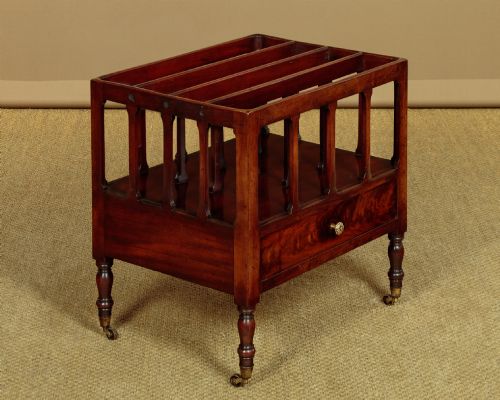
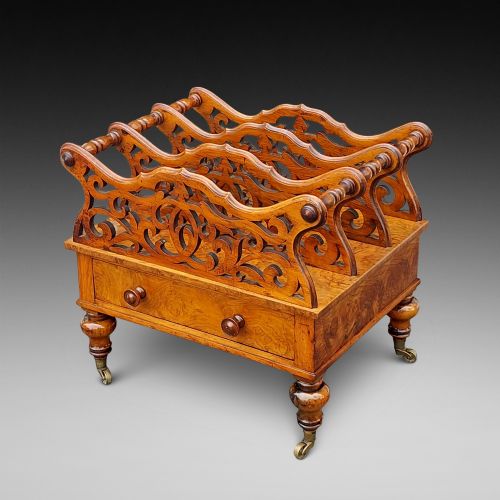
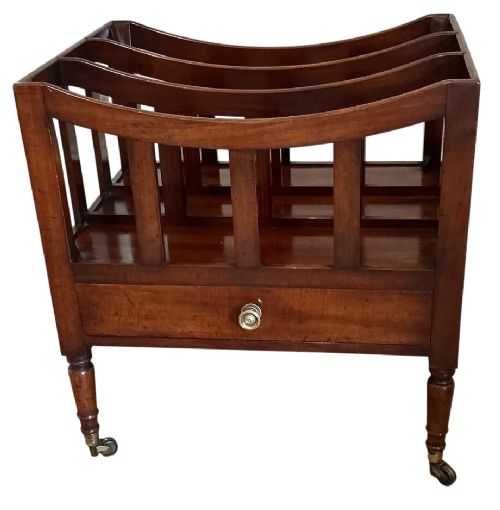
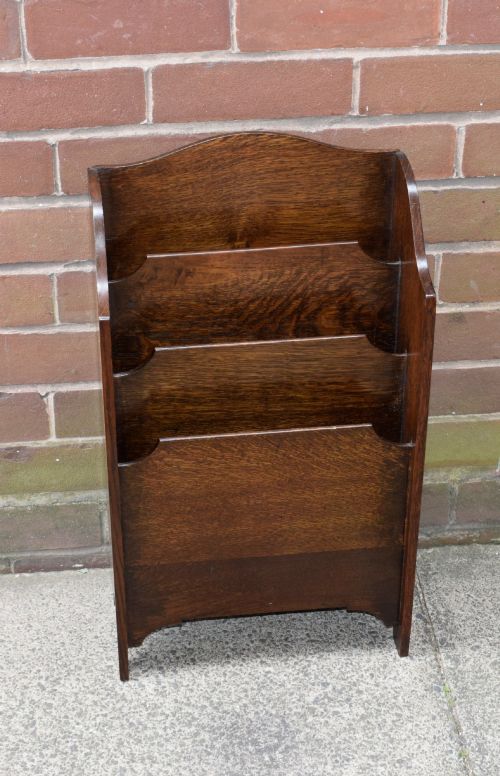
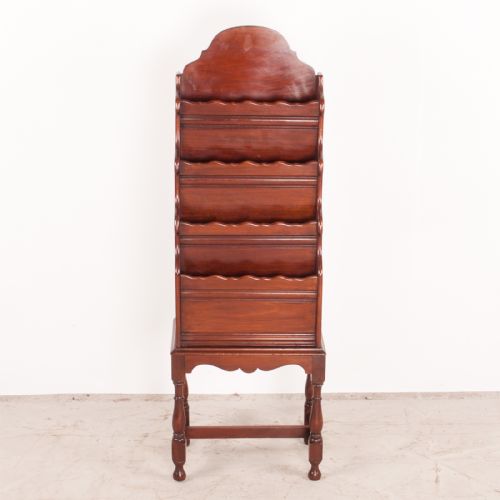
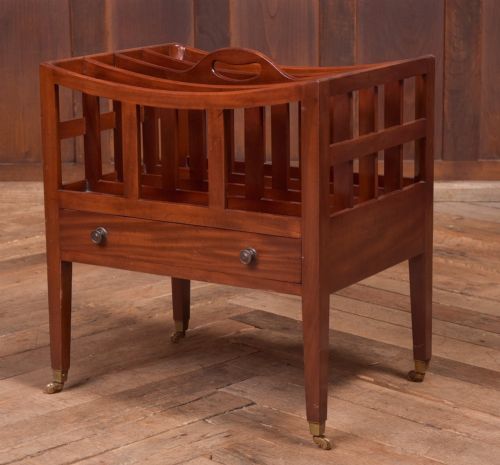
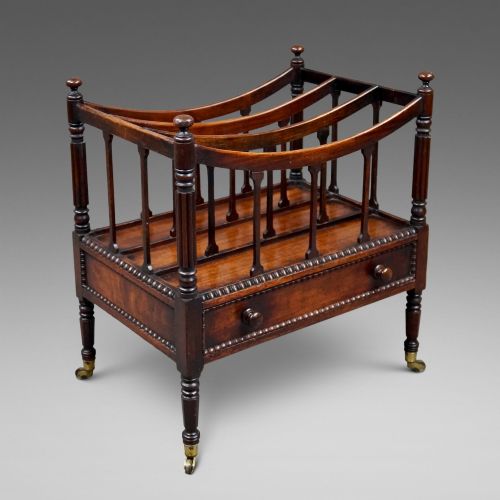
A wooden newspaper rack takes the form of a canterbury or magazine stand, designed to house periodicals in domestic sitting rooms. These pieces emerged across the Regency, William IV, and Victorian periods, serving daily reading habits.
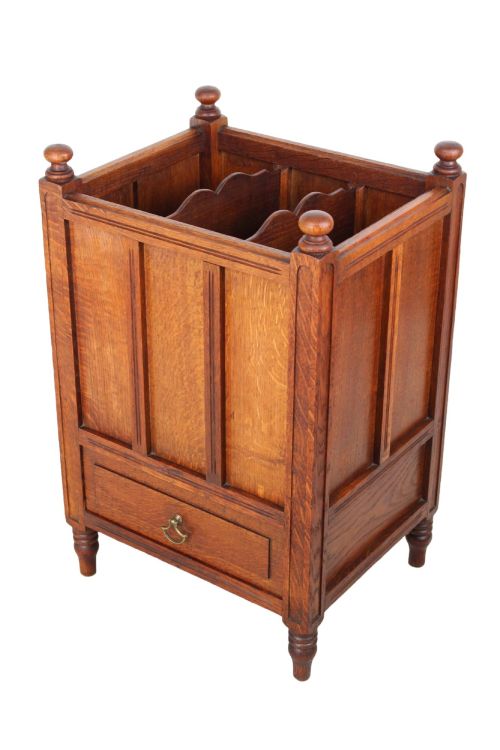
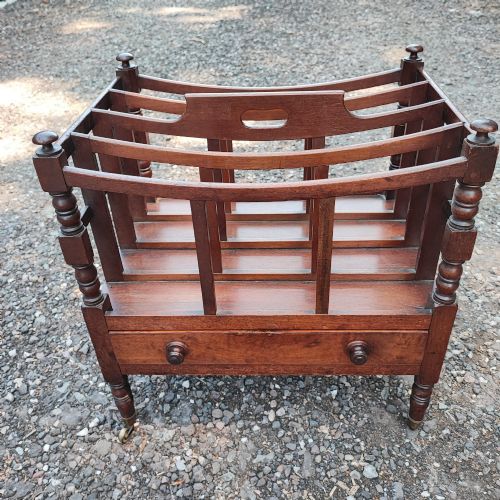
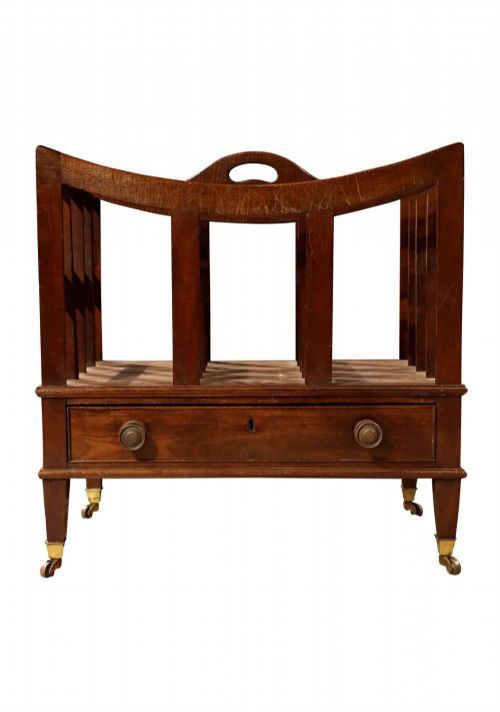
The selections available here feature timber frames often fitted with carrying handles, divisions for separate publications, and occasionally lower drawers. They bridge the gap between heavy library furniture and mobile domestic accessories.
How they were made
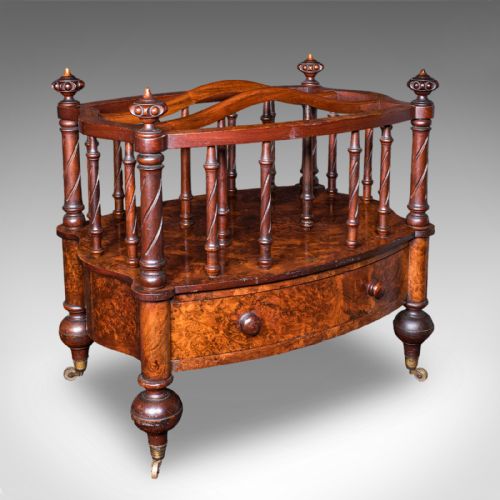
Cabinet makers utilised dense hardwoods including mahogany, rosewood, and walnut, selecting them for their rich grain patterns and structural stability. These timbers were shaped into turned uprights, slatted partitions, and shaped baseboards.
Metal elements such as brass components appeared alongside the timber framework, providing structural reinforcement or decorative accents on handles and feet. Joinery techniques ensured the vertical divisions remained rigid under the weight of heavy paper.
Retail Price Guide 2026
Typical UK retail prices for wooden newspaper rack, calculated from the Sellingantiques database of over a million retail prices indexed since 2003. This retail price guide relies exclusively on Sellingantiques data; no external sources or auction records are used, so the figures do not describe the wider market.
Materials documented across the current selection include brass, mahogany, rosewood, and walnut.
What varies in quality
The distinction between standard examples and superior pieces rests on the choice of timber and the ambition of the joinery. Figured rosewood or richly toned mahogany indicate a higher grade of manufacture than plain utility woods.
Refinement in the turning of spindles, the presence of integrated drawer storage, and the careful integration of brass fittings elevate a piece from a simple utilitarian holder to a sophisticated item of parlour furniture.
J C Loudon
The Wooden Newspaper Rack Glossary
- Canterbury
- A low stand with partitions for holding sheet music, books, or newspapers, typically featuring a carrying handle. Originating in the late eighteenth century, this form became a staple of Victorian sitting rooms.
- Mahogany
- A durable, reddish-brown tropical hardwood prized by cabinet makers for its stability and fine grain. It served as the primary material for much nineteenth-century case furniture.
- Rosewood
- A heavily figured, dense timber with dark streaks, often utilised in high-status Regency and Victorian furnishings. Its distinctive appearance made it popular for decorative display pieces.
- Regency
- A British design style spanning the early nineteenth century, characterised by classical restraint and archaeological revival motifs. Furniture from this era often combines clean architectural lines with rich timber selection.
- Victorian
- The design period spanning the reign of Queen Victoria, encompassing diverse revivals and heavy, ornate domestic goods. Pieces from this era reflect evolving standards of middle-class comfort and utility.
Frequently Asked Questions
What is a wooden newspaper rack?
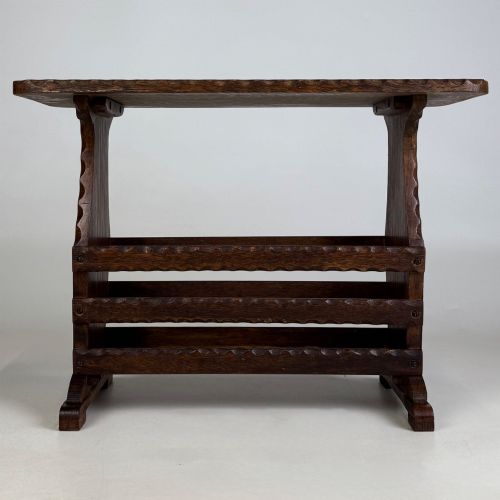
A wooden newspaper rack is a low domestic stand designed to hold periodicals, journals, and daily gazettes within easy reach in a parlour or study. These pieces typically feature vertical slats or partitions to keep papers organised.
Historically termed canenterburys or magazine stands, they combine functional paper storage with decorative timber craftsmanship suited to nineteenth-century interiors.
How were these racks used?
Households utilised these stands to keep daily newspapers and weekly journals neat and tidy in living spaces. The addition of carrying handles allowed owners to move the rack easily between rooms.
They kept reading material off tables and floors while ensuring current gazettes remained accessible for family members and guests throughout the day.
How do I date a rack?
Dating relies on identifying the prevailing stylistic traits, timber choices, and construction methods associated with specific periods like the Regency, William IV, or Victorian eras. Rich rosewood and classical proportions often point to earlier decades.
Later Victorian examples tend to incorporate walnut or mahogany alongside heavier ornamentation and varied partition designs reflecting the manufacturing shifts of the nineteenth century.
How do I live with one?
Living with a period wooden newspaper rack involves placing it beside a reading chair or sofa where its partitions can hold current magazines, books, or broadsheets. Its compact footprint makes it a practical accessory for modern sitting rooms.
Maintenance requires simple dusting and conditioning of the timber to preserve the finish of the mahogany, rosewood, or walnut surfaces over time.