


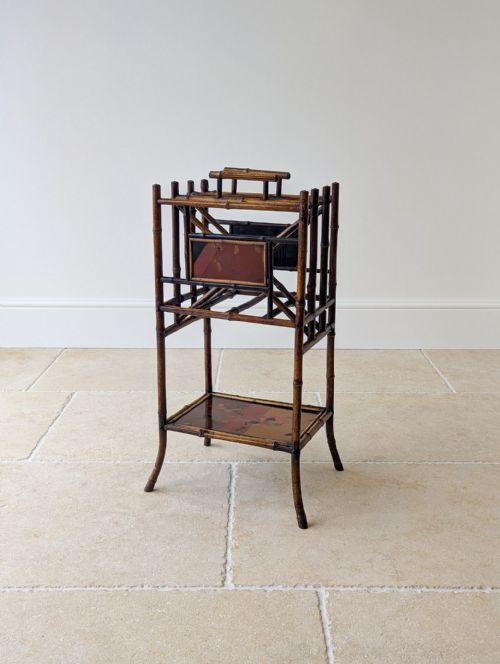
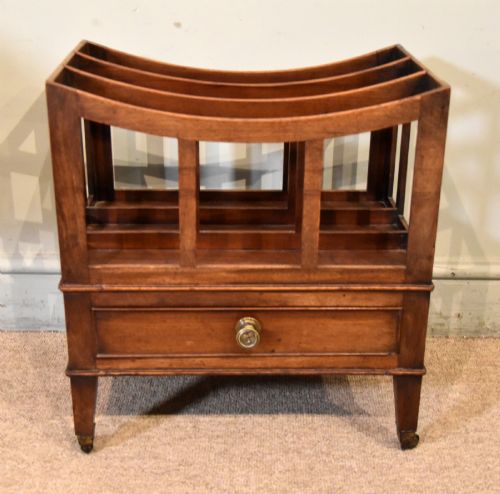
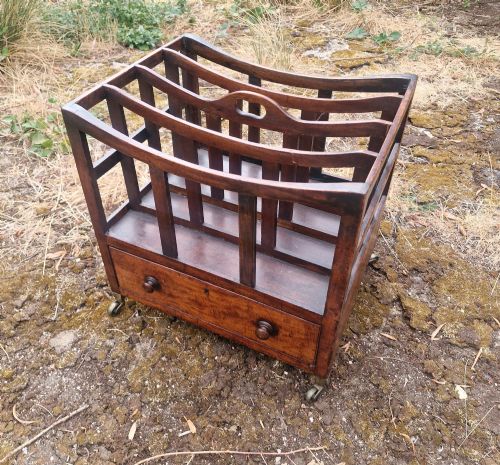
Victorian Sheet Music Rack
These Victorian sheet music racks and canterburys offer divided tiers for scores, journals and newspapers.
Victorian Sheet Music Rack
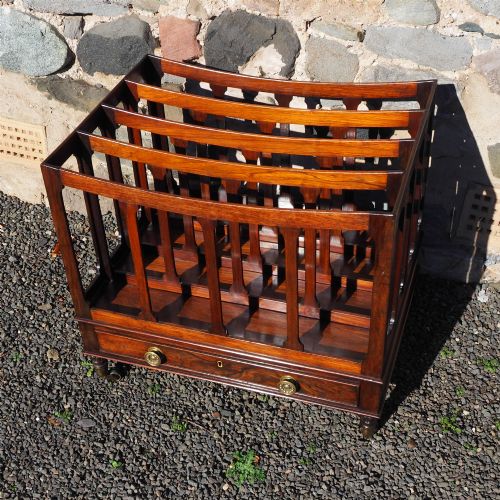
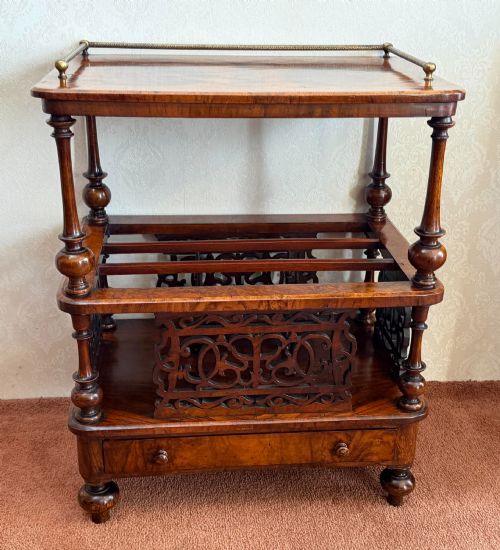
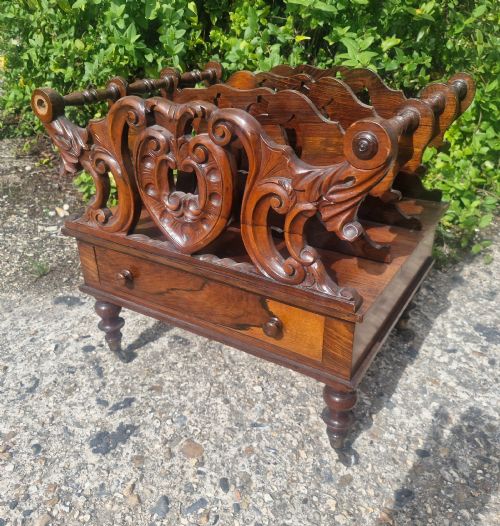
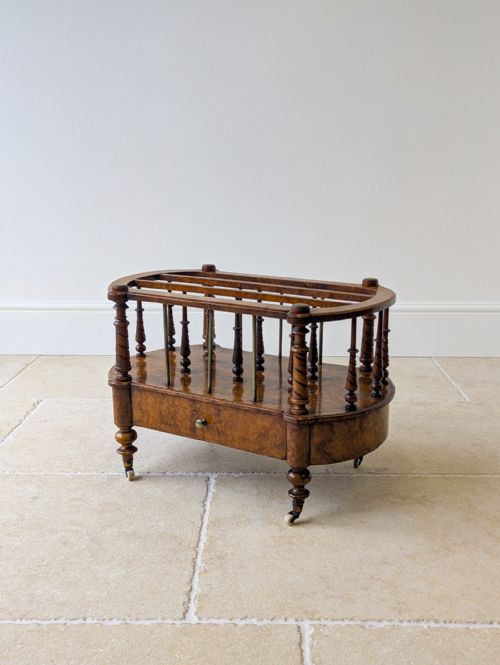
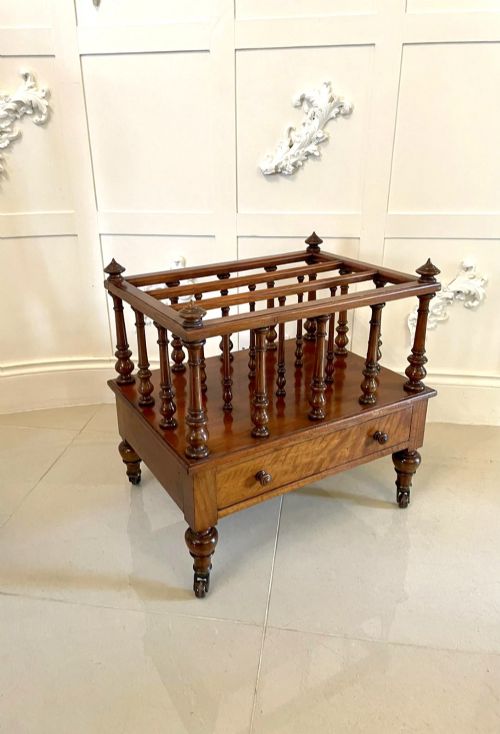
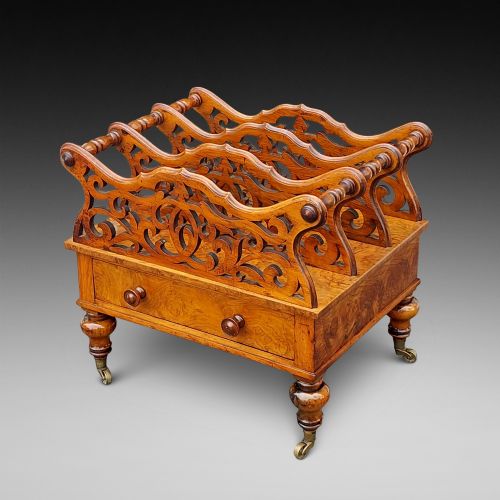
When you search for a Victorian sheet music rack, you encounter sophisticated furniture designed to hold folios and scores upright near a piano or seating area. These pieces frequently appear as low, freestanding canterburys featuring slatted partitions and occasionally a single drawer beneath.
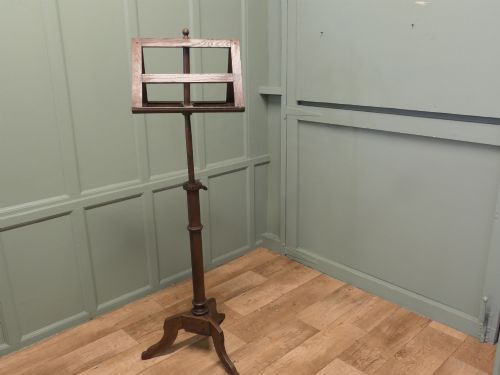
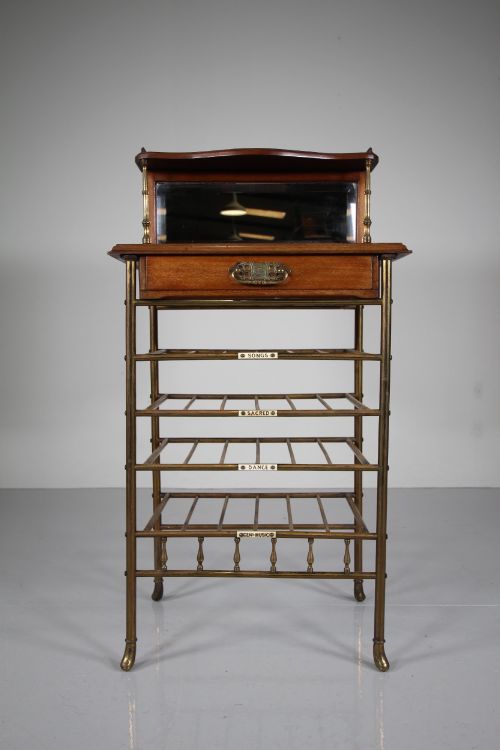
The selections span standard nineteenth-century forms alongside related music stands and occasional tables. Walnut, mahogany and rosewood predominate, reflecting the favoured timbers of the period.
How they were made
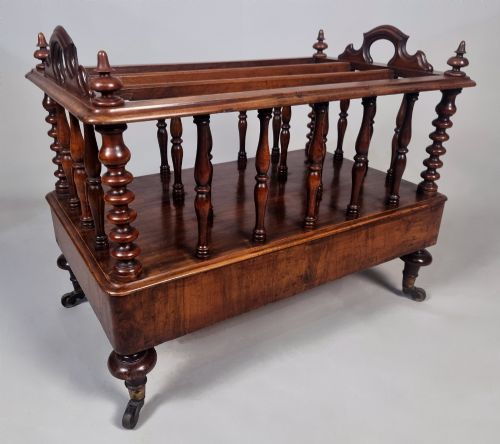
Cabinet makers utilised dense hardwoods such as mahogany, rosewood and burr walnut, often selecting figured veneers to cover structural carcases. Slats and dividers were shaped by hand, sometimes incorporating turned spindles or carved lyre motifs.
Many examples integrate marquetry inlay or brass castors on low ceramic feet, demonstrating meticulous attention to functional hardware and decorative surface detail.
Victorian Sheet Music Rack Retail Price Guide 2026
Typical asking prices for victorian sheet music rack among the pieces listed under this phrase on Sellingantiques today, from the lower quarter to the upper quarter. They describe what is for sale here now, not the wider market.
Some nineteenth-century makers fitted these stands with wheels so musicians could nervously roll their sheet music closer before a hesitant piano recital.
What varies in quality
The standard of timber selection and the crispness of carved details separate superior pieces from simpler workshops. Figured burr walnut and finely grained rosewood indicate a higher grade of manufacture than plain mahogany or secondary softwoods.
Integration of secondary functions, such as an upper whatnot tier or a dovetailed drawer, alters the complexity and elegance of the design. Refined joinery in the slatted divisions and delicate turning on the upright supports mark out the better productions.
Edwards & Roberts
The Victorian Sheet Music Rack Glossary
- Canterbury
- A low stand with partitioned sections for holding sheet music, folios or periodicals, often fitted with castors and a drawer. It developed in the late eighteenth century and remained popular throughout the Victorian era.
- Lyre-form
- A decorative shape resembling the ancient musical instrument, frequently utilised in the vertical supports of music stands and canterburys. This classical motif appeared widely in Regency and Victorian designs.
- Whatnot
- A set of open shelves supported by pillars, used for displaying ornaments or books. When combined with a canterbury, it forms a multifunctional piece of parlour furniture.
- Burr walnut
- A prized timber veneer taken from the gnarled growth of a walnut tree, exhibiting swirling, knotty patterns. It was heavily utilised for high-end Victorian cabinet furniture.
- Aesthetic Movement
- A late nineteenth-century design style that rejected heavy Victorian ornamentation in favour of simplicity and exotic influences. Pieces from this movement often incorporate bamboo or ebonised wood.
Victorian Sheet Music Rack: Frequently Asked Questions
What is a canterbury used for?
These pieces served primarily to store sheet music, folios and unbound periodicals near a piano or in a drawing room. The partitioned upright sections kept paper goods organised and upright.
Secondary variations included integrated tabletops or small drawers, allowing them to function as occasional tables or newspaper tidies.
How do I date a music rack?
Dating relies on timber choices, stylistic markers and construction methods. Earlier Regency and William IV pieces often display clean mahogany or rosewood lines with classical motifs.
Victorian examples frequently showcase burr walnut veneer, marquetry inlay, or later bamboo frames associated with the Aesthetic Movement towards the end of the century.
Where should I place it?
They suit living rooms, studies or music rooms, positioned beside armchairs, sofas or pianos. Their low profile allows them to sit beneath windows or alongside larger seating groups without dominating the floor space.
Avoid placing them in areas of direct sunlight or high humidity to protect the delicate wood veneers and polished surfaces.
Are music stands different from canterburys?
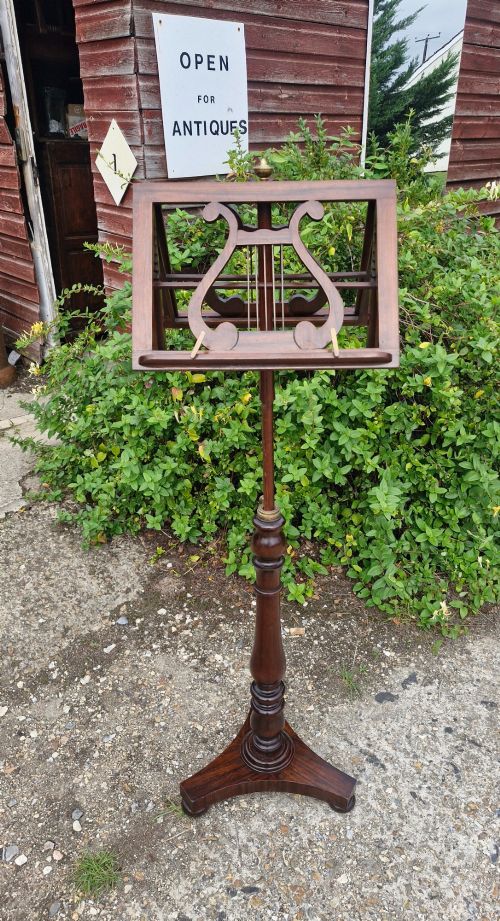
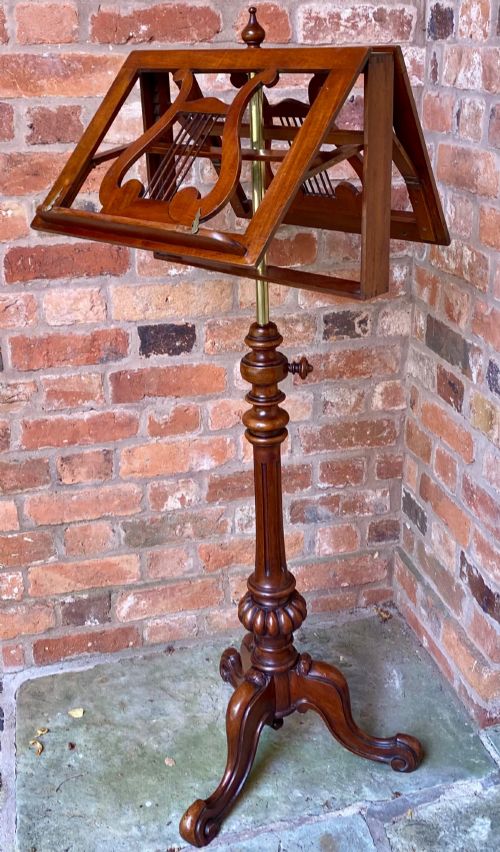
Music stands generally feature adjustable lecterns or dual reading surfaces intended to hold open scores during performance. Canterburys are strictly storage units with vertical compartments designed to hold folios when not in use.
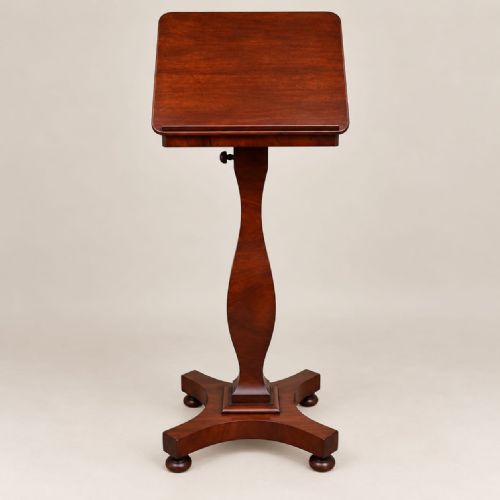
Certain hybrid pieces combine both functions by adding a standing rack or adjustable book rest to a storage base.