



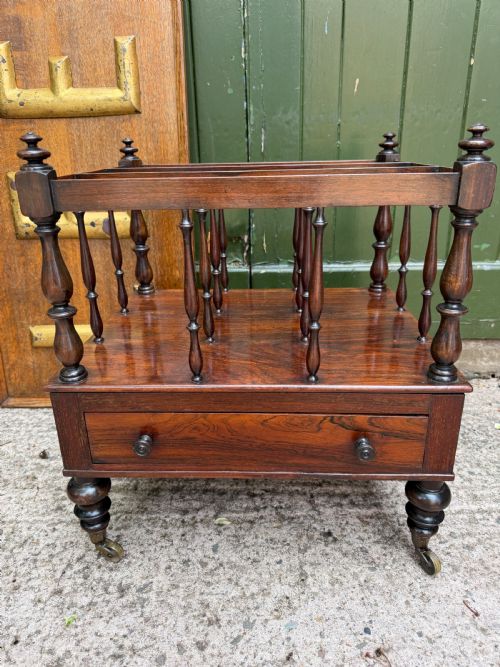

Antique Music Canterbury Drawer
An antique music canterbury drawer holds sheet music and periodicals close at hand, bringing fine timber and clever slatted design to a parlour.
Antique Music Canterbury Drawer
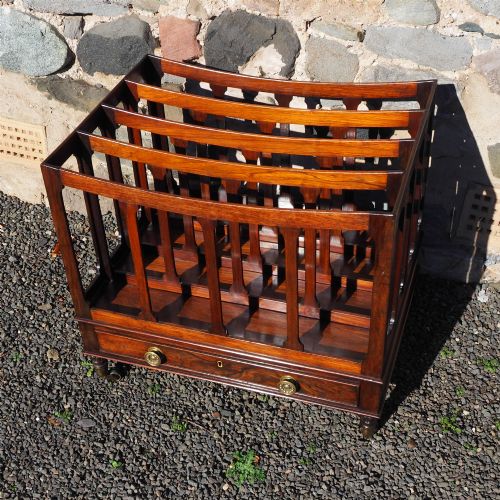
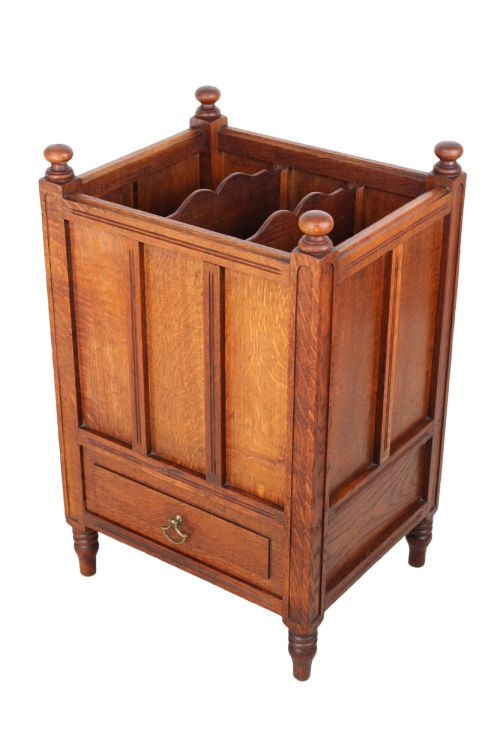
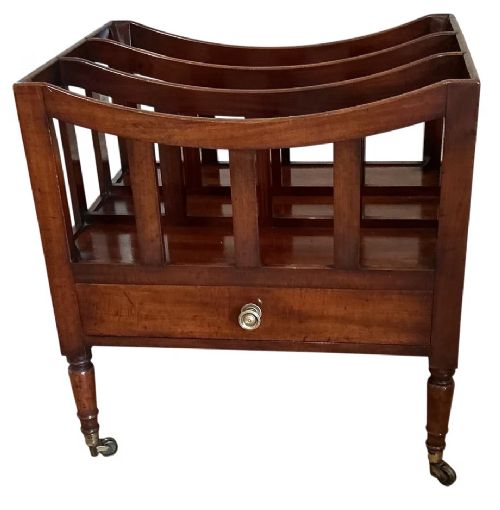
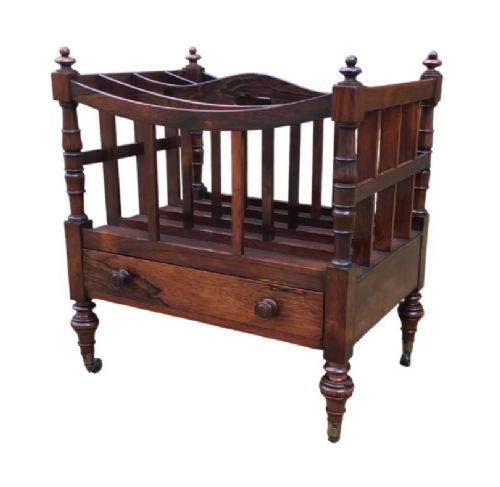
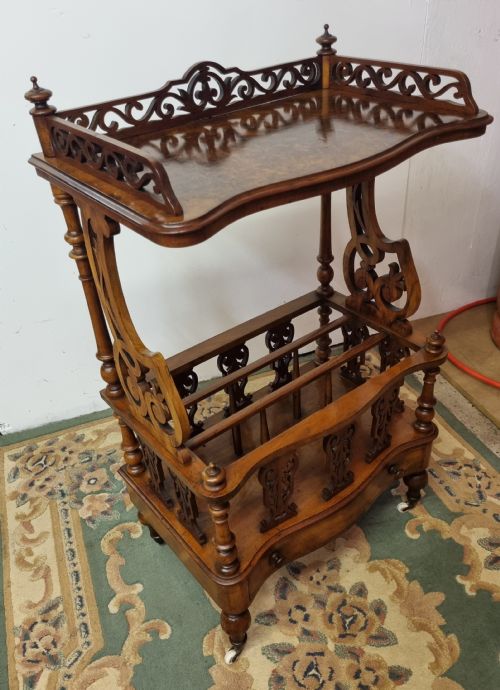
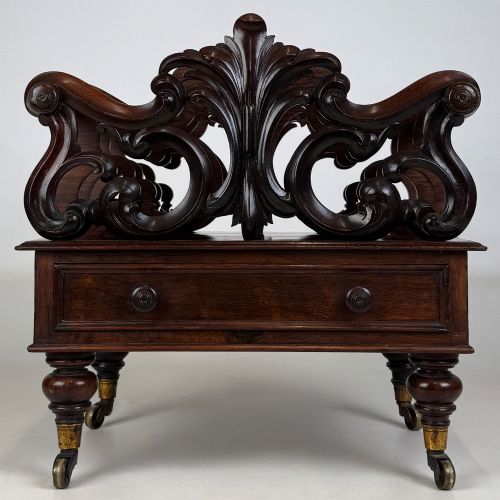
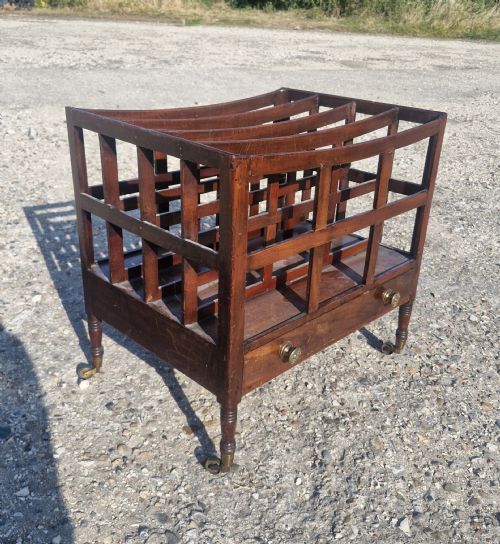
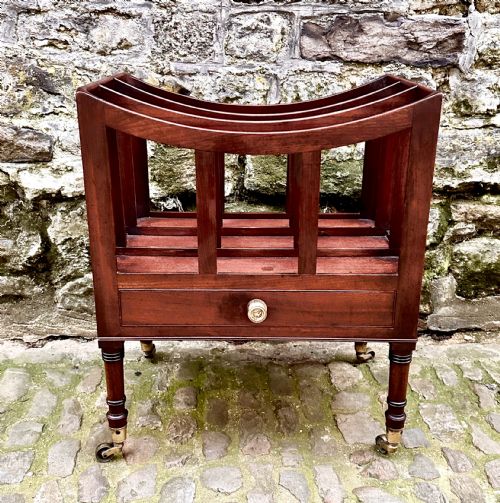
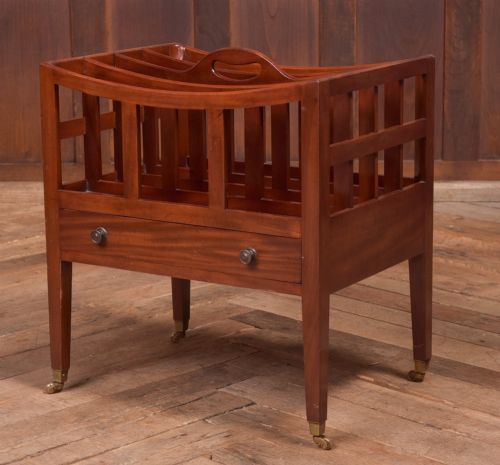
An antique music canterbury drawer combines open slatted tiers for upright storage with a enclosed base compartment, built to house sheet music and periodicals in the home. The form appears across the eighteenth and nineteenth centuries, spanning Georgian, Regency, William IV, Victorian, and Edwardian periods.
Materials and construction methods
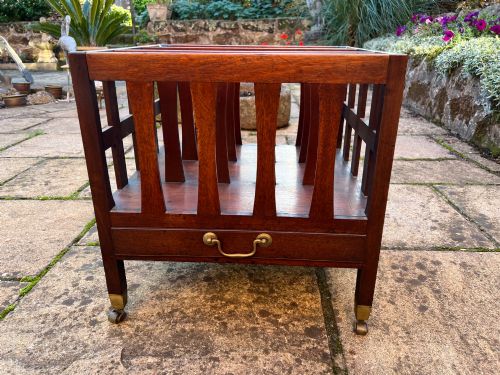
Cabinet makers utilised dense hardwoods like mahogany and rosewood, often selecting figured burr walnut for decorative surfaces. Joinery relies on traditional framing and panel construction, paired with turned wooden legs and brass castors for mobility.
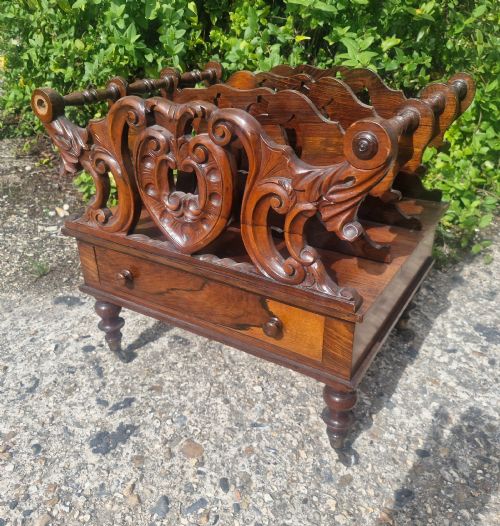
Detailing includes carved elements such as Prince of Wales feathers, alongside brass carrying handles and porcelain accents. Drawer integration requires precise dovetailing to ensure smooth operation beneath the slatted upper tiers.
Antique Music Canterbury Drawer Retail Price Guide 2026
Typical asking prices for music canterbury drawer among the pieces listed under this phrase on Sellingantiques today, from the lower quarter to the upper quarter. They describe what is for sale here now, not the wider market.
Listings span the Georgian, Regency, William IV, Victorian, and Edwardian periods, utilising mahogany, rosewood, burr walnut, oak, and satinwood.
Distinctions in craftsmanship and timber selection
Quality rests in the choice of wood figure, where richly grained burr walnut or heavily figured rosewood elevates a piece above plain mahogany. The crispness of carved details, such as turned supports and applied ornaments, distinguishes finer workshop production from standard output.
Proportion and structural integrity define the higher tiers of design. Pieces featuring integrated drawers, harmonious division layouts, and original brass hardware demonstrate superior execution by the maker.
Edwards and Roberts
The Antique Music Canterbury Drawer Glossary
- Canterbury
- A low stand with upright partitions for holding sheet music or newspapers. The name derives from the Archbishop of Canterbury, who is said to have commissioned the first such rack.
- Divisions
- The vertical wooden or brass slats that separate the upper storage space into distinct compartments. These keep folios and magazines standing upright rather than slumping.
- Boat-shaped
- A curved framing style popular during the Regency period, where the sides sweep upward like the hull of a vessel. This contour softens the rectangular profile of the stand.
- Whatnot
- An open set of multi-tiered shelves used for displaying or storing small items. Some canterbury forms incorporate shelves above the partitions to function as an etagere.
- Fall-front
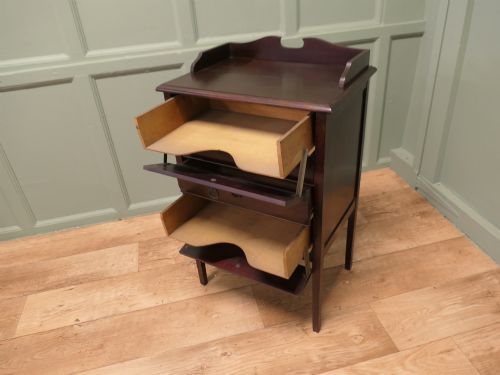
- A hinged panel that drops forward to reveal interior compartments or storage space. This mechanism appears on music cabinets and integrated drawer sections.
Antique Music Canterbury Drawer: Frequently Asked Questions
How were canterburys used originally?
These stands sat beside pianos and seating areas to keep scores and daily newspapers organised and accessible. The open partitions allowed musicians to browse sheet music quickly.
The lower drawer provided enclosed storage for smaller accessories, writing materials, or loose folios.
Which woods are most common?
Mahogany and rosewood appear frequently in pieces dating from the Georgian and Regency periods. Victorian examples often showcase highly figured burr walnut or satinwood.
Edwardian pieces tend to utilise lighter oak or mahogany frames.
How do I date a canterbury?
Stylistic markers reveal the period of manufacture, such as the curved boat-shapes of Regency pieces or the heavy carved details of William IV and Victorian items. Turned legs and brass castors also reflect prevailing tastes of each decade.
Edwardian variants often incorporate enclosed cabinet doors or sheet music drop-fronts c. 1900.