


Mahogany Sheet Music Rack
These mahogany sheet music rack pieces are practical wooden storage stands designed to hold scores and folios with elegance.
What a mahogany sheet music rack is
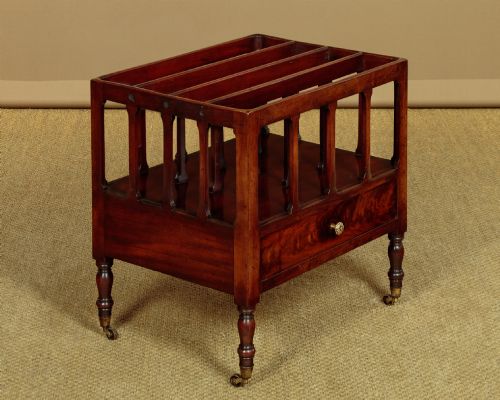
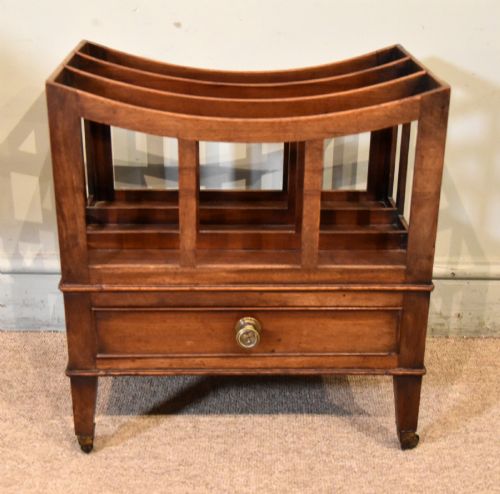
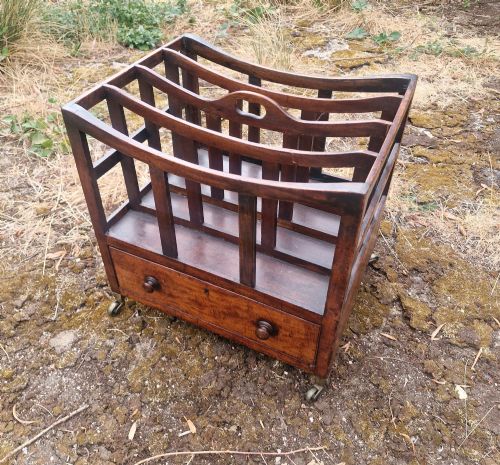
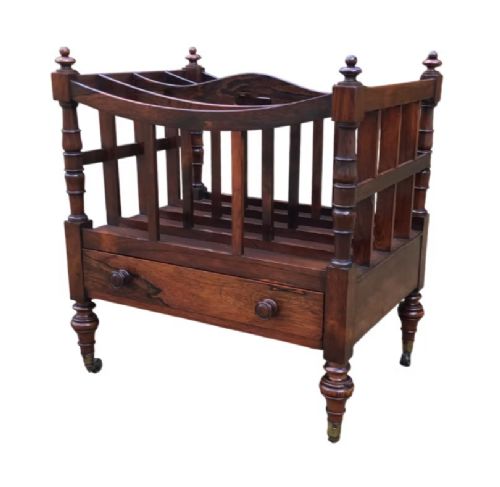
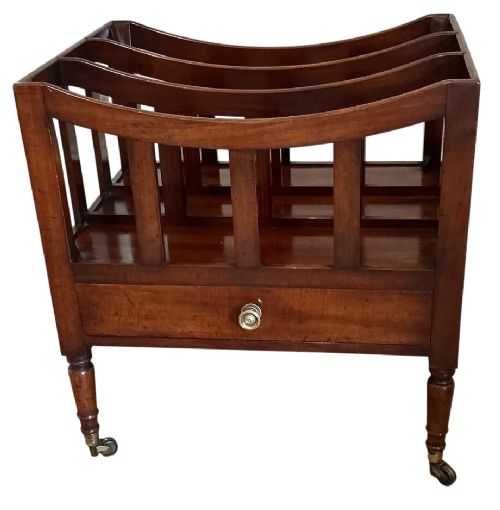
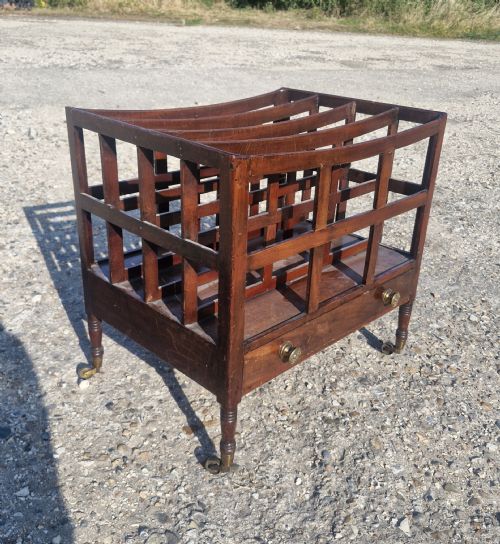
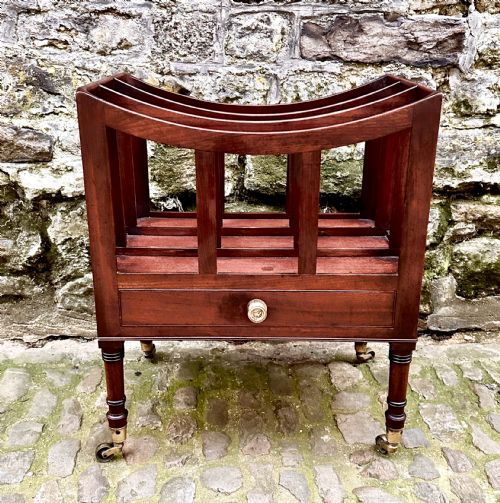
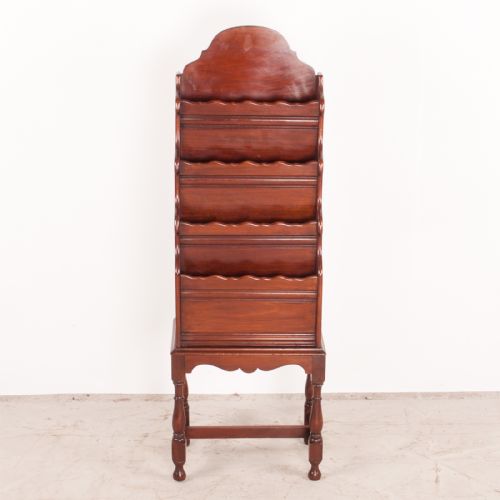
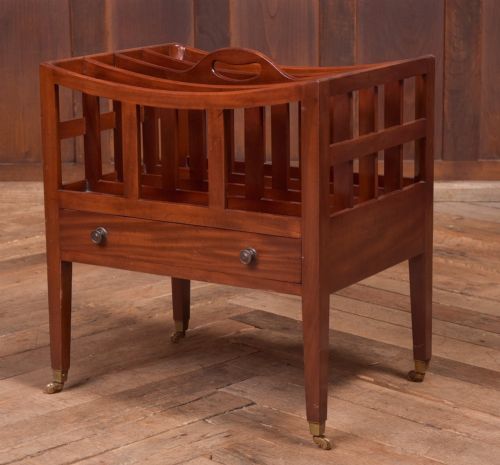
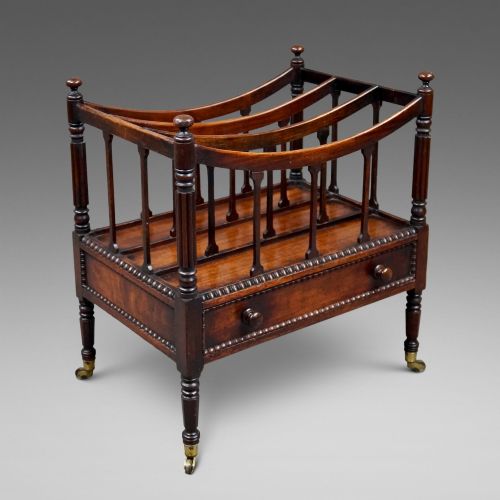
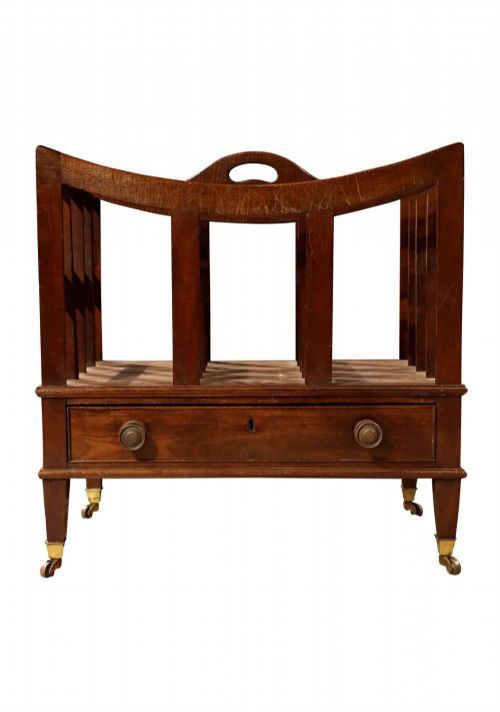
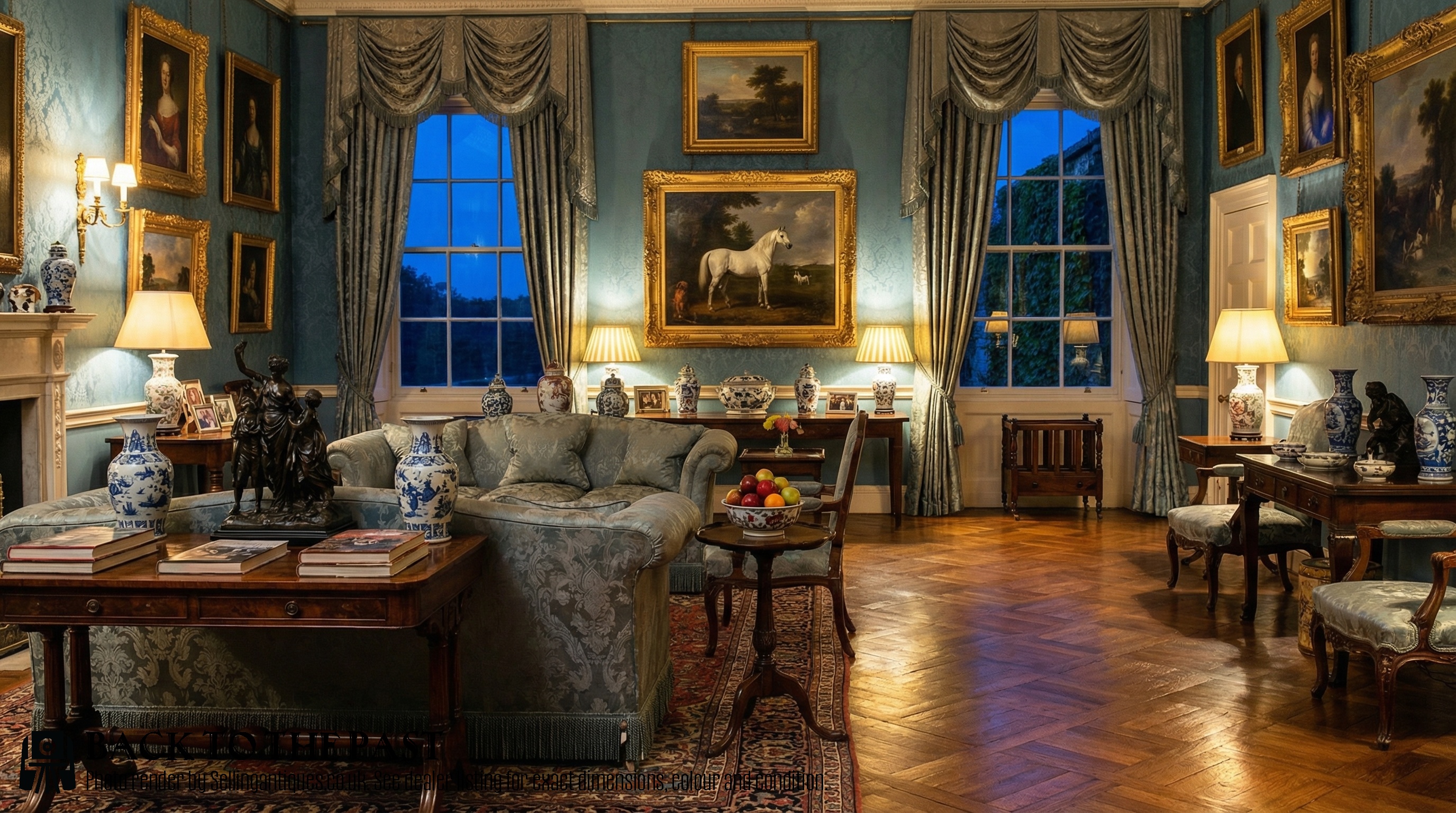
When you search for a mahogany sheet music rack, you encounter a specialised furniture form primarily known as a Canterbury or music canterbury. These items serve to organise and display sheets, folios, and magazines within a domestic interior. The examples found here span the nineteenth century, including specific periods like the William IV, early Victorian, Victorian, and Edwardian eras.
The dominant form takes shape as a four-section or four-division stand, sometimes featuring a distinct boat shape or an X-frame construction. These pieces bridge the gap between functional storage and decorative parlour furniture. Arts and Crafts interpretations also appear, showing how makers adapted the form across different decades.
How they were made
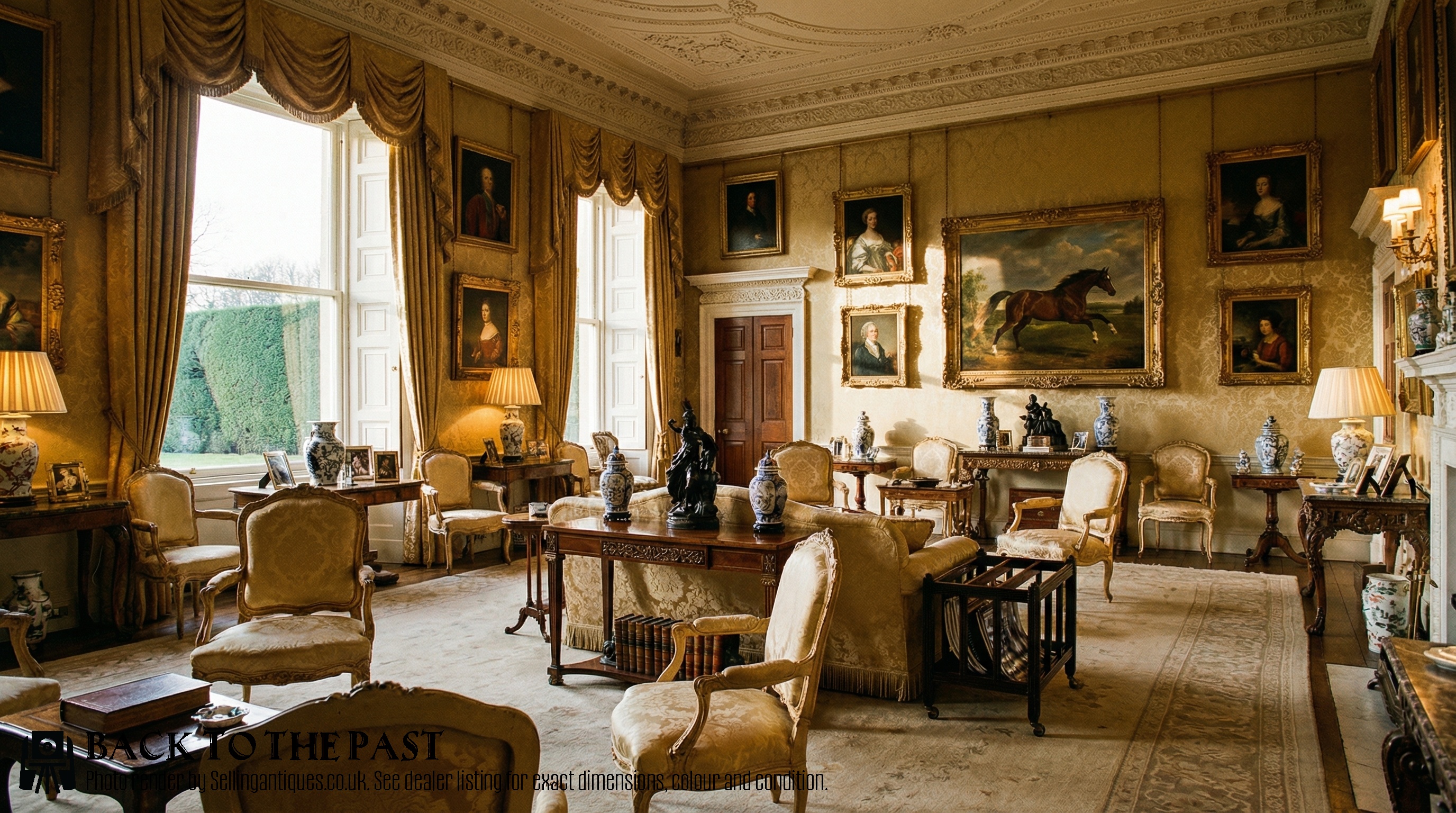
Makers utilised solid mahogany and mahogany veneers to construct the primary framework of each stand. The timber displays rich grain patterns typical of nineteenth-century cabinet making.
Brass fittings frequently appear as structural or decorative elements, securing divisions and adding contrasting metallic detail to the dark wood.
Retail Price Guide 2026
Typical UK retail prices for mahogany sheet music rack, calculated from the Sellingantiques database of over a million retail prices indexed since 2003. This retail price guide relies exclusively on Sellingantiques data; no external sources or auction records are used, so the figures do not describe the wider market.
Listings span the nineteenth century and the Edwardian era, featuring mahogany construction combined with brass.
What varies in quality
The distinction between standard items and superior examples lies in the refinement of the division framing and the choice of mahogany figure. Pieces with complex X-frame structures or distinctive boat shapes demonstrate greater ambition from the cabinet maker.
The integration of brass details and the crispness of the turned or shaped wooden supports elevate the visual weight of the furniture. Finer construction balances stability with a light, portable silhouette suited to drawing rooms.
The Mahogany Sheet Music Rack Glossary
- Canterbury
- A low stand with vertical divisions, originally designed for holding sheet music or portfolios. The form evolved during the late eighteenth century and remained popular throughout the Victorian period.
- Mahogany
- A durable tropical hardwood prized for its reddish-brown colour and fine grain. It became the predominant timber for high-quality British cabinet making from the eighteenth century onwards.
- William IV
- A British design style spanning the 1830s characterised by bold classical proportions and substantial woodwork. Pieces from this era often incorporate robust scrollwork and substantial turned elements.
- Edwardian
- A decorative period covering the early twentieth century up to the First World War. Furniture from this time often reinterprets earlier classical themes with lighter proportions.
Frequently Asked Questions
What is a music canterbury?
A music canterbury is a specialised stand with vertical partitions designed to hold sheet music and folios off the floor.
Cabinet makers developed these pieces to keep scores organised and readily accessible beside a piano or in a music room.
How do I date a mahogany rack?
Dating relies on identifying stylistic markers such as William IV scrollwork, early Victorian boat shapes, or Edwardian proportions.
Examining the construction methods and the specific grain of the mahogany helps place the piece within the nineteenth century.
Where were these stands used?
These items were placed in parlours, drawing rooms, and music rooms alongside pianos and other instruments.
Their portable nature allowed domestic staff to move them easily around the home for evening musical gatherings.
What styles are available?
The available styles range from sturdy William IV and early Victorian designs to later Arts and Crafts interpretations.
Each period brings distinct woodworking techniques and structural variations to the traditional four-division layout.