

Antique Newspaper Holder
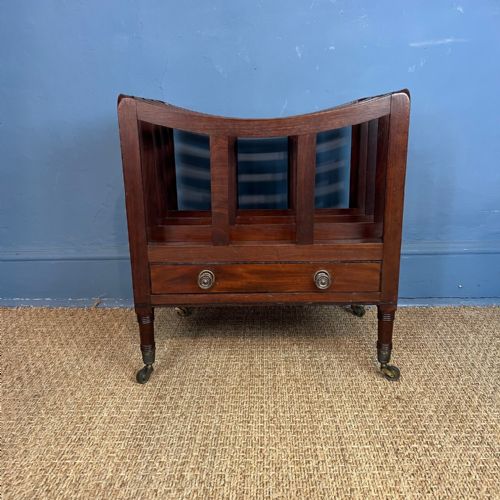
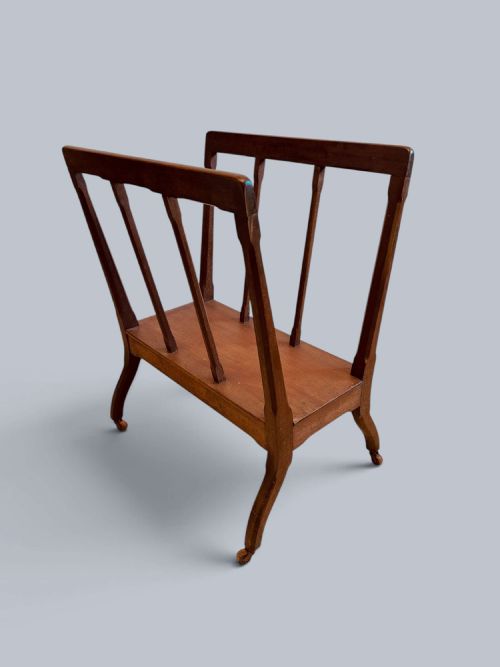
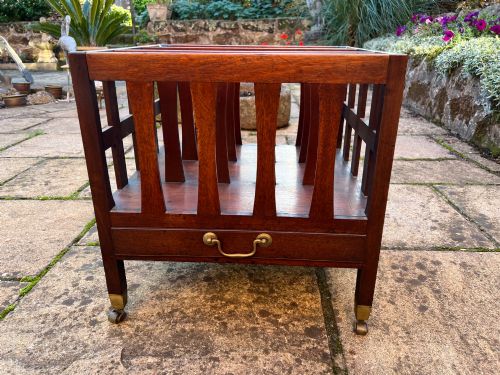
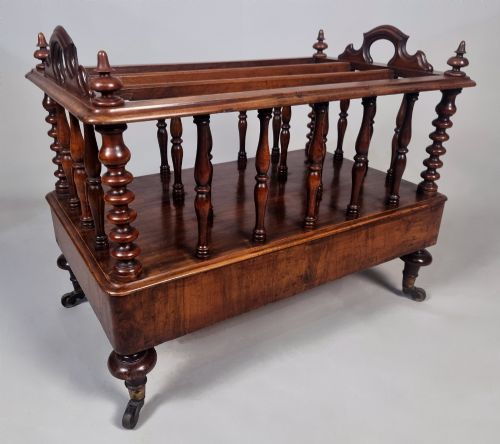
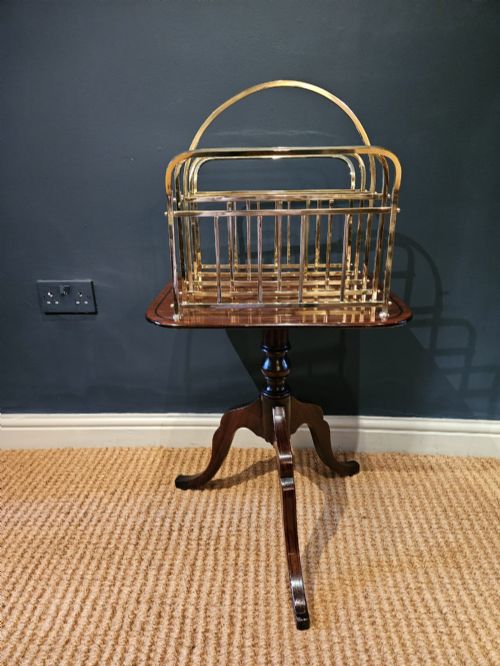
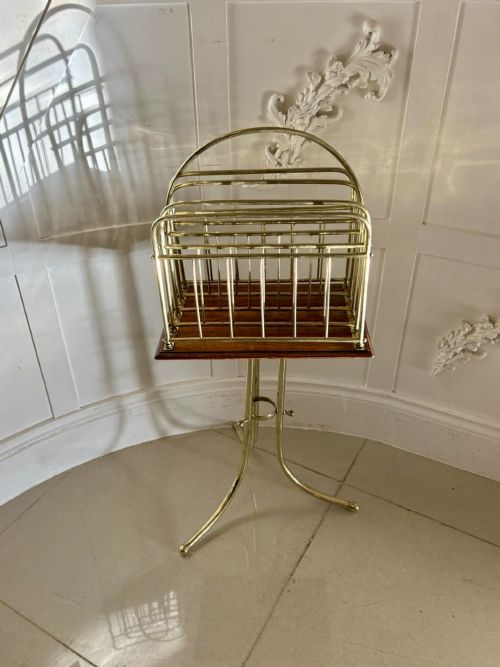
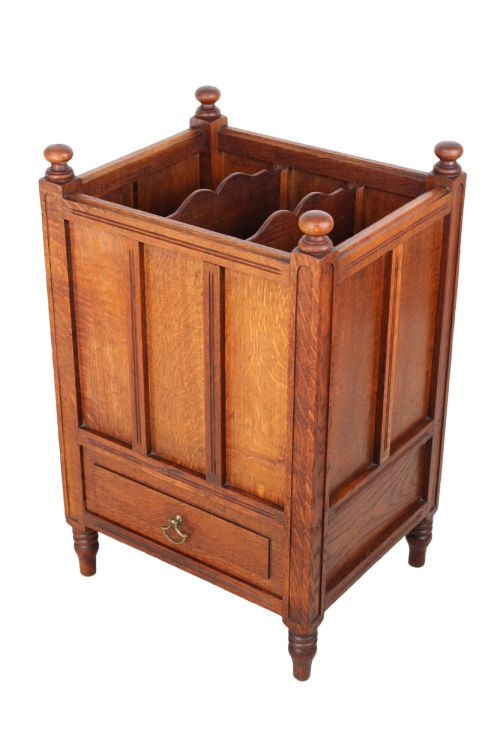
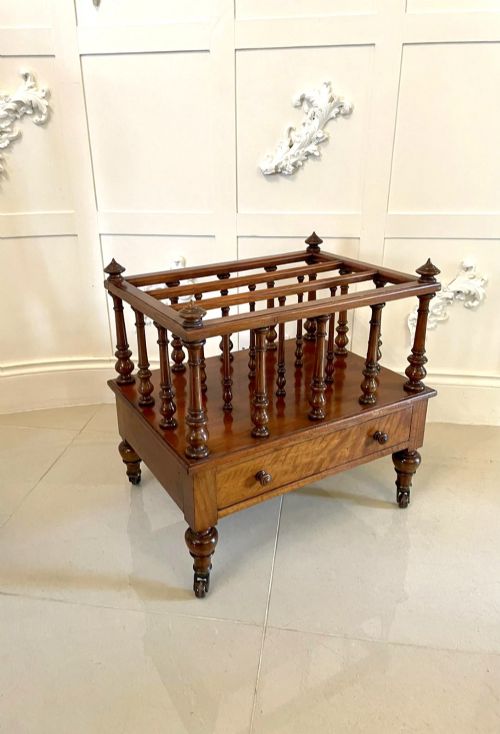
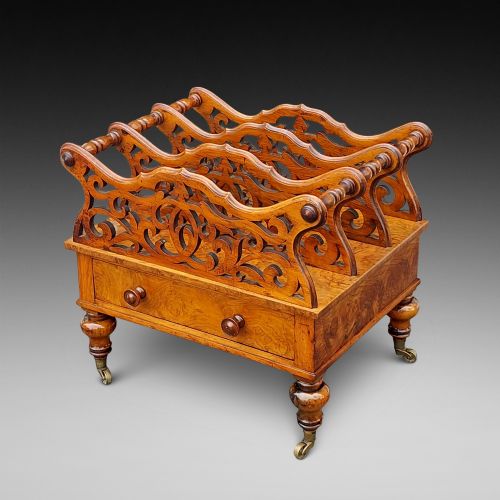
An antique newspaper holder keeps journals and periodicals tidy beside a chair, taking the form of traditional canuterburys and racks.
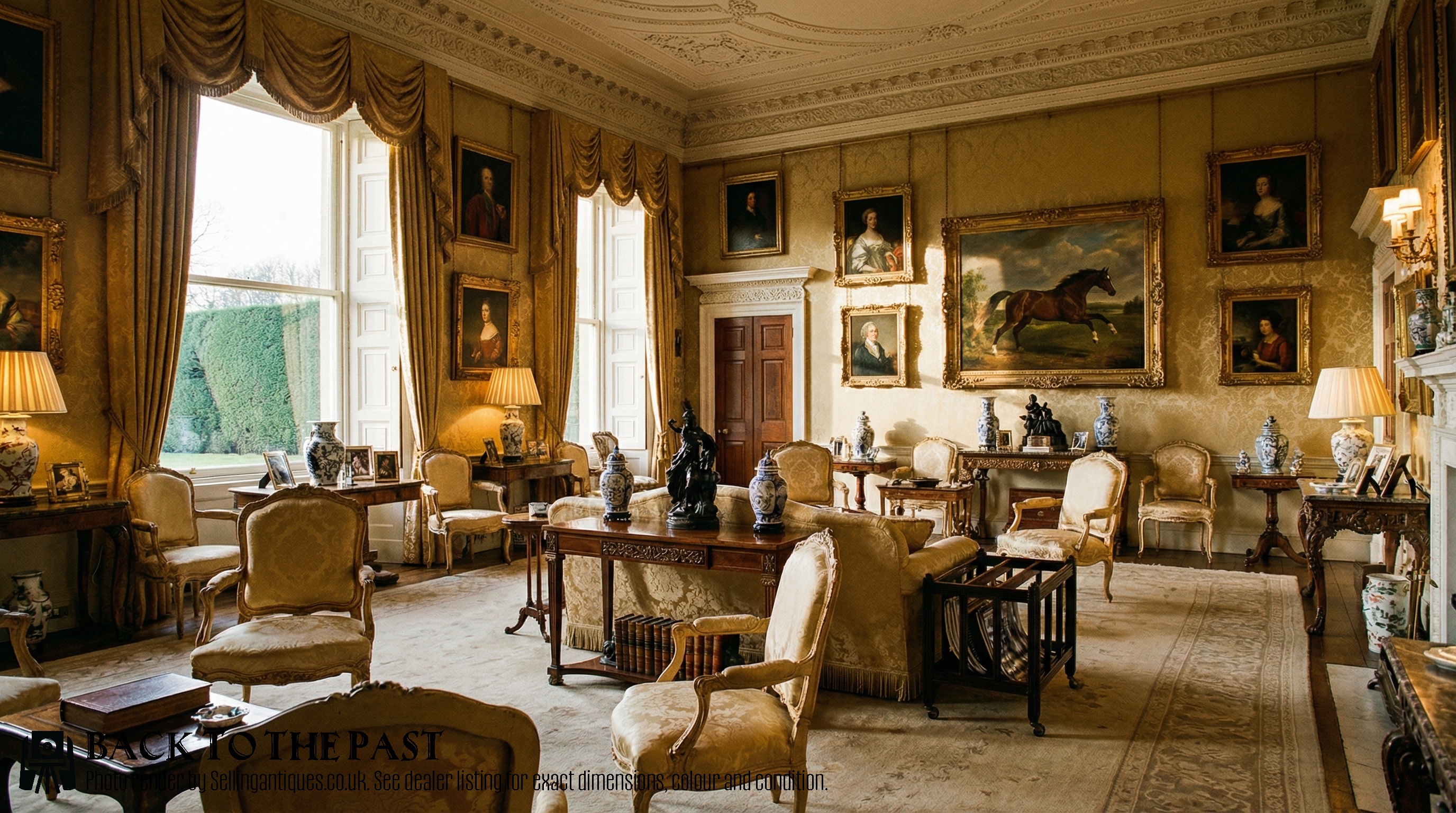
Antique Newspaper Holder
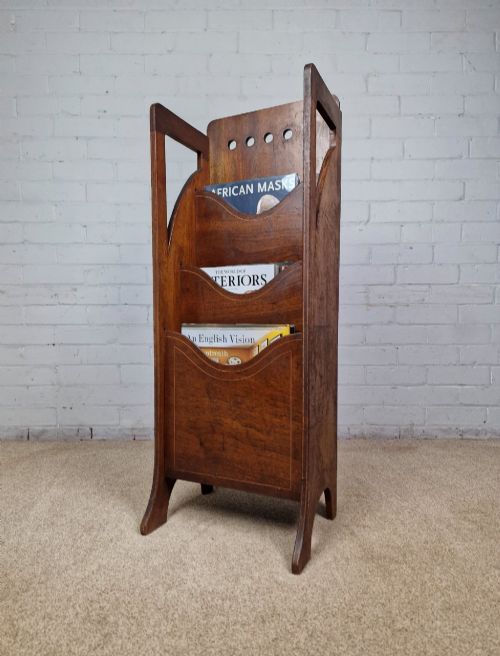
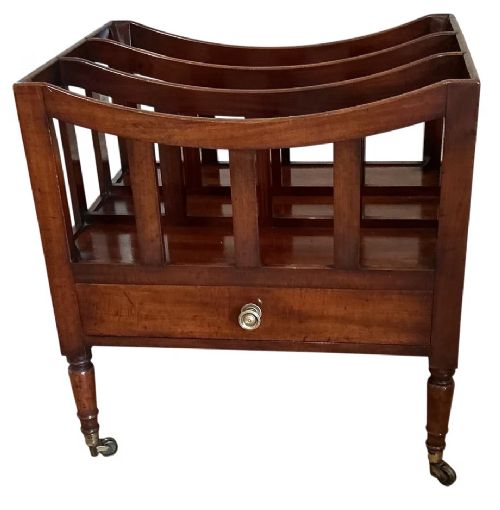
When you search for an antique newspaper holder, you encounter pieces designed to store daily reading material, periodicals and sheets of music. These items appear primarily as canterburys, magazine racks and music stands across this page.
The pieces span periods from the Georgian and Regency eras through the Victorian and Edwardian decades, stretching into the 1920s. You meet freestanding timber stands alongside wall shelves and revolving brass designs.
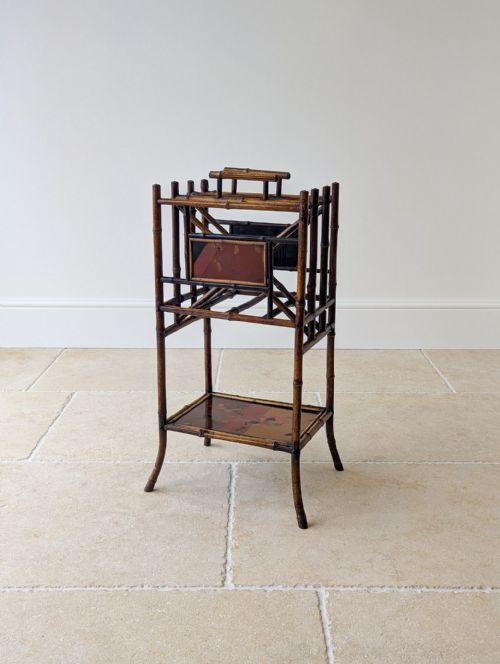
Mahogany, oak and rosewood form the traditional timber options, while bamboo and lacquer represent lighter aesthetic styles. Brass and copper also appear as primary materials for freestanding and wall-hung magazine stands.
How they were made
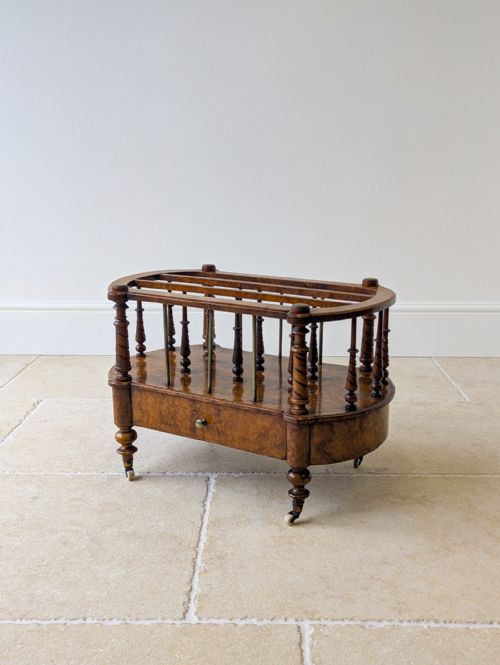
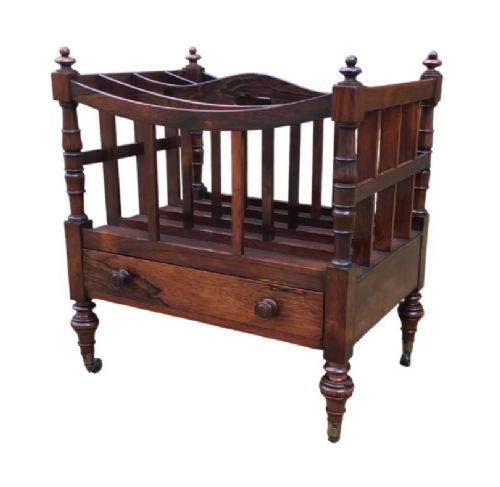
Cabinet makers utilised dense hardwoods such as mahogany, rosewood, walnut and oak, shaping them into division racks, boat-shaped bodies and cabinet bases. Turnery appears on legs, often supported by castors for mobility across floorboards.
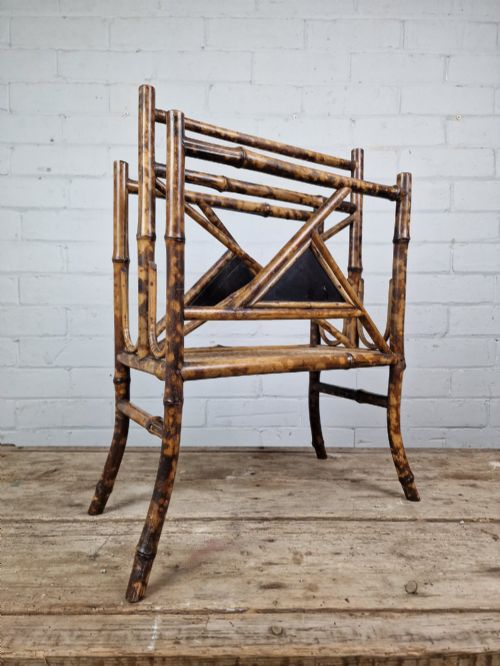
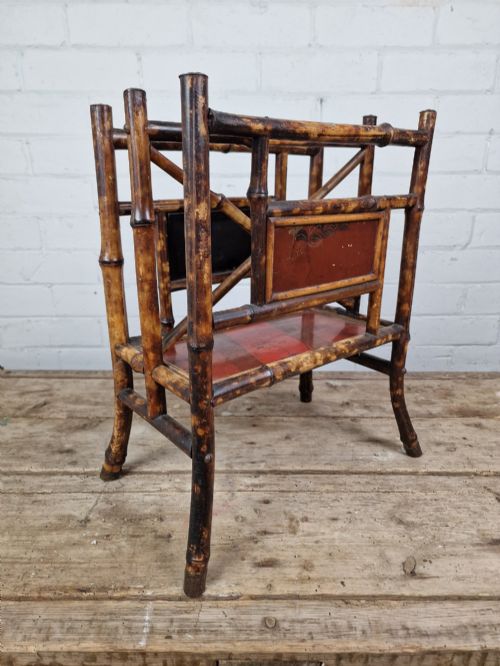
Makers of the Aesthetic Movement and late periods incorporated tiger bamboo and fruitwood, tying together organic materials with lacquer finishes. Metal workers shaped brass and copper into structured stands, wirework frames and revolving tiers.
Antique Newspaper Holder Retail Price Guide 2026
Typical asking prices for newspaper holder among the pieces listed under this phrase on Sellingantiques today, from the lower quarter to the upper quarter. They describe what is for sale here now, not the wider market.
Tiger bamboo makes an appearance, bringing a distinctly wild stripe to your daily broadsheet storage.
What varies in quality
The selection of timber grain defines the visual weight of a piece, with burr walnut and figured rosewood sitting at the upper end of cabinet work. Clean joinery in the divisions and crisp turning on the legs separate standard utility pieces from finer drawing room furniture.
Maker signatures and specific hardware, such as original brass castors or fitted drawers, elevate the standing of a canterbury. The structural integrity of the vertical dividers remains crucial, as these partitions endure constant weight and handling.
Edwards and Roberts
The Antique Newspaper Holder Glossary
- Canterbury
- A low freestanding stand with upright divisions, originally designed for sheet music and newspapers. These pieces often feature one or more drawers beneath the slatted sections.
- Aesthetic Movement
- A late 19th-century design style that favoured simplicity, Japanese-influenced motifs and the use of bamboo or lacquered surfaces. Objects from this period lean towards exotic materials.
- Boat-shaped
- A descriptor for canterburys with curved, concave sides that sweep upward toward the ends. This profile is frequently seen in Regency examples.
- Metamorphic
- A term for furniture that transforms or serves multiple functions, such as a stand that alters its configuration for reading or storage. These pieces involve mechanical folding or pivoting elements.
Antique Newspaper Holder: Frequently Asked Questions
What is a canterbury?
A canterbury is a low, freestanding stand divided into vertical partitions for holding newspapers, magazines and sheet music. They often include a small drawer at the base.
Cabinet makers produced them in various timbers, shaping them to sit neatly beside seating in reception rooms and parlours.
How were newspaper holders used?
These holders kept daily journals, periodicals and current reading material organised and accessible near armchairs and desks. Sheet music found a natural home in the partitioned sections.
They served as portable furniture that could be moved around the room as needed.
How do I identify a Regency canterbury?
Regency pieces often display boat-shaped bodies with curved sides, resting on turned legs fitted with castors. The timber used is typically mahogany or rosewood.
The lines remain clean and classical, reflecting the furniture design of the early 19th century.
Where should I place an antique rack?
Position a freestanding rack beside a sofa or reading chair where newspapers and magazines accumulate. Wall-hung shelves suit tighter spaces like hallways or studies.
Keep them away from direct heat sources to protect the polished wood surfaces and veneers.