



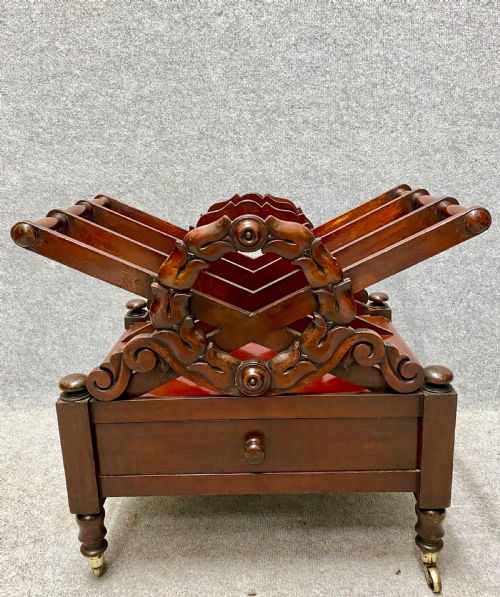


Brass Newspaper Stand
A brass newspaper stand is a practical domestic accessory designed to keep periodicals tidy, and these pieces bring period metalwork straight into a modern room.
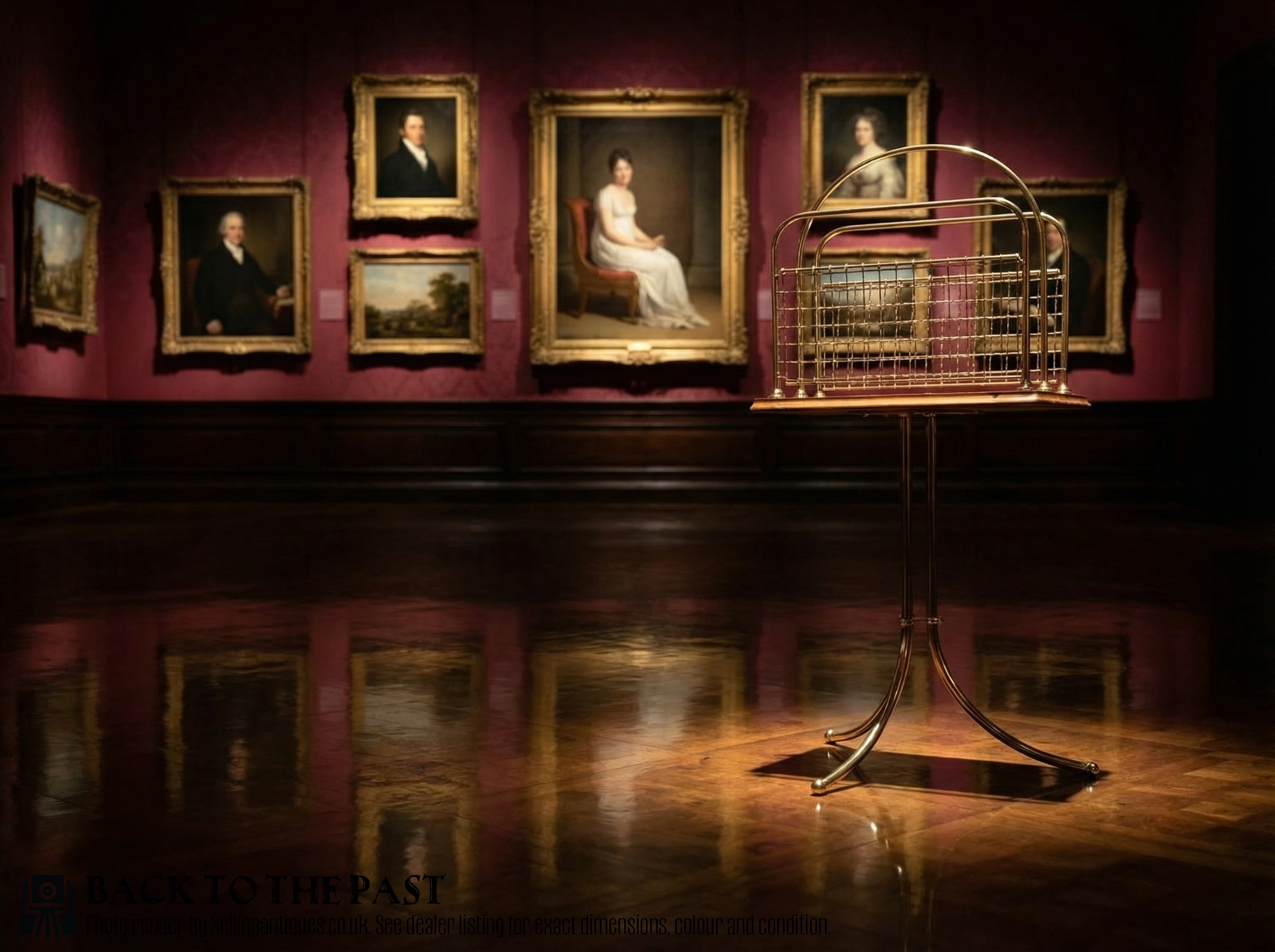
Brass Newspaper Stand
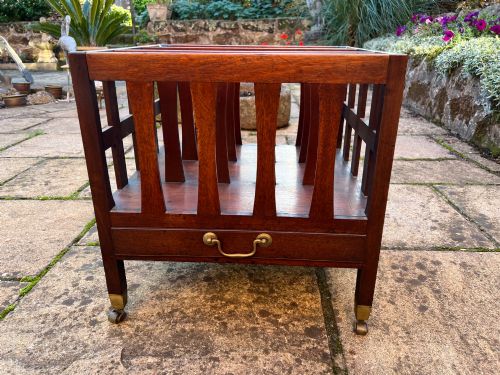
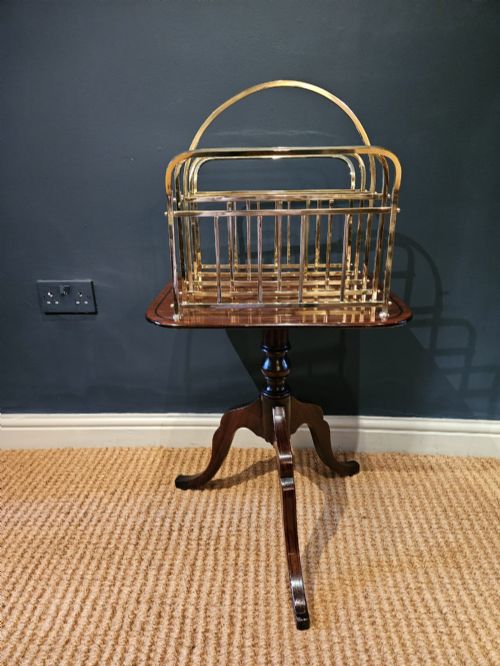
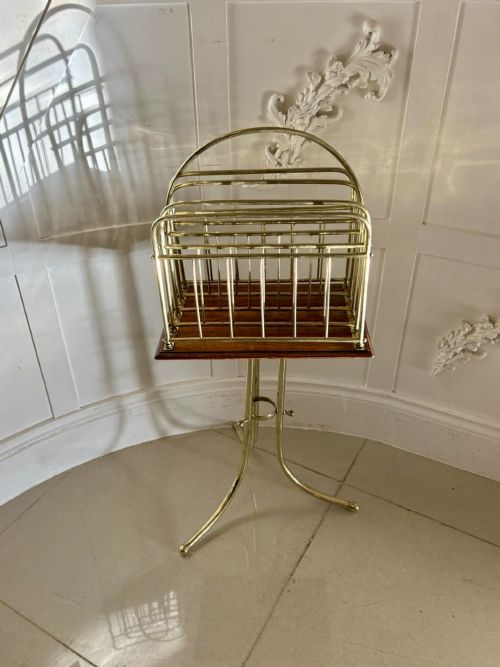
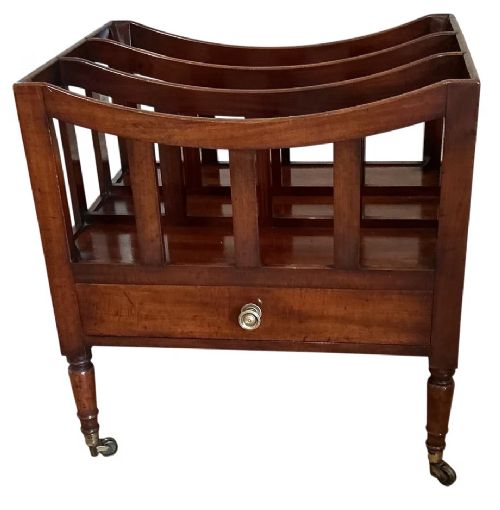
A brass newspaper stand combines metal frames with timber elements such as oak and mahogany to hold daily journals and magazines. These utilitarian items served sitting rooms and studies across the Victorian and Edwardian eras, keeping reading materials close to hand.
The pieces appearing here span the late nineteenth century into the early decades of the twentieth, encompassing Edwardian designs and Arts and Crafts examples. Revolving formats and floor-standing racks dominate the selection, often combining solid brass with wire mesh or polished wood.
How they were made
Maker construction relies on shaped brass components, joined with riveted frames, wire mesh panels, and turned wooden bases. Oak and mahogany provide structural stability for revolving tiers and heavy side frames.
Surfaces feature polished brass alongside patinated copper accents, reflecting traditional metalworking methods of the period. Joints utilise screws and brackets typical of early twentieth-century workshop production.
Brass Newspaper Stand Retail Price Guide 2026
Typical asking prices for brass newspaper stand among the pieces listed under this phrase on Sellingantiques today, from the lower quarter to the upper quarter. They describe what is for sale here now, not the wider market.
Some models include integrated letter racks, proving that Victorian correspondence was just as hard to keep off the desk.
What varies in quality
Quality rests in the weight of the metal and the precision of the revolving mechanism where fitted. Solid brass frames with thick gauge wire show greater durability than lighter, pressed alternatives.
The integration of cabinet timbers such as figured oak or mahogany alongside metal indicates a higher standard of manufacture. Finer pieces demonstrate careful proportioning in the turned uprights and decorative brass mounts.
William Tonks and Sons
The Brass Newspaper Stand Glossary
- Revolving
- A mechanism allowing the rack to turn freely on a central axis for easy access to periodicals.
- Arts and Crafts
- A design movement prioritising honest construction, visible fixings, and handcrafted metalwork.
- Edwardian
- A period dating from nineteen hundred to nineteen ten, characterised by lighter proportions and refined domestic furnishings.
- Wire mesh
- Interwoven metal strands forming sides that secure folded papers while maintaining visibility.
Brass Newspaper Stand: Frequently Asked Questions
What is a brass newspaper stand used for?
These stands hold daily newspapers, journals, and weekly periodicals in a domestic setting. They keep reading materials organised beside a chair or desk.
Period examples offer sturdy storage designed specifically for the folded formats of historical newspapers and early magazines.
How do I date a brass newspaper stand?
Dating relies on stylistic clues, timber choices, and construction methods. Edwardian pieces often feature lighter oak frames, while Victorian examples lean towards heavier brass work.
Revolving mechanisms and patent stamps can also help narrow down the decade of production.
Are revolving stands stable?
Yes, period revolving stands utilise heavy cast iron or weighted brass internal bases to ensure stability when turning. The balance supports stacked periodicals on multiple sides without tipping.
Quality central spindles allow smooth rotation while maintaining a firm vertical alignment on the floor.
How do I clean brass and oak?
Brass components respond well to gentle cleaning with a soft cloth to preserve the natural patina built up over decades. Harsh chemical polishes should be avoided on antique metal surfaces.
Oak and mahogany frames require occasional treatment with suitable wax to nourish the grain and protect the wood.