

Antique Canterbury Rack
An antique canterbury rack is a divided stand for books and papers, combining utility with elegance across Georgian, Regency, and Victorian periods.
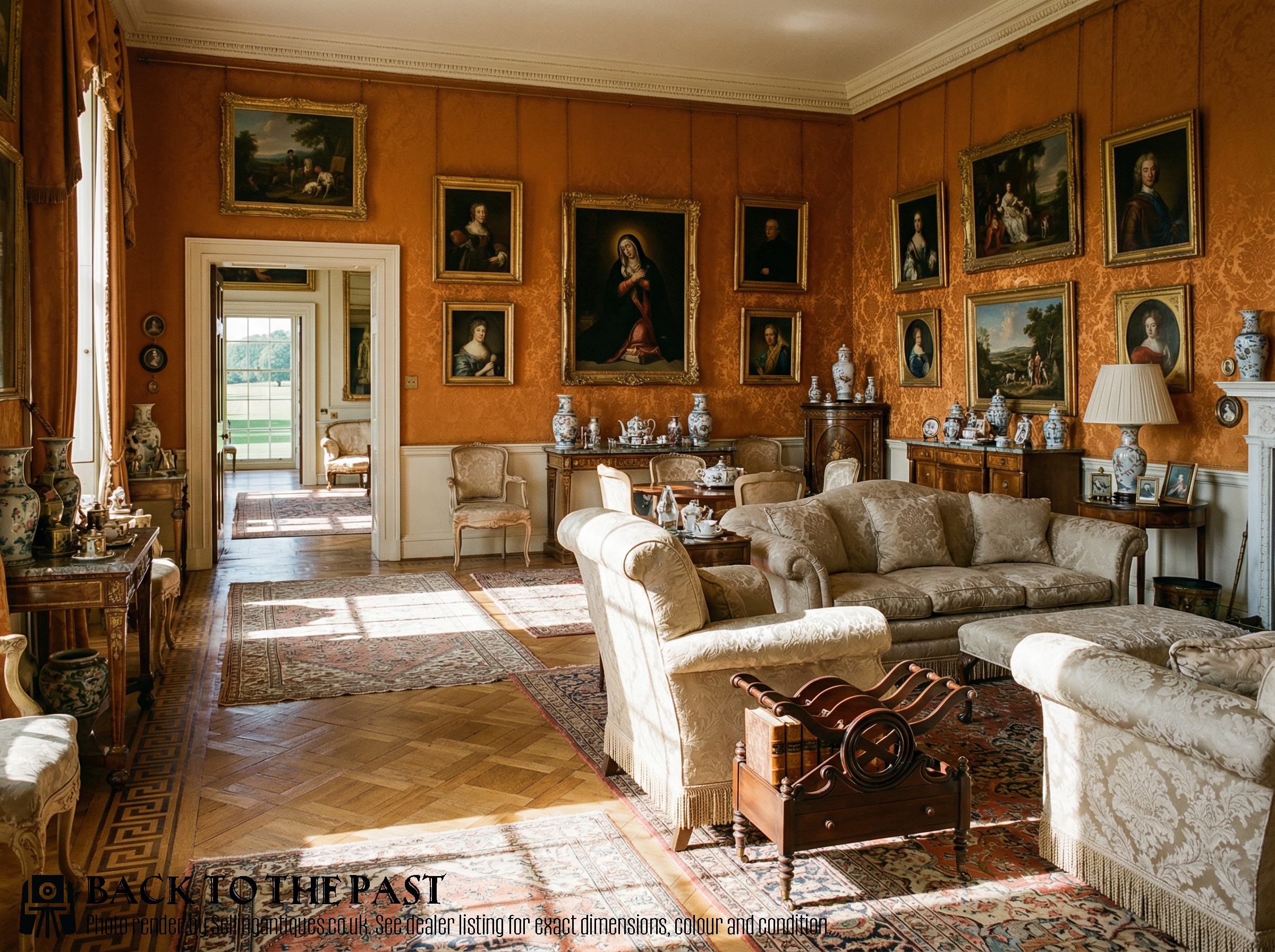
Antique Canterbury Rack
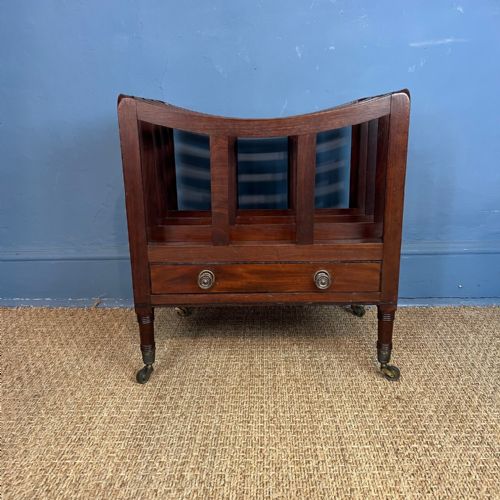
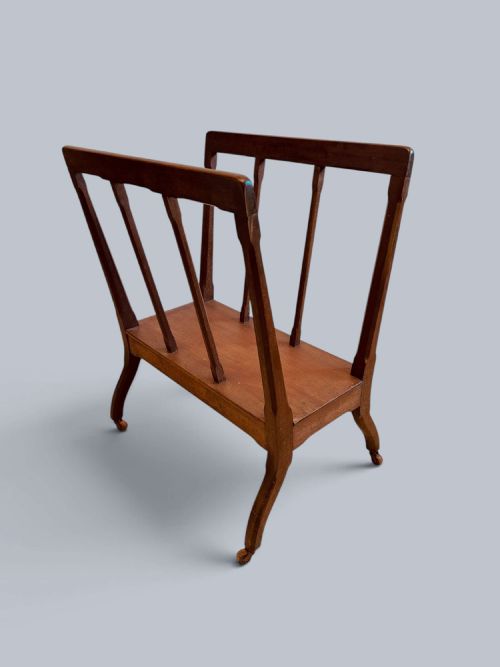
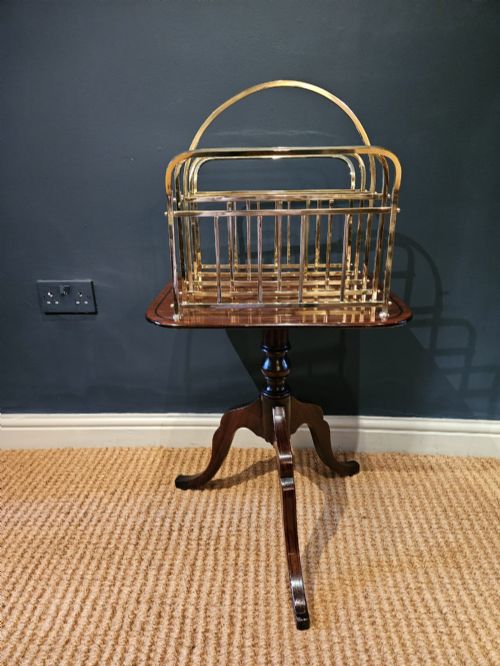
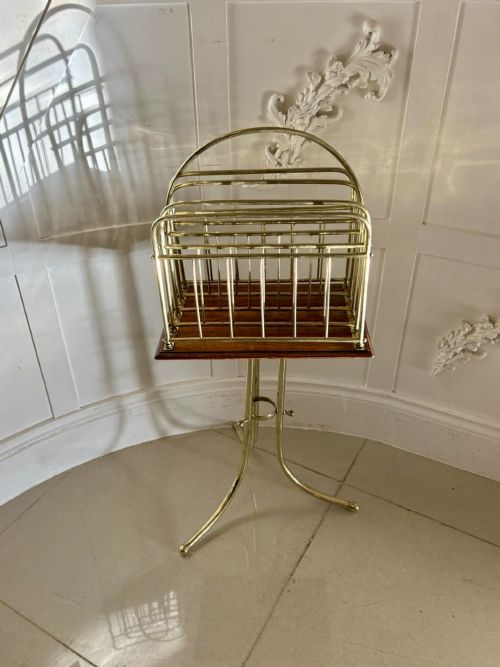
An antique canterbury rack serves as a low, partitioned stand designed to hold sheet music, periodicals, and books near seating areas. The pieces gathered here span from the Georgian and Regency eras through the Victorian and Edwardian periods.
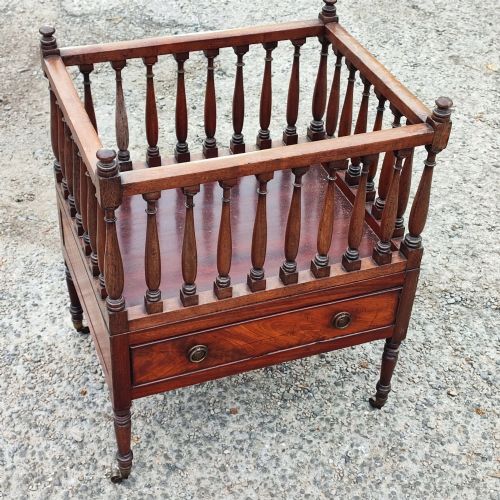
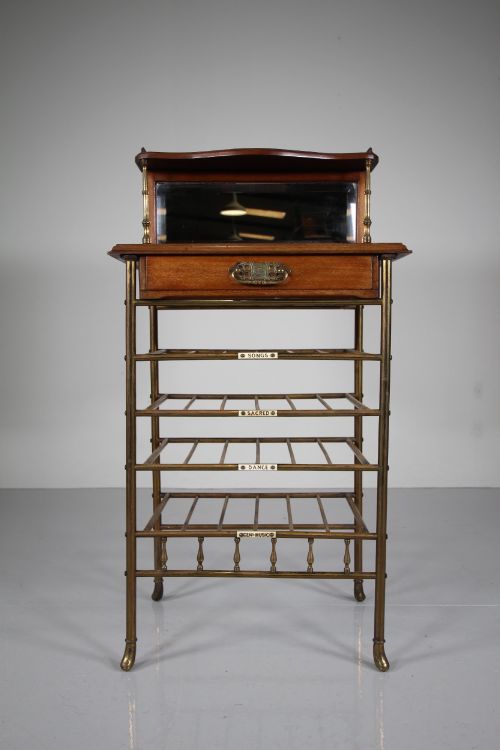
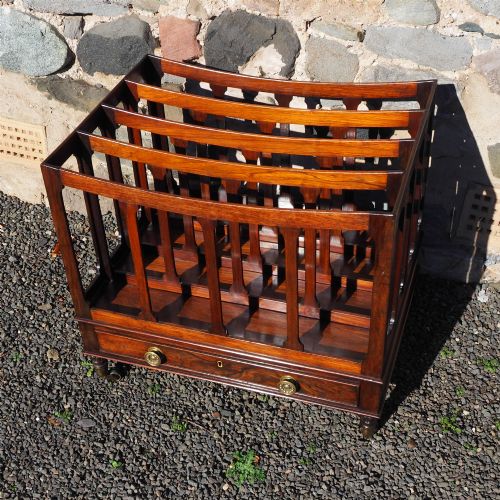
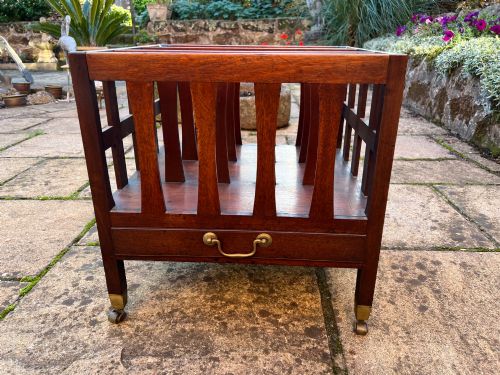
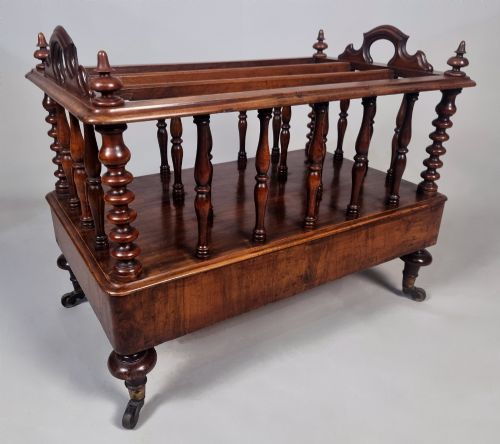
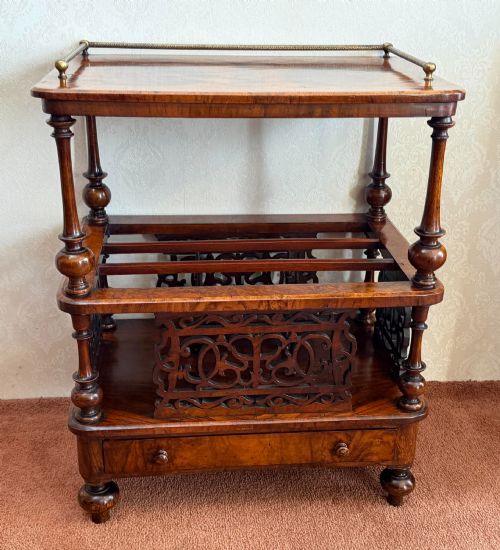
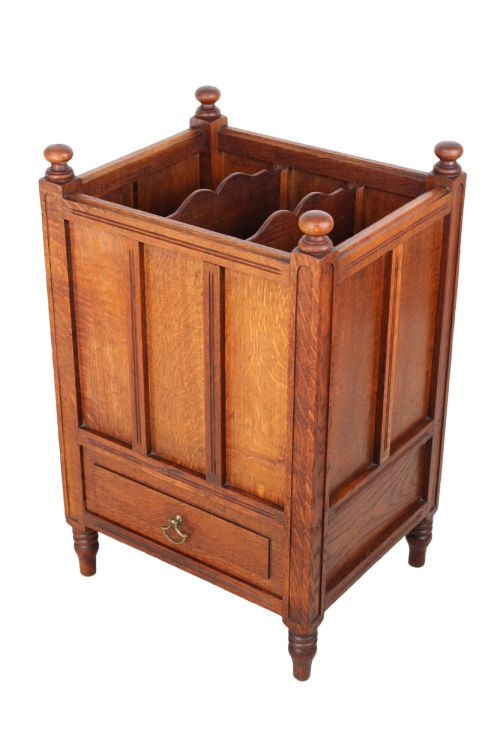
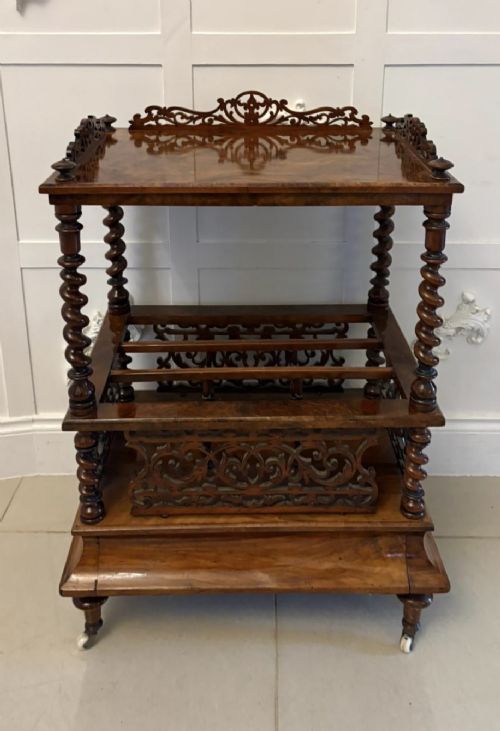
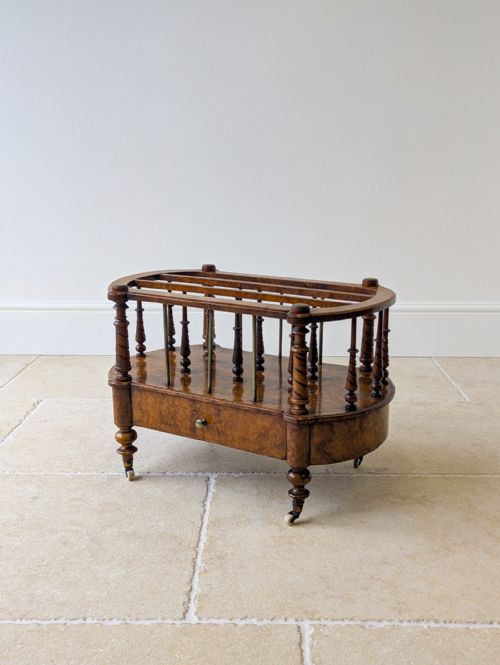
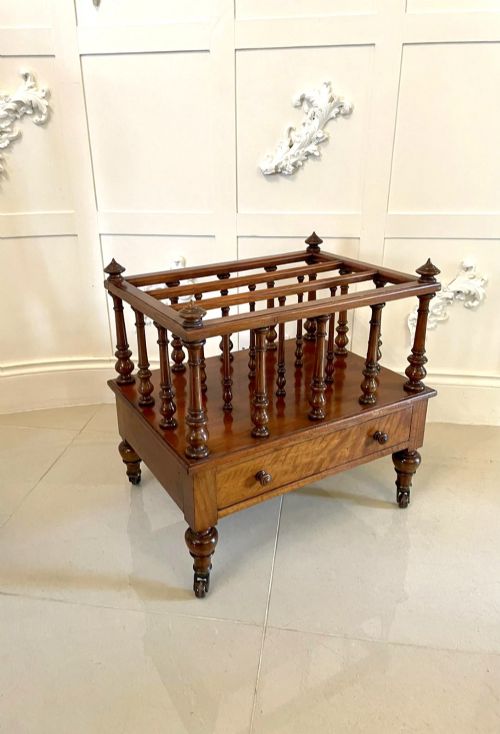
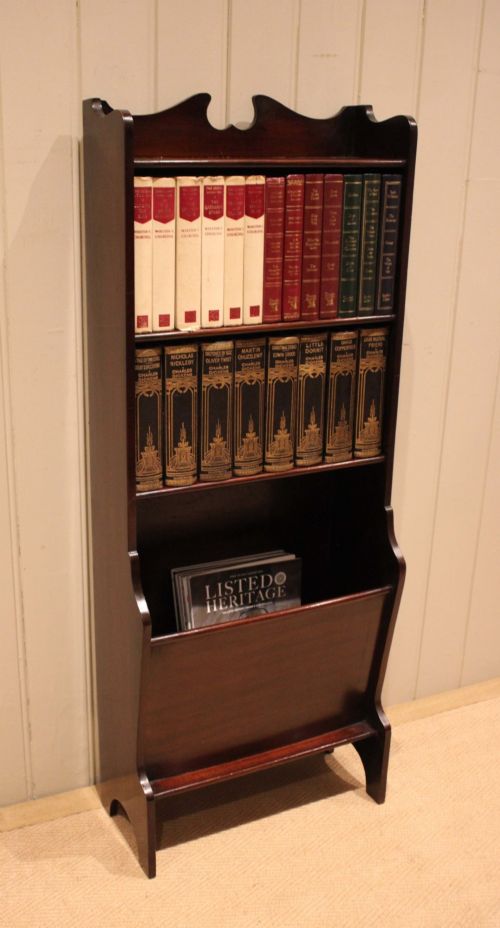
The most common forms on this page include mahogany and burr walnut examples featuring slatted partitions above a low drawer, alongside occasional tables and bamboo variations. Makers and craftsmen adapted these stands to function both as dedicated sheet music holders and as general magazine tidies.
Meticulous joinery and thoughtful division define the utility of these stands, allowing the orderly storage of printed matter in a drawing room or library. Buyers will encounter boat-shaped designs, freestanding whatnots, and low side tables equipped with magazine storage.
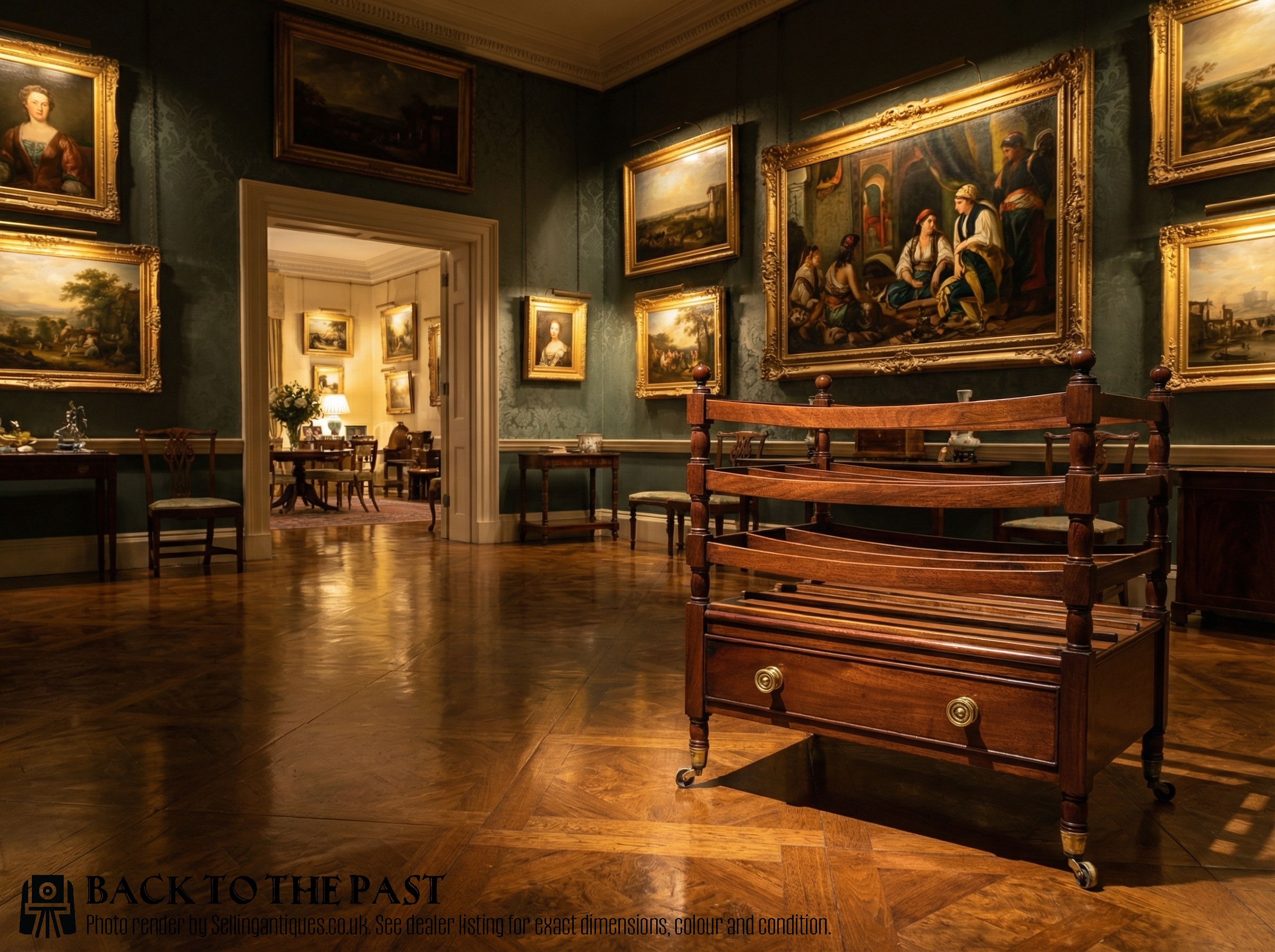
Materials and Construction
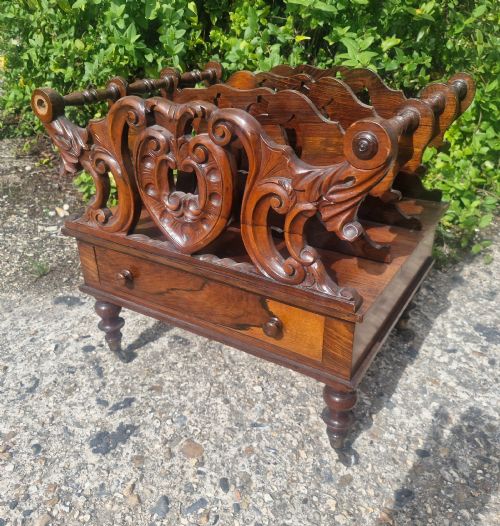
Cabinet makers utilised dense hardwoods such as mahogany, rosewood, and walnut, often selecting burr walnut veneers for rich patterning on flat panels and drawer fronts. Secondary timbers provide structural stability to the slatted divisions and lower drawers.
Brass castors, handles, and occasional gallery rails add functional metallic accents, while specialised variations incorporate bamboo and ceramic elements during the later nineteenth century. Joinery methods rely on precise dovetailing for drawers and secure tenons for the upright partitions.
Antique Canterbury Rack Retail Price Guide 2026
Typical asking prices for canterbury rack among the pieces listed under this phrase on Sellingantiques today, from the lower quarter to the upper quarter. They describe what is for sale here now, not the wider market.
Tiger bamboo makes a surprise appearance alongside traditional mahogany, proving that nineteenth-century Victorians loved an exotic twist on their newspaper storage.
Evaluating Quality and Detail
Superior examples display finely figured wood grains, particularly on burr walnut and mahogany surfaces, matched with crisp carving or delicate inlay work. The elegance of the turned spindles and the structural integration of the drawer set finer pieces apart from utilitarian versions.
Finer construction is evident in the rigidity of the slatted divisions and the smooth operation of any incorporated lower drawer. The presence of original brass castors and uncompromised timber patination indicates a higher standard of original craftsmanship.
Edwards & Roberts
The Antique Canterbury Rack Glossary
- Canterbury
- A low stand with upright partitions designed for holding sheet music, newspapers, or books. The form dates back to the late eighteenth century and continued in various stylistic interpretations through the Edwardian era.
- Burr walnut
- A veneer taken from the knotted growths of the walnut tree, prized for its swirling, highly decorative grain patterns. Cabinet makers utilised it on prominent surfaces of Victorian furniture.
- Aesthetic Movement
- A late nineteenth-century design style emphasising visual beauty over narrative content, often incorporating oriental influences and materials such as bamboo. Pieces from this period reject heavy Victorian historicism in favour of lighter forms.
- Boat-shaped
- A descriptor for furniture featuring curving, concave ends reminiscent of a hull, commonly seen in Regency-era designs. This silhouette provides a streamlined profile to compartmentalised stands.
- Whatnot
- An open-shelved piece of freestanding furniture used for displaying or storing small items, frequently combined with a canterbury base in Victorian examples. These multi-tiered items maximise vertical space in compact rooms.
Antique Canterbury Rack: Frequently Asked Questions
What is an antique canterbury rack used for?
These stands were originally designed to hold sheet music near a piano, or newspapers and periodicals in a sitting room.
Today, they serve the same practical function for contemporary magazines and books while adding period character to a room.
How do I date a canterbury rack?
Dating relies on identifying the prevailing style, timber choices, and construction methods characteristic of periods like Regency or Victorian.
Georgian and Regency pieces often feature linear mahogany forms, whereas Victorian versions frequently showcase burr walnut, ornate inlays, or bamboo.
Are these racks sturdy enough for daily use?
Most pieces were built from solid hardwoods like mahogany and walnut to withstand the weight of books and paper.
Standard domestic use for holding current magazines remains entirely suitable for these robust nineteenth-century constructions.