








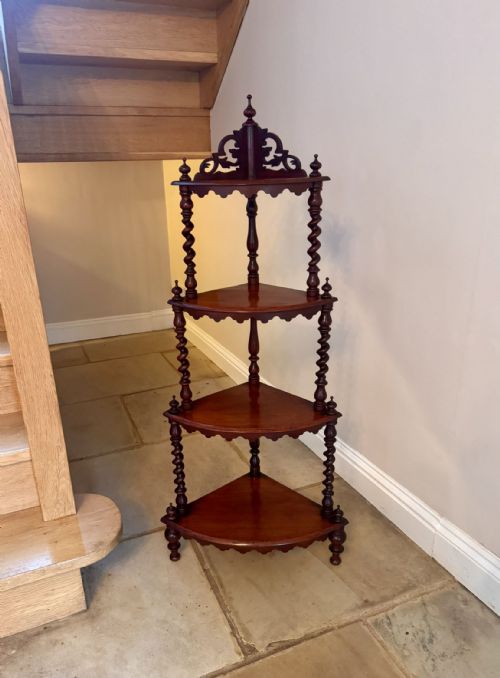
Antique Whatnot Stand
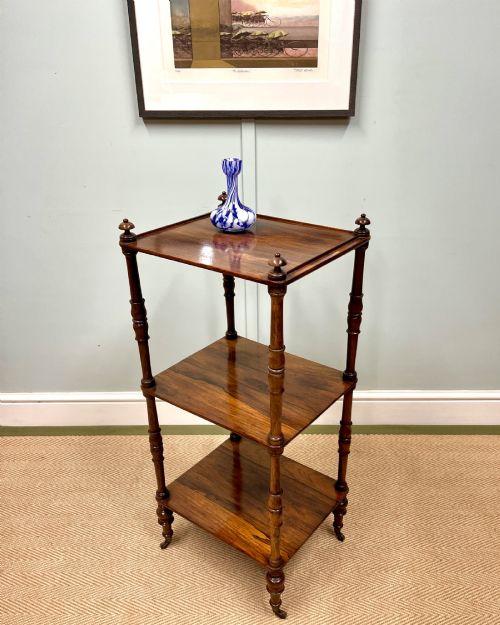
An antique whatnot stand is a tiered display shelf designed for books and ornaments, bringing distinct multi-level elegance to a room.
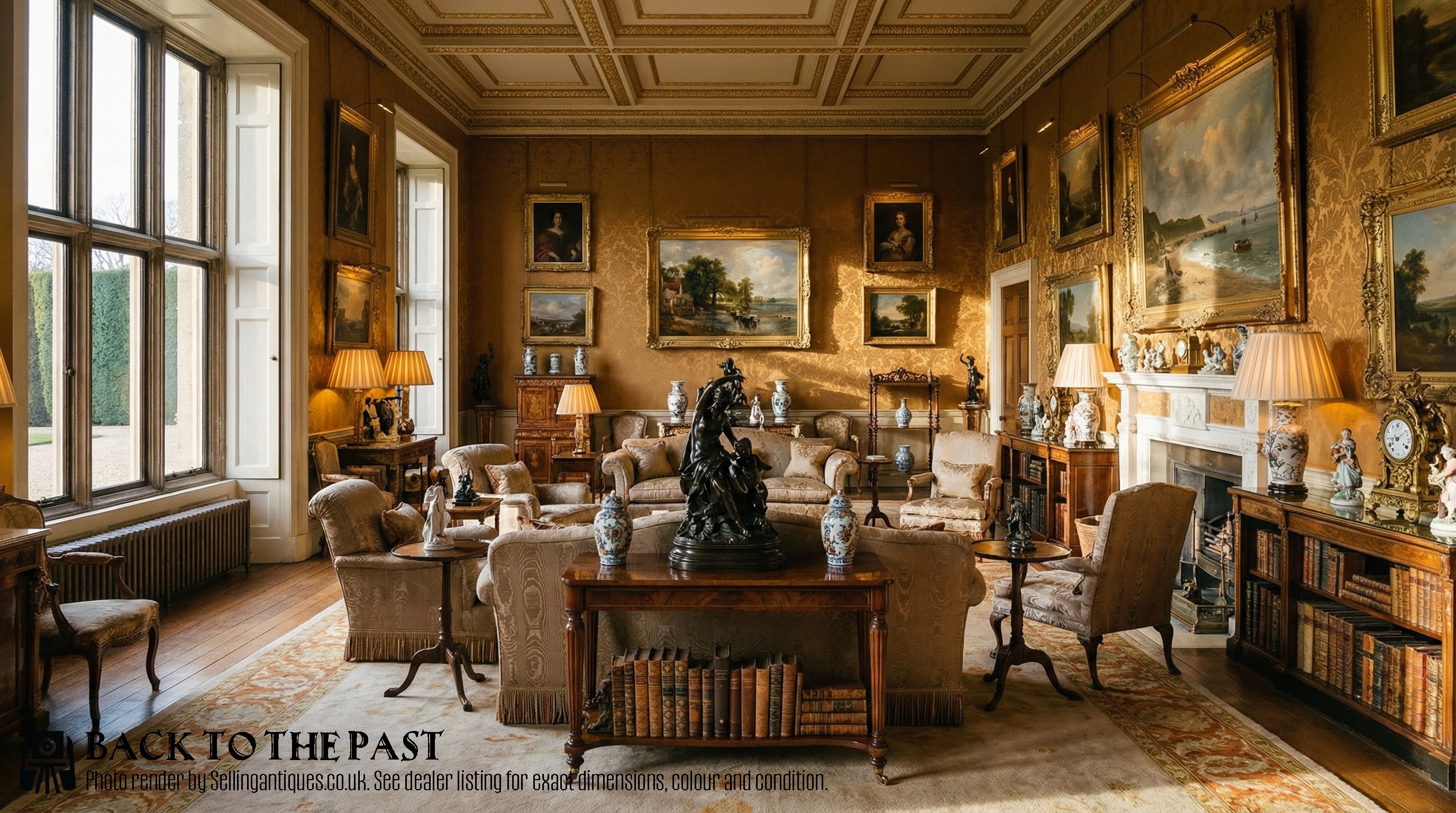
Antique Whatnot Stand
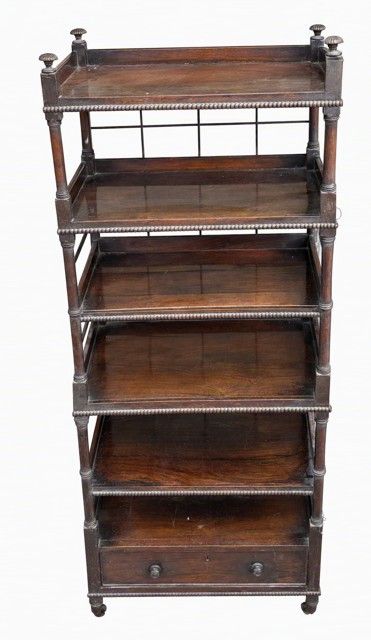
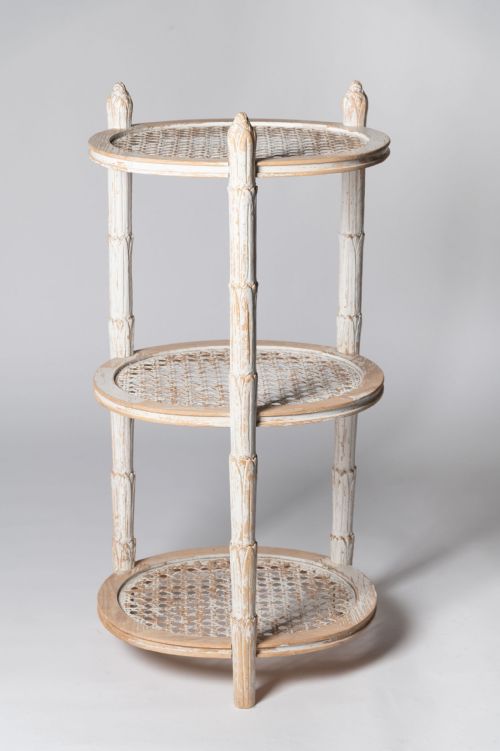
The antique whatnot stand is fundamentally a multi-tiered piece of furniture created to display ornaments, books, and small personal belongings. Pieces span several eras, with Victorian examples appearing most frequently alongside Regency and nineteen-hundreds revivals.
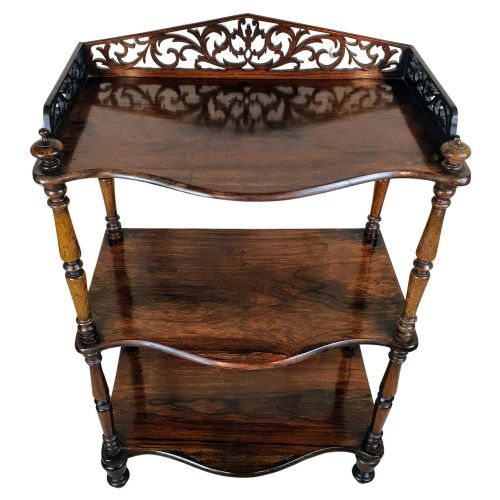
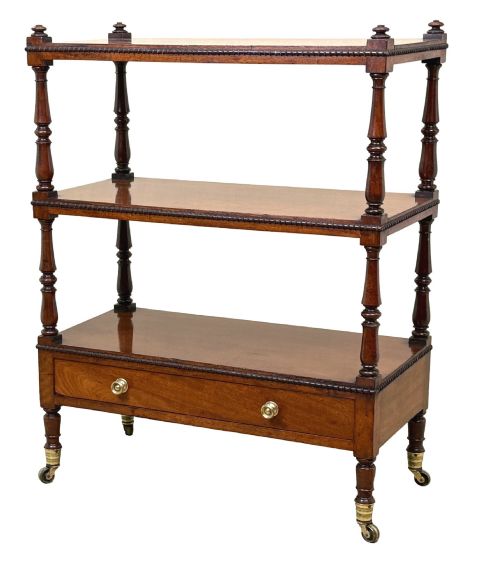
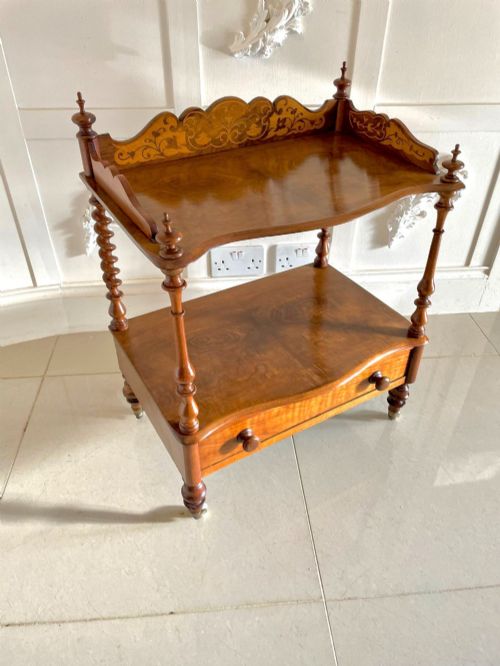
Forms range from three-tier and four-tier upright display stands to specialised variations incorporating a lower Canterbury compartment for sheet music or newspapers, corner units, and serpentine-shaped shelves.
They function as versatile decorative furniture, serving as side tables, display stands, or bedside surfaces while maintaining open shelving that keeps rooms feeling spacious.
Materials and construction
Cabinet makers utilised rich hardwoods including mahogany, rosewood, walnut, burr elm, and oak, often enhancing surfaces with elaborate wood veneers. Supporting elements and decorative mounts frequently incorporated brass.
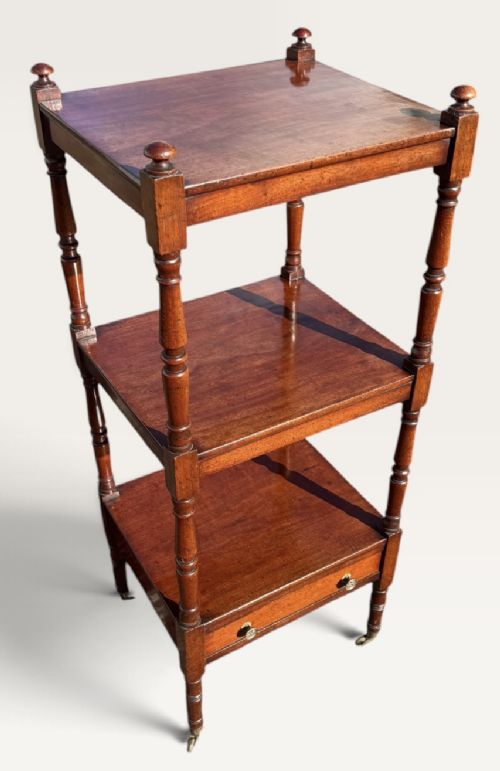
Construction methods involved tiered platforms secured by turned columns, corner supports, or upright spindle galleries, occasionally integrating lower drawers or fitted compartments for specific domestic uses.
Antique Whatnot Stand Retail Price Guide 2026
Typical asking prices for whatnot stand among the pieces listed under this phrase on Sellingantiques today, from the lower quarter to the upper quarter. They describe what is for sale here now, not the wider market.
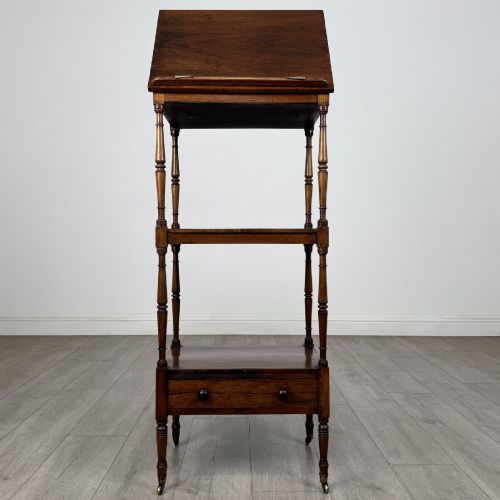
Some Victorian pieces included articulated lecterns to hold heavy books at an angle, sparing readers from holding weighty volumes.
Judging standard and execution
Quality rests upon the choice of timber grain, particularly where burr walnut or burr elm veneers provide intricate natural patterns across the tiered shelves. The crispness of carved details and inlaid decoration dictates the level of craftsmanship.
Structural stability across multiple tiers distinguishes superior pieces, where upright supports and joints remain rigid without leaning. The integration of functional additions, such as a lower drawer or a music rack, reveals the original ambition of the maker.
The Antique Whatnot Stand Glossary
- Whatnot
- A multi-tiered piece of open shelving used for displaying ornaments and books. It originated in the eighteenth century and became a staple of Victorian interiors.
- Etagere
- A French term for a set of tiered display shelves serving a similar decorative purpose to the English whatnot. These pieces often feature delicate turned supports.
- Serpentine
- A curved shelf edge that undulates in a gentle convex and concave wave. This shape appears on higher-end Victorian walnut examples.
- Burr
- A knotty growth on a tree trunk that yields timber with highly twisted and decorative grain patterns. Cabinet makers prized burr walnut and burr elm for veneering prominent surfaces.
Antique Whatnot Stand: Frequently Asked Questions
What is an antique whatnot stand used for?
These pieces served primarily as multi-level display units for porcelain, ornaments, and books in formal reception rooms. Owners also utilised them as bedside tables or side surfaces where space remained limited.
Specific variants incorporated lower racks to hold newspapers, magazines, or music folios near a seating area. Their open tiers allowed decorative items to remain visible from multiple angles within a room.
How do I date an antique whatnot stand?
Dating relies on identifying the prevailing timber choices, structural forms, and decorative details characteristic of each period. Regency examples tend to feature refined rosewood or mahogany with slender turned uprights.
Victorian pieces frequently display burr walnut veneers, serpentine front edges, inlaid marquetry, or combined Canterbury compartments. Pieces from nineteen-hundreds revivals often echo these earlier Regency forms using slightly different internal construction methods.
What is a Canterbury whatnot?
A Canterbury whatnot combines open display shelves on the upper tiers with a partitioned lower section designed for organising papers or music. This hybrid form gained popularity during the Victorian period.
The lower compartment uses vertical wooden slats to keep folios upright and accessible beside a piano or seating group. The upper shelves maintained the traditional function of displaying ornaments.