






Antique Walnut Etagere
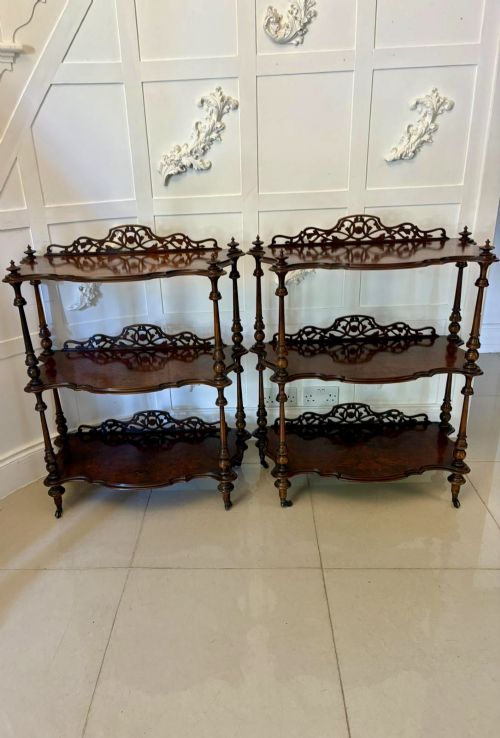
An antique walnut etagere provides tiered shelving for display, combining useful open storage with decorative woodwork.
Antique Walnut Etagere
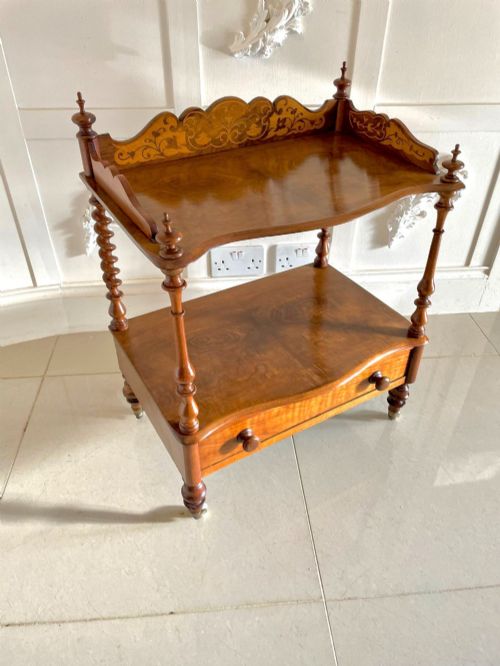
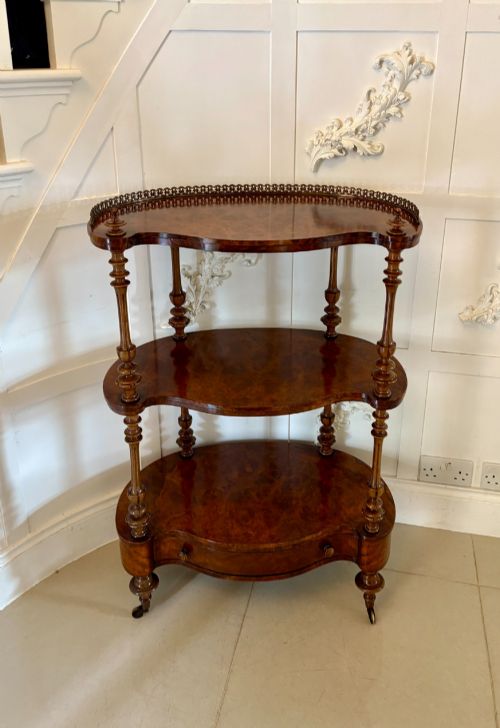
An antique walnut etagere appears primarily in Victorian variations, often described interchangeably as a whatnot, display stand, or multi-tiered open shelf unit. Pieces frequently emerge from nineteenth-century workshops, spanning periods from the mid-nineteenth century onwards.
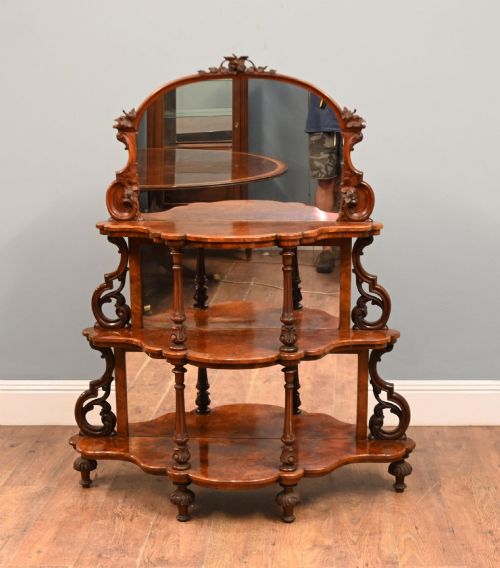
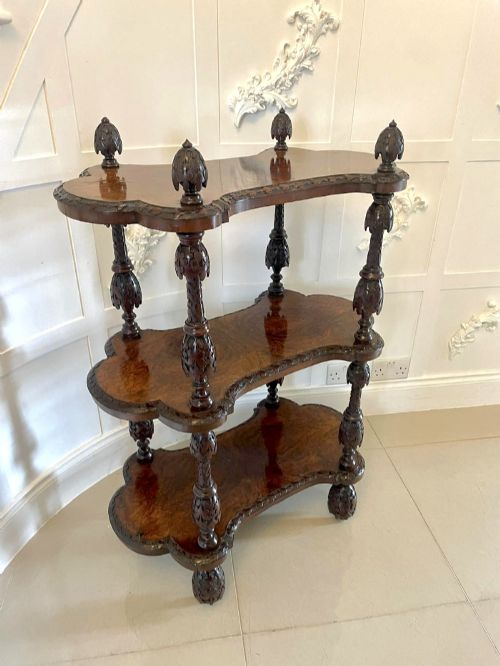
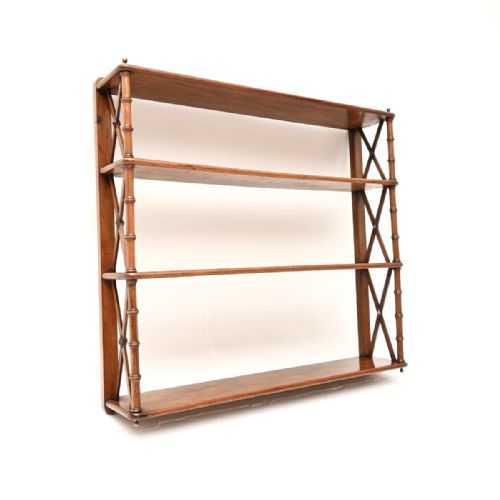
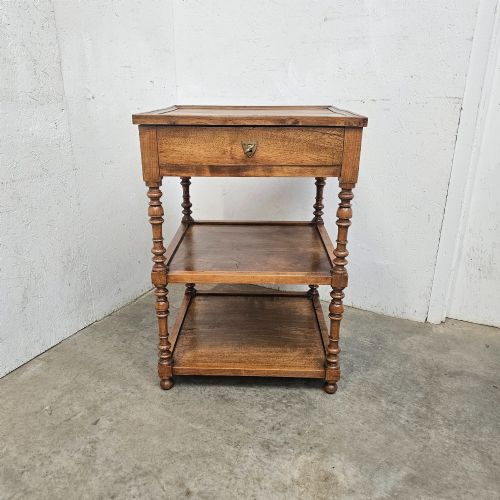
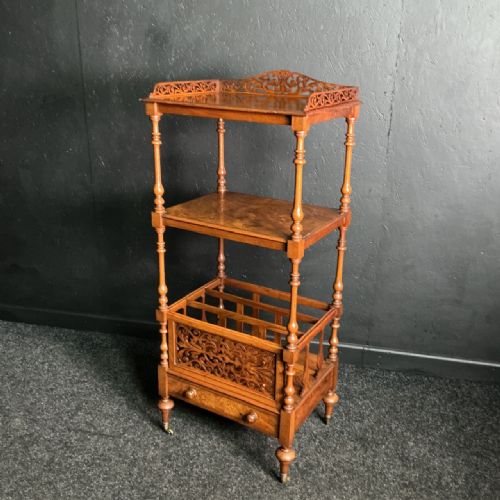
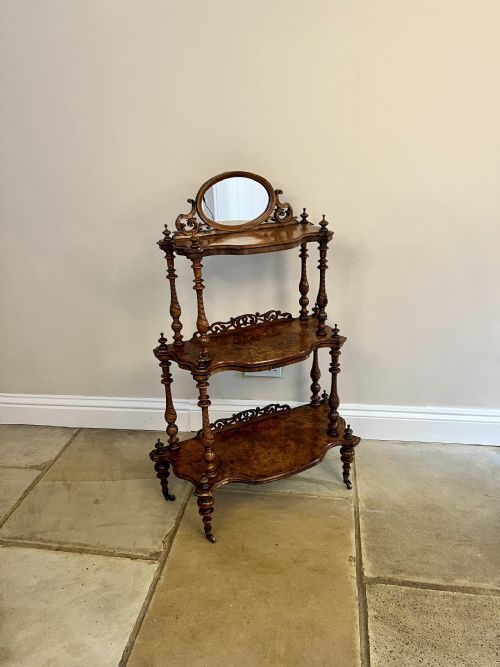
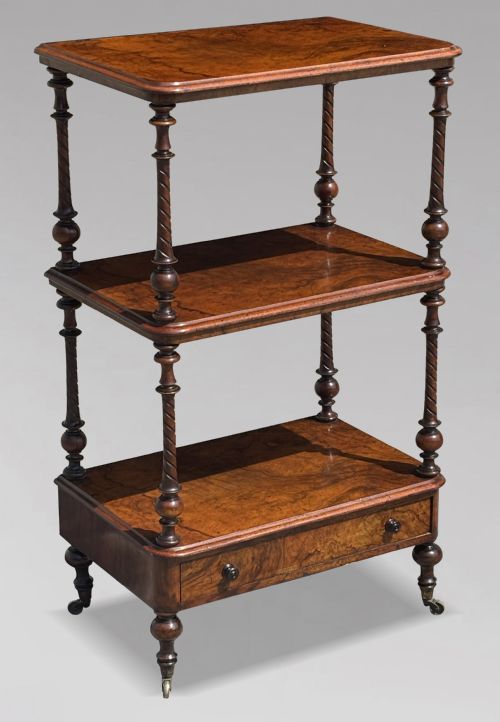
The physical form ranges from freestanding three-tier corner units and serpentine cabinets to wall-mounted shelves and compact lamp tables. Walnut and burr walnut dominate the structural timbers, supplemented by occasional ebonised wood or mixed woods.
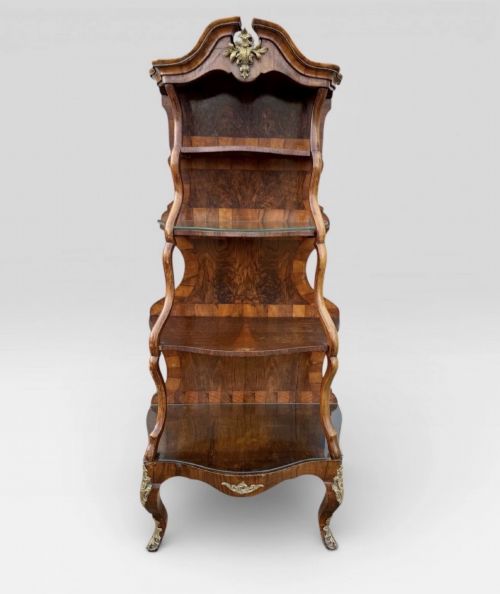
Makers and designers from English and French traditions shaped these tiers, incorporating marquetry inlay, brass mounts, and glazed compartments. Buyers encounter both freestanding exhibition-quality pieces and smaller domestic wall units.
How they were made
Cabinet makers utilised figured walnut and burr walnut veneers applied to solid timber carcases, creating rich grain patterns across the tiers. Marquetry inlay, brass banding, and gilt metal mounts furnished decorative detail along the edges and friezes.
Structural uprights often feature turned columns, cabriole legs, or brass supports that sustain multiple open tiers. Ormolu, glass, and mirror elements integrate into French-influenced designs to enhance reflective light across the shelving.
Antique Walnut Etagere Retail Price Guide 2026
Typical asking prices for walnut etagere among the pieces listed under this phrase on Sellingantiques today, from the lower quarter to the upper quarter. They describe what is for sale here now, not the wider market.
Victorian households once relied on these tiered shelves to keep the endless parade of ornaments out from under the tea service.
What varies in quality
The choice of timber grain defines the visual impact, with deeply figured burr walnut commanding attention over plain walnut boards. Precision in the marquetry inlay and the crispness of turned wooden columns separate standard production from exhibition pieces.
Metal fittings such as ormolu mounts, brass galleries, and castors indicate the original tier of manufacture. Integrated drawers, side cabinets, and sturdy multi-tier architecture reflect more complex carpentry than basic open shelves.
Gabriel Viardot
The Antique Walnut Etagere Glossary
- Etagere
- A tiered piece of furniture designed for displaying small ornaments and books. It relies on open shelves supported by slender columns.
- Whatnot
- A nineteenth-century shelving unit with multiple open tiers used for storing or displaying objects. It appears in both freestanding and corner configurations.
- Burr walnut
- A veneer sliced from walnut tree growths, producing swirling, knotty grain patterns. Cabinet makers prized it for decorative table tops and cabinet fronts.
- Marquetry
- Decorative veneer work forming pictures or geometric patterns using various woods. Craftsmen applied it to tabletops and cabinet doors.
- Ormolu
- Gilded bronze ornamentation applied to furniture mounts and feet. French cabinet makers favoured it on nineteenth-century pieces.
Antique Walnut Etagere: Frequently Asked Questions
What is an antique walnut etagere used for?
These tiered units serve primarily for displaying porcelain, small silver, and decorative objects within a principal reception room. The open shelves allow ornaments to be viewed from multiple angles.
Some variants incorporate small cupboards, drawers, or drop-down writing surfaces for enclosed storage alongside the display tiers.
How do you style an etagere at home?
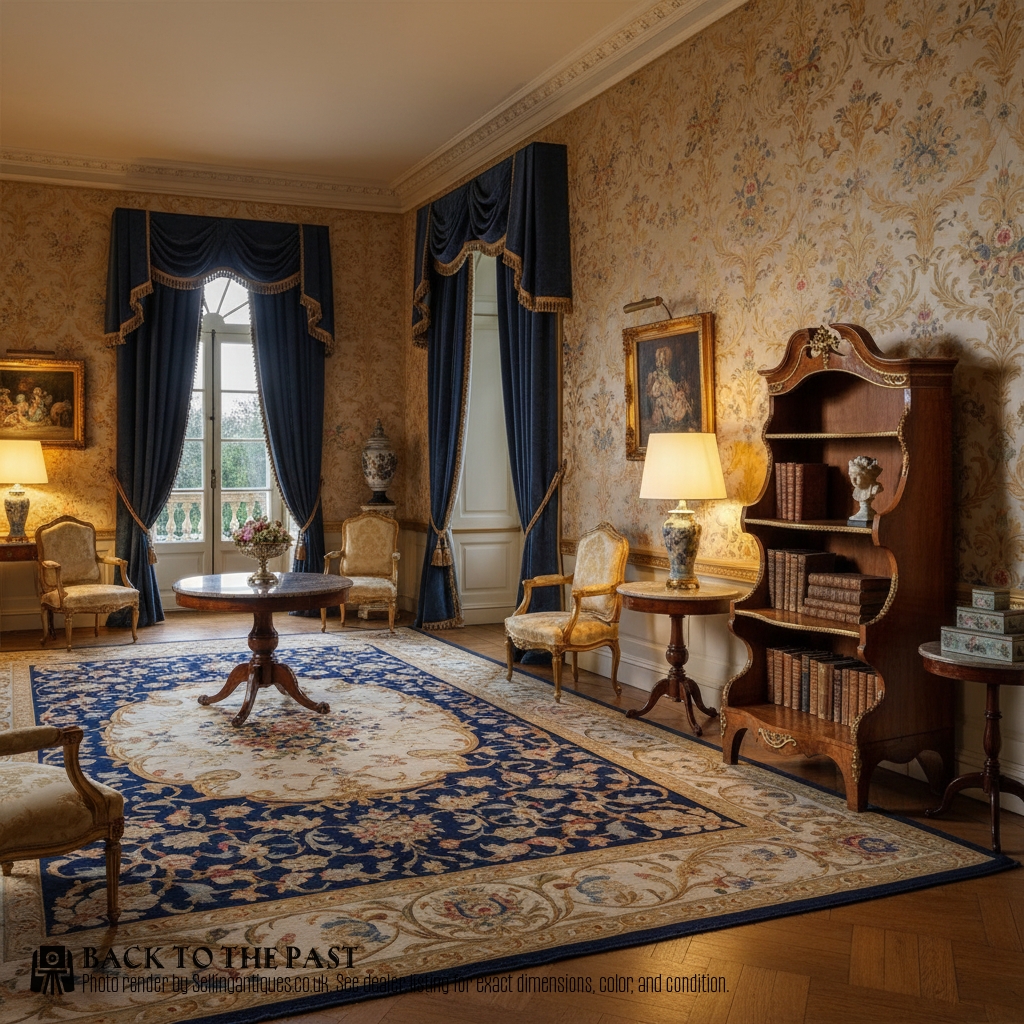
Balance the visual weight by placing heavier ceramic or bronze items on the lower tiers while reserving lighter glass or delicate porcelain for upper shelves. Allow empty space around objects to prevent a cluttered appearance.
Position freestanding models against panelled walls or in corners where the turned columns and grain patterns receive adequate natural light.
How do I date an antique etagere?
Examine the timber selection, construction methods, and secondary woods visible beneath the shelves or inside drawers. Mid-nineteenth-century examples frequently employ solid walnut carcases with hand-cut dovetails and turned supports.
Later Victorian and Edwardian iterations often incorporate machine-cut elements, brass galleries, and French marquetry ormolu mounts typical of the late nineteenth century.
What is the difference between an etagere and a whatnot?
The terms overlap significantly in nineteenth-century British and French furniture commerce, though etagere often implies a French stylistic influence with decorative ormolu mounts. Whatnot serves as the traditional English descriptor for multi-tiered display shelving.
Both forms utilise upright supports and stacked platforms, appearing in square, rectangular, or corner formats across the Victorian period.