






Victorian Walnut Whatnot
These Victorian walnut whatnots are multi-tiered display stands designed to hold books, ornaments and sheet music in formal nineteenth-century interiors.
Victorian Walnut Whatnot
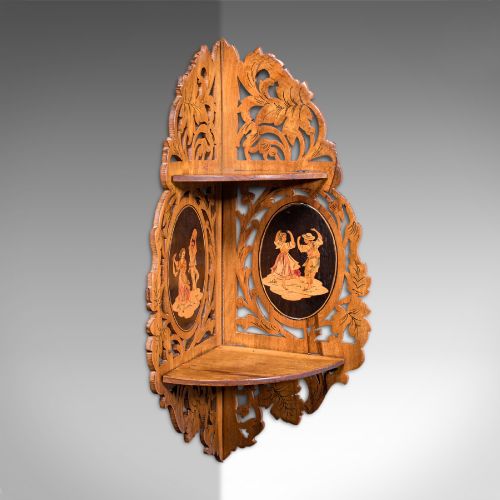
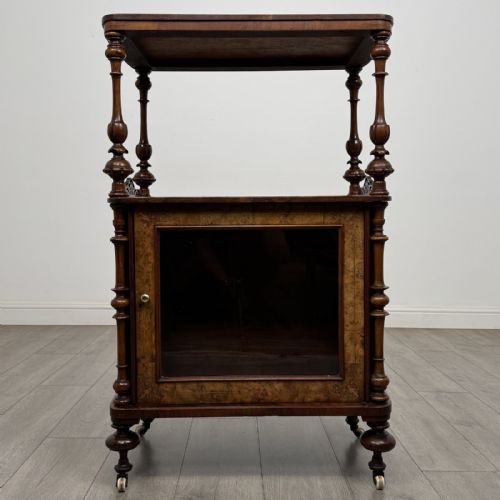
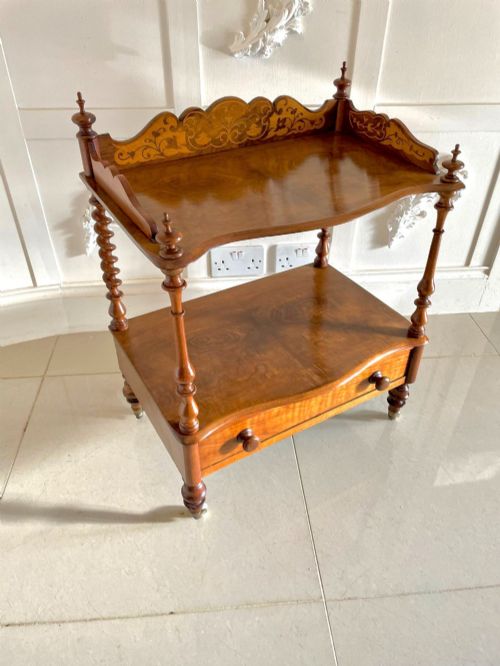
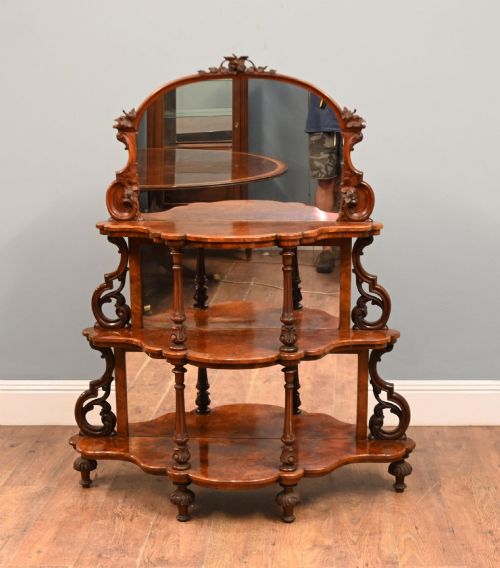
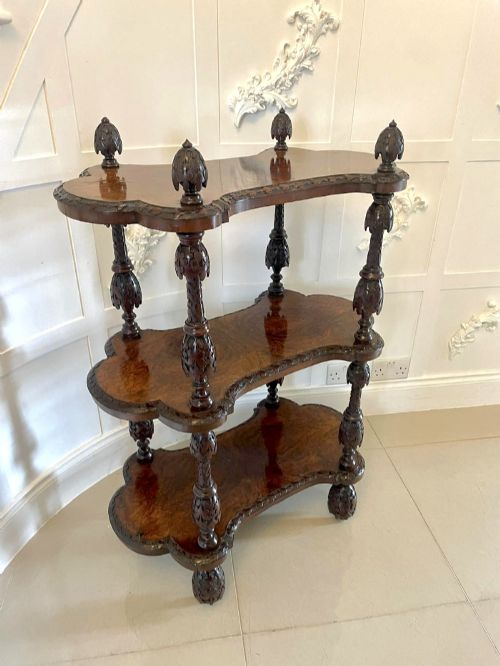
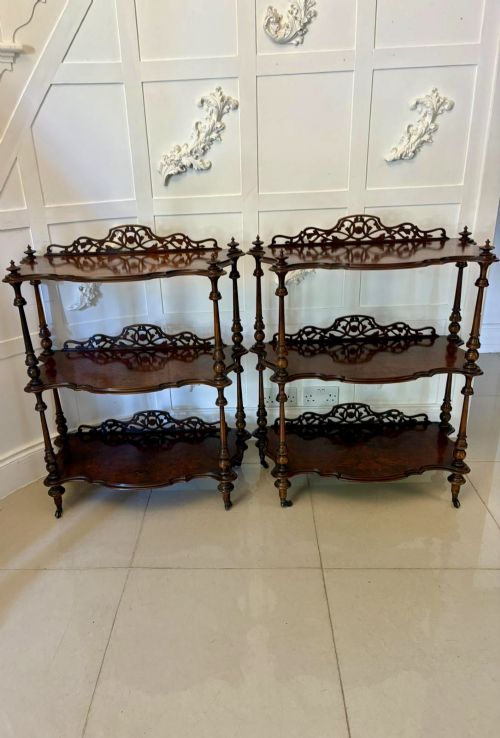
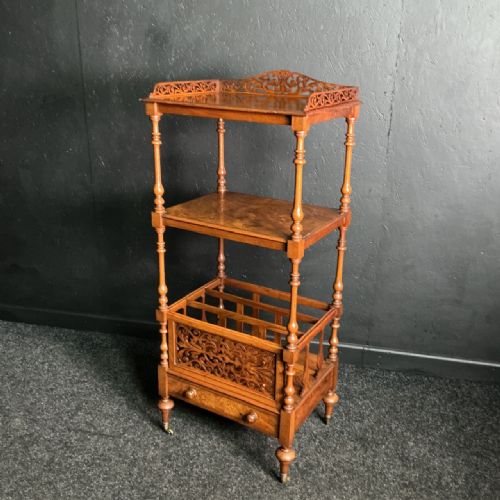
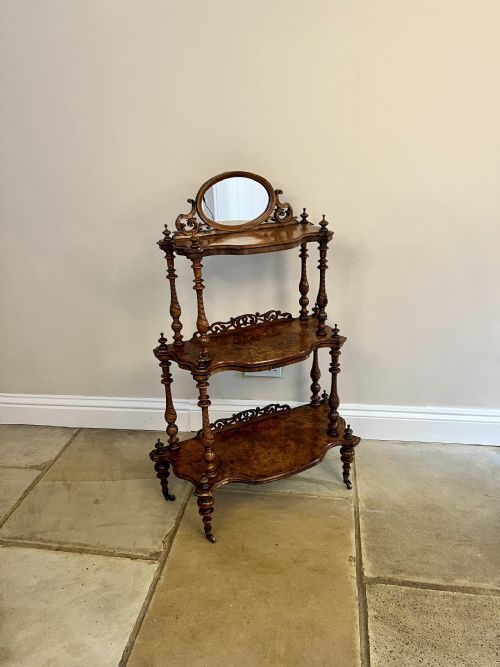
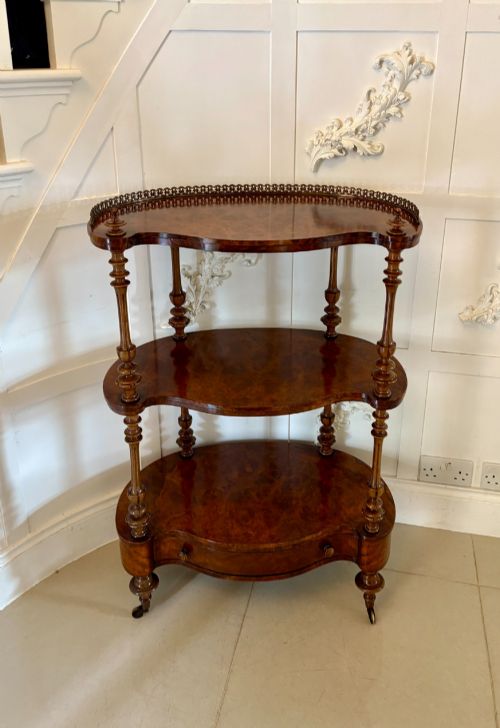
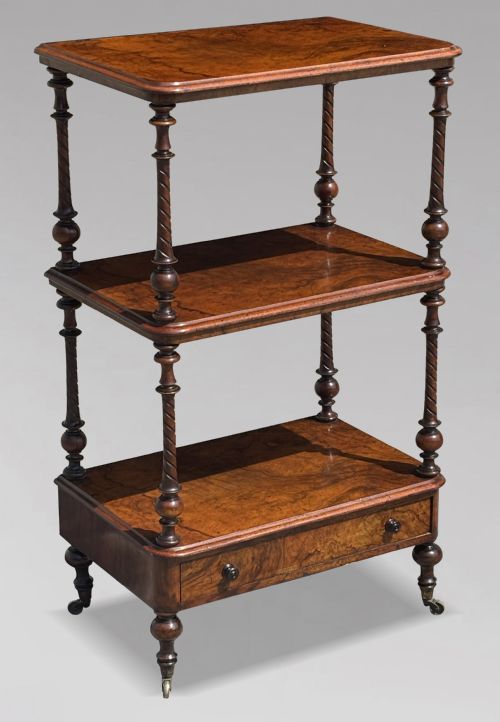
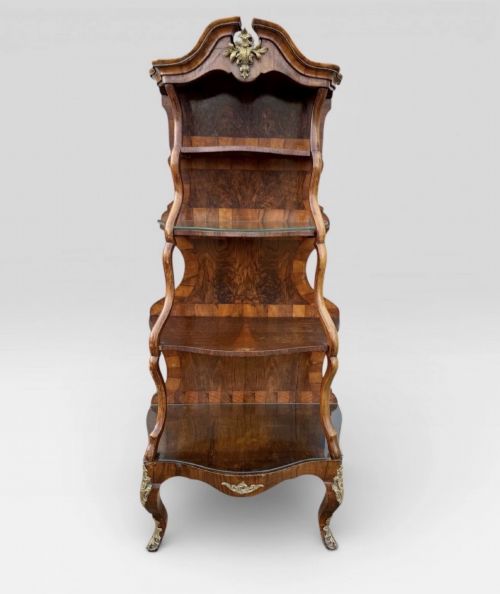
A victorian walnut whatnot provides open shelving across three or four tiers, often combining display space with lower storage functions. The evidence shows frequent examples configured as corner units, freestanding serpentine pieces, or combined Canterbury stands incorporating partitions for music.
Most pieces date from the nineteenth century within the Victorian period, frequently utilising burr walnut veneers. Forms range from simple tiered shelving units to elaborate exhibition pieces with carved details and inlaid decoration.
Materials and construction
Cabinet makers constructed these pieces primarily using walnut and burr walnut timber, applying wood inlay and gilt metal mounts for ornamentation. Some variations incorporate brass, glass, and ebony details alongside turned columns and carved supports.
The architectural framework relies on tiered shelves joined by upright posts or pillars, sometimes supported on small feet or castors. Individual makers employed specific techniques like serpentine shaping and corner fitting to maximise utility in domestic spaces.
Victorian Walnut Whatnot Retail Price Guide 2026
Typical asking prices for victorian walnut whatnot among the pieces listed under this phrase on Sellingantiques today, from the lower quarter to the upper quarter. They describe what is for sale here now, not the wider market.
Several Irish pieces feature carved shamrock details, adding a distinct regional flourish to standard Victorian shelving forms.
Judging quality and design
Quality rests upon the selection of timber grain, particularly the depth and movement found in burr walnut veneers. Superior examples display refined wood inlay, crisp carving, and substantial gilt metal or brass fittings.
Structural ambition separates standard tiered shelving from exhibition-grade pieces with serpentine profiles, integrated drawers, or Canterbury sections. The presence of maker attributions or stamps further distinguishes exceptional items.
Gillows·T Wilson of London
The Victorian Walnut Whatnot Glossary
- Whatnot
- A piece of furniture consisting of open shelves for displaying small objects. These tiered stands gained popularity during the Victorian era for parlours and drawing rooms.
- Étagère
- A French term for a piece of furniture with a series of shelves for ornament. It functions similarly to the English whatnot.
- Canterbury
- A low stand with partitions for holding sheet music or books. Many Victorian examples integrate this feature into the lower section of a whatnot.
- Burr walnut
- Timber taken from a tree growth where the grain has swirled into a pattern of knots. Cabinet makers prized this veneer for its decorative visual impact.
- Serpentine
- A curved line or shape that turns inward and outward in a gentle wave. This profile appears frequently on the front edges of high-quality tabletops and shelves.
Victorian Walnut Whatnot: Frequently Asked Questions
What is a Victorian walnut whatnot used for?
These pieces served as display furniture in nineteenth-century drawing rooms and parlours, holding ceramics, small books, and decorative ornaments. Their open tiers allowed homeowners to exhibit collections within formal entertaining spaces.
Some variants included lower sections configured as Canterburys for storing sheet music near a piano. Others functioned as corner units designed to utilise awkward architectural spaces efficiently.
How do I identify a burr walnut finish?
Burr walnut displays distinctive swirling grain patterns and clusters of tiny knots created by growth deformities in the timber. Cabinet makers sliced this wood into thin veneers to cover structural carcases on quality furniture.
This figured timber yields a mottled, highly decorative surface that catches the light differently than straight-grained walnut. It appears frequently on the primary display shelves of better Victorian pieces.
Are all these whatnots freestanding?
While many examples stand independently in the room, a significant portion of the recorded pieces are specifically shaped as corner units. Corner whatnots utilise right-angled shelves designed to fit snugly into room junctions.
Freestanding versions often feature finished backs and decorative serpentine shaping on all sides. This allows them to sit away from walls as central room dividers or focal points.