




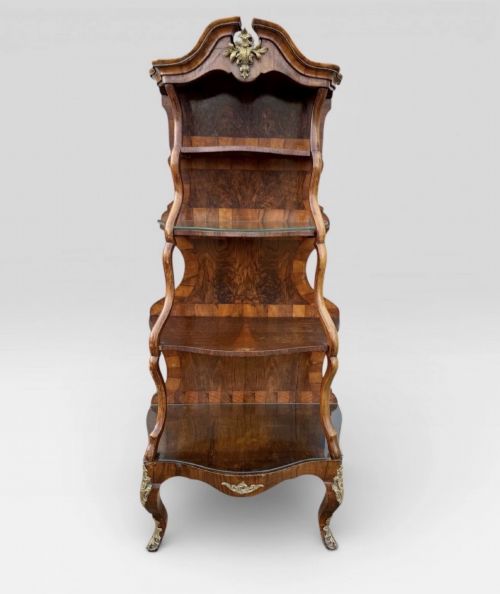
Victorian Corner Shelf
A victorian corner shelf makes use of dead space while holding books, ceramics or small display objects.
Victorian Corner Shelf
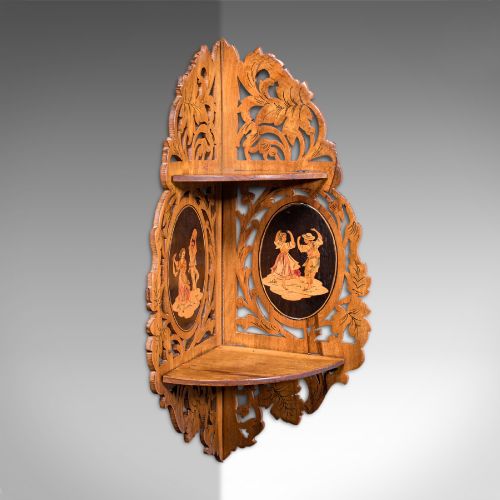
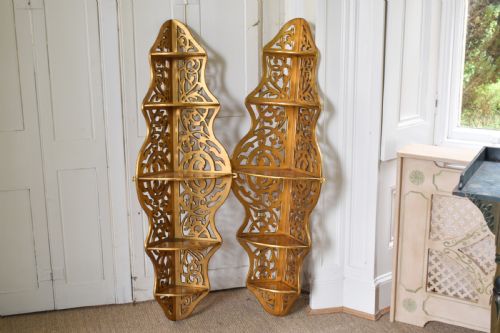
When you search for a victorian corner shelf, you find multi-tiered wooden furniture designed to fit into room corners. These pieces appear as hanging wall shelves, open tiered stands, and enclosed corner cabinets from the nineteenth century. Walnut, mahogany and rosewood form the main structural woods for these space-saving designs.
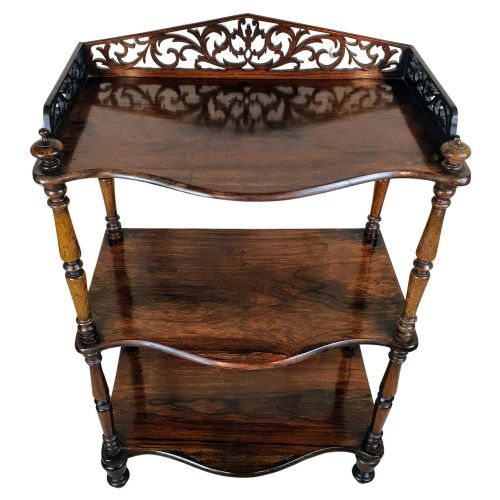
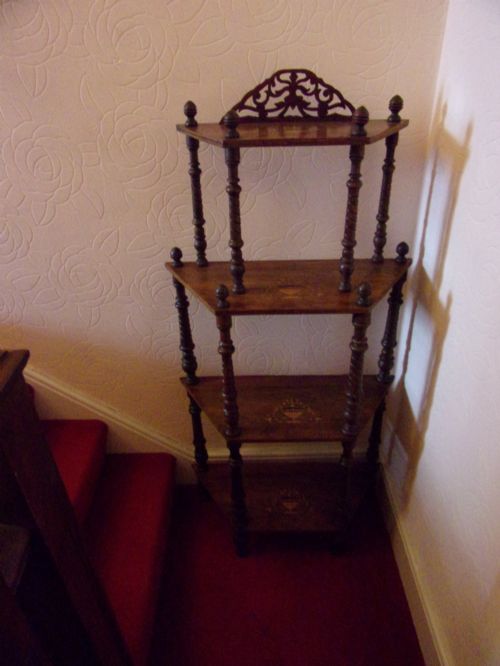
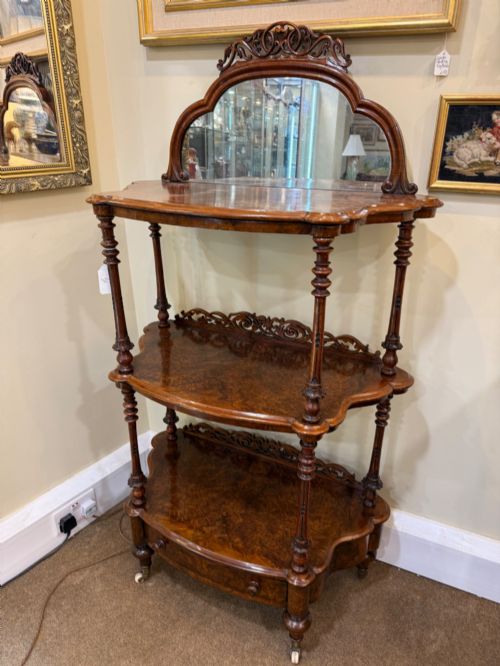
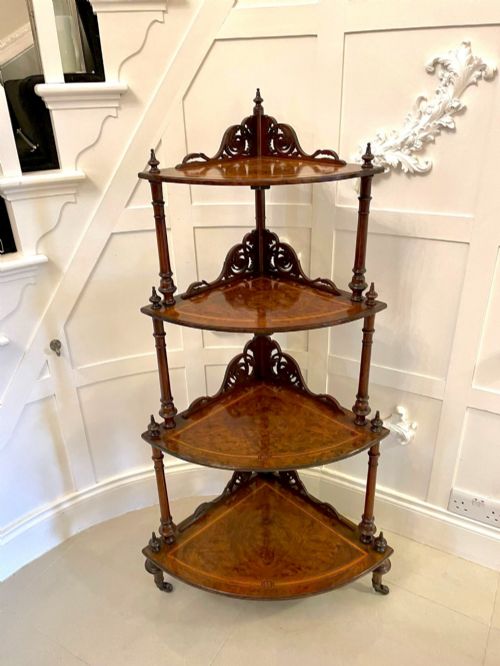
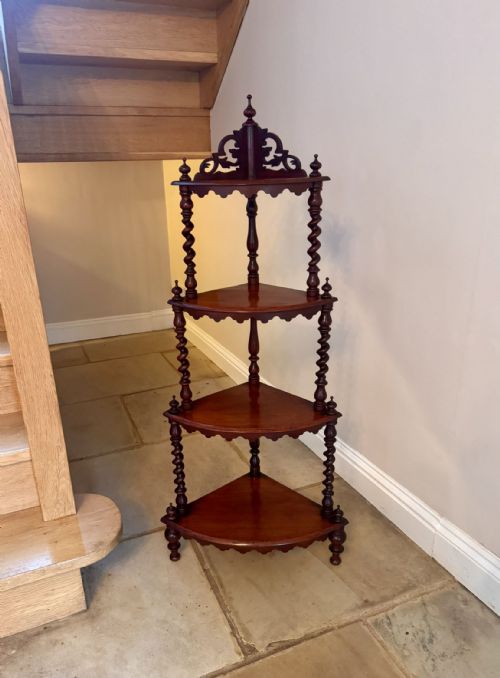
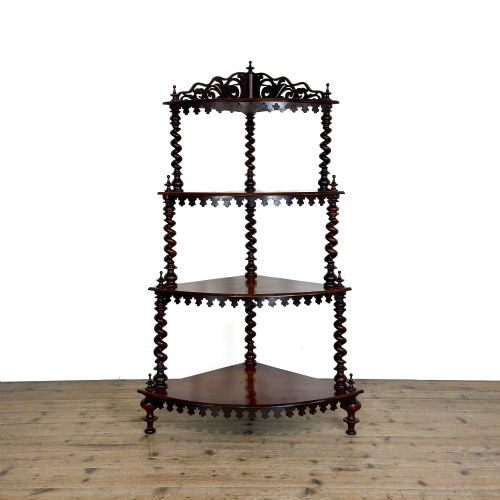
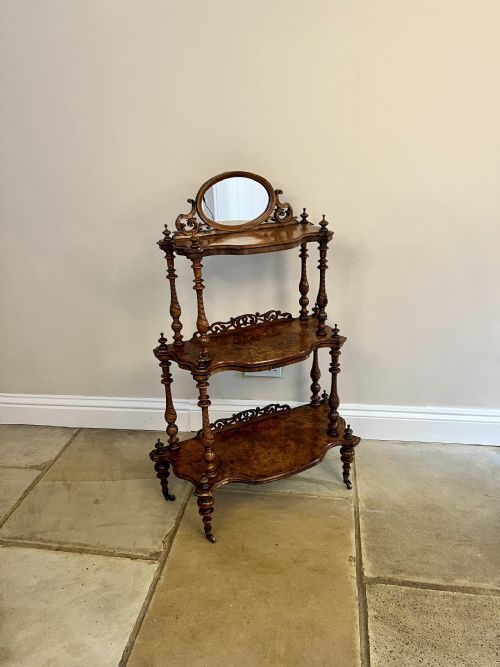
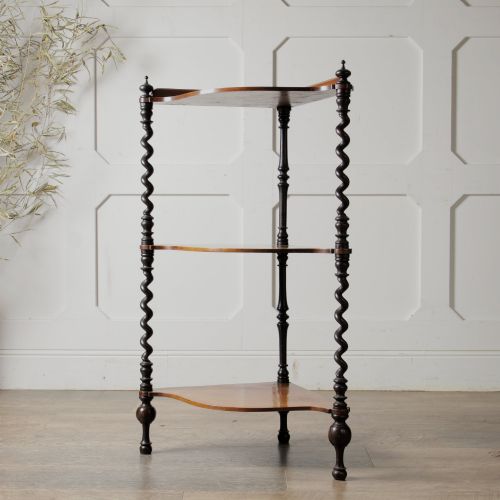
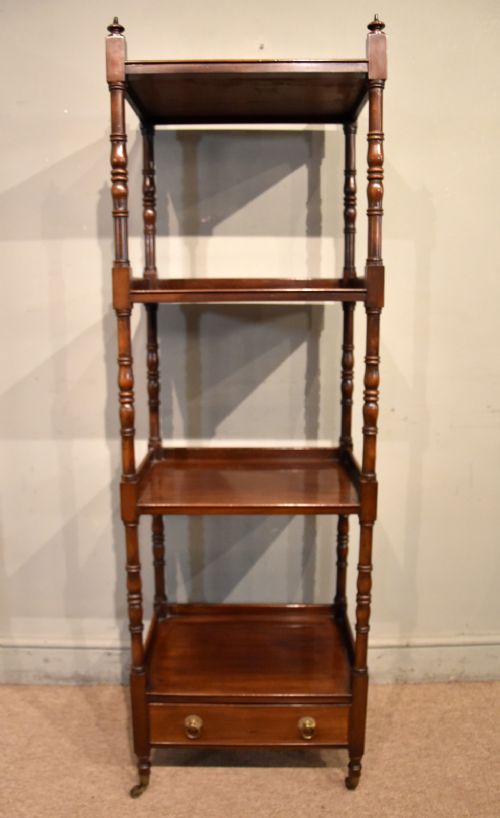
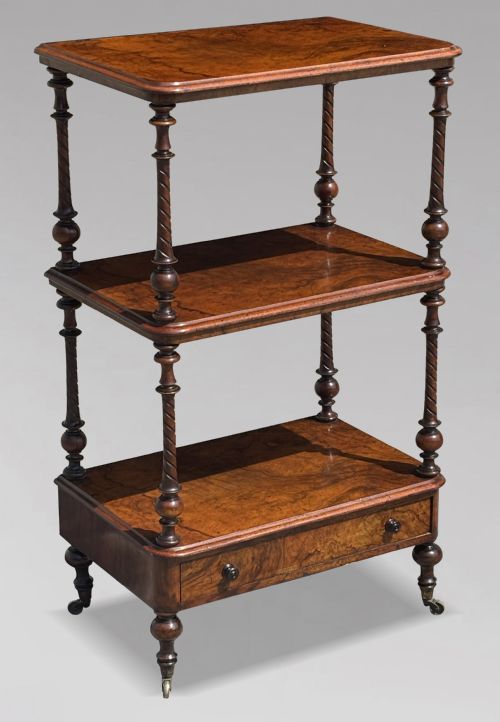
The version you meet most often on this page is the open multi-tiered whatnot or corner shelf in walnut or mahogany. Many examples feature three or four tiers supported by turned columns, barley twists or upright panels. Some items incorporate glass doors, brass hardware or delicate inlay work.
Materials and construction
Cabinet makers utilised dense hardwoods like mahogany, rosewood and burr walnut, often selecting figured veneers for visible surfaces. Structural joints relied on traditional cabinet-making methods, while turned supports utilised lathe work to create barley twist columns or upright spindles.
Decorative elements included intricate marquetry inlay, gilt metal mounts, brass details and carved wooden motifs. Secondary woods provided structural framing behind polished exterior veneers and solid shelves.
Victorian Corner Shelf Retail Price Guide 2026
Typical asking prices for victorian corner shelf among the pieces listed under this phrase on Sellingantiques today, from the lower quarter to the upper quarter. They describe what is for sale here now, not the wider market.
Listings feature pieces spanning from the early nineteenth century through to nineteen hundred, encompassing walnut, mahogany, rosewood and bamboo materials.
Judging the quality
The distinction between ordinary and superior pieces rests on the choice of timber and the precision of the cabinet work. Highly figured burr walnut veneers, complex serpentine fronts and detailed marquetry inlay indicate a higher grade of manufacture. Simpler items rely on plain mahogany or pine timbers with straightforward turned supports.
Execution of decorative details such as carved mouldings, turned spindle galleries and brass fittings separates standard production furniture from exhibition-standard pieces. Structural stability and intact joints also determine the enduring integrity of multi-tiered shelving units.
Edwards & Roberts·John Stow Ltd of Bradford
The Victorian Corner Shelf Glossary
- Whatnot
- An open multi-tiered piece of furniture designed for displaying ornaments, books or small objects. These tiered stands appear in various woods throughout the nineteenth century.
- Burr walnut
- A highly prized wood veneer showing knotted growth patterns that create swirling decorative figures. Cabinet makers utilised this timber on prominent surfaces of fine Victorian furniture.
- Barley twist
- A spiral turning technique applied to wooden columns and upright supports. This decorative form appears frequently on nineteenth-century stands and shelf supports.
- Marquetry
- Fitted pieces of wood veneer assembled to form decorative patterns or pictures on a wooden surface. Sorrento workshops specialised in inlaid olive wood items.
- Aesthetic movement
- A late nineteenth-century design style emphasising simplicity, Japanese artistic influences and ebonised or bamboo construction. Pieces from this movement often incorporate asymmetrical shelving arrangements.
Victorian Corner Shelf: Frequently Asked Questions
How do I hang a wall-mounted corner shelf safely?
Hanging shelves require secure fixings into wall studs or solid masonry to support the weight of the timber and displayed objects.
Check that the original hanging brackets or mounting points remain sound before installation.
What is the difference between a whatnot and a corner shelf?
A whatnot is typically a freestanding multi-tiered display stand placed against a flat wall or specifically built for room angles. A corner shelf is engineered expressly to fit the ninety-degree junction of two walls.
Both forms served to display decorative ornaments in nineteenth-century interiors.
How should I clean a burr walnut shelf?
Dust surfaces regularly with a soft, dry cloth to prevent dirt accumulation on polished veneers. Avoid abrasive cleaners or excess moisture which can damage nineteenth-century French polish.
Apply a quality beeswax occasionally to nourish the timber and maintain the lustre.
Can these shelves support heavy books?
Most antique shelving units were constructed to hold decorative ceramics, small trinkets or light volumes rather than heavy reference books. Freestanding floor units offer more stability for weight than hanging wall models.
Examine the vertical supports and shelf joints to gauge the structural capacity of each individual piece.