

Antique Display Shelf
When you search for an antique display shelf, you are looking at practical furniture designed to hold books, ceramics and decorative objects across centuries of British and continental design.
Antique Display Shelf
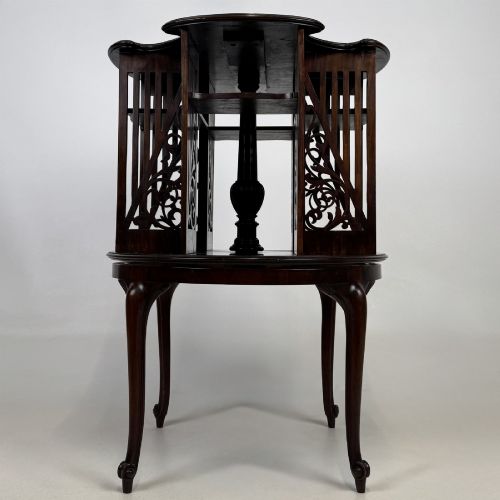
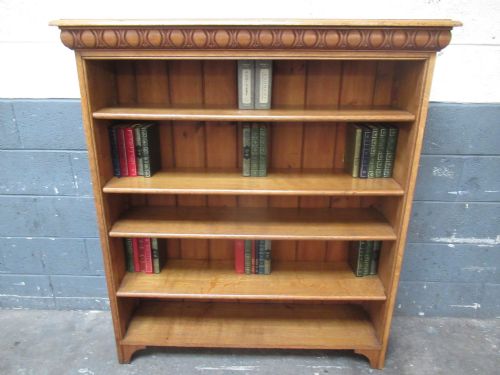
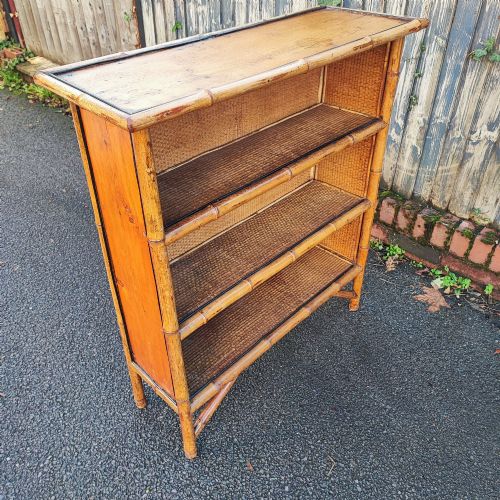
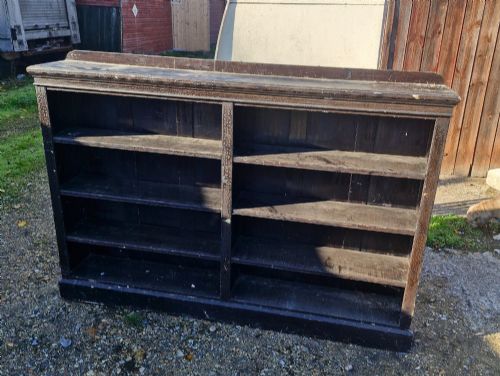
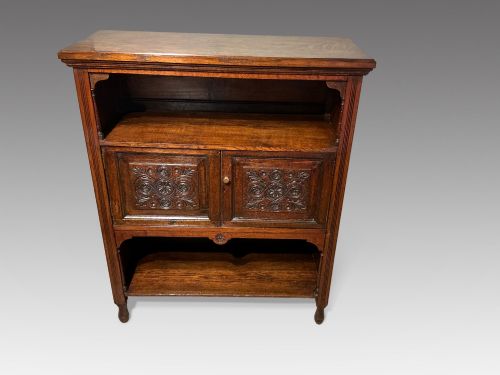
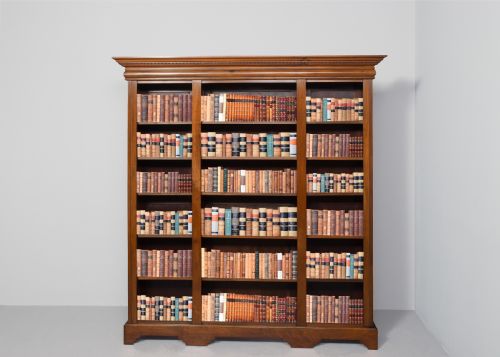
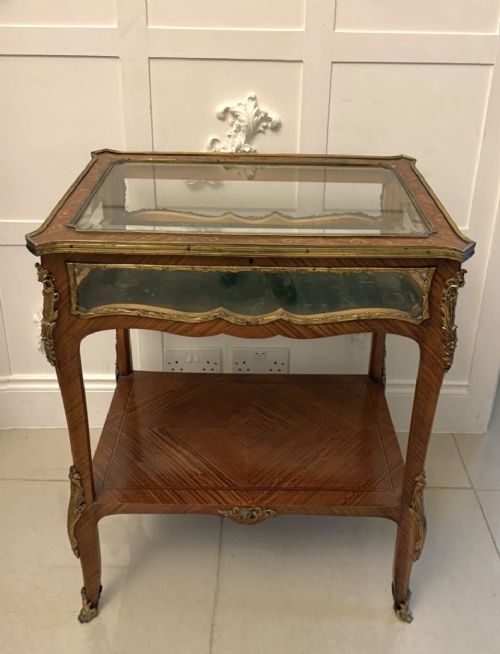
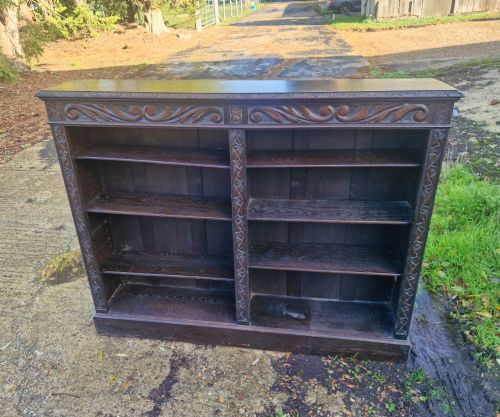
When you search for an antique display shelf, you are looking at open bookcases, hanging wall brackets, corner whatnots and tiered stands designed to hold books, ceramics and decorative objects. These pieces span from the Georgian and Regency periods through the Victorian, Edwardian and early twentieth-century eras, reflecting shifts in domestic interior design.
The most common versions you will meet on this page are mahogany, oak and walnut open bookcases or multi-tiered whatnots originating from the nineteenth and early twentieth centuries. Many feature adjustable shelves, mirrored backs or carved details, varying from rustic country pine to formal neoclassical styles.
Makers and workshops across Britain and France produced these units for varied domestic spaces, ranging from slim wall-hanging shelves to large freestanding bookcases and corner cabinets. Their forms bridge purely utilitarian book storage and decorative display.
How they were made
Cabinetmakers constructed these pieces primarily using solid hardwoods and veneers such as mahogany, oak, walnut and burr walnut, alongside pine and rosewood. Timber selection dictated both the structural integrity of the shelving and the visual grain pattern displayed on the front-facing surfaces.
Joinery methods involved traditional techniques suited to load-bearing tiers and wall-mounted brackets, occasionally supplemented by brass fittings, ormolu mounts, gilt gesso and carved woodwork. Surfaces were finished to highlight the natural qualities of the wood, from polished mahogany to painted or distressed pine.
Antique Display Shelf Retail Price Guide 2026
Typical asking prices for display shelf among the pieces listed under this phrase on Sellingantiques today, from the lower quarter to the upper quarter. They describe what is for sale here now, not the wider market.
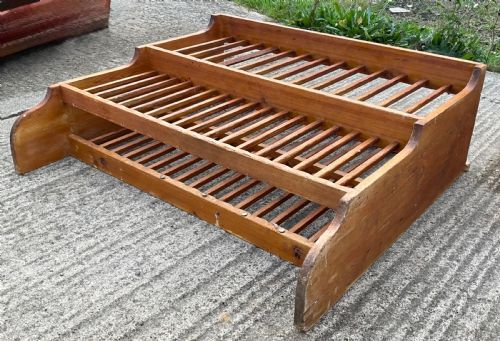
A nineteenth-century pine hanging display shelf includes a subtle butterfly detail carved into the original woodwork.
What varies in quality
The standard of a piece is determined by the selection of timber figures, such as burr walnut or flame mahogany veneers, and the crispness of hand-carved decorative elements like barley twists or neoclassical motifs. Finer examples display balanced proportions, superior wood selection and thoughtful joinery that accommodates functional adjustments like movable shelving.
Construction details also separate workshop standards, visible in the integration of auxiliary materials like brass hardware, mirrored glass panels or ormolu mounts. Pieces executed by named makers or specialist cabinet-makers generally exhibit a higher degree of finish refinement compared to utilitarian provincial items.
Trevor Page & Co·Gabriel Viardot·Dubois of Lyon
The Antique Display Shelf Glossary
- Whatnot
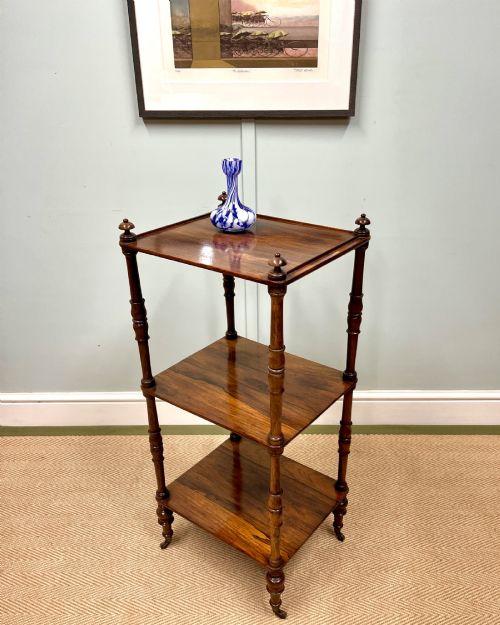
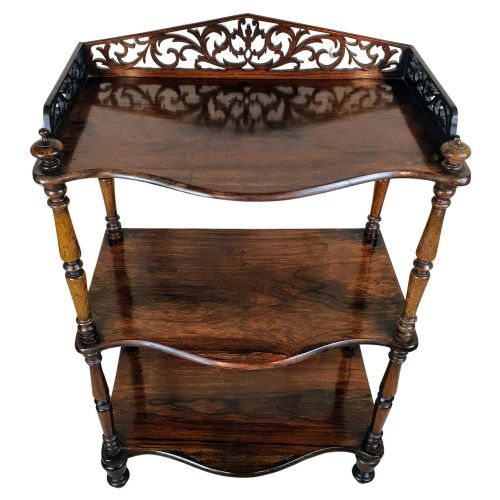
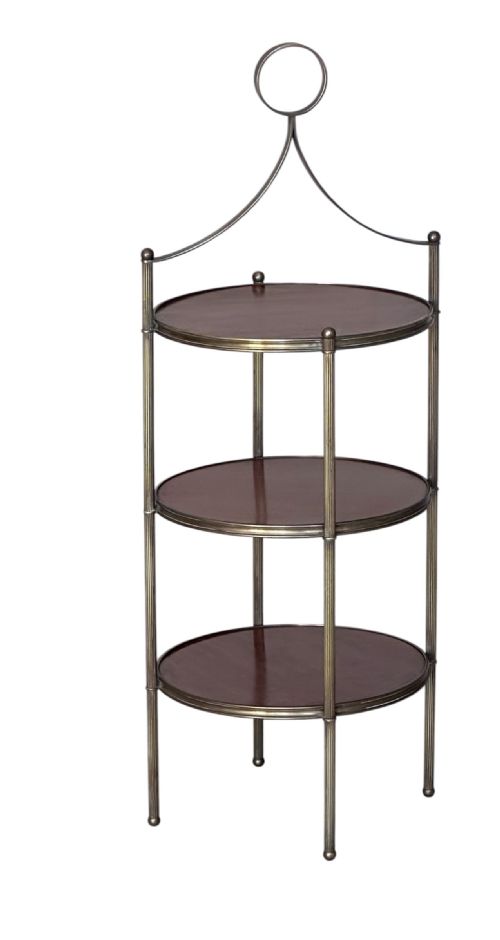
- A multi-tiered piece of freestanding furniture designed for displaying ornaments, books or small objects. These typically feature three or more open shelves supported by slender columns or turned uprights.
- Open Bookcase
- A shelving unit without doors, allowing direct access to books and decorative items stored within. They frequently appear in mahogany, oak or walnut across Victorian and Edwardian listings.
- Wall Bracket
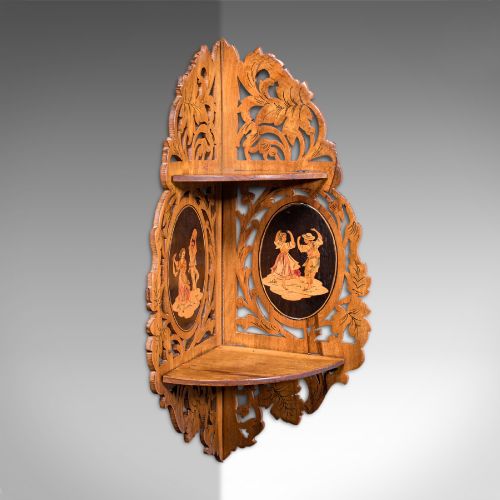
- A decorative projecting support or small shelf attached directly to a wall. They are often carved from wood and used to showcase single display items.
- Credenza
- A sideboard or cabinet piece originating from furniture design traditions. In the evidence, these incorporate fine timber and decorative mounts suitable for formal rooms.
- Barley Twist
- A carved wooden column or support shaped in a spiral twist resembling barley sugar. This decorative turning technique is common on Victorian stands and whatnots.
Antique Display Shelf: Frequently Asked Questions
What is an antique whatnot shelf?
A whatnot is a multi-tiered freestanding display stand with three or more open shelves. They were popular in the nineteenth century for exhibiting decorative objects and ornaments.
These pieces often feature turned columns, such as barley twist supports, and occasionally include small drawers at the base for storage.
How do I date an open bookcase?
Dating relies on timber choices, construction methods and stylistic markers like Georgian proportions or Edwardian inlay work. Earlier pieces often use solid mahogany or oak, while later Victorian and Edwardian examples may feature adjustable shelving systems and specific veneer selections.
Examining the backboards, fixings and overall wear helps distinguish nineteenth-century production from early twentieth-century workshop output.
Were wall shelves meant for books?
Wall-hanging shelves served multiple purposes depending on their depth and construction. Shallower brackets and mirrored ledges were built for decorative ceramics, plates and ornaments.
Deeper hanging shelves accommodated smaller volumes and practical household storage in studies, hallways or kitchens.
What woods were commonly used?
Mahogany, oak and walnut dominate the structural timbers across these listings. Cabinetmakers utilised figured variations like burr walnut and rosewood for decorative impact on visible surfaces.
Pine and fruitwoods appear frequently in utilitarian items, kitchen plate racks and country furniture pieces.