



Dark Wood Whatnot
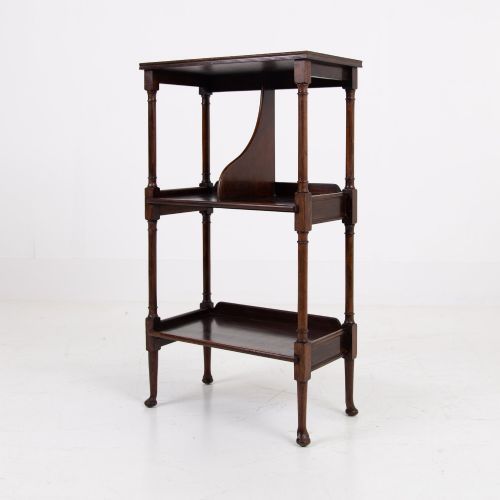
A dark wood whatnot is a tiered open shelf unit for display or storage, bringing distinct period character and practical vertical surface to a room.
Dark Wood Whatnot
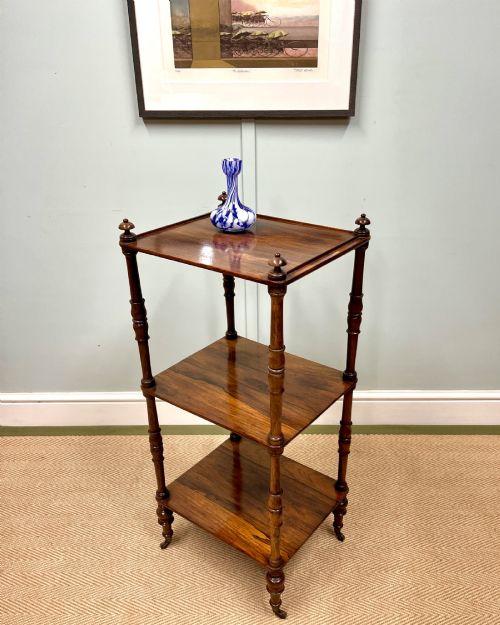
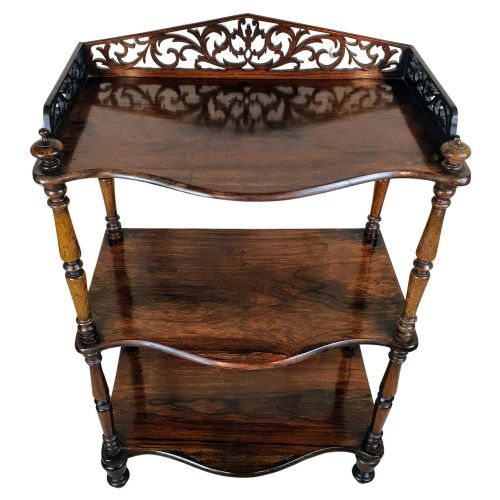
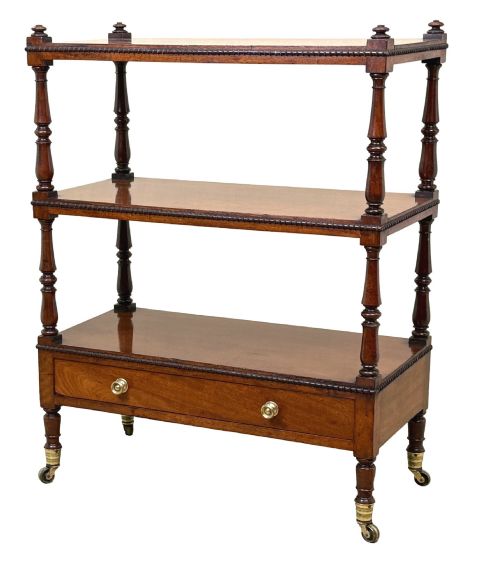
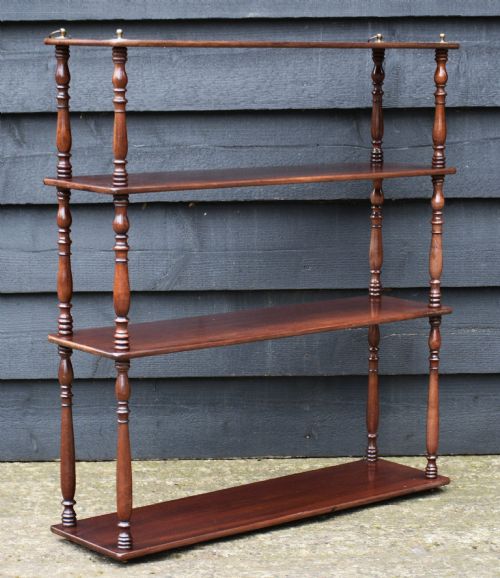
A dark wood whatnot is essentially a multi-tiered set of open shelves designed to hold books, plants, china or display items without dominating a room's floor space. When searching for this phrase, a buyer encounters pieces primarily from the nineteenth century, spanning Georgian, Regency, William IV and Victorian eras.
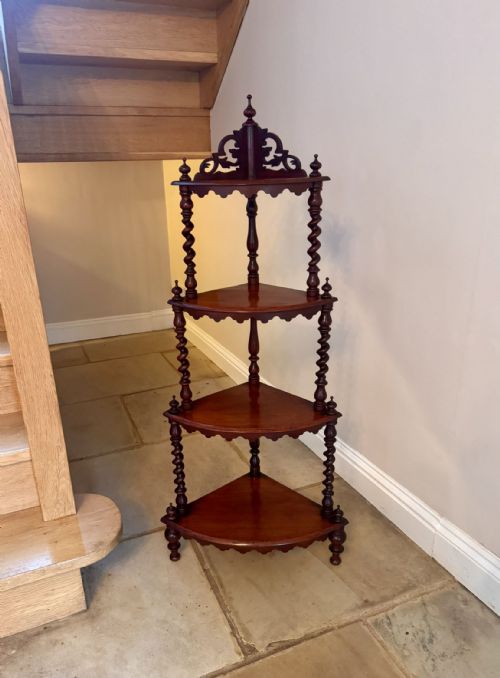
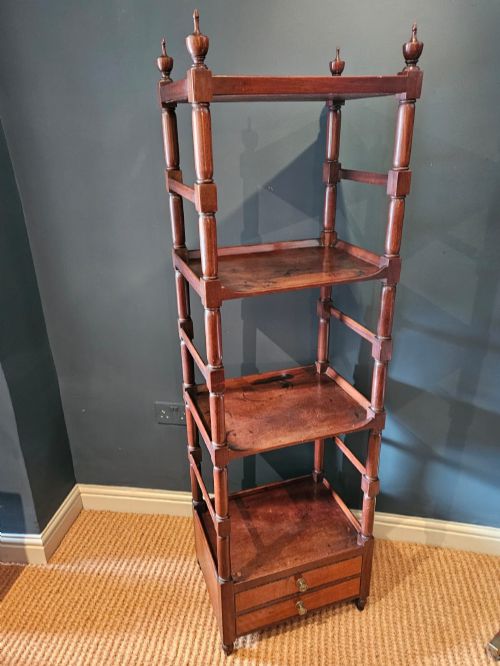
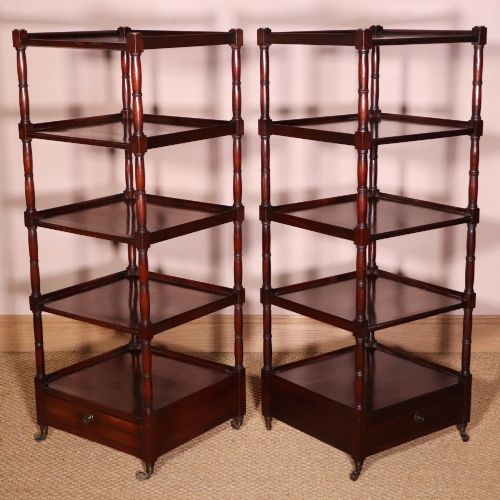
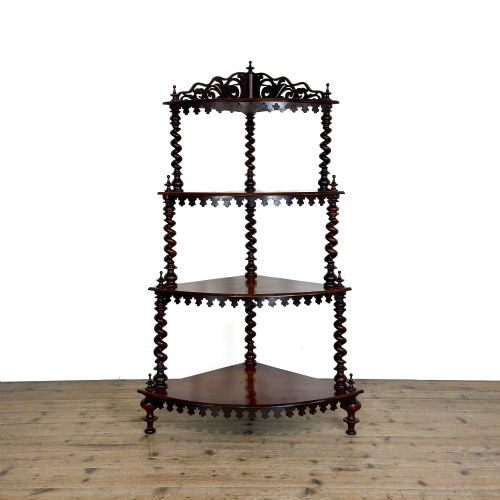
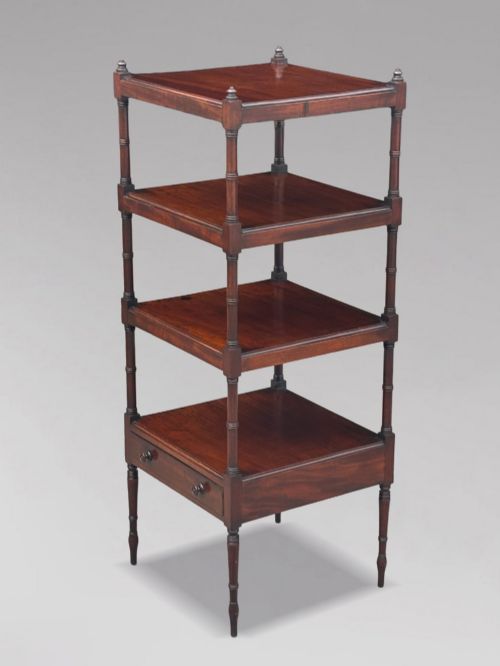
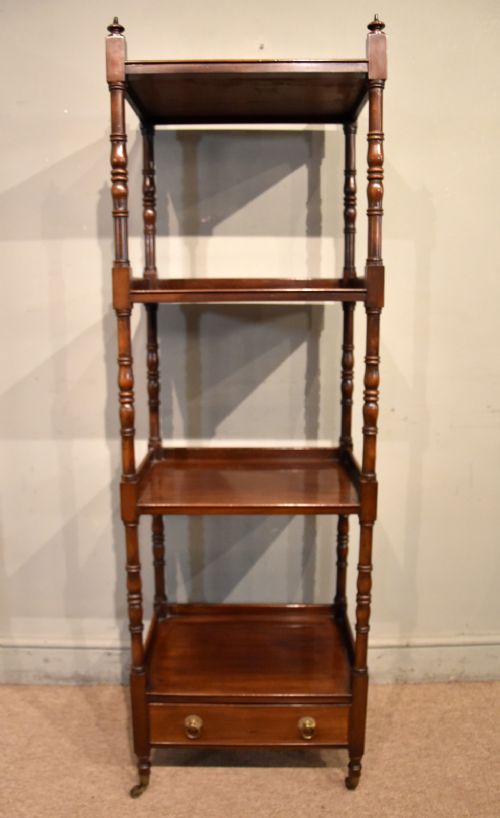
The most common formats found in these listings are freestanding four-tier structures and corner shelves, often taking the form of etagères or book-stands. Materials such as mahogany and rosewood dominate, frequently shaped into slender uprights supporting graduated shelves.
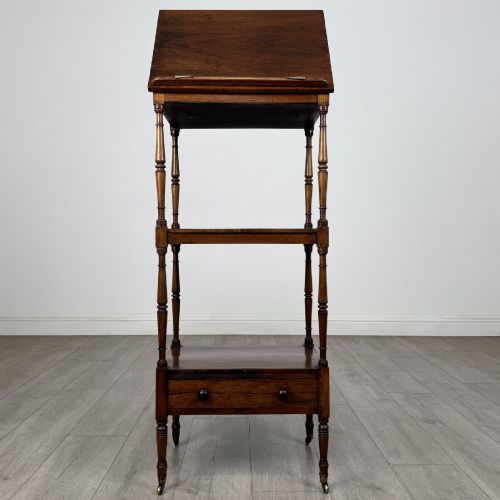
Makers and craftsmen of these periods utilised dense timbers to create versatile stands that served as music stands, plant holders or general display furniture. The resulting forms range from modest three-tier tables to tall, six-tier stands with barley twist columns or brass details.
Materials and construction
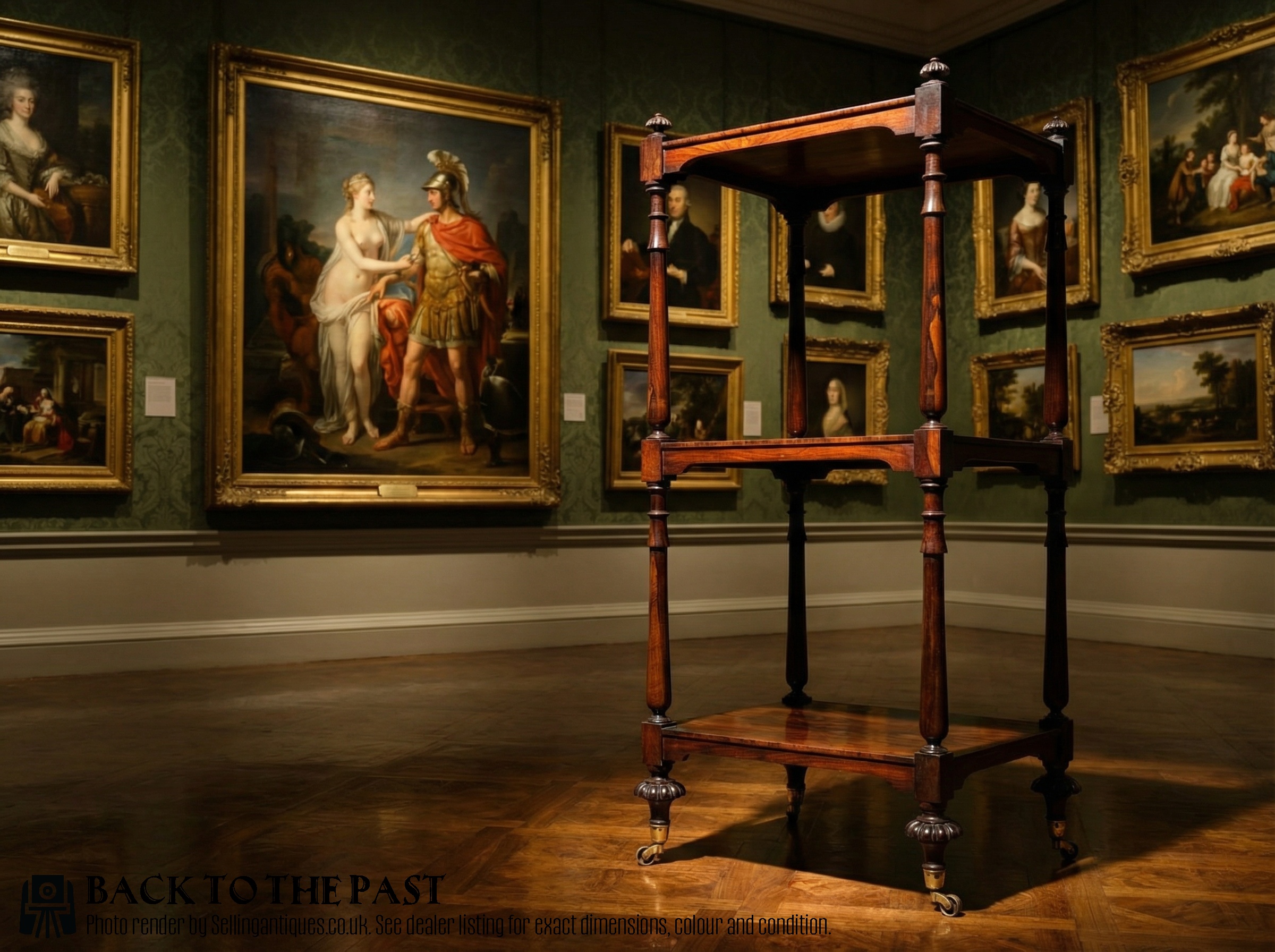
Makers constructed these pieces using dense tropical hardwoods, primarily mahogany, rosewood and burr walnut, valued for their rich natural grain and deep colour. These timbers provided the structural strength required for slender vertical supports and multiple stacked shelves.
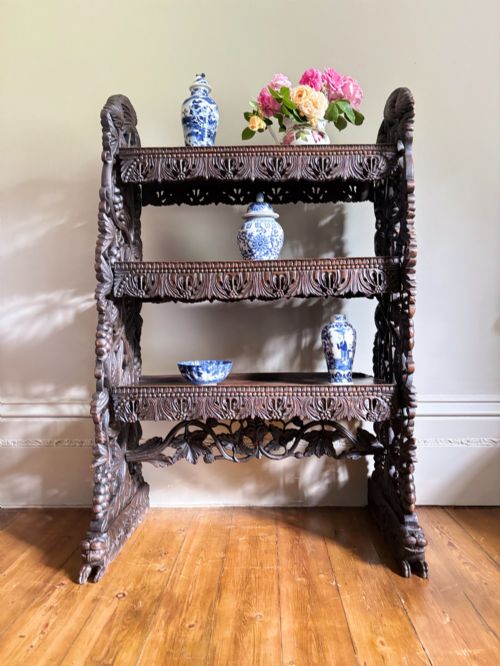
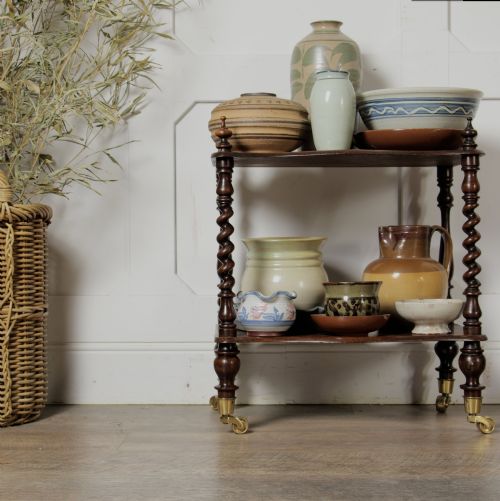
Joinery techniques combined traditional framing with turned uprights, sometimes incorporating brass castors, glass elements or carved details like barley twist columns. Finer examples utilised highly figured veneers or specialised timbers such as padauk and teak.
Dark Wood Whatnot Retail Price Guide 2026
Typical asking prices for dark wood whatnot among the pieces listed under this phrase on Sellingantiques today, from the lower quarter to the upper quarter. They describe what is for sale here now, not the wider market.
Listings for dark wood whatnot pieces feature items constructed from mahogany, rosewood, walnut, burr walnut, teak, padauk, and brass.
What separates the tiers of quality
The distinction between standard examples and top-tier pieces lies in the selection of timber and the sophistication of the joinery. Superior items feature highly figured rosewood or burr walnut veneers, intricate turnings, and well-balanced proportions across multiple tiers.
Quality also shows in the integration of auxiliary functions, such as built-in drawers, music compartments, or matched pairs designed for display. Simpler utilitarian pieces rely on straightforward mahogany construction without decorative carving or specialised hardware.
The Dark Wood Whatnot Glossary
- Whatnot
- A piece of furniture consisting of a set of open shelves for displaying small objects or books. They first appeared in the late eighteenth century and remained popular throughout the nineteenth century.
- Etagere
- A French term for a piece of furniture with a series of open shelves for displaying ornaments. These often overlap in function and form with traditional British whatnots.
- Barley twist
- A type of column or furniture leg carved in a spiral shape resembling a twist of barley. This decorative turning is frequently seen on Victorian stands.
- Padauk
- A heavy, durable tropical hardwood with a reddish-brown hue used in certain overseas pieces. It provides exceptional stability for tall shelving units.
- Canterbury
- A low stand with partitioned sections for sheet music or books, occasionally combined with topmost whatnot shelves. This form provides dual storage and display utility.
Dark Wood Whatnot: Frequently Asked Questions
What is a dark wood whatnot used for?
These units served historically for holding books, displaying decorative ceramics, or supporting plants and music folios.
Today, they function well in living rooms or hallways to display collections while maintaining an open, airy feel.
How do I date a whatnot?
Dating relies on identifying period styles, timber choices, and construction methods such as turnings and fixings.
Georgian and Regency pieces tend to feature lighter mahogany or rosewood frames, while heavy burr walnut and elaborate barley twists point toward the Victorian era.
Are corner whatnots stable?
Corner units were specifically engineered to fit snugly into room angles, naturally utilising wall support to enhance stability.
Their triangular footprint makes them secure options for displaying heavier items like books or small sculptures.
What woods are typical for these shelves?
Mahogany and rosewood appear most frequently across nineteenth-century examples, offering deep natural tones and robust grain structures.
More elaborate pieces occasionally incorporate burr walnut, teak, or padauk for enhanced visual grain patterns.