



Victorian Corner Etagere
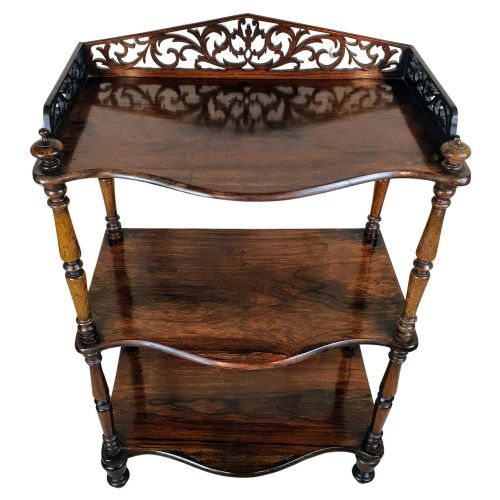
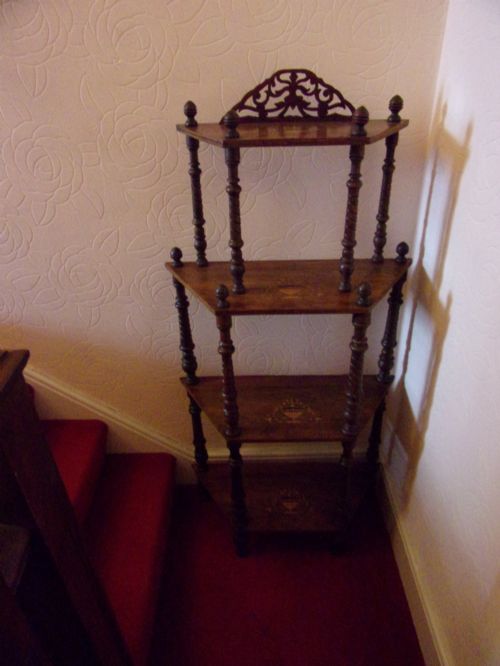
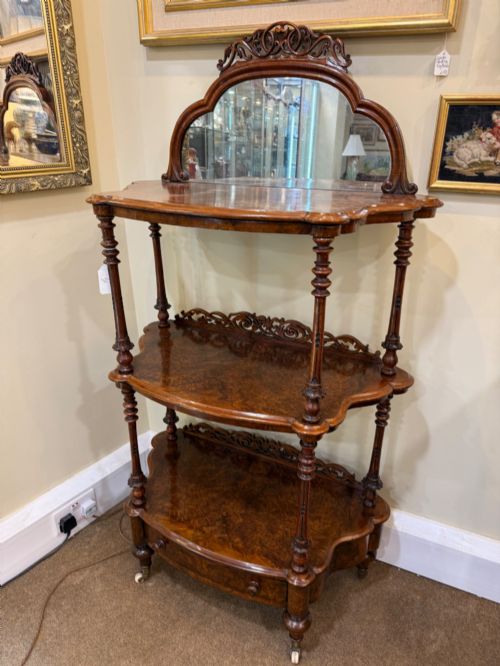
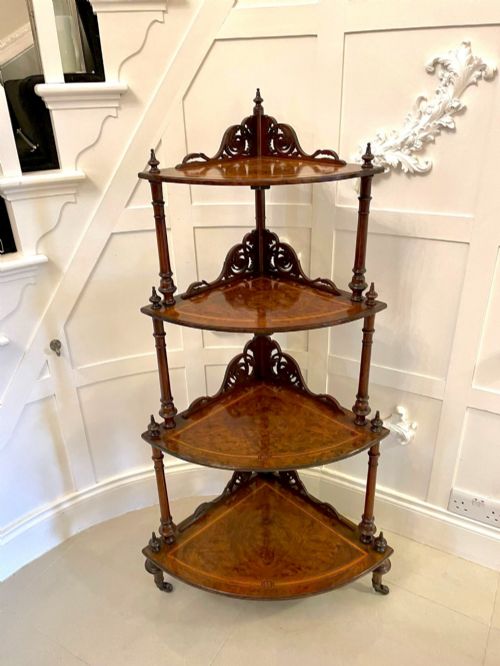
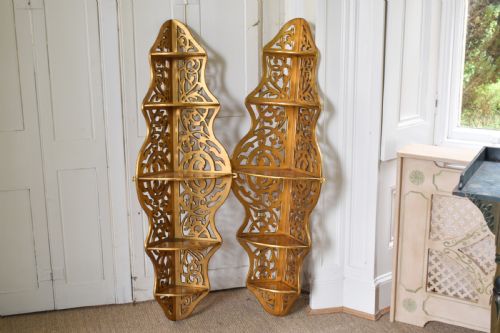
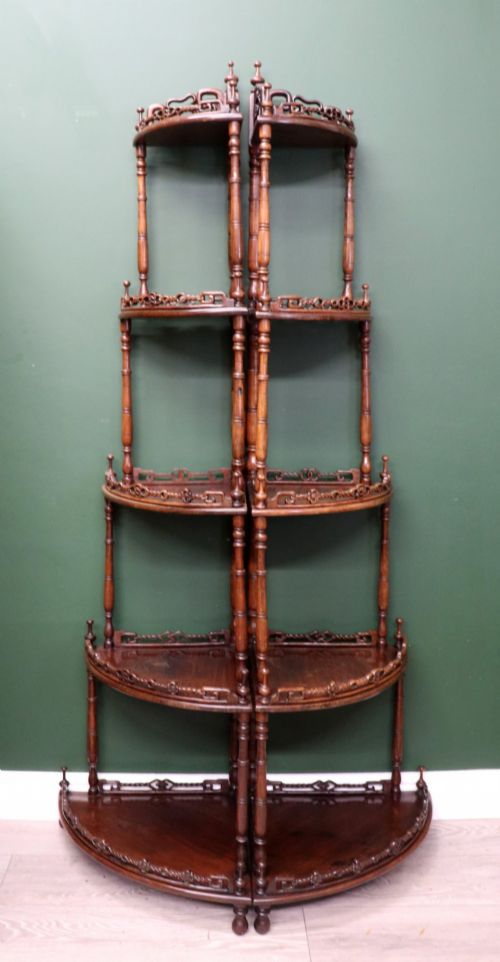
These Victorian corner etagere pieces provide tiered open shelving designed to fit room angles while displaying ornaments.
Victorian Corner Etagere
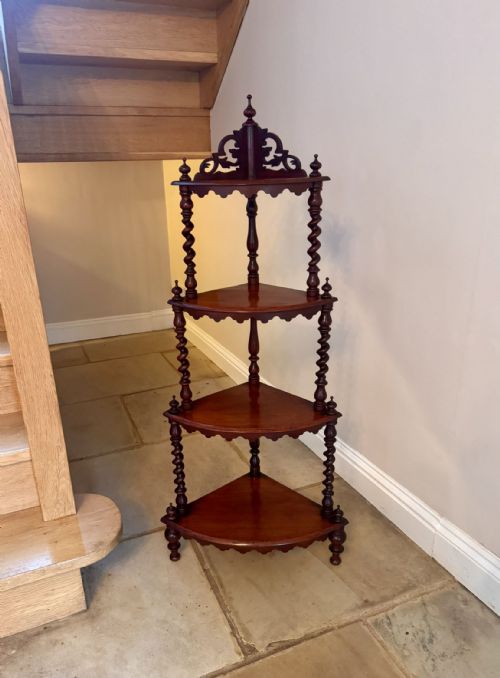
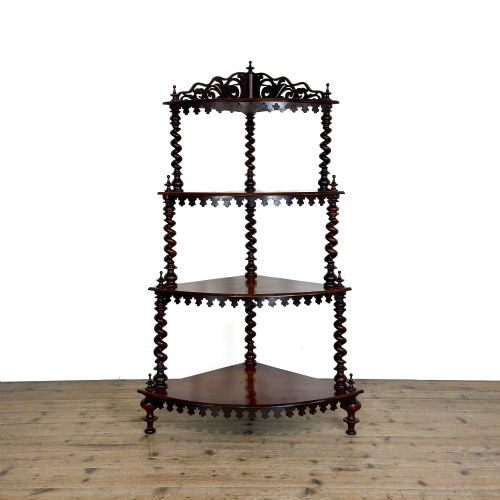
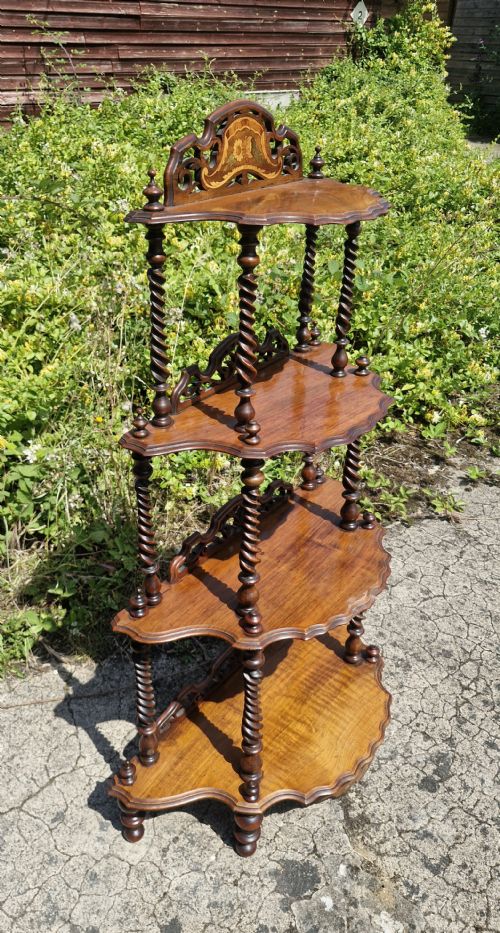
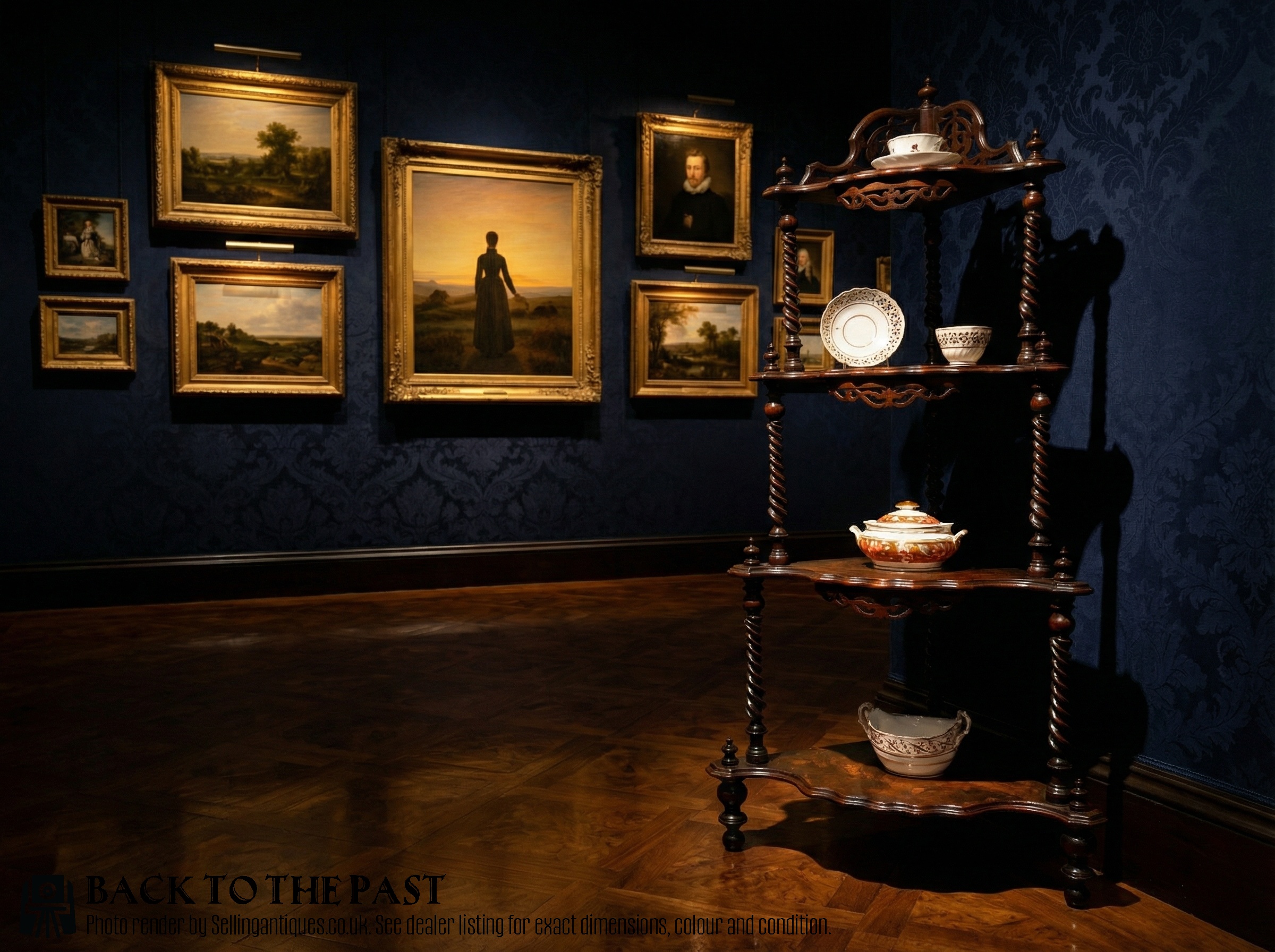
A victorian corner etagere takes the form of multi-tiered shelving units engineered specifically to occupy unused room angles. These pieces function primarily as display stands for ornaments, small ceramics and books.
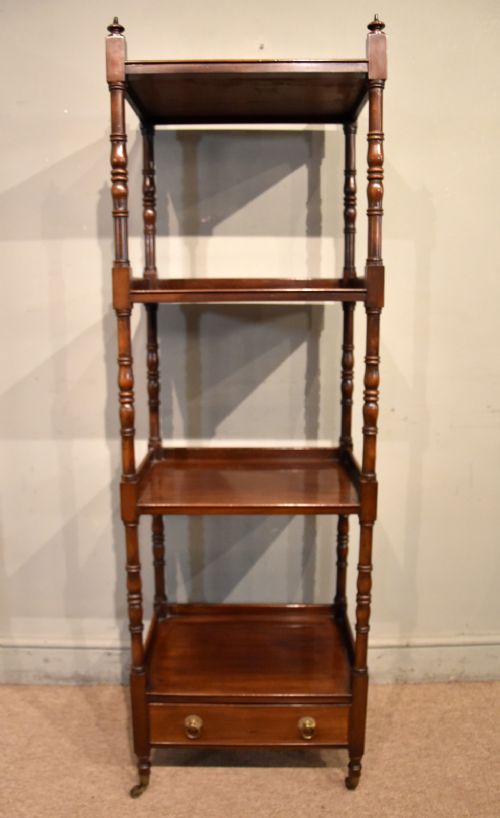
The evidence shows forms ranging from three-tier to six-tier units, alongside specific corner cabinets, display stands and wall-mounted shelves. Walnut, mahogany and rosewood dominate the construction across the nineteenth century.
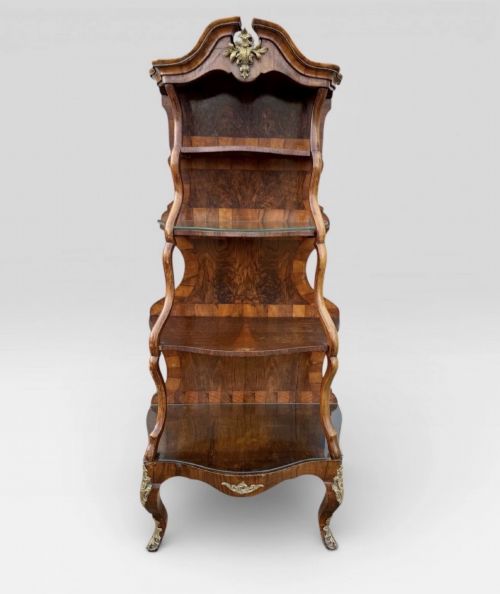
Makers utilised various stylistic influences, including Rococo Revival, Aesthetic Movement and Gothic Revival. Pieces often appear as matched pairs or freestanding furniture items designed for domestic parlours.
Materials and construction methods
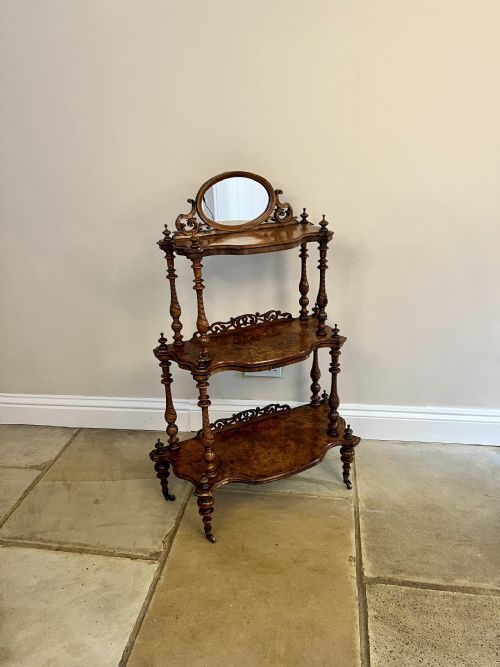
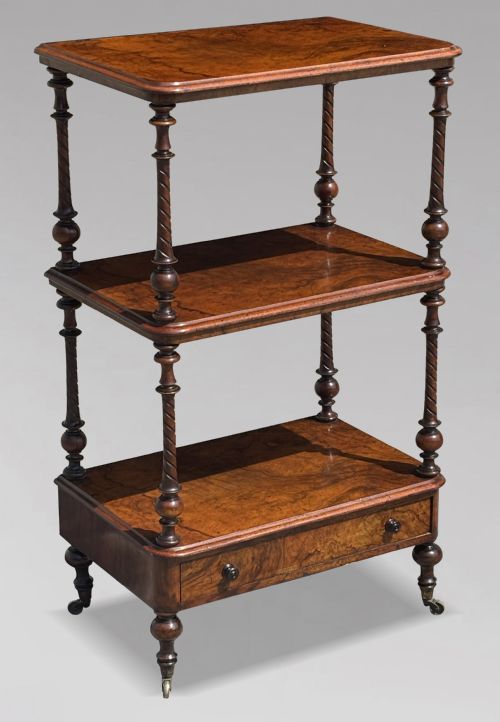
Cabinet makers constructed these etageres using timbers such as walnut, burr walnut, mahogany and rosewood. Decorative elements frequently incorporate brass, gilt metal, glass and mirrored panels.
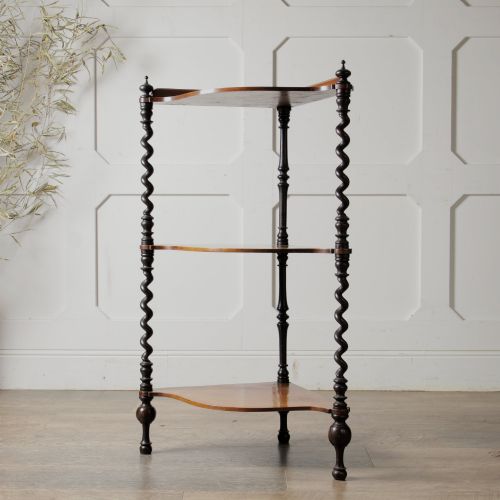
Structural variety includes turned barley twist supports, carved uprights and delicate inlaid satinwood details. Some iterations utilise bamboo or wrought iron for lighter aesthetic or plant stand functions.
Victorian Corner Etagere Retail Price Guide 2026
Typical asking prices for victorian corner etagere among the pieces listed under this phrase on Sellingantiques today, from the lower quarter to the upper quarter. They describe what is for sale here now, not the wider market.
Design styles across the available inventory include Rococo Revival, Aesthetic Movement, Gothic Revival and Regency influences.
Distinctions in quality and execution
Quality rests in the selection of timber veneers, such as figured burr walnut or rich mahogany, and the crispness of turned supports like barley twists. Superior examples feature detailed marquetry inlay, carved ornamentation and mirrored backing plates.
Stability and proportion separate standard utilitarian shelving from exhibition pieces. Finer iterations demonstrate meticulous joinery in tier supports and balanced proportions across multiple shelves.
Edwards & Roberts
The Victorian Corner Etagere Glossary
- Etagere
- A piece of furniture consisting of a set of open shelves for displaying small objects or ornaments. These tiered stands developed in France before becoming popular in British nineteenth-century parlours.
- Whatnot
- An open multi-tiered shelving unit used for displaying curiosities and books. This term appears interchangeably with etagere in many period descriptions.
- Burr walnut
- A prized timber veneer obtained from walnut tree growths, showing intricate swirling grain patterns. Cabinet makers utilised this material on high-status Victorian furniture surfaces.
- Barley twist
- A type of column turning resembling the shape of a twisted rope or barley stalk. This decorative woodworking technique frequently supports the tiers of nineteenth-century etageres.
- Aesthetic Movement
- A late nineteenth-century design style emphasising visual and compositional beauty over narrative content. Pieces from this movement often incorporate bamboo or simplified structural lines.
Victorian Corner Etagere: Frequently Asked Questions
What is a victorian corner etagere used for?
These tiered units serve as display furniture for ornaments, porcelain and small decorative objects in domestic rooms. Their angular shape allows them to occupy unused corners efficiently while providing multiple levels of storage.
Historically, households utilised them in parlours and drawing rooms to showcase prized possessions. Today, they continue to function as practical display stands in modern interiors.
How do you identify a genuine nineteenth-century piece?
Authentic pieces rely on period timbers such as mahogany, rosewood and walnut, often featuring traditional hand-cut joinery. Construction methods, patination and timber shrinkage offer clear indicators of nineteenth-century manufacture.
Stylistic cues like Rococo Revival carving, barley twist supports and satinwood inlay align with Victorian and nineteenth-century design practices. Examining the timber grain and back panels helps confirm the age of the structure.
What is the difference between an etagere and a whatnot?
In historical terminology, both names describe multi-tiered open shelving units intended for display. Period makers and modern cataloguers often use etagere and whatnot interchangeably.
Slight distinctions sometimes appear in regional preferences or the presence of enclosed cabinet sections, but both function as open display furniture. The core purpose remains holding ornaments across several stacked levels.
How do you care for antique walnut and mahogany furniture?
Polishing timber surfaces with traditional beeswax helps maintain the natural moisture and sheen of walnut and mahogany. Keeping pieces away from direct heat sources and strong sunlight prevents veneer cracking and fading.
Routine dusting with a soft, dry cloth preserves the delicate inlay and carved details without harming the finish. Stable room temperatures protect the structural integrity of older joints.