



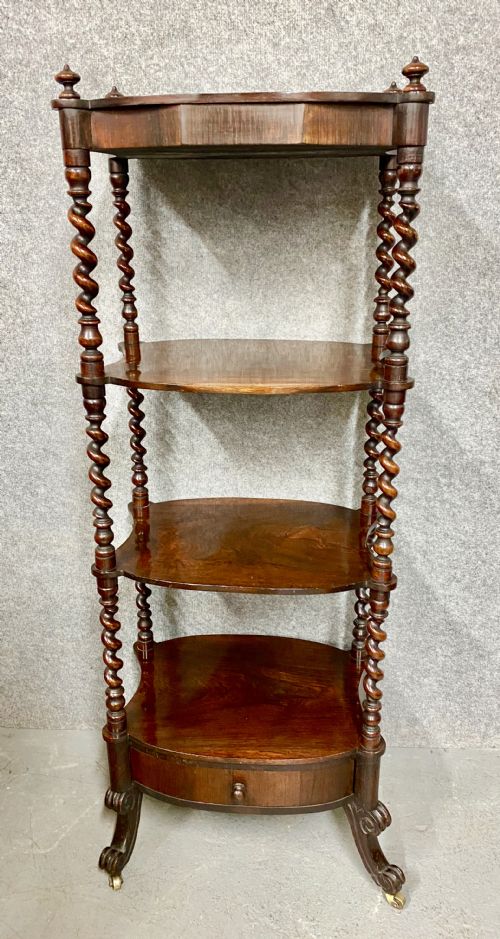


Barley Twist Whatnot
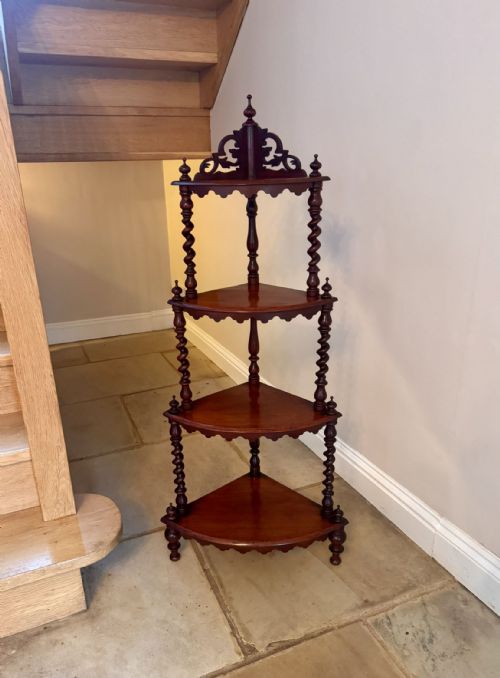
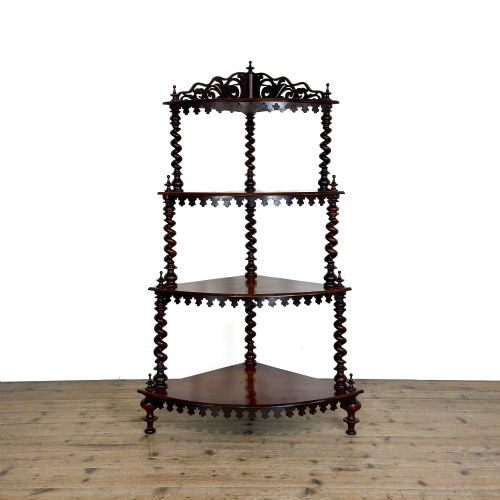
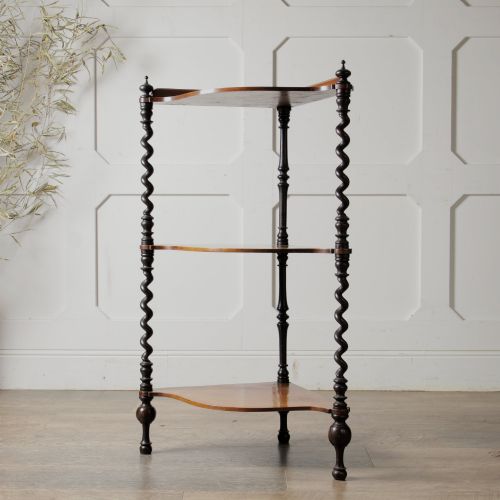
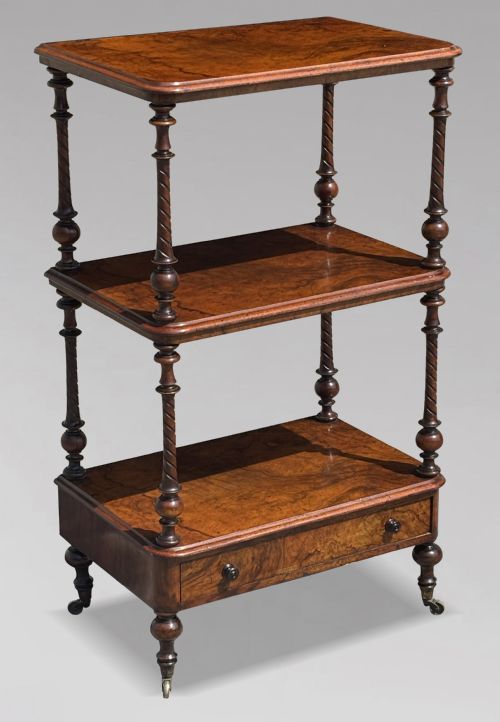
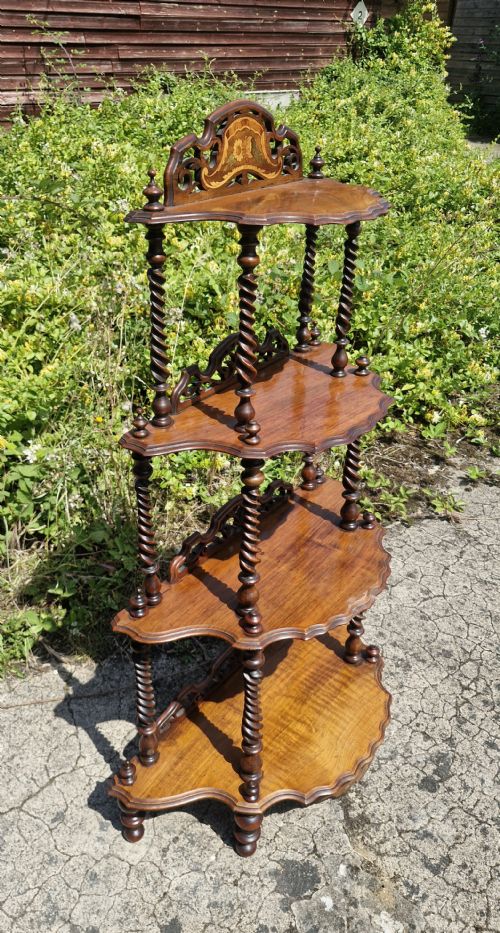
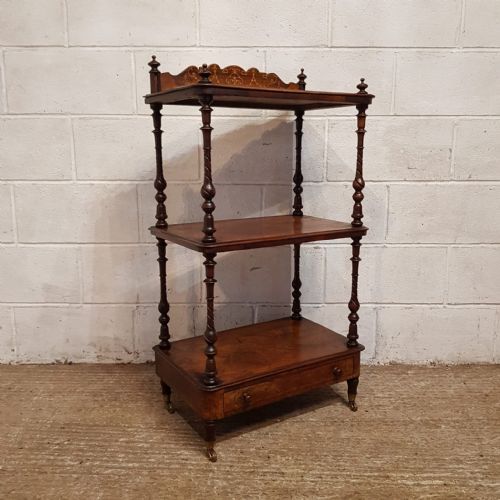
These barley twist whatnot pieces bring tiered display and open shelving to a room, valued for upright turned supports.
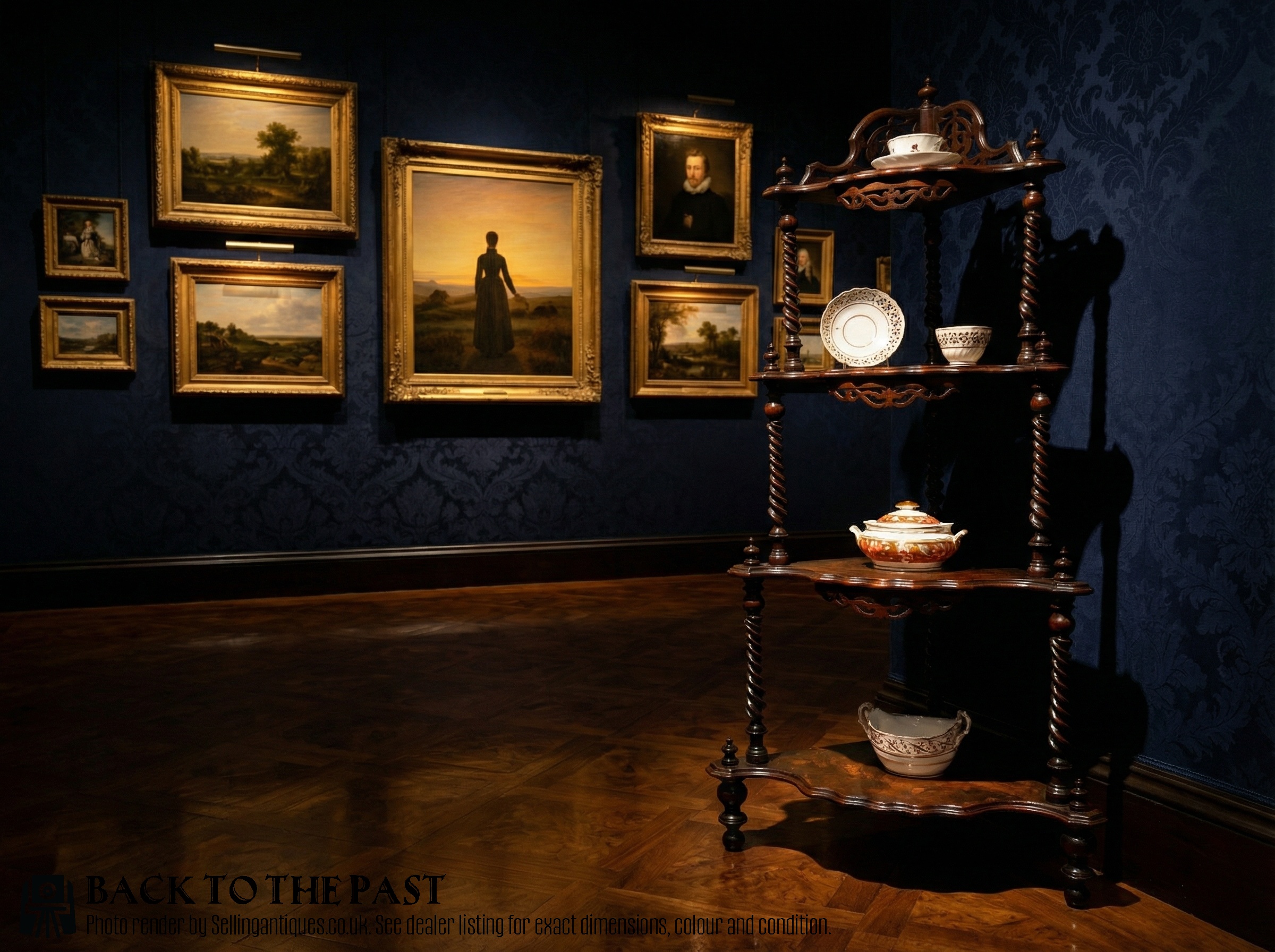
Barley Twist Whatnot
A barley twist whatnot functions primarily as an open tiered stand or shelving unit designed for display. These pieces appear mostly in Victorian and nineteenth-century forms, alongside occasional Regency and William IV examples.
Buyers encounter corner whatnot variants, multi-tiered étagères, and serpentine or demi-lune display tables. Woods like walnut, burr walnut, mahogany, and rosewood dominate the listings, frequently paired with glass and brass details.
Many items incorporate specialised additions such as integrated lower cupboards or Canterbury sections for periodicals. Origin styles stretch from English country house iterations to French chateau and Anglo-Indian designs.
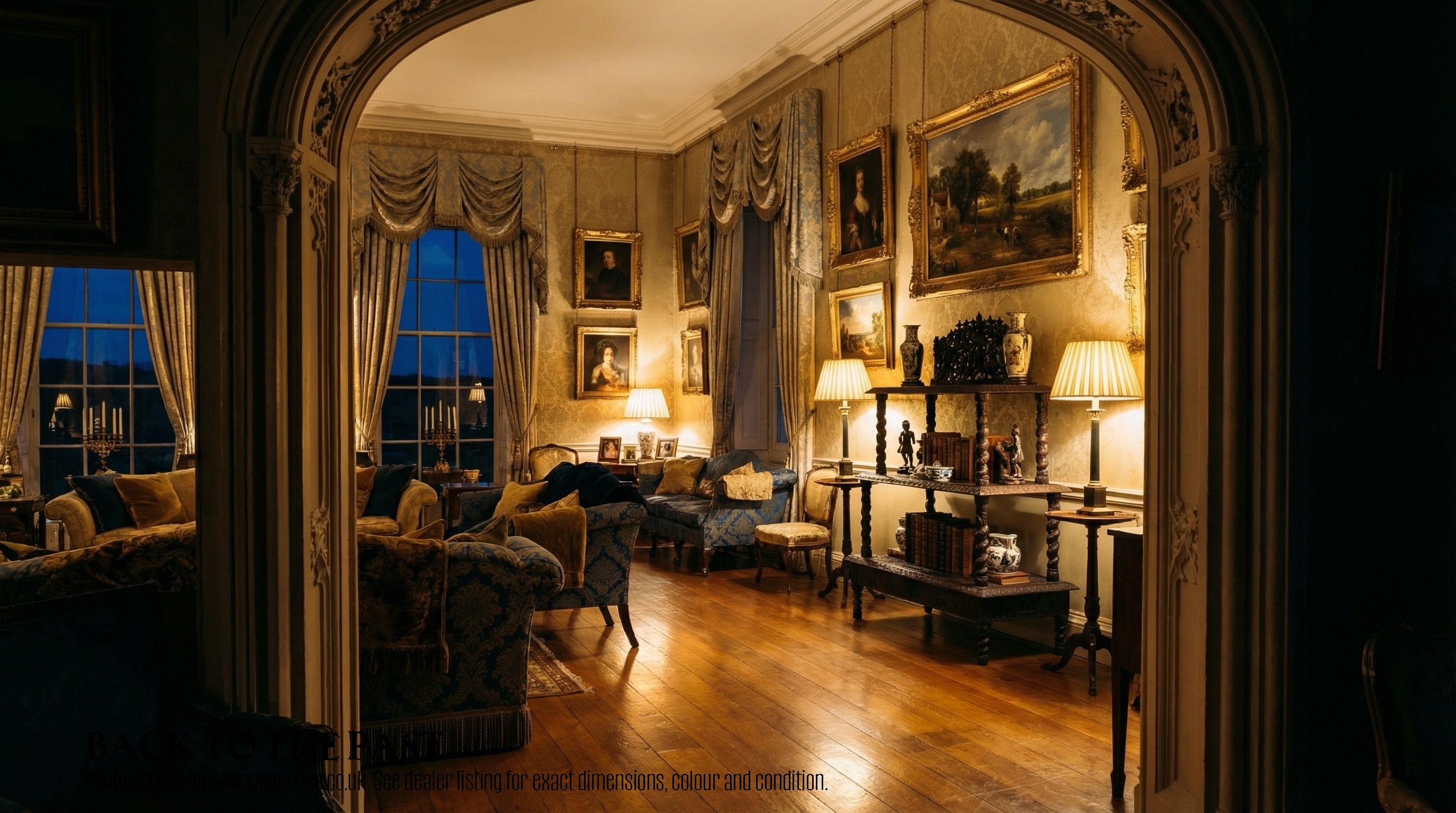
Materials and construction methods
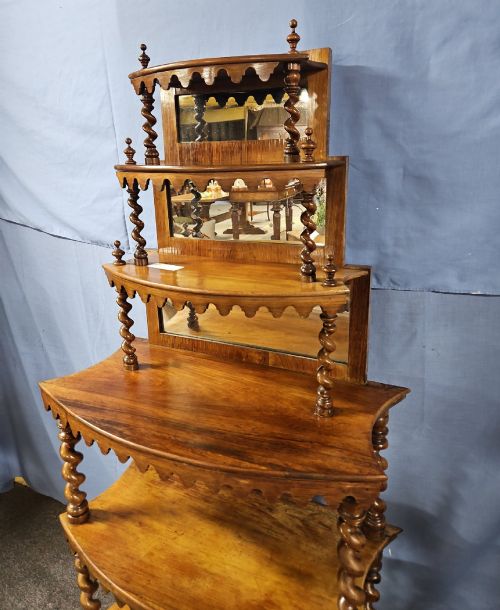
Cabinet makers utilised dense hardwoods including rosewood, walnut, and mahogany to build the structural uprights and shelves. Burr walnut veneer surfaces appear frequently on finer tiers, showing intricate grain patterns across the display boards.
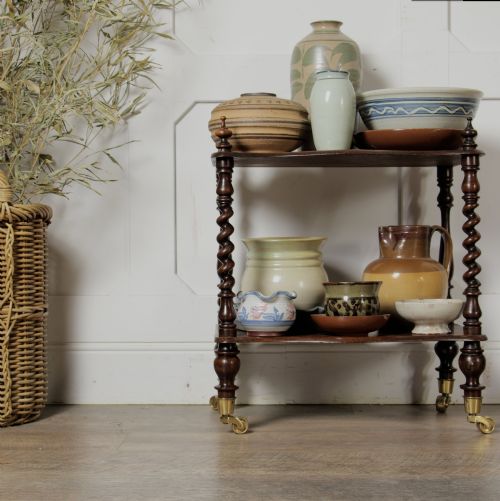
The characteristic spiral columns are shaped using specialised wood-turning techniques to create the signature hollow or solid twist supports. Additional decorative elements include delicate wood inlay, brass castors, and mirrored panels fitted into the backboards.
Barley Twist Whatnot Retail Price Guide 2026
Typical asking prices for barley twist whatnot among the pieces listed under this phrase on Sellingantiques today, from the lower quarter to the upper quarter. They describe what is for sale here now, not the wider market.
Listings feature woods like rosewood, walnut, and mahogany across Victorian, Regency, and nineteenth-century periods.
Distinctions in quality
The choice of primary timber and veneer heavily separates standard items from exceptional ones. Highly figured burr walnut and richly grained rosewood sit at the upper end of the scale compared to plainer mahogany or standard hardwoods.
The crispness and execution of the turned spiral supports dictate the refinement of the piece. Superior examples show precise, balanced turning along every tier, whereas lesser items rely on simpler, heavier uprights without the same sculptural depth.
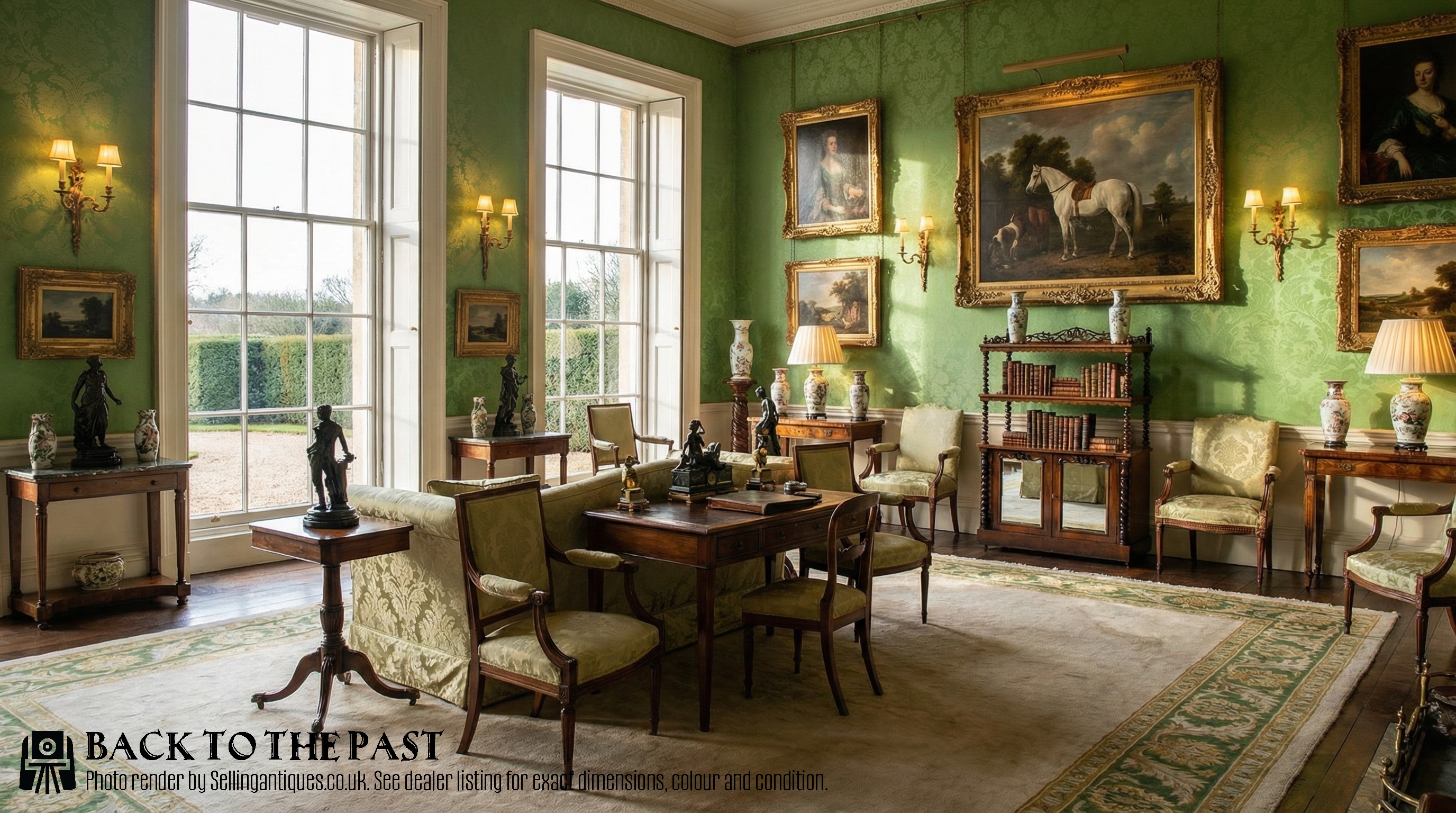
The Barley Twist Whatnot Glossary
- Whatnot
- A piece of furniture consisting of open shelves for displaying ornaments, books, or small objects. These tiers are supported by slender upright pillars.
- Etagere
- A piece of furniture with a set of open shelves for displaying small articles, often synonymous with a whatnot. The term applies widely to multi-tiered display stands.
- Barley twist
- A type of turned column resembling the spiral growth of barley grain. This decorative turning forms the primary vertical support on many Victorian stands.
- Canterbury
- A low stand with partitioned sections, originally used for holding sheet music or books. Some multi-tiered stands incorporate this feature into the lower framework.
- Demi-lune
- A half-moon shape used for console tables and corner units. These curved surfaces fit flush against a wall while projecting outward into the room.
Barley Twist Whatnot: Frequently Asked Questions
What is a barley twist whatnot used for?
These tiered stands serve as open display furniture for porcelain, books, and decorative objects. They provide vertical storage without closing off the surrounding room.
Historically placed in parlours and drawing rooms, they allow collectors to arrange ornaments across multiple levels while keeping floor footprints modest.
How do I date a Victorian whatnot?
Dating relies on timber choice, construction methods, and recorded stylistic shifts across the nineteenth century. Rosewood and mahogany appear heavily in earlier examples, while burr walnut gains prominence toward the latter decades.
Secondary indicators include the presence of brass castors, mirrored backs, and the complexity of the turned supports. Comparing the tier profiles against documented archive pieces helps narrow the production window.
Where should I place a corner whatnot?
Corner units fit directly into ninety-degree wall junctions, utilising neglected spaces in hallways, sitting rooms, or dining areas. Their triangular footprint allows display shelving without obstructing walkways.
Matching the wood tone to existing furniture helps anchor the piece naturally within the room scheme.
What is the difference between an etagere and a whatnot?
Both terms describe tiered open shelving units designed for display, though regional and period terminology often overlaps. Etagere frequently emphasises French or lighter decorative origins, while whatnot covers standard English multi-shelf stands.
In practice, both types share identical functions as vertical display furniture utilising turned uprights.