






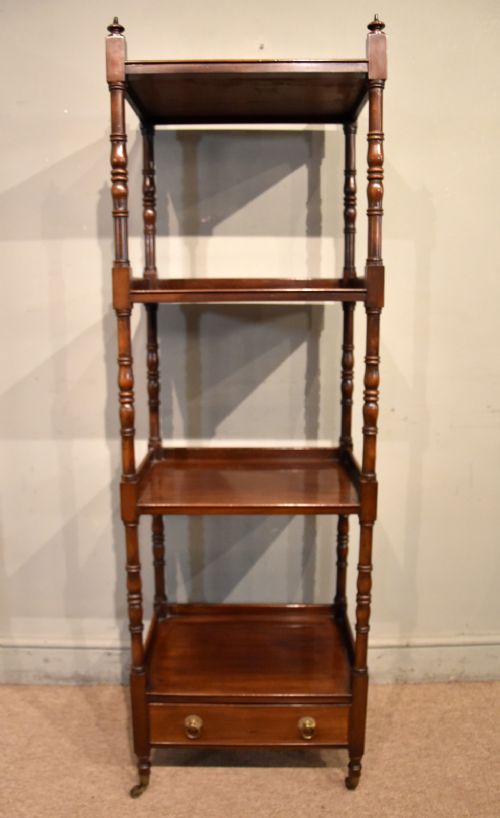
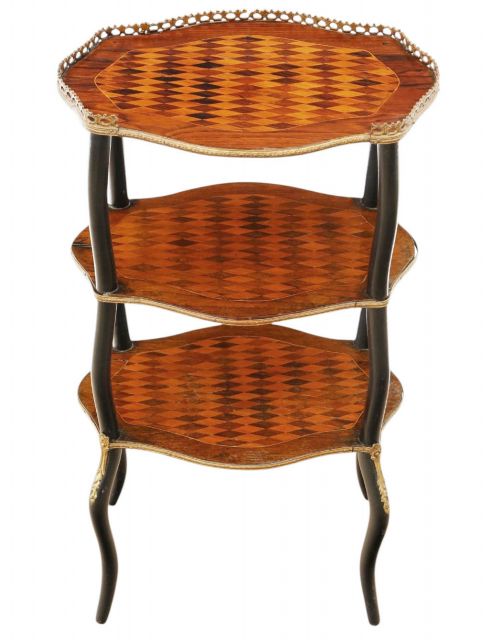
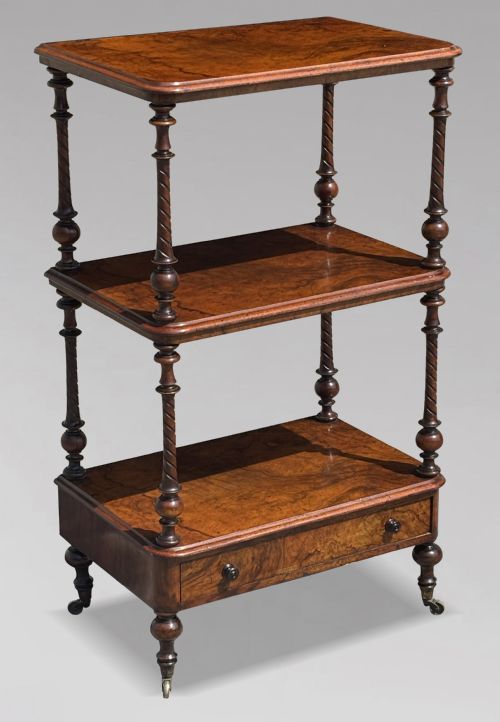
Antique Corner Etagere
An antique corner etagere is a multi-tiered display stand designed to fit domestic angles, offering vertical storage and visual grace.
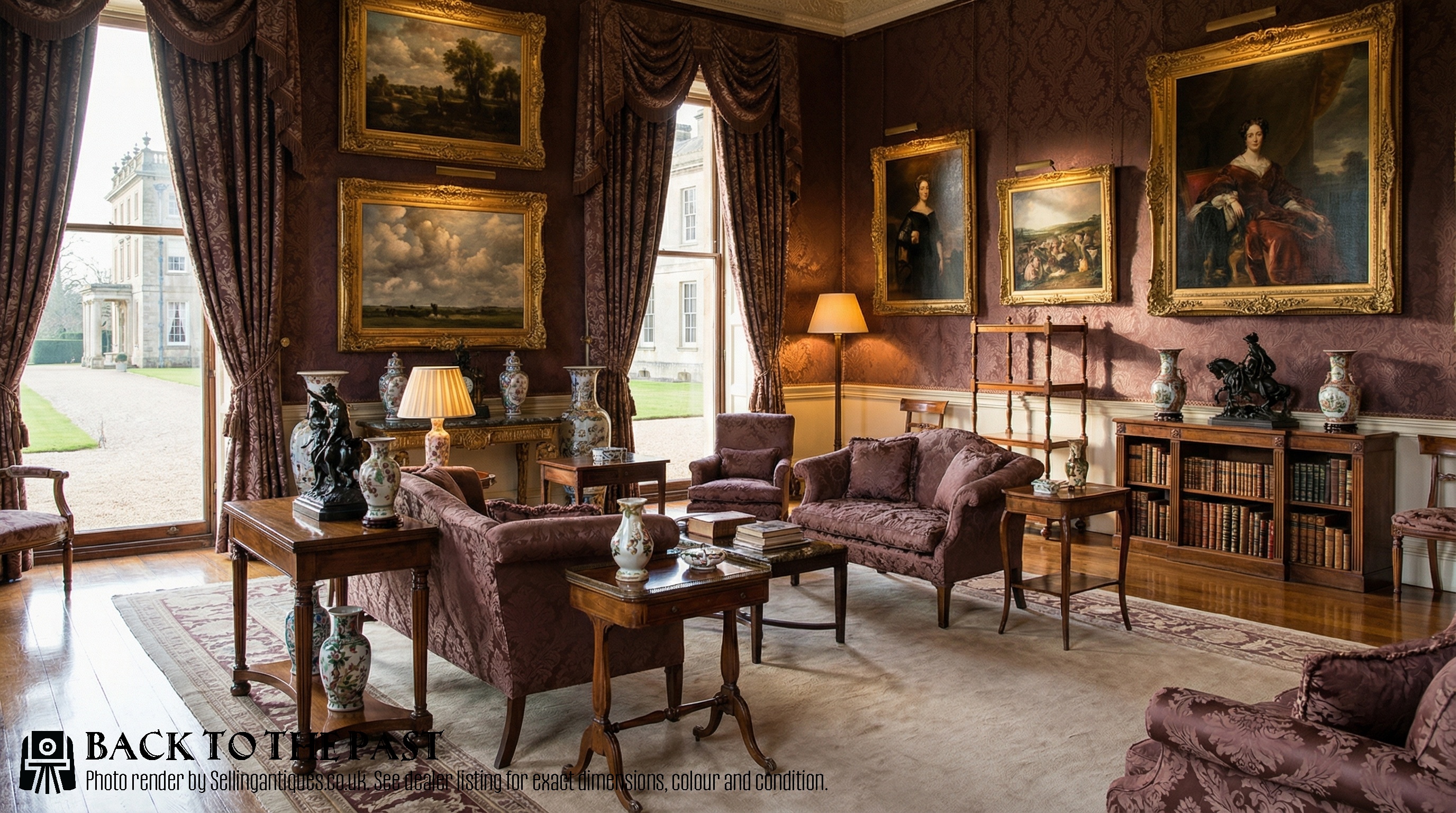
Antique Corner Etagere
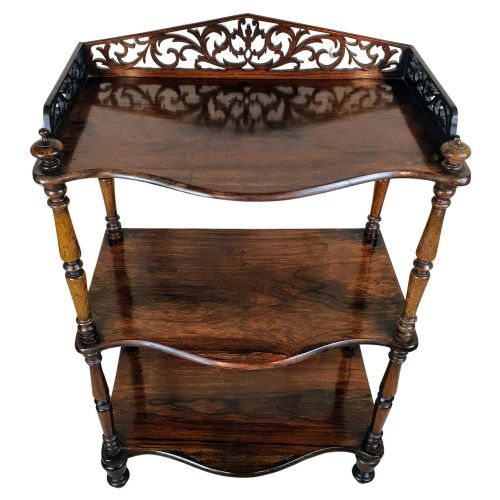
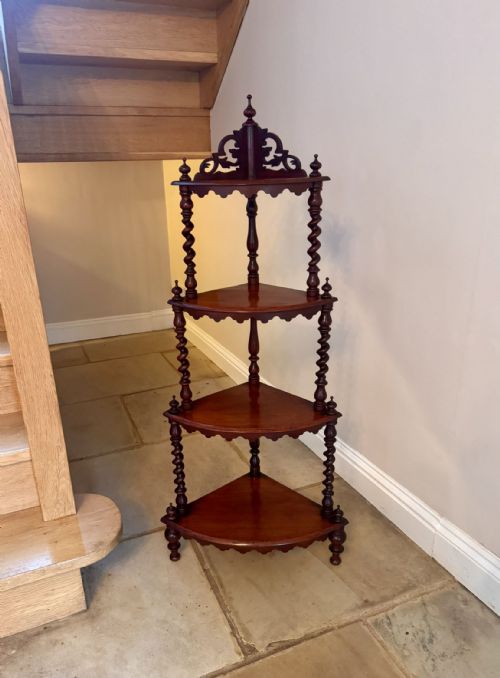
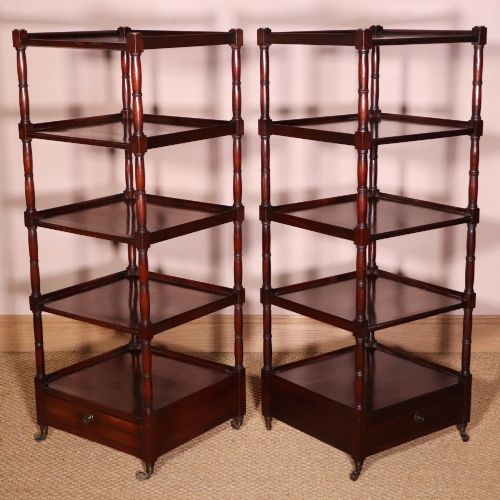
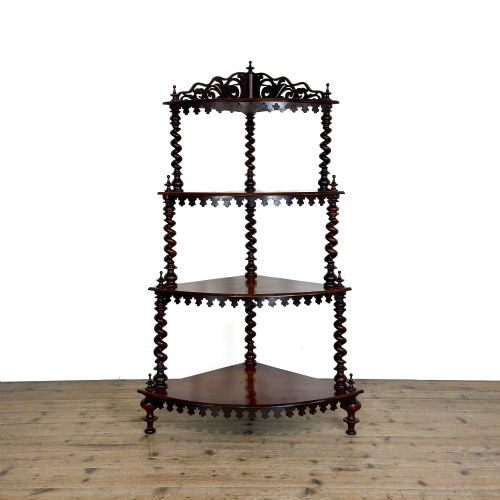
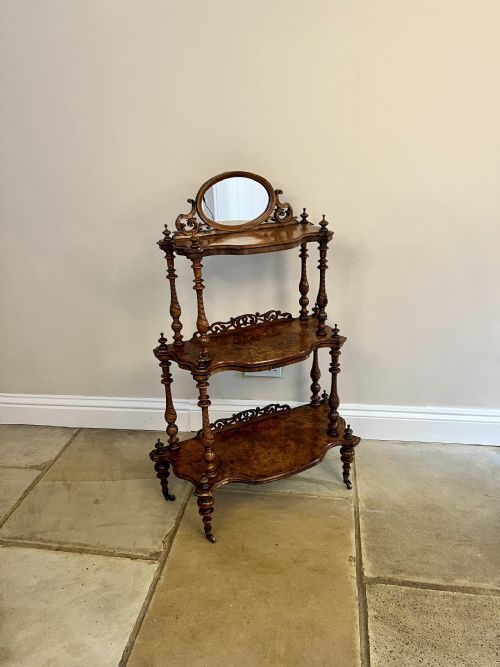
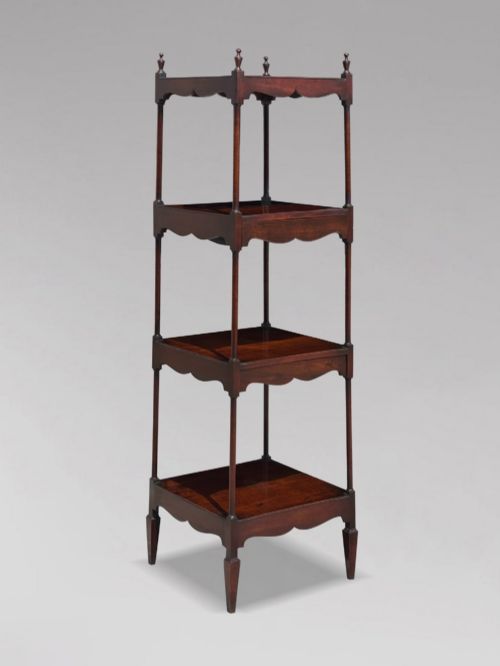
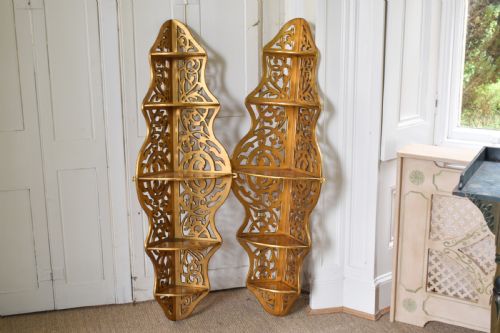
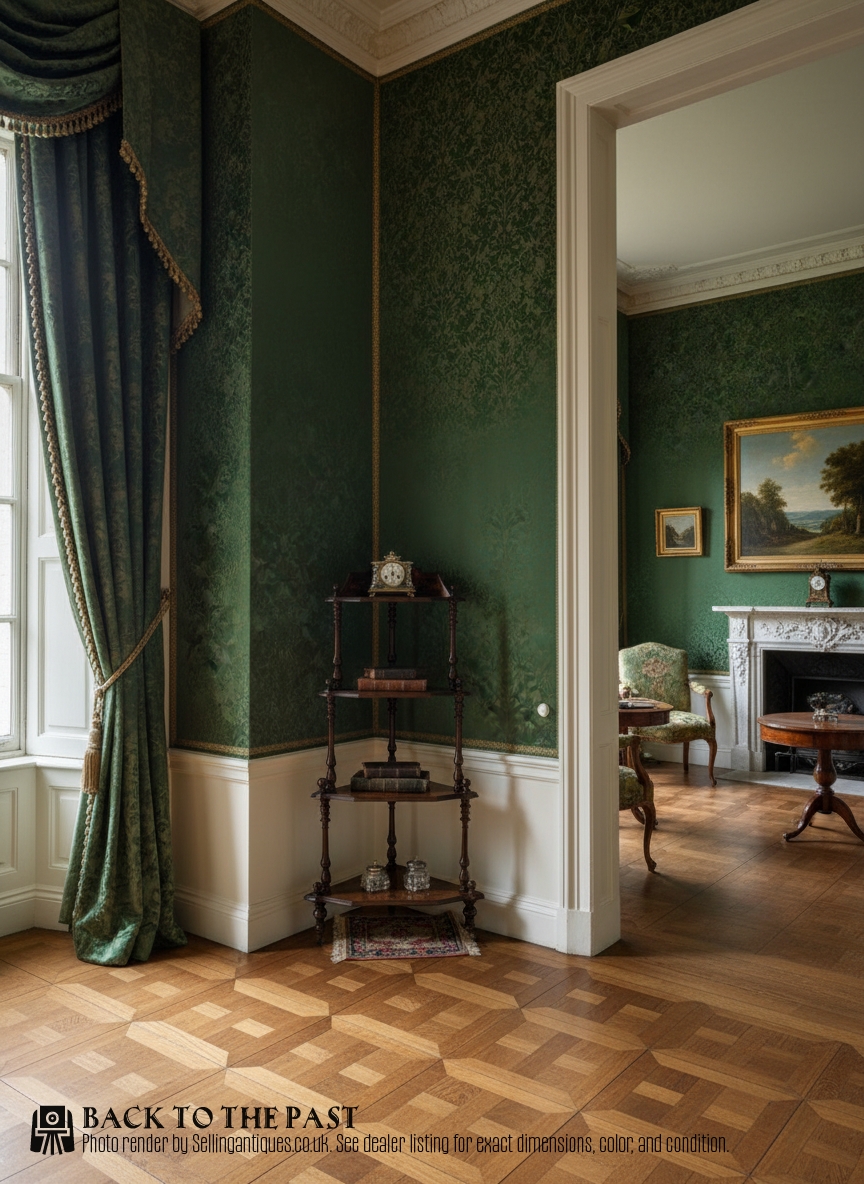
An antique corner etagere is a multi-tiered shelving unit designed to occupy empty room angles while displaying decorative objects and books. The pieces appearing on this page span the Georgian, Regency, and Victorian periods, with mid-to-late nineteenth-century examples forming the majority of the selection. They manifest as stepped corner stands, open shelf units, and occasionally enclosed corner cabinets.
Makers and cabinetmakers constructed these tiered pieces to utilise vertical space efficiently in domestic interiors. The surviving examples utilise various configurations, ranging from simple three-tier stands to elaborate multi-shelf displays with inlaid parquetry. They serve primarily as decorative furniture designed to hold ceramics, glass, and small ornaments.
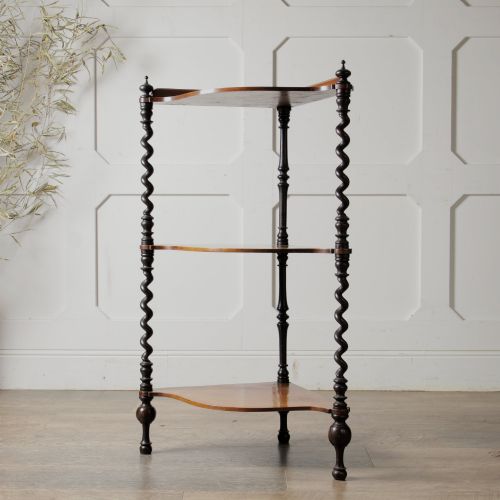
The physical evidence on this page demonstrates that mahogany and walnut remain the predominant timbers for these corner units. Pieces also emerge in burr walnut, rosewood, ebonised wood, and bamboo, alongside occasional examples rendered in iron and brass. The structural forms include barley twist supports, serpentine outlines, and A-frame designs.
How They Were Made
Cabinetmakers constructed these pieces using solid timbers and decorative veneers, applying mahogany, walnut, and burr walnut over supporting framing. Workshops frequently incorporated turned uprights, such as barley twist columns or tapered supports, to separate the individual tiers. Joinery methods relied on precise corner fitting to ensure stability against wall junctions.
The decorative schemes on these etageres often involved marquetry inlay, parquetry patterns, and gilt metal mounts. Ebonised finishes and contrasting wood types appeared during the Victorian era to create visual depth on display shelves. Skilled artisans also utilised bamboo and wrought iron for specific aesthetic movements within the late nineteenth century.
Antique Corner Etagere Retail Price Guide 2026
Typical asking prices for corner etagere among the pieces listed under this phrase on Sellingantiques today, from the lower quarter to the upper quarter. They describe what is for sale here now, not the wider market.
Listings demonstrate that mahogany and walnut dominate these corner units, supplemented by rosewood, burr walnut, and bamboo.
What Varies in Quality
Quality in these tiered units rests upon the selection of timber figures, particularly the grain depth in burr walnut and mahogany veneers. Superior examples display meticulous attention to the turning of upright supports and the precision of inlaid parquetry. Lesser examples rely on plain timber without secondary decorative embellishments.
Construction standards differ between standard workshop output and exhibition pieces attributed to prominent makers such as Gillows or Edwards and Roberts. Finer etageres exhibit refined edge moulding, robust tier joints, and harmonious proportions suited to formal drawing rooms. Simpler iterations serve utilitarian display functions with basic bracket supports.
Gillows·Edwards and Roberts
The Antique Corner Etagere Glossary
- Etagere
- A piece of furniture consisting of a set of open shelves for displaying small objects or ornaments. These tiers graduate in size or maintain uniform footprints depending on the corner design.
- Whatnot
- A multi-shelved stand used for displaying curiosities, books, or ornaments. This term appears interchangeably with etagere across nineteenth-century listings.
- Parquetry
- Geometric mosaic woodwork used for decorative surface patterns on tabletops and shelf borders. Artisans arrange contrasting timber veneers to create intricate visual designs.
- Serpentine
- A curved line or edge that waves inward and outward in a gentle S-shape. Cabinetmakers applied this contour to the front edges of shelves and cabinets.
Antique Corner Etagere: Frequently Asked Questions
Where do I put an antique corner etagere?
These units suit neglected room angles, transforming empty vertical junctions into focal points for display. They fit neatly into drawing rooms, studies, and hallways without obstructing main walking routes.
Position them away from direct sunlight and strong heat sources to protect timber veneers and polished finishes. Their triangular footprints anchor securely against intersecting walls.
What is the difference between an etagere and a whatnot?
Historical makers and contemporary dealers often use both terms to describe multi-tiered shelving units designed for display. An etagere frequently implies a French-influenced decorative piece, whereas a whatnot often denotes standard British multi-shelf stands.
Both forms provide open tiers for ornaments, though etageres sometimes feature more elaborate serpentine outlines or gilt metal mounts. The underlying function of vertical display remains identical across both designations.
How do I identify a Victorian corner stand?
Victorian examples typically feature dark timbers such as walnut, burr walnut, and rosewood, often accompanied by barley twist columns or carved detailing. The period also encompasses ebonised finishes and bamboo construction styles associated with the Aesthetic Movement.
Examining the underside and shelf joints reveals nineteenth-century assembly methods and secondary woods. These units reflect the Victorian preference for filling domestic interiors with tiered display furniture.
Can these shelves hold heavy items?
These tiers are built primarily for decorative ornaments, small ceramics, and collections of books rather than heavy loads. The corner brackets and slender upright supports distribute weight vertically rather than absorbing heavy side pressure.
Distributing heavier objects on the lowest tier preserves the structural stability of the stand. Lighter decorative pieces sit safely on the upper shelves.