





Brown Wood Corner Shelves
These brown wood corner shelves span Georgian, Victorian, and later eras, offering practical display space in timber.
Brown Wood Corner Shelves
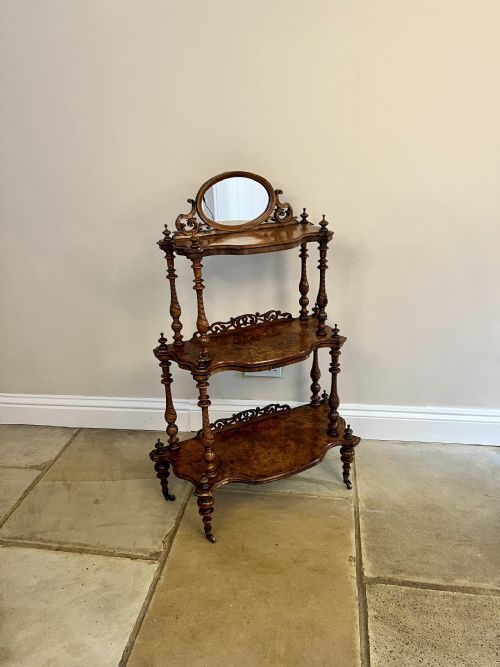
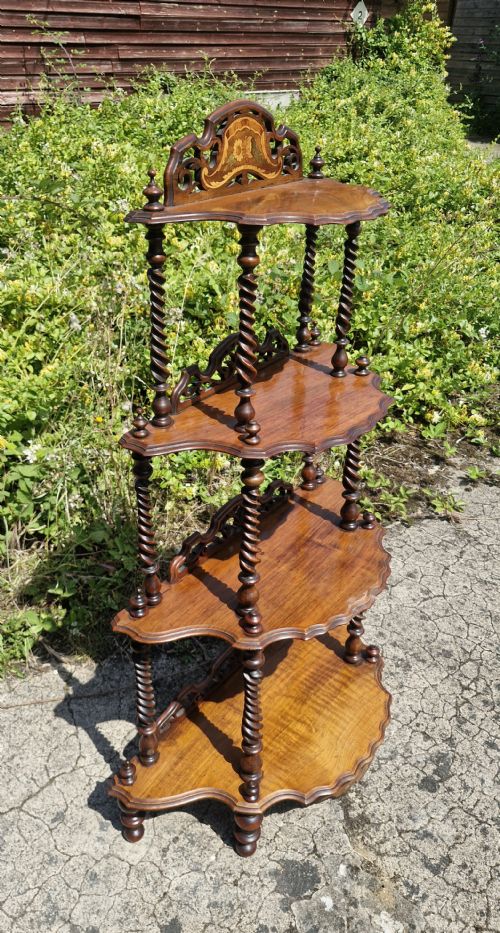
When buyers search for brown wood corner shelves, they encounter multi-tiered whatnots, etageres, and wall-mounted brackets designed to utilise unused room angles. The Victorian examples in burr walnut and mahogany dominate the selection, frequently appearing as tiered stands with turned supports.
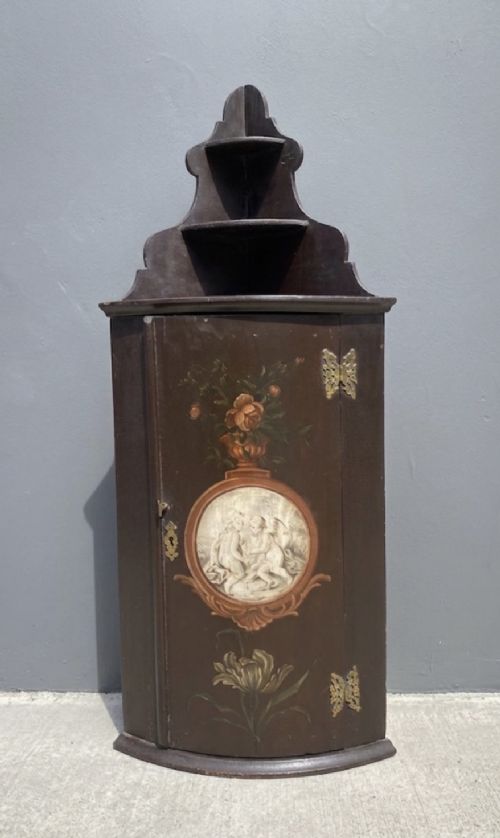
Earlier Georgian pieces also feature, including painted corner cupboards and mahogany A-frame structures designed for practical storage and display. These items translate domestic utility into architectural woodwork that fits neatly into room junctions.
How they were made
Cabinetmakers utilised dense timbers such as mahogany and walnut, often selecting burr veneers to produce figured surfaces on tier tops and cabinet doors. Marquetry inlay and brass elements provide decorative contrast against the dark timber bases.
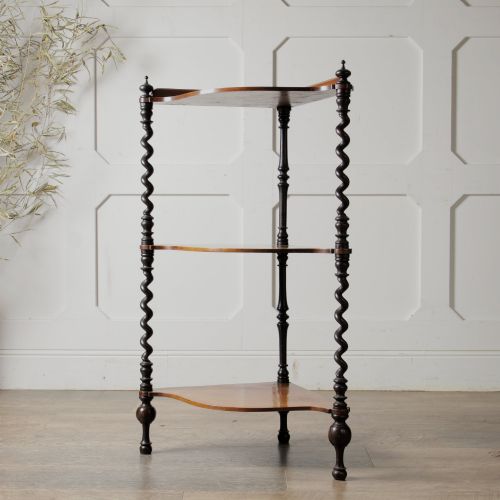
Structural elements rely on turned columns, barley twist supports, and fitted brackets to secure multiple tiers safely. Joinery methods connect uprights directly to shaped platforms designed to fit tight 90-degree angles.
Brown Wood Corner Shelves Retail Price Guide 2026
Typical asking prices for brown wood corner shelves among the pieces listed under this phrase on Sellingantiques today, from the lower quarter to the upper quarter. They describe what is for sale here now, not the wider market.
Listings feature walnut, mahogany, and olive wood across Victorian and Georgian periods, alongside inlaid marquetry and mirror glass.
What varies in quality
The refinement of the timber figure and the complexity of the turnings distinguish finer pieces from plainer variants. Burr walnut surfaces with balanced grain patterns and crisp marquetry inlay represent the upper end of the production.
Structural integrity depends on the rigidity of the tier supports and the precision of the corner fit. Superior examples maintain stability across multiple tiers without wobble in the upright columns or twist in the shelving boards.
E.W Godwin
The Brown Wood Corner Shelves Glossary
- Whatnot
- A piece of furniture consisting of several open shelves for small objects, popular during the 19th century. These tiers are supported by slender columns or turned uprights.
- Etagere
- A piece of furniture with a set of open shelves for displaying ornaments. It functions similarly to a whatnot with tiered platforms.
- Burr Walnut
- Wood taken from a walnut tree growth that produces intricate, swirling grain patterns. Cabinetmakers sliced this wood into thin veneers for decorative surfaces.
- Marquetry
- The art of applying pieces of veneer to a structure to form decorative patterns. Craftsmen utilise various woods to create pictorial or geometric designs on tabletops and shelves.
- Barley Twist
- A type of turning resembling a spiralling rope or barley sugar stick. This decorative carving technique appears on the vertical supports of Victorian whatnots.
Brown Wood Corner Shelves: Frequently Asked Questions
What are brown wood corner shelves used for?
These pieces provide vertical display space for ornaments, books, and small collections while fitting neatly into room angles. They turn unused corners into functional storage areas.
Historically, whatnots and etageres held decorative items, china, and everyday objects within domestic parlours and drawing rooms.
How do I date a Victorian whatnot?
Victorian examples often feature burr walnut veneers, inlaid marquetry, and turned supports such as barley twists. Examining the timber choice and decorative motifs helps place the piece within the 19th century.
Later Victorian pieces from the 1880s frequently incorporate lighter walnut timbers and precise decorative stringing compared to earlier mid-century items.
Are these shelves sturdy enough for heavy books?
Most tier structures and corner brackets are built to support decorative ornaments, ceramics, and light display items rather than heavy volumes. The slender uprights and bracket mounts are engineered for lighter loads.
Wall-mounted brackets require secure fixings into solid walling to bear weight safely in domestic settings.
How do I clean and care for walnut furniture?
Dust timber surfaces regularly with a soft, dry cloth to prevent dirt accumulation on polished finishes. Avoid placing antique wood in direct sunlight or near heat sources to prevent timber splitting.
Applying a traditional beeswax polish periodically helps maintain the lustre of mahogany and walnut without building up heavy residues.