

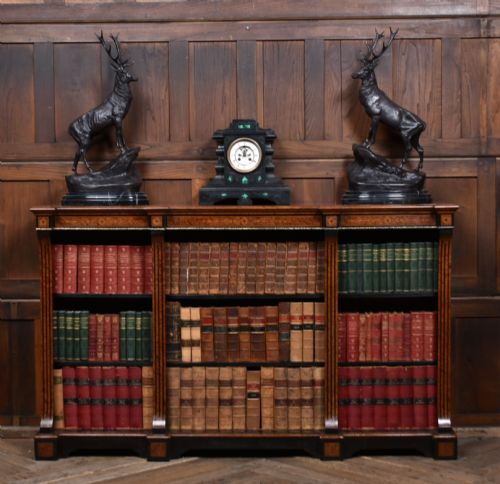
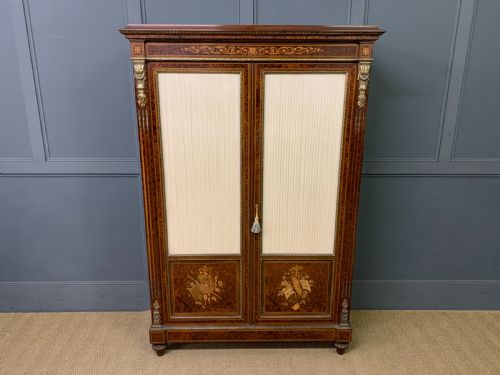

Inlaid Wooden Bookcase
An inlaid wooden bookcase brings warmth and decorative precision to a room, uniting practical shelving with meticulous craftsmanship.
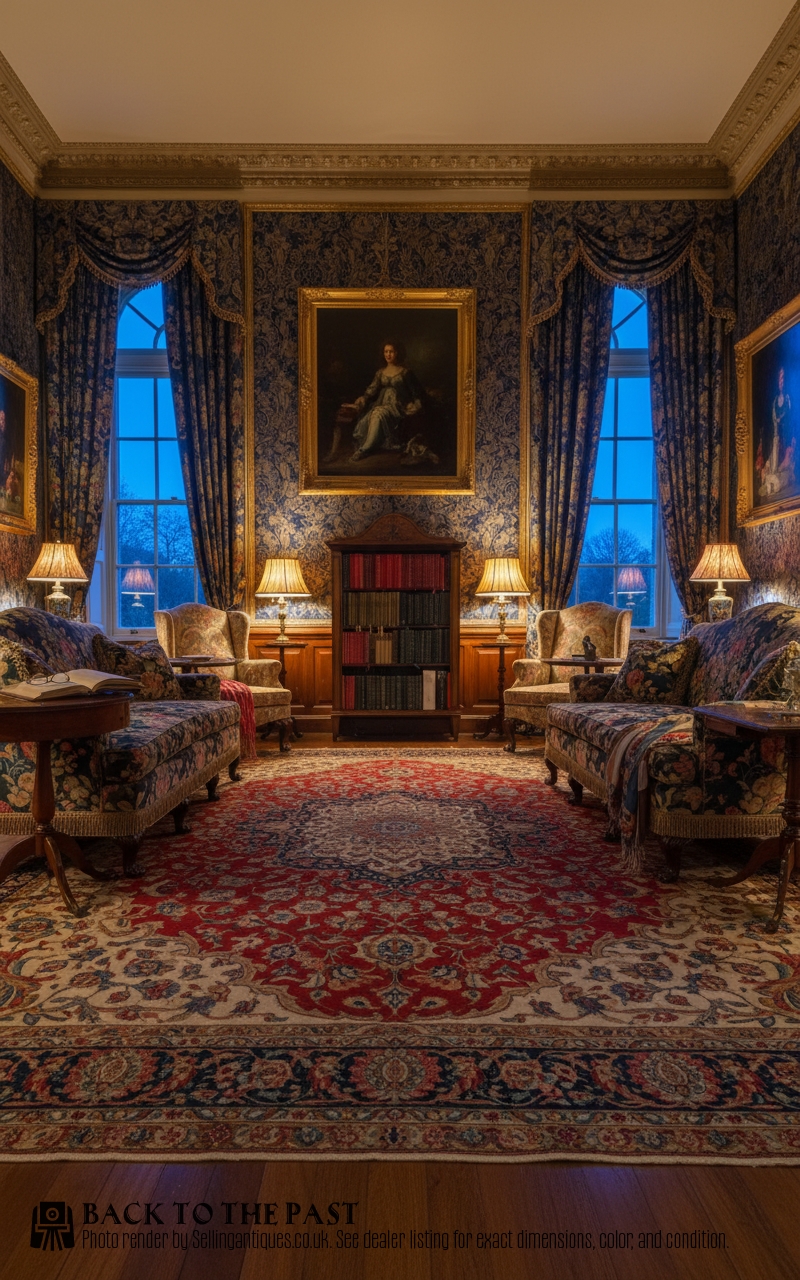
Inlaid Wooden Bookcase
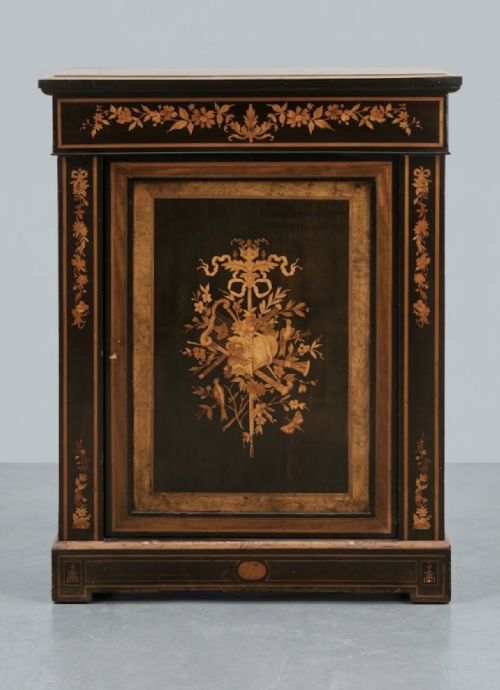
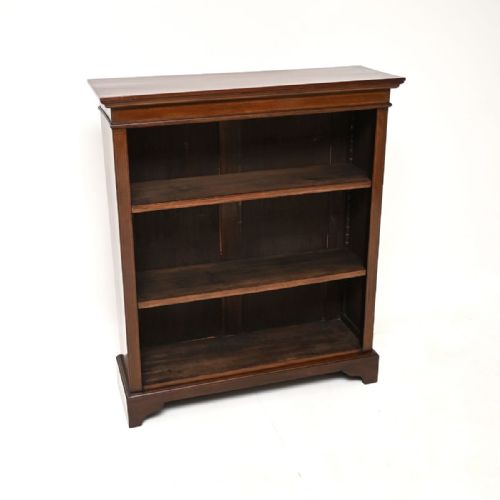
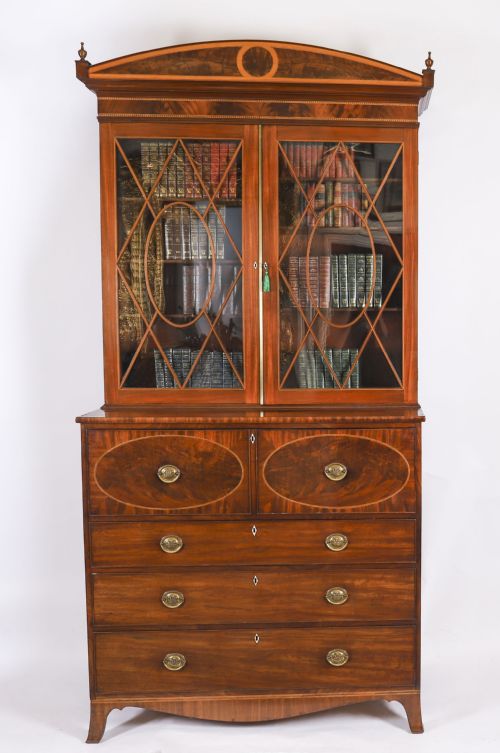
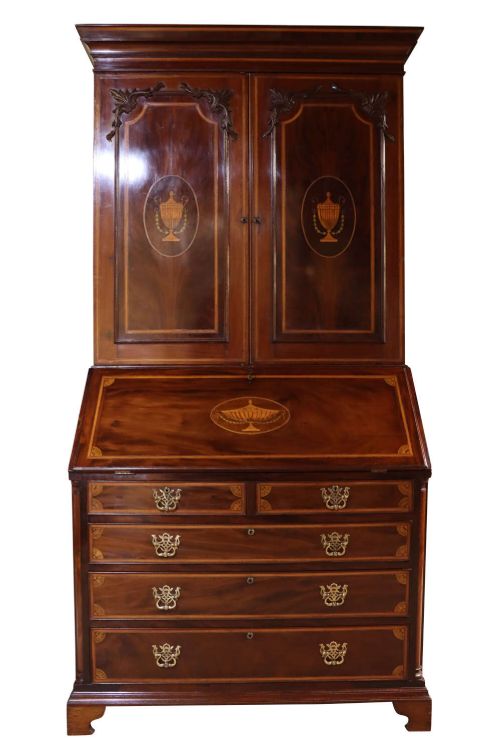
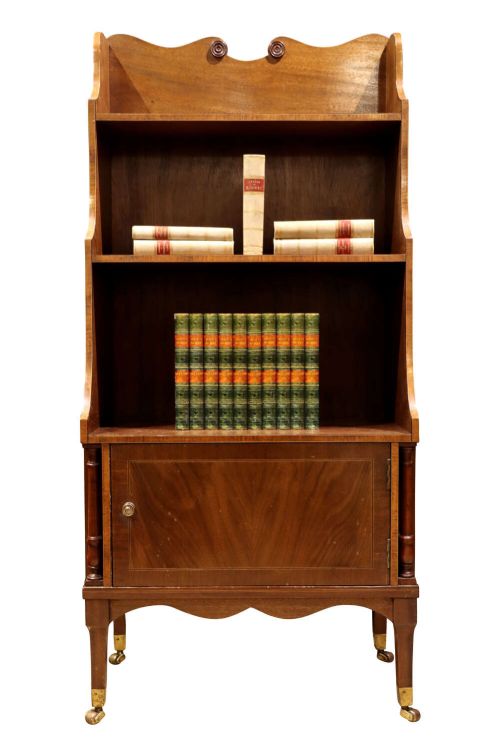
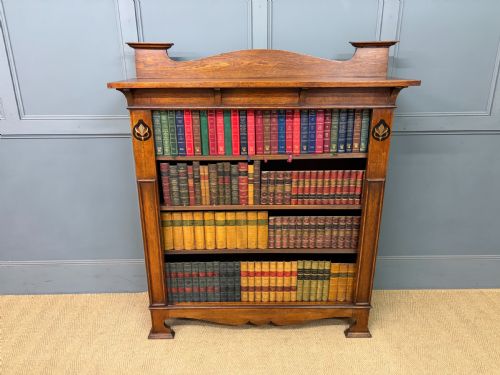
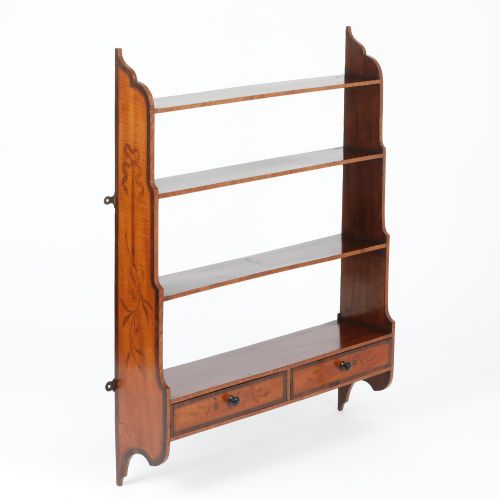
An inlaid wooden bookcase spans formats from tall bureau bookcases and display cabinets to open shelves, revolving bookstands, and side cabinets. The search phrase covers pieces originating from the nineteenth century, the Victorian era, and the Edwardian period, alongside Regency and Georgian styles.
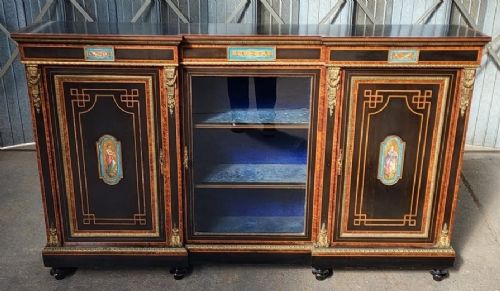
Edwardian mahogany examples predominate on this page, frequently featuring delicate satinwood stringing, glazed doors, or revolving mechanisms. Buyers also encounter nineteenth-century secretaire bookcases and walnut or ebonised side cabinets with brass mounts.
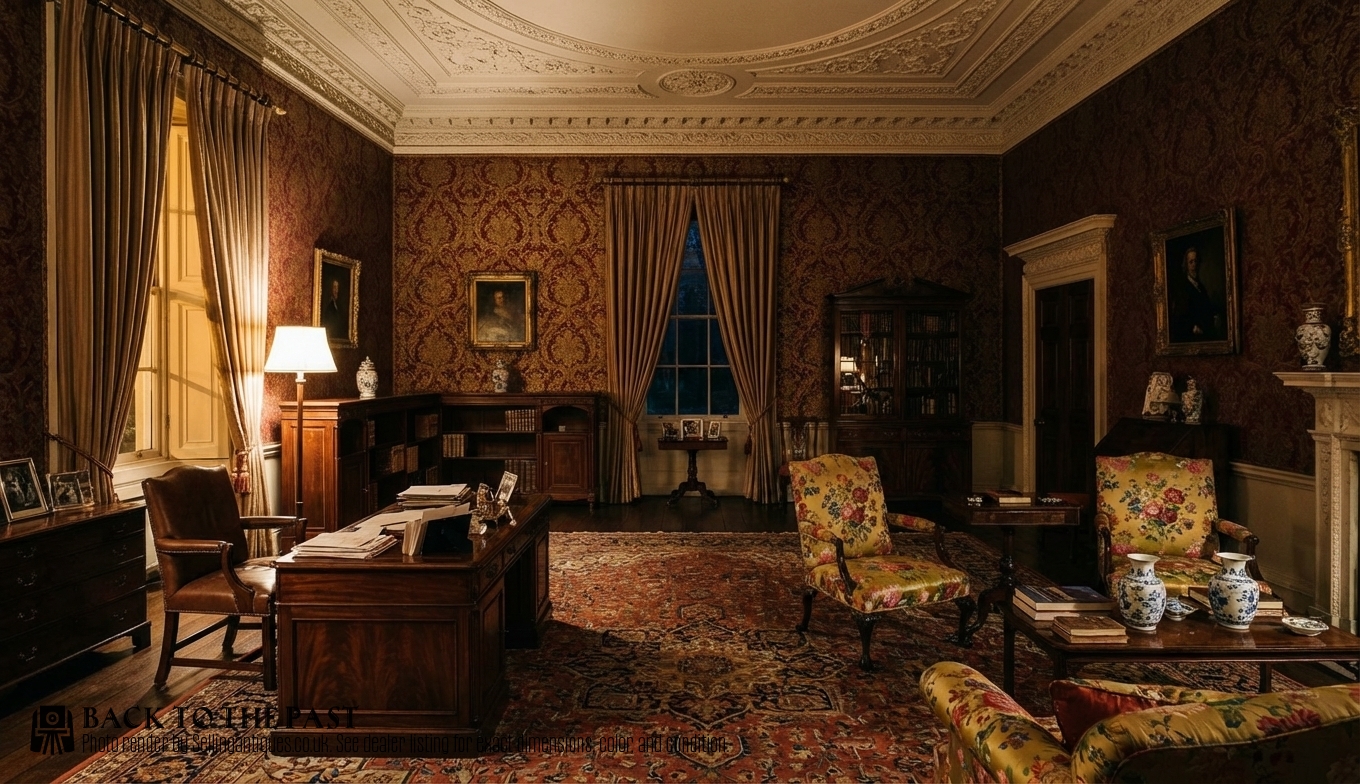
Materials and Technique
Cabinetmakers constructed these pieces primarily using solid mahogany, walnut, and oak, often applying figured veneers such as flame mahogany, satinwood, and amboyna to primary surfaces. Fine contrasting stringing and marquetry details were inlaid directly into the timber to create geometric and floral motifs.
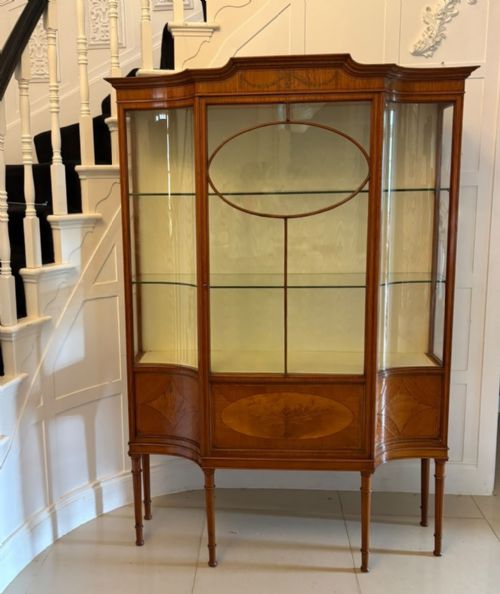
Glazing bars divided glass door panels on larger display and breakfront bookcases, while specialist additions included brass castors, ormolu mounts, and leather writing surfaces in secretaire compartments.
Inlaid Wooden Bookcase Retail Price Guide 2026
Typical asking prices for inlaid wooden bookcase among the pieces listed under this phrase on Sellingantiques today, from the lower quarter to the upper quarter. They describe what is for sale here now, not the wider market.
Current listings showcase mahogany, walnut, satinwood, and ebonised wood across Victorian, Edwardian, and nineteenth-century periods.
Standards of Execution
Quality rests in the crispness of the timber selection, the precision of the inlay work, and the harmonious balance of proportions. Superior examples exhibit tightly figured veneers and flawlessly flush inlay that remains intact across panel joins.
Finer pieces incorporate thoughtful secondary details such as original brass hardware, working locks with keys, well-fitted internal shelving, and refined glazing bars rather than heavy structural framing.
S and H Jewell London
The Inlaid Wooden Bookcase Glossary
- Inlay
- A decorative technique where pieces of contrasting wood, brass, or other materials are set into recesses flush with the surrounding surface. This creates intricate patterns and borders on cabinet doors and friezes.
- Secretaire Bookcase
- A dual-purpose cabinet featuring a fitted pull-out writing drawer with a drop-front desk surface concealed beneath upper bookcase shelving. It combines a compact writing desk with traditional book storage.
- Marquetry
- Elaborate veneer work arranged to form pictorial or decorative designs using various tinted woods and shell. It differs from simple linear stringing by creating complex multi-coloured scenes.
- Waterfall Bookcase
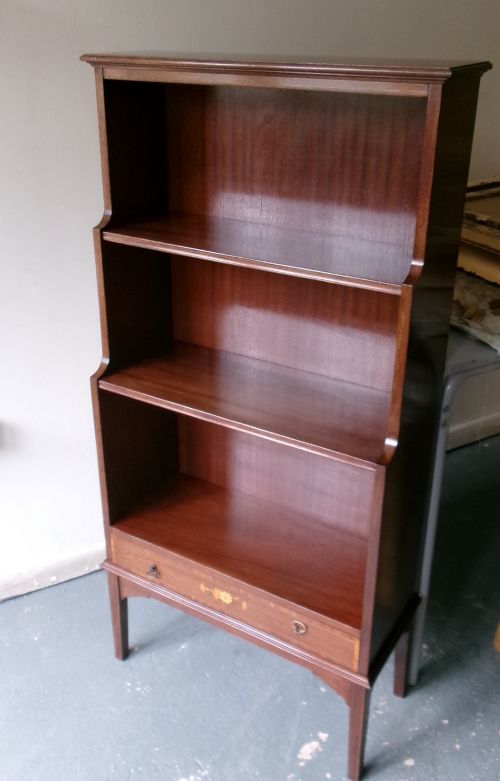
- A set of open shelves diminishing in depth from bottom to top, often stepped with graduated tiers. These pieces were popular during the nineteenth and early twentieth centuries for displaying smaller volumes.
- Revolving Bookcase
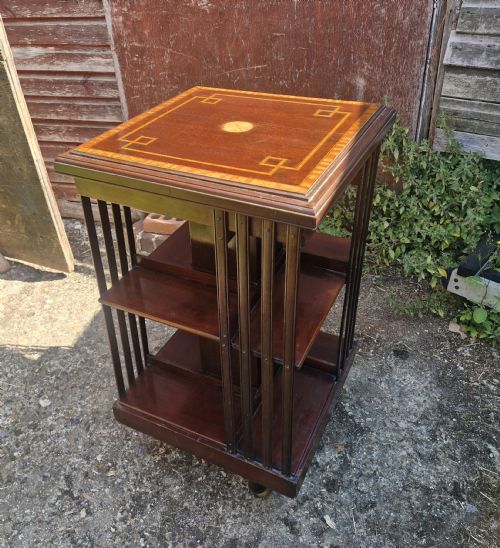
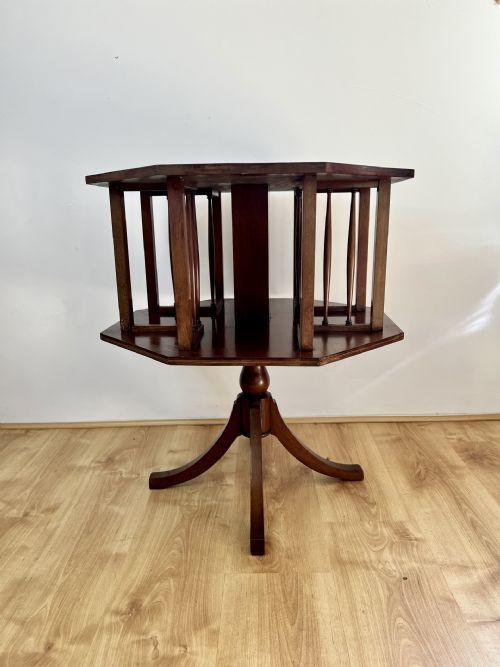
- A compact, freestanding tiered bookcase mounted on a rotating spindle base for easy access to volumes. Edwardian iterations in mahogany are particularly common.
Inlaid Wooden Bookcase: Frequently Asked Questions
How do I date an inlaid wooden bookcase?
Dating relies on timber choice, construction methods, and stylistic cues such as Edwardian satinwood stringing or heavier Victorian proportions. Secondary woods inside drawers and the style of brass hardware also offer clues to the period of manufacture.
Cabinet backs and dovetail joints reveal whether a piece originates from the early nineteenth century or the Edwardian revival period. Comparing specific moulding details helps narrow down the decade.
Are revolving bookcases sturdy?
Revolving bookcases are engineered with a central internal pivot mechanism that supports the weight evenly while allowing smooth rotation. They hold standard octavo volumes securely when placed on a level floor.
Heavy folio volumes are best kept on lower shelves to maintain a stable centre of gravity. Regular gentle use preserves the internal wooden or iron spider bearing.
How should I care for antique mahogany?
Antique mahogany benefits from consistent indoor humidity and placement away from direct sunlight or heat sources. Gentle dusting with a dry, soft cloth preserves the polished surface without building up synthetic residues.
Occasional application of traditional beeswax feeds the dry timber and maintains its deep colour. Avoid silicone sprays which can damage aged French polish.