

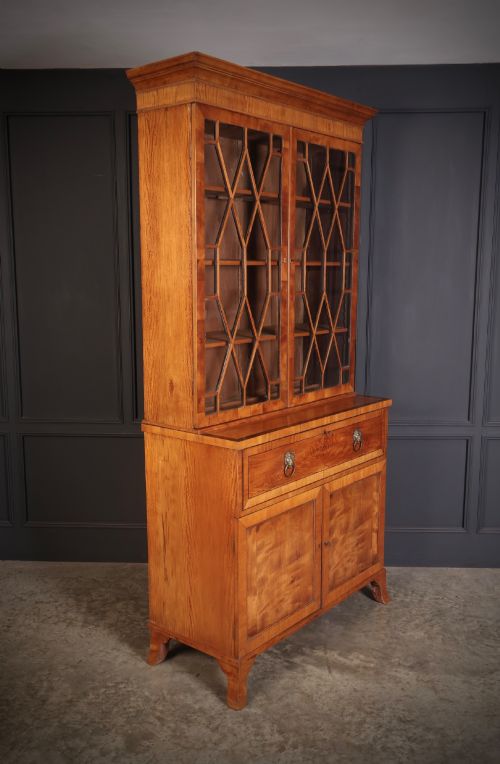
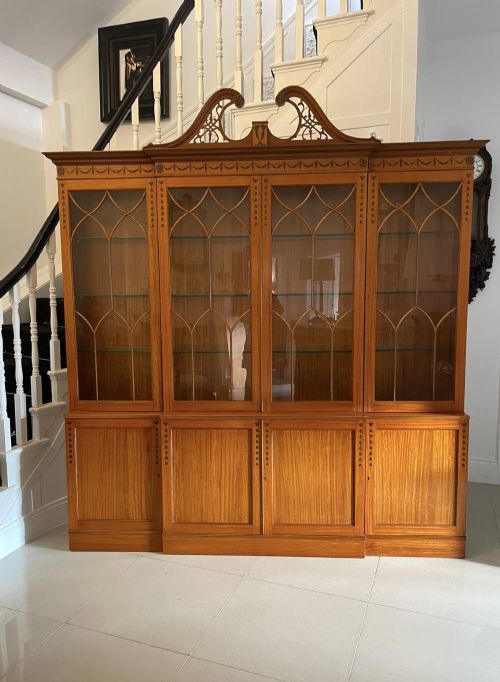

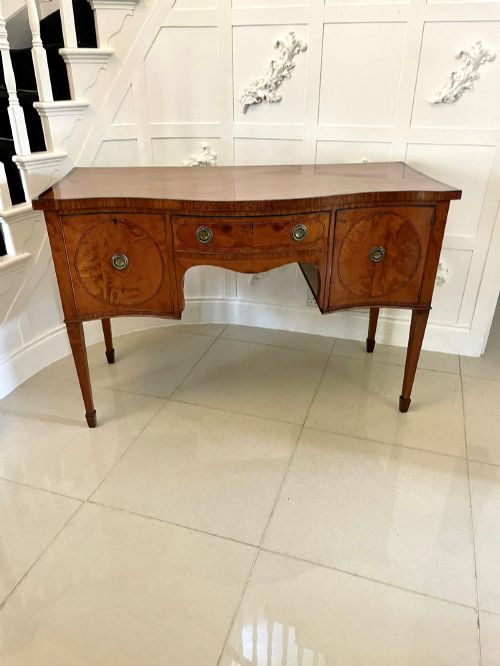
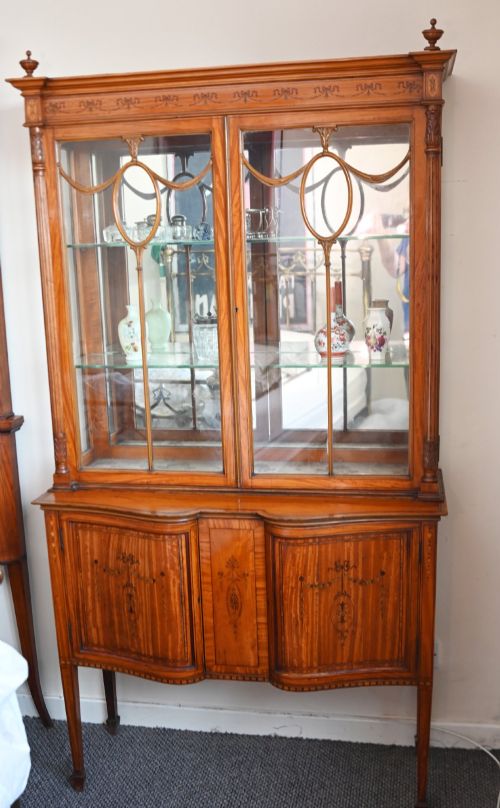
Golden Satinwood Cabinet
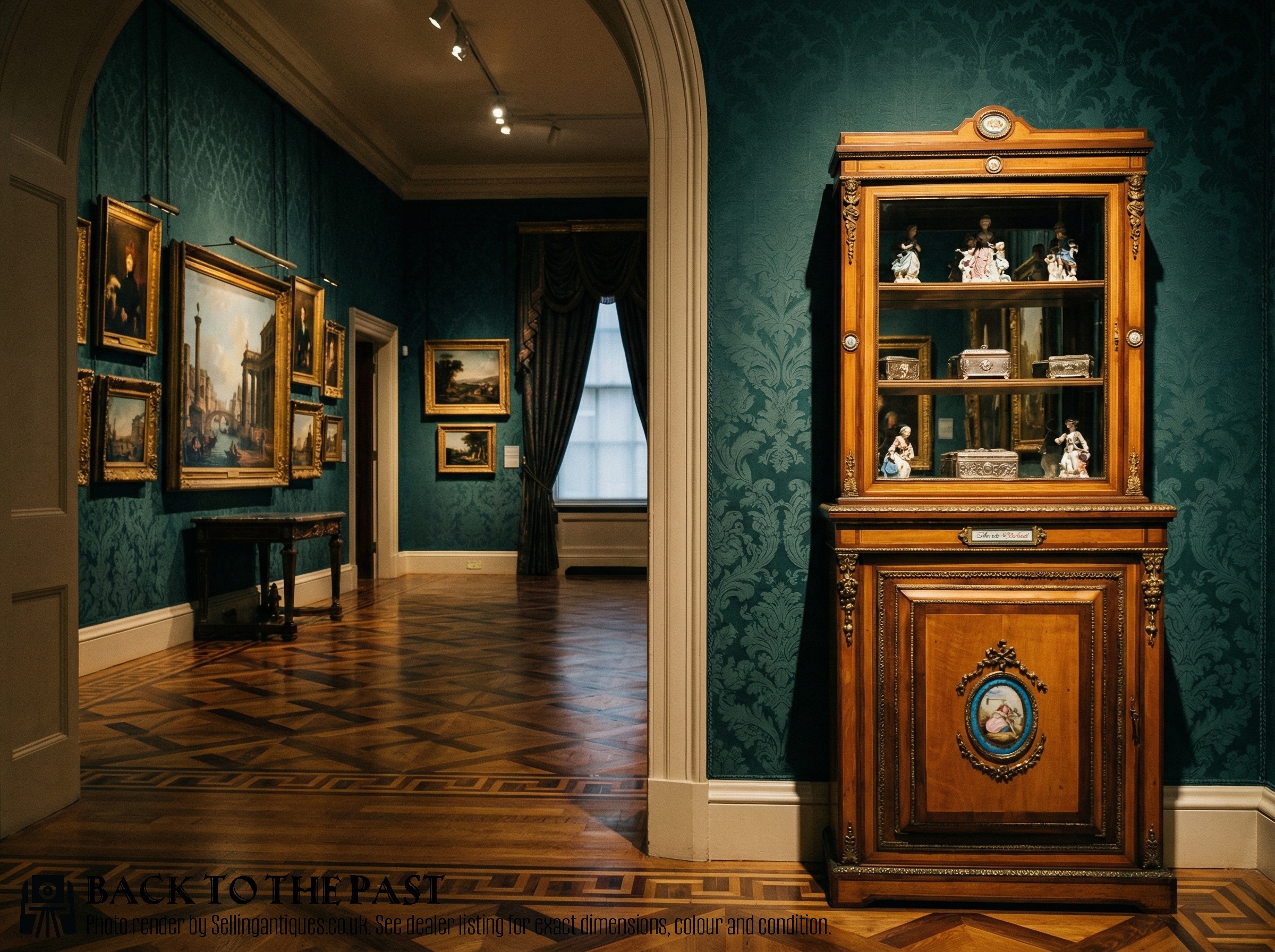
A golden satinwood cabinet brings pale warmth and fine timber grain into a room, offering both display space and refined storage.

Golden Satinwood Cabinet
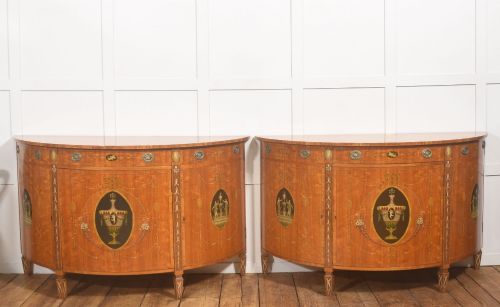
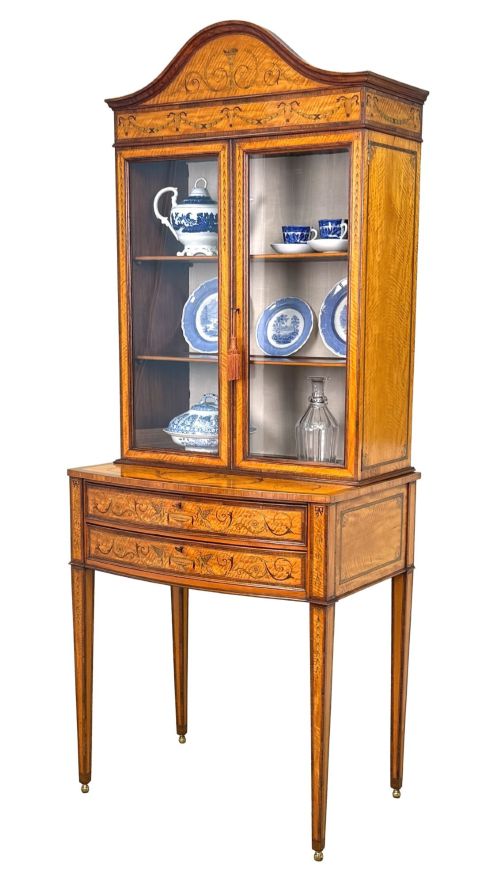
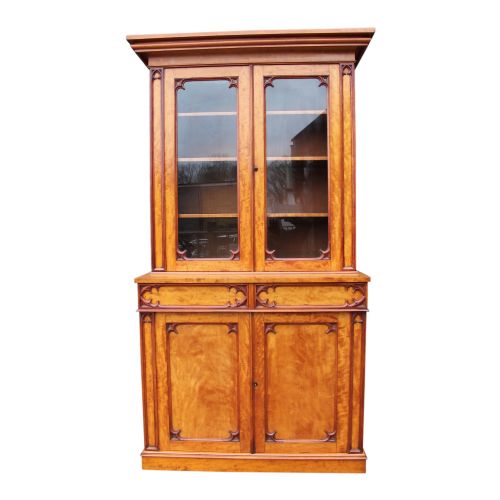
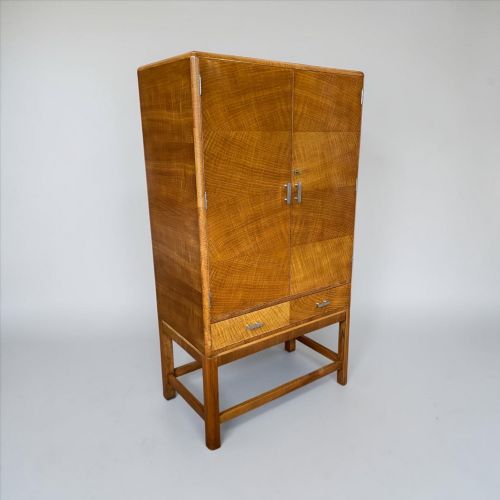
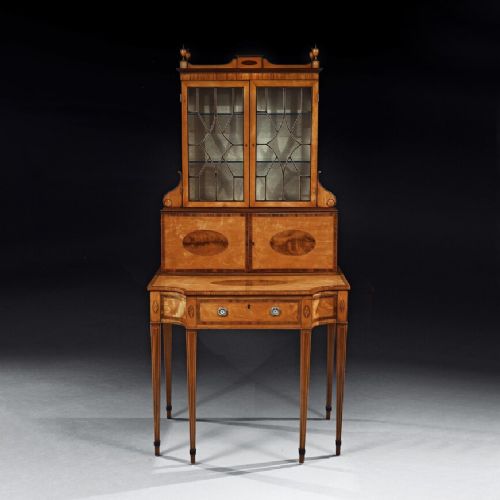
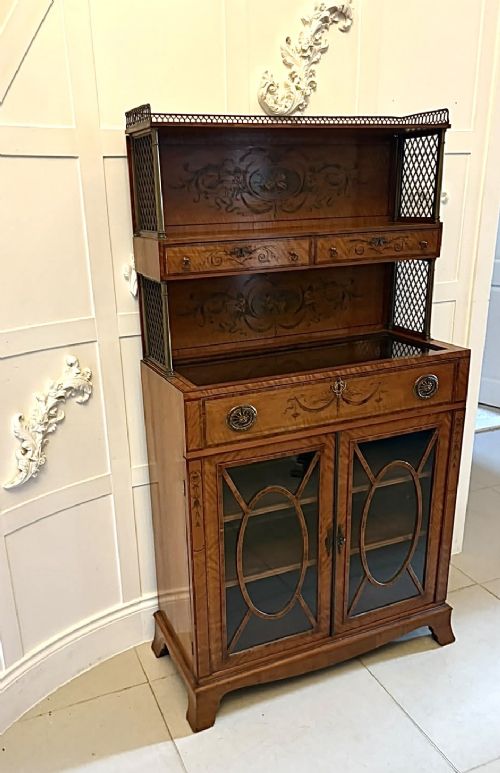
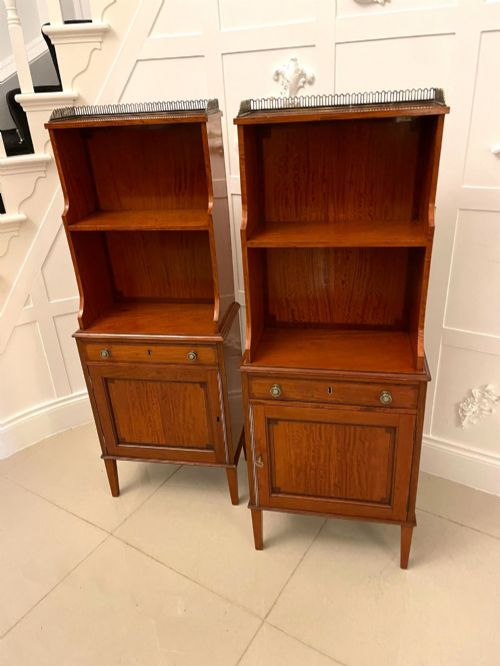
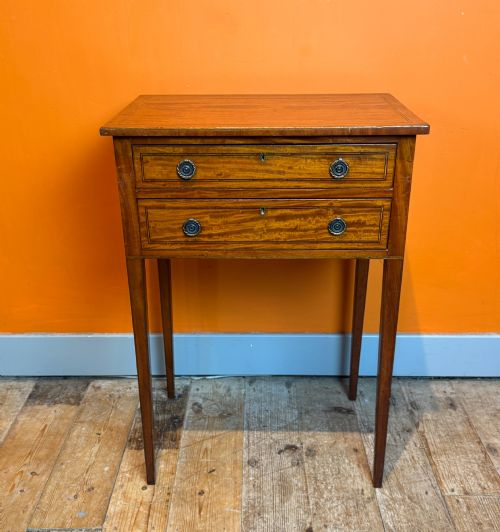
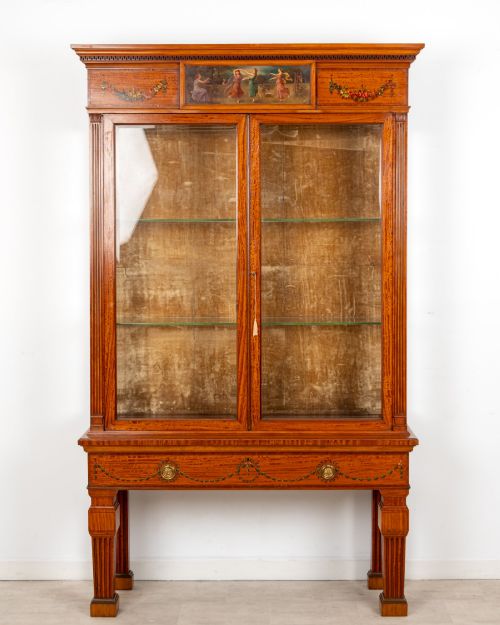
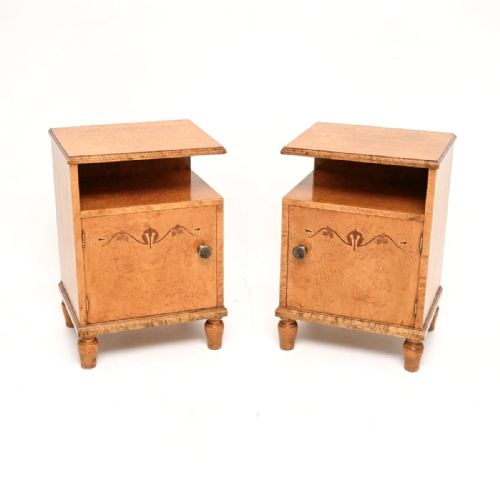
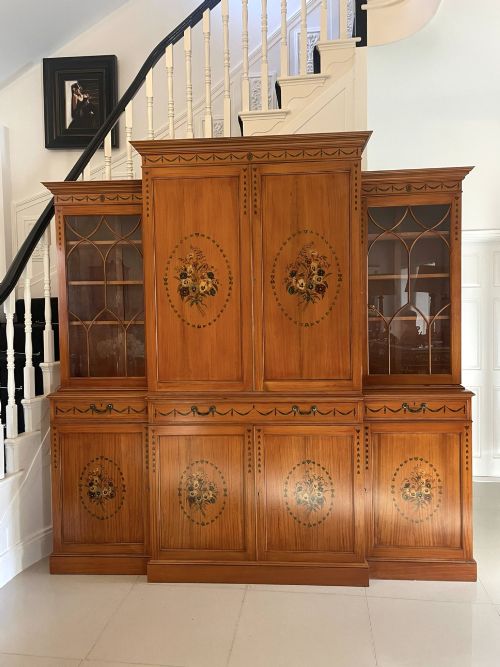
A golden satinwood cabinet appears in forms ranging from compact bedside cupboards and commodes to expansive breakfront display cabinets and tall bookcases. These pieces span the eighteenth, nineteenth, and early twentieth centuries, with heavy representation from the Victorian, Edwardian, and Sheraton Revival periods.
Buyers encounter specialised storage forms such as bijouterie tables, secretaire bookcases, and demi-lune side cabinets alongside simpler bedside chests. Many items exhibit stylistic influences including Neoclassical, Art Deco, and Georgian designs.
The most frequent examples on this page date from the Victorian and Edwardian eras, often displaying inlaid woodwork or painted decoration characteristic of the Sheraton Revival style.
Materials and construction
Cabinet makers utilised satinwood as the primary timber, valued for its lustrous, light-reflecting grain and golden tone. This wood is frequently combined with secondary timbers such as mahogany, walnut, and satin birch.
Decoration relies heavily on wood inlay, marquetry, and painted details, sometimes accented with ormolu mounts, marble tops, glass panels, and brass hardware. Construction techniques join solid frames with carefully applied veneers to display the distinctive pattern of the satinwood.
Golden Satinwood Cabinet Retail Price Guide 2026
Typical asking prices for golden satinwood cabinet among the pieces listed under this phrase on Sellingantiques today, from the lower quarter to the upper quarter. They describe what is for sale here now, not the wider market.
Materials appearing across the inventory include satinwood, walnut, mahogany, rosewood, brass, marble, glass, and fabric.
Gradations of quality
Quality rests upon the selection of the satinwood veneer and the precision of the marquetry or painted decoration. Finer examples display balanced grain matching across the doors and panels, executed by established cabinet makers rather than provincial workshops.
The integrity of the structural joinery, the inclusion of original brass fittings or marble tops, and the subtlety of hand-painted motifs separate ordinary production pieces from works of superior craftsmanship.
Hampton and Sons·Edwards and Roberts·Gillows·Maple and Co·James Hicks·Harry and Lou Epstein·Mercier Freres
The Golden Satinwood Cabinet Glossary
- Satinwood
- A dense tropical timber with a luminous, golden sheen. It takes a high polish and forms the visual base of these cabinets.
- Marquetry
- The art of applying pieces of veneer to a structure to form decorative patterns. Craftsmen use contrasting woods to create pictorial designs on cabinet doors.
- Demi-lune
- Half-moon shaped in plan. This form is common in side cabinets and commodes designed to sit flush against a wall.
- Ormolu
- Gilt bronze mounts applied to furniture. These decorative elements frame doors and highlight corners on nineteenth-century pieces.
- Astral glazed
- Glass panels held within a wooden framework of slender bars. This technique allows light into display cabinets while organising the viewing area.
Golden Satinwood Cabinet: Frequently Asked Questions
How do I care for satinwood furniture?
Keep wooden cabinets away from direct sunlight and rapid humidity changes to protect the delicate veneer and finish. Dust gently with a dry cloth and avoid modern aerosol polishes.
Wax can be applied sparingly to nourish the timber, provided it suits the specific polish or lacquer on the surface.
How can I tell Sheraton Revival from Georgian?
Sheraton Revival pieces date from the late nineteenth or early twentieth century and frequently use lighter construction with machine-cut veneers and specific revival markings. Original Georgian pieces date from the eighteenth century and show hand-cut joinery methods appropriate to that era.
Examining the internal drawer construction and timber backing boards helps clarify the actual period of manufacture.
Where were these cabinets used?
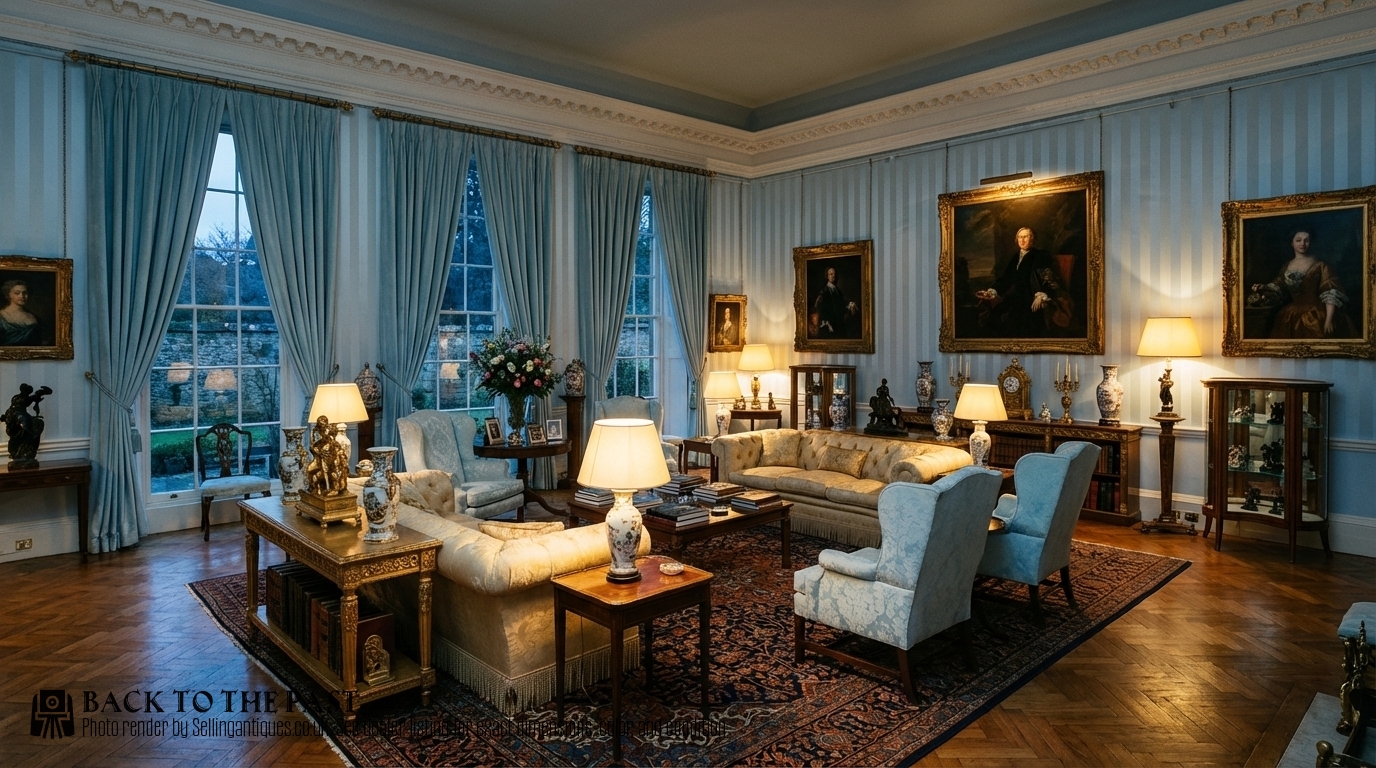
Bedside cabinets and chests served bedrooms for holding night-time essentials, while larger display pieces stood in drawing rooms or libraries to showcase porcelain and books. Side cabinets and commodes functioned in dining rooms and hallways for general storage.
Their decorative painted surfaces and glazed doors made them suitable for principal entertaining rooms.
Are painted satinwood cabinets original?
Many Edwardian and Sheraton Revival cabinets feature hand-painted floral swags, ribbons, or classical figures applied directly to the satinwood during manufacture. These decorative schemes match the aesthetic tastes of the period in which they were built.
Closer inspection of the pigment and underlying wood helps distinguish factory-original decoration from later embellishments.