

Sheraton Satinwood Bookcase
A sheraton satinwood bookcase brings refined geometry and luminous timber together, offering a stately home for a library.
Sheraton Satinwood Bookcase
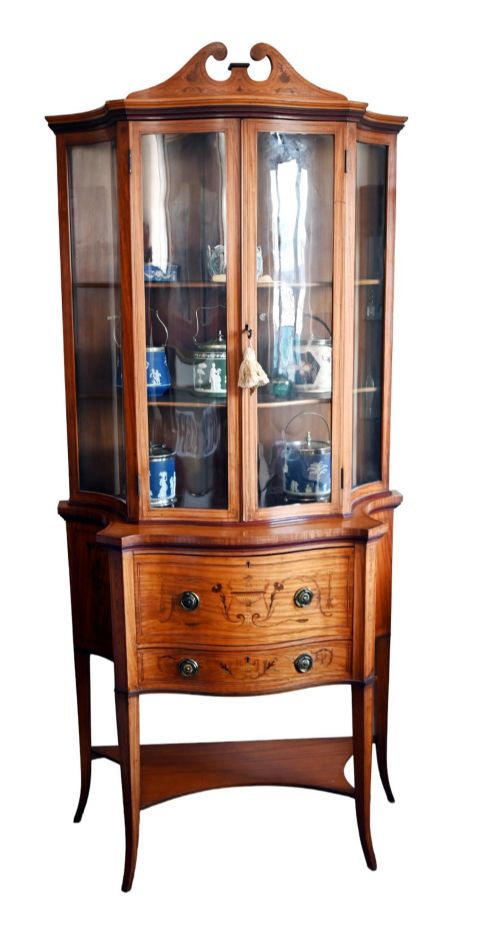
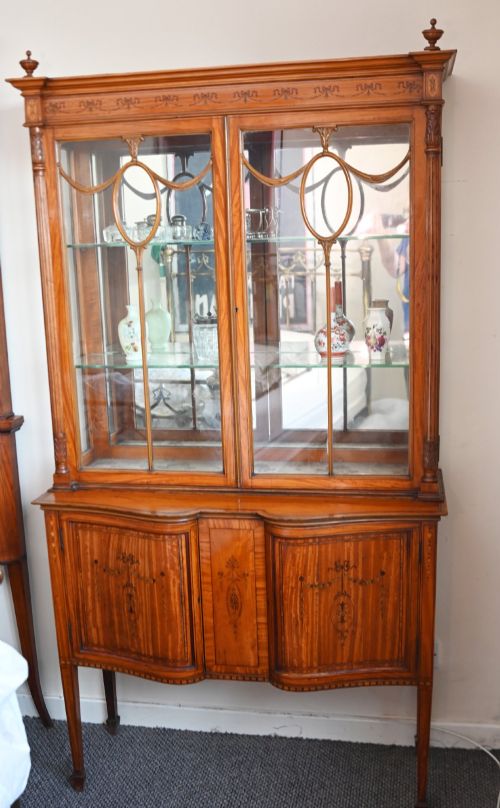
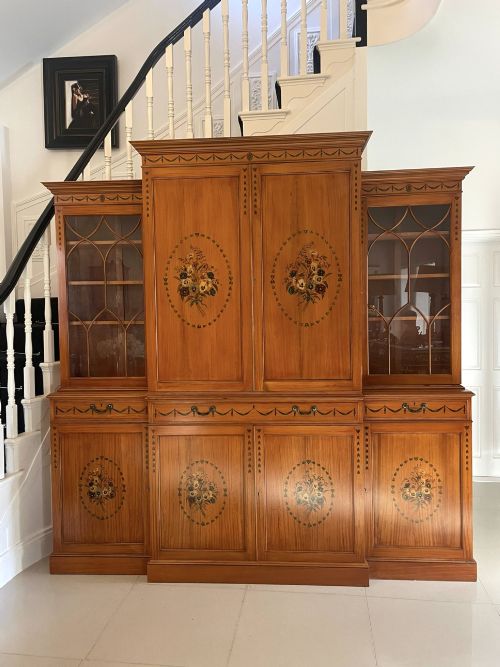
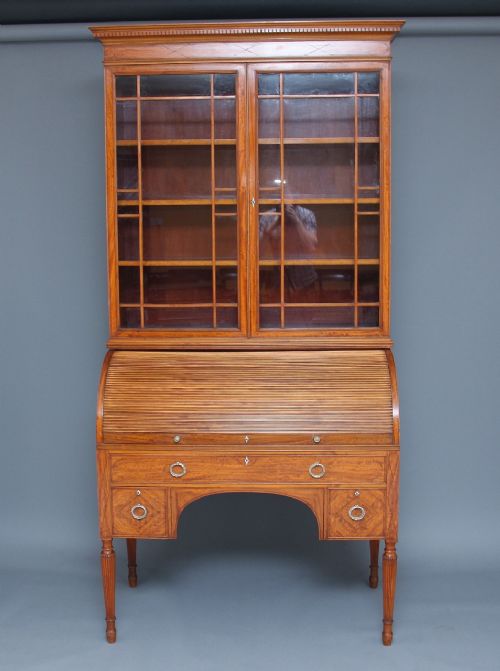
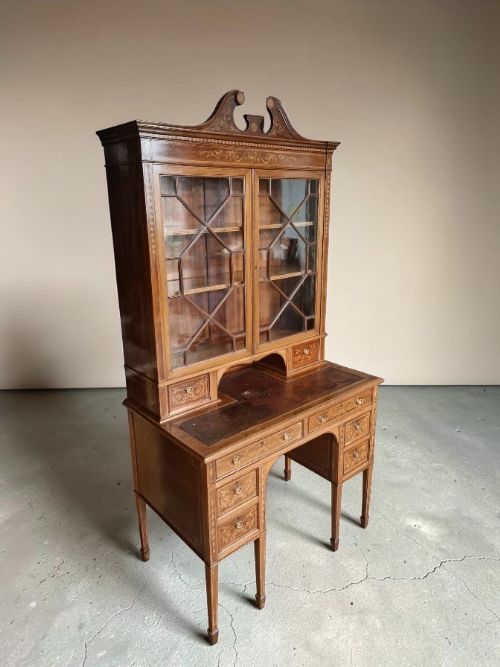
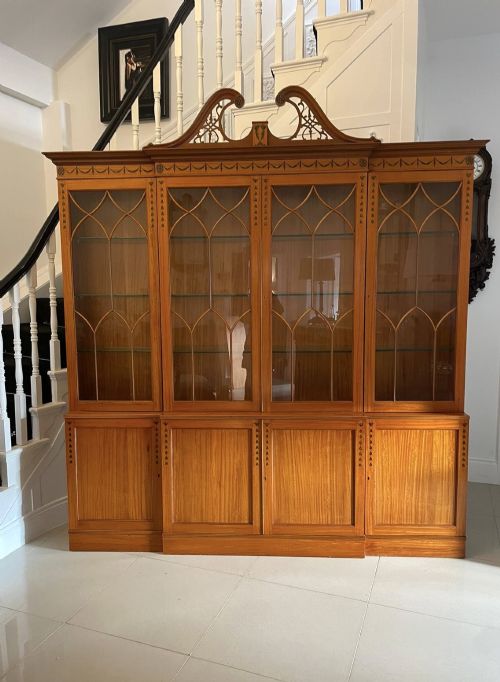
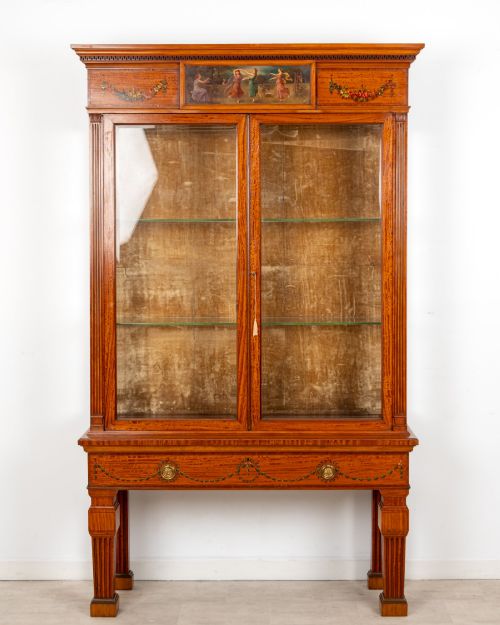
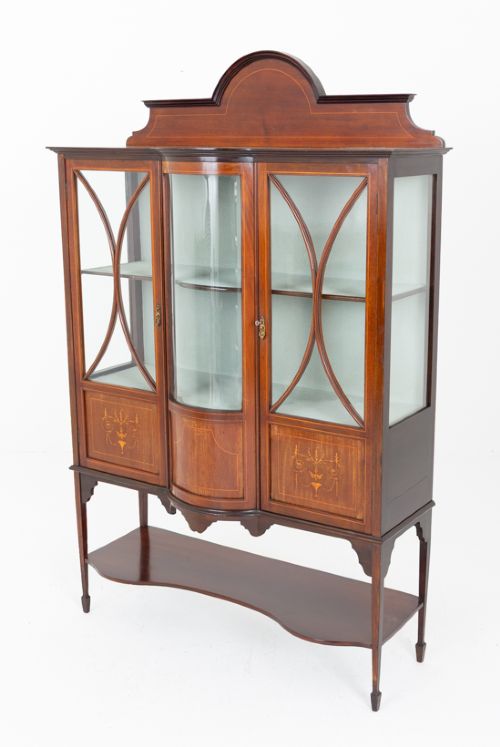
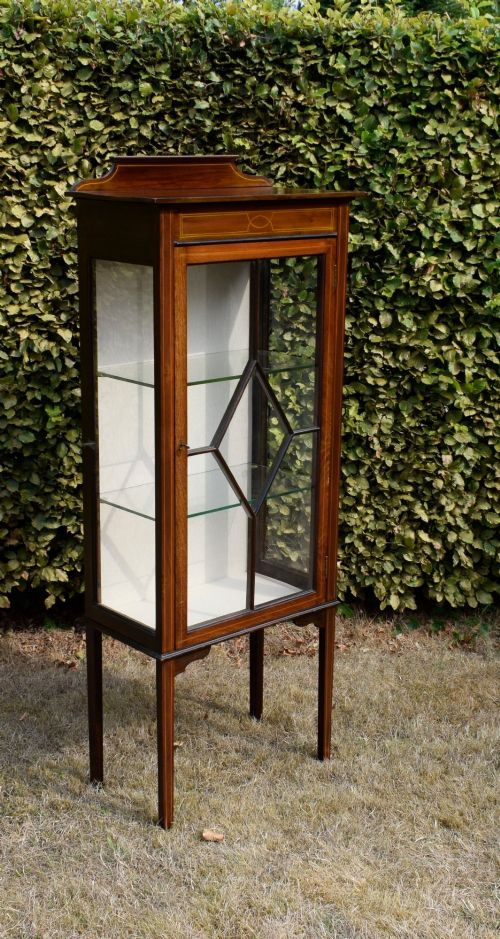
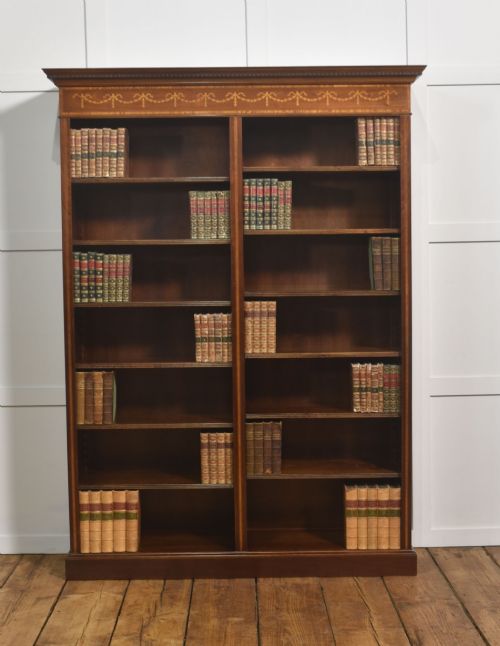
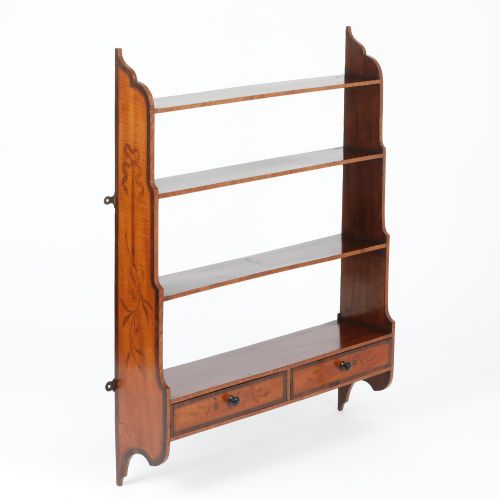
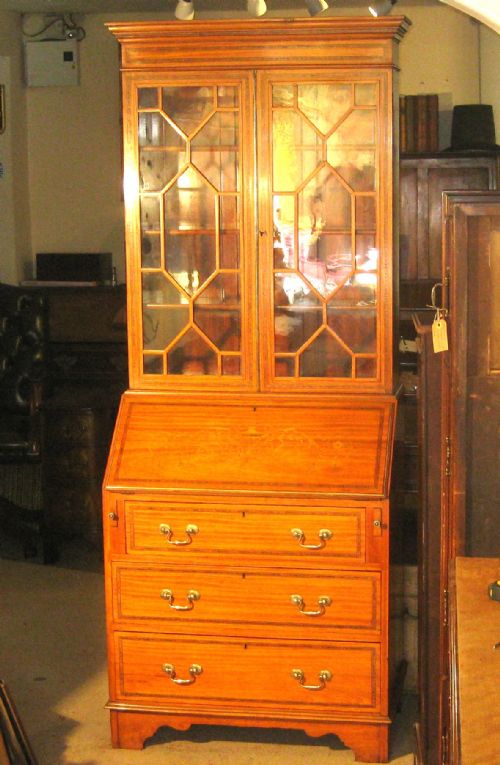
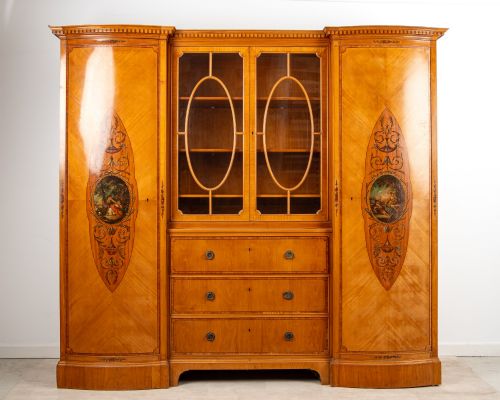
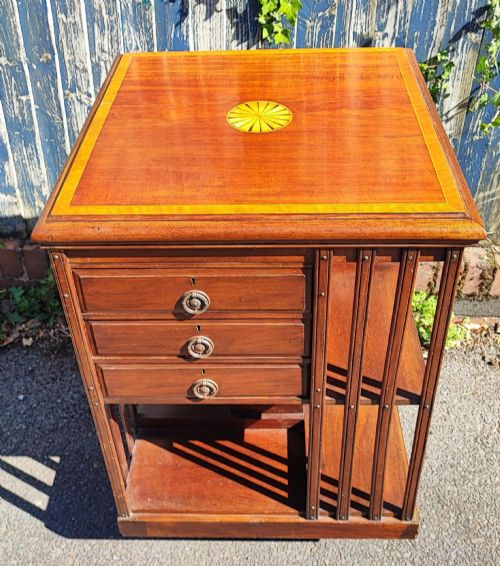
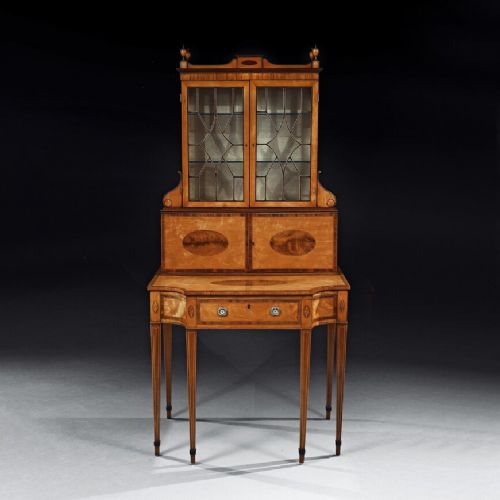
When you search for a sheraton satinwood bookcase, you encounter forms that span George III originals to Edwardian Sheraton Revival interpretations. The pieces on this page appear primarily as display cabinets, bureau bookcases, and open bookcases constructed from light timbers.
Makers and workshops from the nineteenth and early twentieth centuries reproduced these classical proportions in satinwood, mahogany, and contrasting veneers. You will regularly find glazed doors, painted panels, and inlaid friezes defining the facade of these cabinets.
Materials and construction
Cabinet makers utilised satinwood as a primary veneer, selected for its shimmering grain and pale yellow tone. This timber is frequently combined with mahogany, boxwood, and rosewood to create linear stringing and intricate marquetry panels.
Glazing bars are arranged in geometric astragal patterns across the doors, while interiors often incorporate adjustable shelving and fitted bureau compartments. Hand-painted decoration and brass hardware complete the construction of these refined pieces.
Some cabinets hide tiny secret drawers behind decorative book spines within the bureau interiors.
Assessing quality and execution
The distinction between standard production and exceptional work lies in the precision of the wood inlay and the choice of timber figures. Finer pieces display crisp boxwood lines and symmetrical flame veneers that require advanced joinery skill.
Original painted decoration and untouched brass handles elevate the standing of a cabinet. The integration of structural elements, such as astragal glazed doors and balanced proportions, marks the difference in cabinetmaking standards.
Hampton & Sons·Edwards & Roberts·Maple & Co·Waring & Gillow
The Sheraton Satinwood Bookcase Glossary
- Astragal
- A small moulding used to divide glass panes within a door. These wooden strips form delicate geometric patterns across the front of a bookcase.
- Marquetry
- Decorative veneer work arranged in pictorial or ornamental patterns. Pieces utilise contrasting woods to form classical motifs.
- Satinwood
- A tropical hardwood known for its golden lustre and reflective sheen. It serves as the principal surface timber for these cabinets.
- Secretaire
- A desk disguised as a drawer, featuring a drop-front writing surface. It conceals small pigeonholes and compartments inside the cabinetry.
- Stringing
- Thin inlay lines of contrasting wood used to outline drawers and panels. This technique highlights the structural geometry of the furniture.
Sheraton Satinwood Bookcase: Frequently Asked Questions
How do I spot a George III original?
George III pieces originate from the eighteenth century, showing authentic hand-cut dovetails and mature timber patination. The construction methods reflect manual joinery rather than the machine-assisted processes seen in later revivals.
Original hardware and aged secondary woods like oak or pine inside the drawers provide further confirmation of an eighteenth-century date. Examine the interior carcass and backboards for signs of early hand planing.
What is the difference in Sheraton Revival?
Sheraton Revival furniture dates from the late nineteenth and early twentieth centuries, drawing inspiration from the earlier Georgian designs. These pieces adopt the lighter proportions and painted motifs associated with the original eighteenth-century style.
While sharing aesthetic traits, revival pieces utilise manufacturing techniques from the Victorian and Edwardian eras. They offer the visual elegance of the earlier period with the robust construction of the late nineteenth century.
How should I care for satinwood?
Satinwood requires protection from direct sunlight to preserve its pale golden colour and prevent the timber from darkening excessively over time. Maintain a stable room humidity to keep the delicate veneers from lifting.
Apply a microcrystalline wax periodically to nourish the surface and clean away dust with a soft, dry cloth. Avoid using silicone polishes that can degrade the antique finish.
Where were bureau bookcases used?
Bureau bookcases served as multifunctional furniture in historic homes, functioning as both a writing desk and a library storage unit. The drop-front flap provided a private surface for correspondence and ledger work.
Upper glass-fronted shelves kept valuable volumes protected from dust while displaying fine bindings in a study or drawing room. The lower cupboards offered concealed storage for papers and household accounts.