


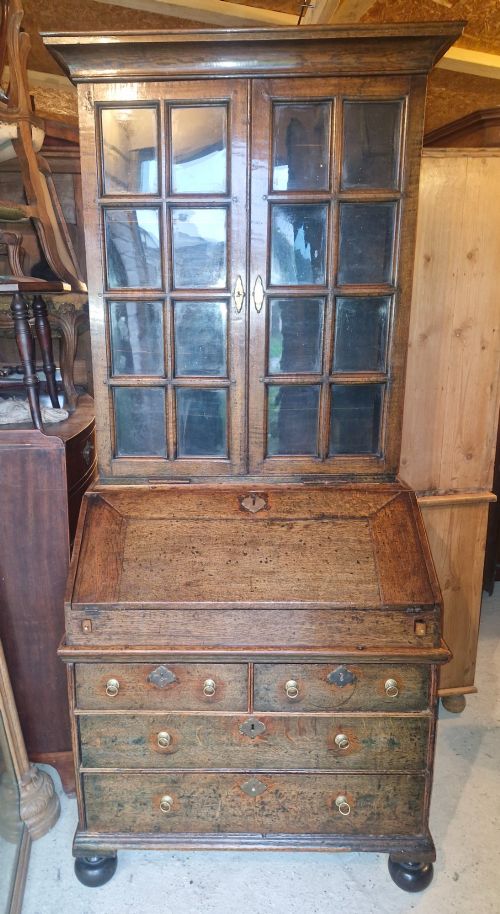
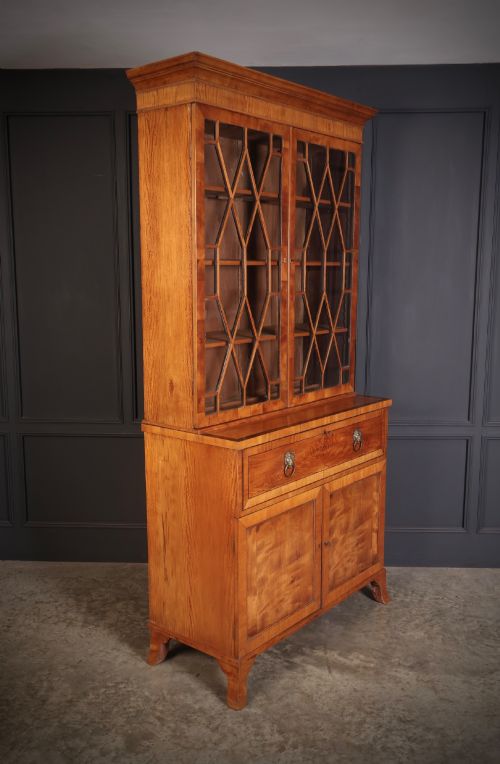
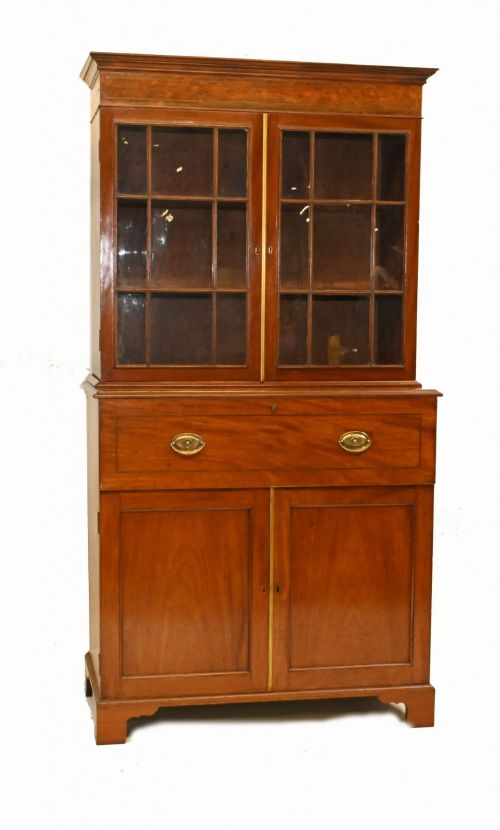
Georgian Glazed Secretary Desk
These substantial Georgian glazed secretary desk pieces combine a writing drawer with upper shelving behind glass, built for serious home administration.
Georgian Glazed Secretary Desk
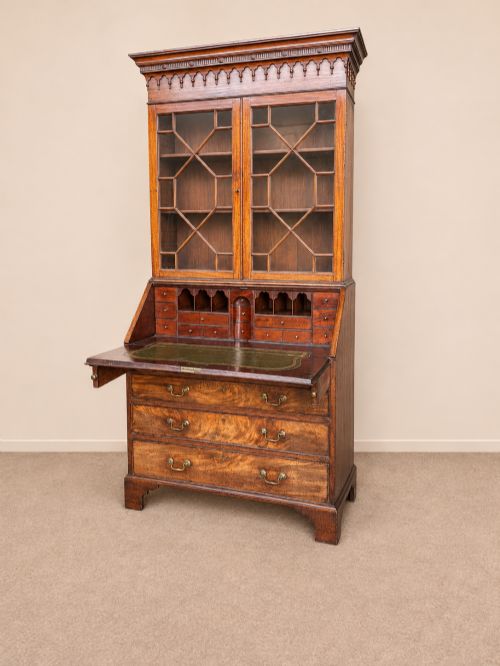
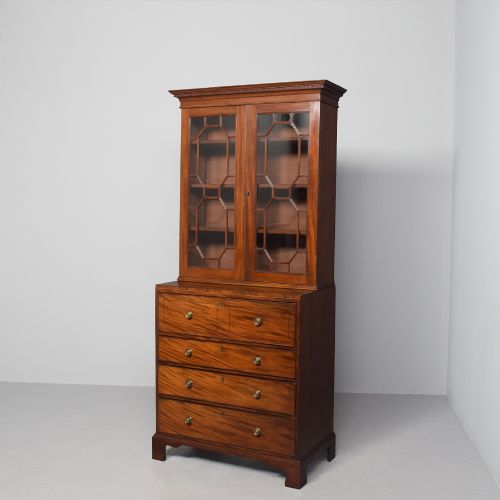
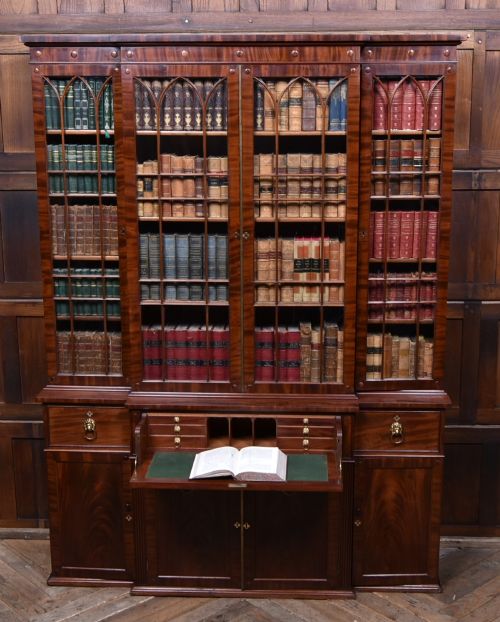
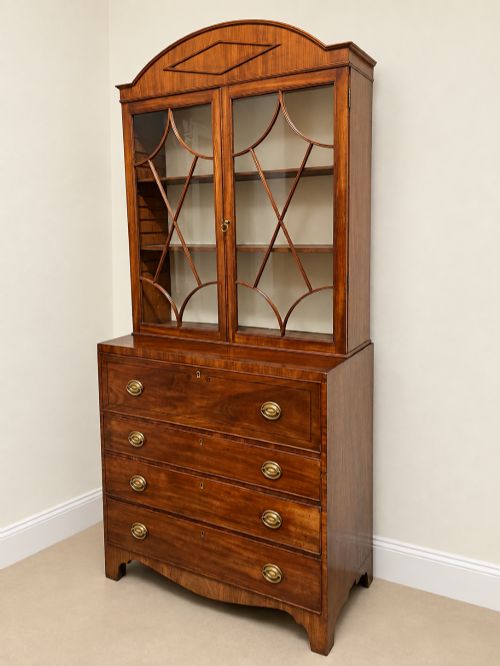
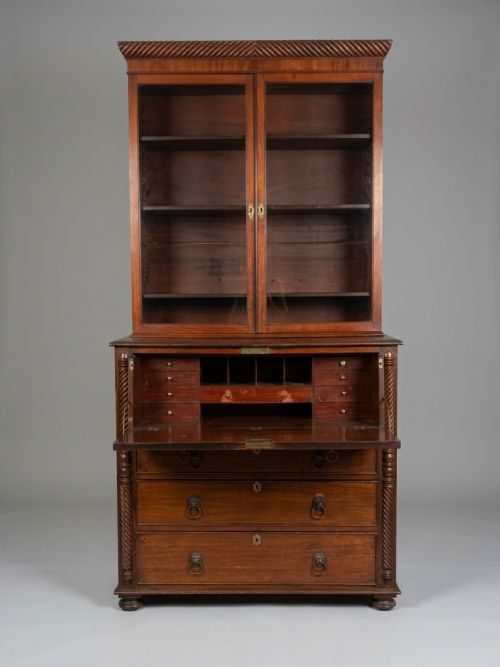
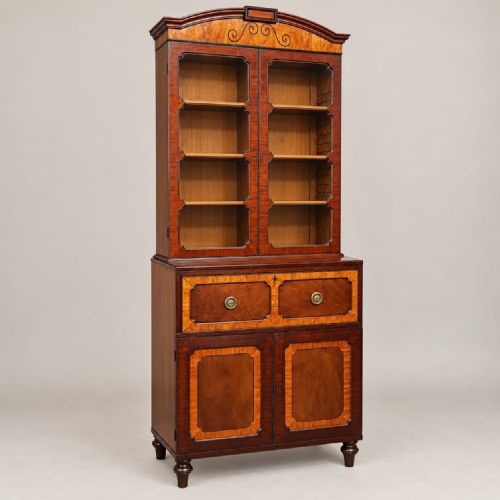
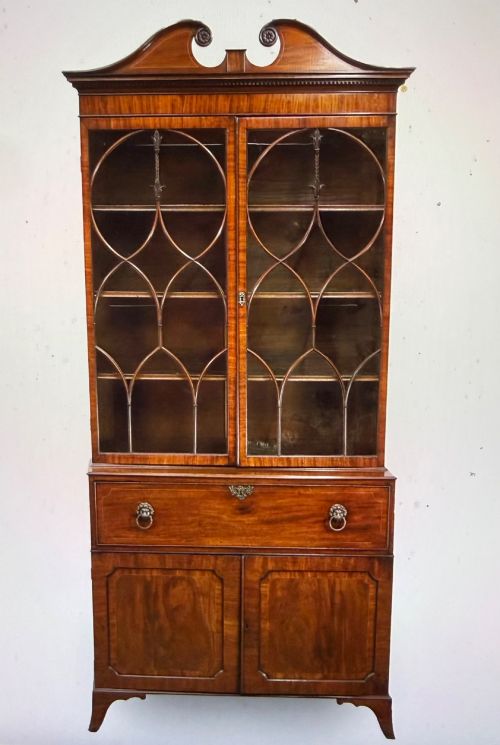
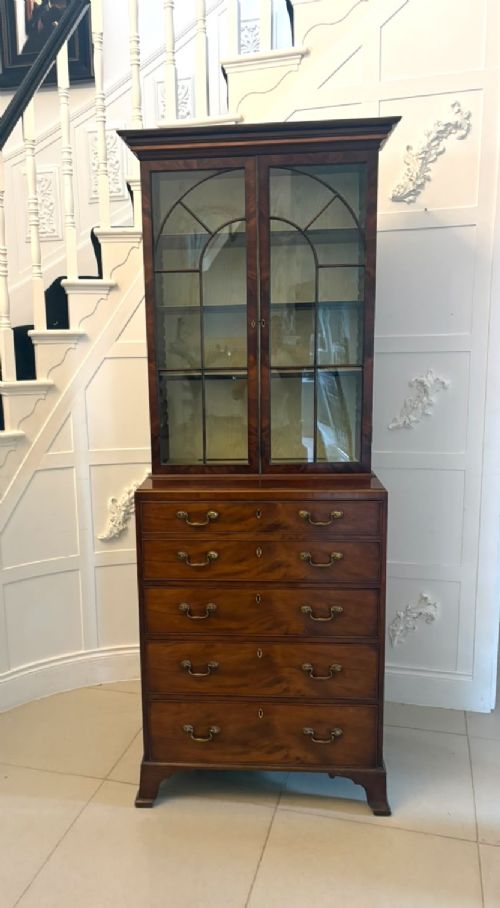
A georgian glazed secretary desk brings together a glazed upper bookcase cabinet and a fitted writing drawer with a drop-down fall front. These dual-purpose items served as both libraries and private administrative stations in grand houses.
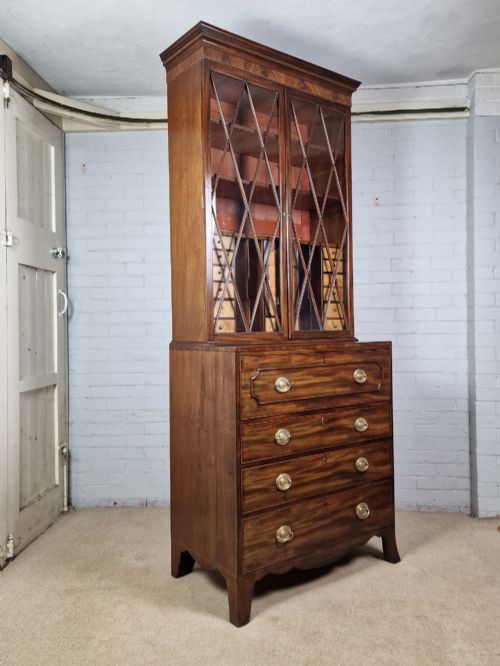
The most common examples encountered on this page date from the Georgian and Regency periods, rendered primarily in rich timber forms. They appear under various historic terms including secretaire bookcases, bureau bookcases, and library cabinets.
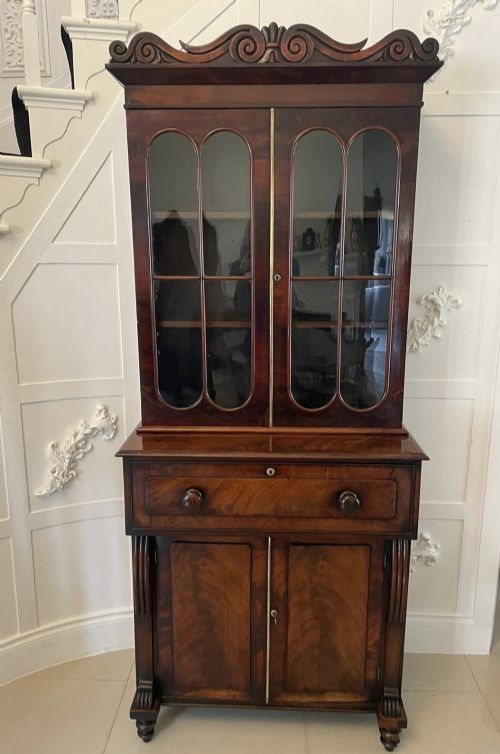
Craftsmen built these pieces in both tall grand proportions and smaller neat dimensions, allowing them to fit domestic spaces of varying scales while maintaining substantial storage capacity.
Distinguishing quality across examples
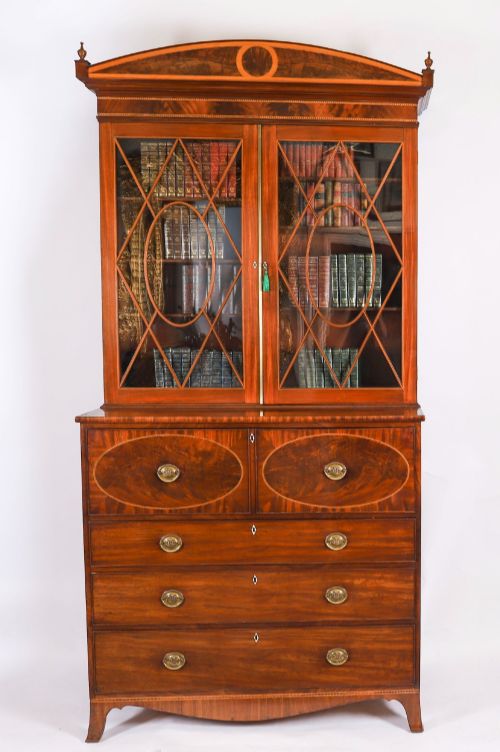
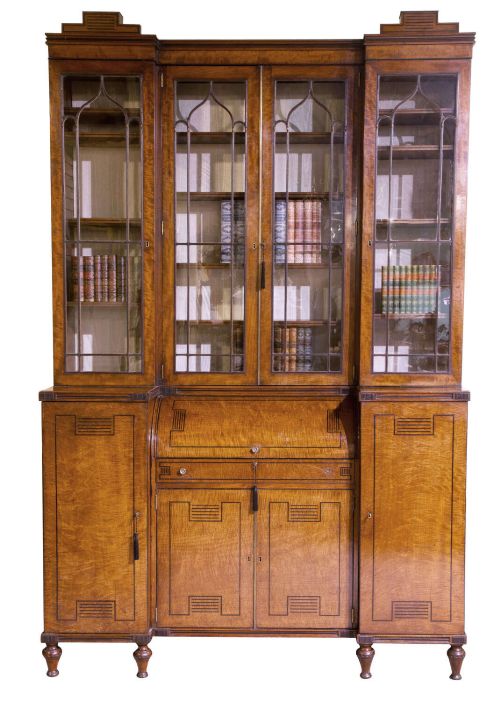
The selection of timber grain dictates much of the visual appeal, separating standard mahogany boards from highly figured flame mahogany and richly contrasted satinwood veneers. Finer pieces demonstrate careful book-matching where grain patterns mirror across panel surfaces.
The execution of interior stationery fittings within the pull-out drawer reveals the maker's hand, distinguishing simple pigeonholes from serpentine secret compartments and finely turned small drawers. Glazing bar refinement also marks the division between standard utility pieces and high-status commissions.
Proportion and scale dictate desirability, with narrow tall cabinets or exceptionally neat shallow depths commanding greater attention than standard heavy carcases.
Georgian Glazed Secretary Desk Retail Price Guide 2026
Typical asking prices for georgian glazed secretary desk among the pieces listed under this phrase on Sellingantiques today, from the lower quarter to the upper quarter. They describe what is for sale here now, not the wider market.
Listings span multiple historical eras including the Georgian, Regency, Edwardian, and Victorian periods, executed in mahogany, satinwood, walnut, and oak.
Gillows of Lancaster·Tudor & Burrey
The Georgian Glazed Secretary Desk Glossary
- Secretaire Bookcase
- A dual-purpose tall furniture form featuring an upper shelving cabinet enclosed by glass doors above a pull-out desk drawer. This term appears frequently alongside bureau bookcase in historic descriptions.
- Astragal Glazed
- A style of glass door construction where thin wooden strips divide the large window area into smaller individual panes. These glazed frameworks protect stored volumes from dust while maintaining visibility.
- Fall Front
- A hinged writing flap that pulls down to form a horizontal desk surface, concealing internal pigeonholes and small private drawers when closed. This folding mechanism defines the working section of the desk.
- Flame Mahogany
- A wood veneer cut from the branch forks of the mahogany tree, producing a distinct flickering flame pattern across the panel. Cabinet makers reserved this timber for principal facade surfaces.
- Satinwood
- A pale yellow exotic hardwood prized for its reflective sheen and smooth texture, used extensively for fine stringing and contrasting geometric inlay work.
Georgian Glazed Secretary Desk: Frequently Asked Questions
How do I use the writing drawer?
The top drawer pulls forward and the front hinges downward to reveal an internal arrangement of small drawers and pigeonholes. This creates a stable writing platform without requiring a separate table.
Fold the writing flap back up and push the drawer home when you finish your correspondence to conceal your papers behind the main facade.
What is the glass used for?
Upper cabinet doors feature clear glass panes held by wooden astragal bars to display leather-bound library volumes while protecting them from dust and ambient moisture. This turns the upper section into a formal display bookcase.
Most historic pieces retain their original glass panes, which often display slight surface ripples characteristic of early manufacturing methods.
How do I distinguish Georgian from Regency pieces?
Georgian examples generally exhibit restrained classical proportions with straight bracket feet and conservative astragal glazing patterns. Timber choices lean toward dense brown mahogany with subtle decorative banding.
Regency and George IV iterations often introduce bolder architectural forms, richer figured flame veneers, and occasionally brass inlay work reflecting evolving neoclassical tastes.
Where should I place a tall cabinet?
These tall pieces require stable wall placement in rooms with adequate ceiling height to accommodate their substantial vertical presence. Position them away from direct sunlight and heating vents to protect the antique timber and veneer.
Ensure the floor surface is level so the heavy carcase doors and internal desk drawers operate smoothly within their frames.