

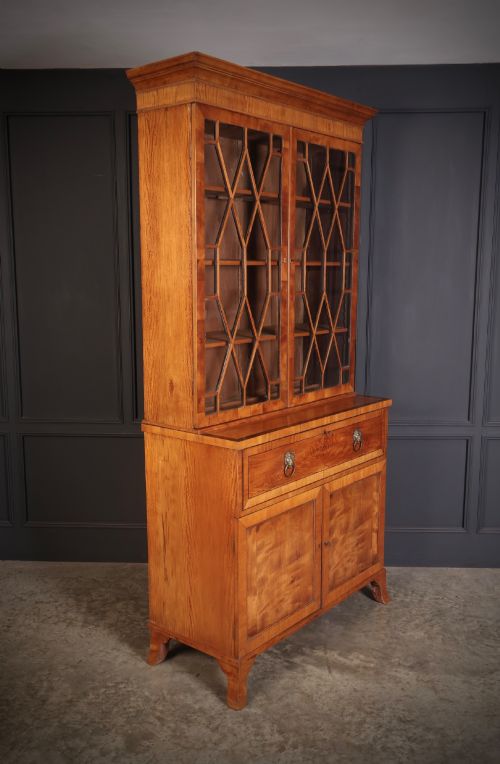
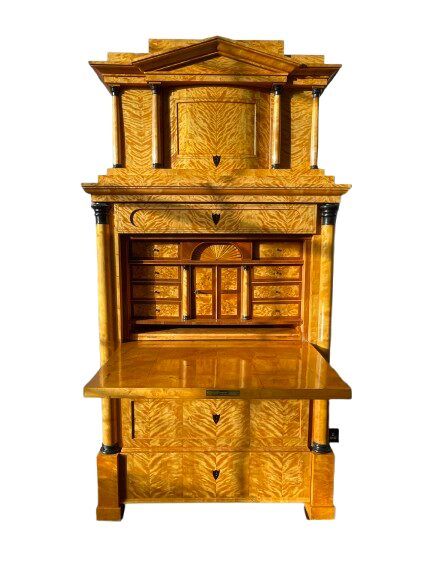


Satinwood Secretaire Desk
A satinwood secretaire desk combines a fine writing drawer with elegant cabinetry, offering refined workspace and concealed storage for the discerning interior.
Satinwood Secretaire Desk
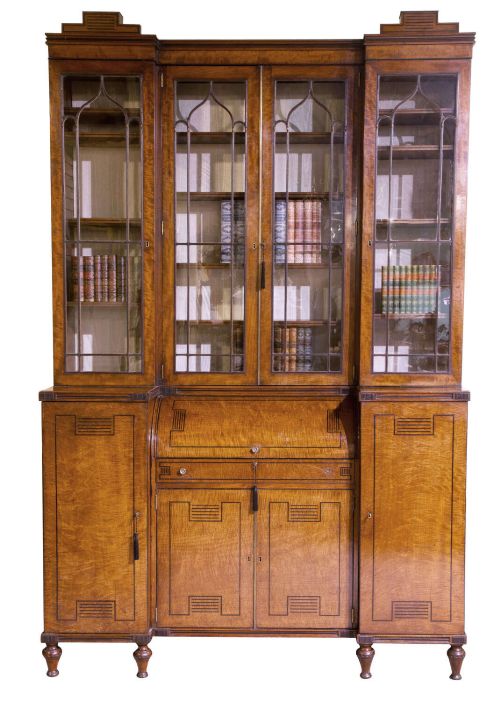
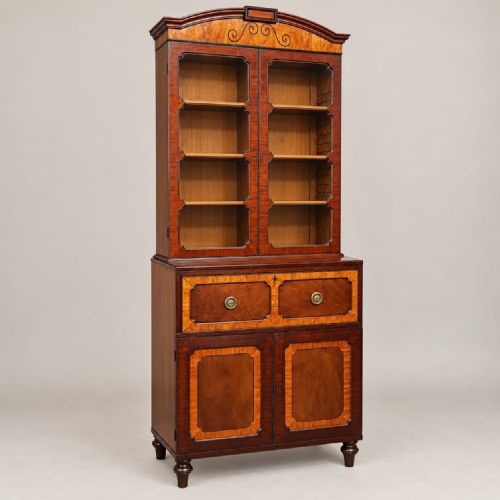
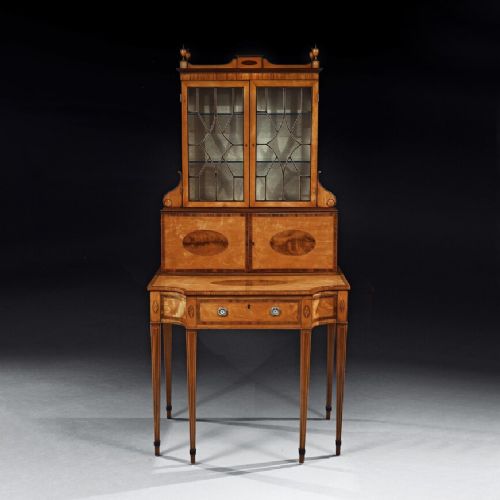
A satinwood secretaire desk brings together the warm glow of exotic timber and the clever utility of a drop-front writing drawer. These pieces range from compact chests and writing cabinets to grand bookcases fitted with glazed upper doors.
The selections span multiple eras, with George III and Regency examples appearing alongside 19th Century Biedermeier cabinets and Edwardian revivals. You will encounter forms incorporating mahogany carcases, ebony stringing, and elaborate marquetry details.
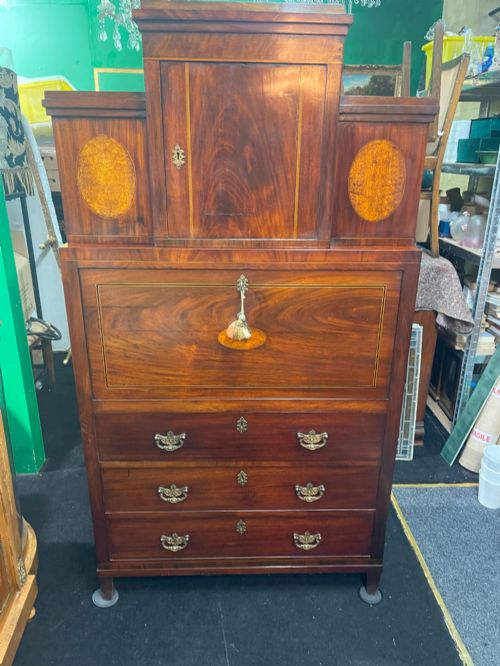
The primary focus remains the fall-front writing surface that conceals fitted interior compartments, pigeonholes, and small drawers. Such furniture served elite domestic interiors as sophisticated writing stations and display cabinets alike.
How they were made
Cabinetmakers utilised dense native and imported timbers, laying figured satinwood veneers over sturdy foundational carcases of mahogany or walnut. Secondary woods and structural supports often included oak or pine depending on the workshop origin.
Surface decoration relied on intricate contrasting stringing, geometric banding in ebony, and pictorial marquetry panels. Glazed doors featured delicate wooden glazing bars, whilst drawers incorporated fine hand-cut dovetail joinery.
Fittings included cast brass handles, escutcheons, and working locks that secured both the primary fall-front and internal compartments. Biedermeier variations focused on clean architectural lines that highlighted the natural grain patterns of the wood.
Satinwood Secretaire Desk Retail Price Guide 2026
Typical asking prices for satinwood secretaire desk among the pieces listed under this phrase on Sellingantiques today, from the lower quarter to the upper quarter. They describe what is for sale here now, not the wider market.
Object forms span Secretaire Bookcases, writing cabinets, and compact chests with integrated fall-front writing compartments.
What varies in quality
The grade of a satinwood secretaire desk rests upon the selection and matching of the veneer figures across the primary surfaces. Superior examples display symmetrical grain patterns that wrap fluidly around drawer fronts and cabinet doors.
The complexity of the interior stationery fittings also distinguishes standard utility pieces from exhibition grade creations. Finely turned small drawers, secret compartments, and delicately inlaid doors reveal the hand of a master cabinetmaker.
The integrity of the structural carcass and the crispness of the inlay work dictate the lasting distinction of the piece. Subtle details such as fine cockbeading around drawer edges separate workshop standards.
Edwards and Roberts·Gillows
The Satinwood Secretaire Desk Glossary
- Secretaire
- A desk or cabinet featuring a drop-front drawer that opens to reveal a writing surface and small interior pigeonholes. This clever mechanism conceals writing materials when not in use.
- Satinwood
- A light yellowish timber prized for its lustrous, reflective grain and smooth texture. It takes a high polish and forms the principal decorative surface on these cabinets.
- Marquetry
- The art of forming decorative patterns by fitting together thin veneers of different coloured woods. Craftsmen cut these intricate designs to adorn drawer fronts and cabinet doors.
- Sabicu
- A heavy, durable tropical hardwood often used alongside satinwood in 18th Century cabinet making. Its rich tone provides a strong visual contrast.
- Stringing
- Thin inlaid lines of contrasting timber used to outline panels and drawer edges. This linear detail defines the geometric elegance of Sheraton and Regency furniture.
Satinwood Secretaire Desk: Frequently Asked Questions
What is a satinwood secretaire desk?
A satinwood secretaire desk is a refined piece of antique furniture featuring a drop-front writing drawer that conceals inner compartments. The exterior showcases the distinctive light, golden timber known as satinwood.
These versatile items function both as compact writing desks and elegant display cabinets or chests. They represent a high point of 18th and 19th Century cabinet making.
How do I date a satinwood desk?
Dating relies on examining the structural woods, secondary framing, and decorative styles such as George III neoclassical lines or Regency proportions. Inlays, brass hardware, and construction methods offer further clues.
Early pieces often feature solid mahogany carcases with fine veneers, whilst Edwardian revivals reflect later manufacturing techniques. Comparing the internal secondary timbers helps confirm the era.
Where were secretaire desks used?
These desks were housed in the principal reception rooms, libraries, and private bedchambers of grand townhouses and country estates. Their dual purpose suited polite correspondence and private record keeping.
The handsome exterior allowed them to sit comfortably alongside formal drawing-room furniture while remaining fully functional for daily use.
How should I care for satinwood?
Protect antique satinwood surfaces by keeping them away from direct sunlight and maintaining steady room humidity. Regular dusting with a soft, dry cloth preserves the fragile veneer.
A light application of appropriate furniture wax helps maintain the natural lustre without building up heavy residues over time.